

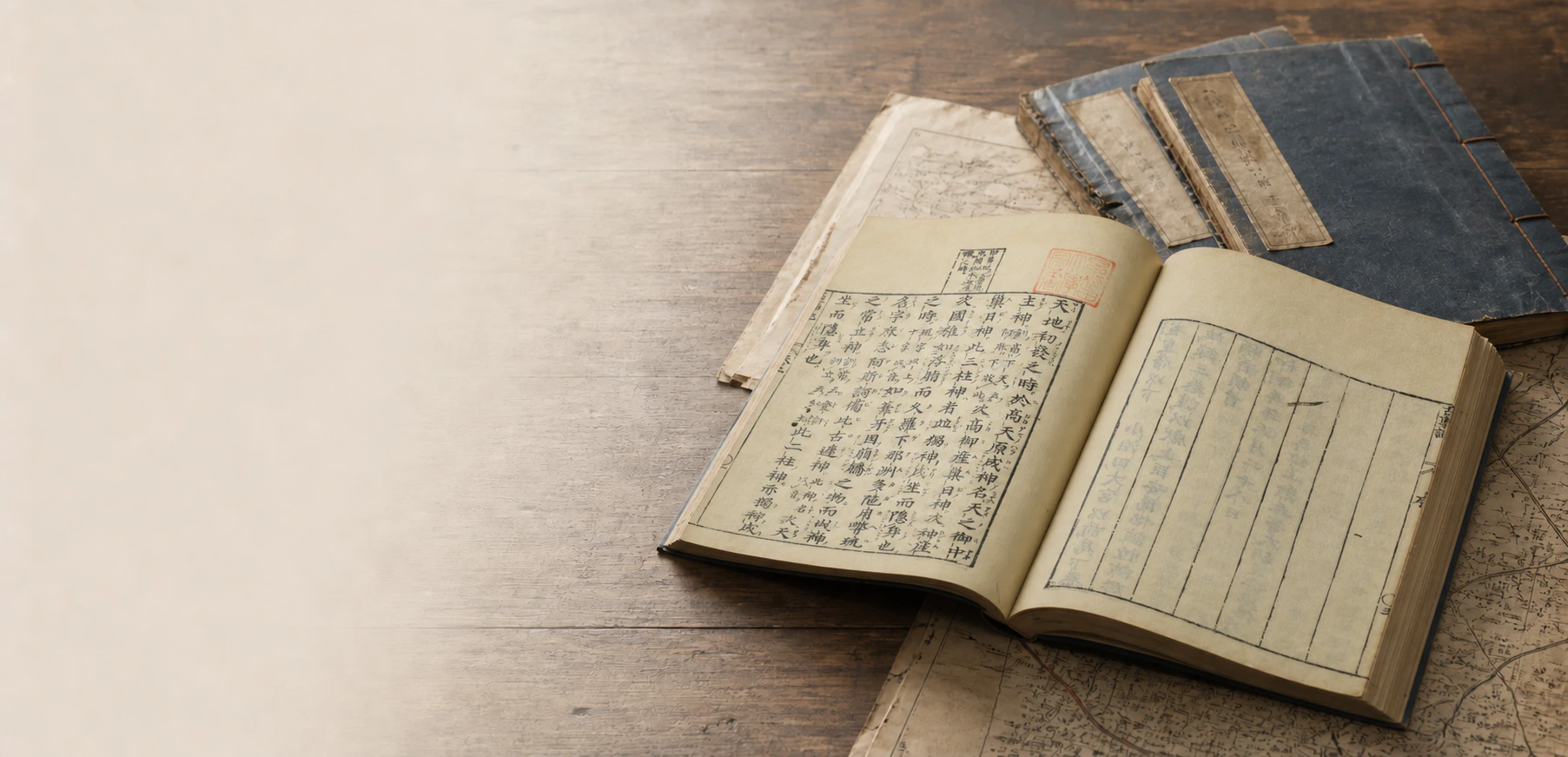
Jōmon
縄文
c. 14,000 BCE–c. 900 BCE
The “formation of the Japanese archipelago” was not an event that occurred on a single date. It was a long interaction among geology, changing sea levels, ecosystems, and human movement. During the glacial cycles of the Quaternary, sea levels repeatedly fell, altering distances and environmental conditions along the routes between Hokkaido and Sakhalin and between Kyushu and the Korean Peninsula. Even so, the islands were not simply joined to the continent as one continuous landmass throughout the Ice Age. Changing coastlines created opportunities and barriers that varied by place and time.
Read full Jōmon period guideCollapse Jōmon period guide
The National Museum of Japanese History treats the period after about 37,000 years ago as an important beginning for the Late Paleolithic in the islands. Modern humans were active in many regions, making chipped-stone tools, hunting animals such as deer and wild boar, and moving in response to seasonal resources. The discovery of the Iwajuku site overturned the former claim that Japan had no Paleolithic past. Obsidian found at Shirataki in Hokkaido, in Nagano, and on the Izu Islands shows that communities obtained and exchanged stone across considerable distances. Materials originating on islands also indicate some capacity to cross open water. These journeys should not be imagined as effortless migrations; they required knowledge of landscapes, shorelines, weather, and resources.
Paleolithic life cannot be reduced to the familiar image of people hunting mammoths. Climate, animal populations, and tool traditions differed greatly between northern and southern regions. Human remains from Okinawa also suggest that people may have entered the archipelago by more than one route. Around 16,000 years ago, pottery began to appear. By roughly 12,000 years ago, a warming climate and rising seas were helping create the coastline of the modern archipelago. Expanding forests and changing coastal resources established new possibilities that contributed to later Jōmon lifeways. These shifts did not produce an abrupt replacement of one population by another; they altered the environments within which communities adapted.
This history must avoid projecting a completed “Japanese people” into deep prehistory. The present population of the islands emerged through Paleolithic settlement, Jōmon communities, and many later movements and mixtures of people. Stone tools and human remains displayed at the Iwajuku Museum, the Shirataki sites, or the Okinawa Prefectural Museum are evidence of adaptation, resource seeking, technical skill, and crossings of difficult waters. They are not proof of a single ethnic origin. The deeper story is about how varied human groups learned to inhabit environments repeatedly transformed by climate and the sea—and how archaeology reconstructs those lives without the aid of written testimony.
The Jōmon period is conventionally dated from the appearance of the earliest pottery, roughly 16,000 years ago, to the gradual spread of wet-rice agriculture across the western archipelago. Its end did not occur everywhere at the same time. Even the name, derived from the cord-marked surfaces of pottery, can be misleading if it suggests a single, unchanging culture lasting more than ten millennia. Jōmon history is better understood as the history of many regional societies that repeatedly adjusted to different environments and changing conditions.
As the climate warmed, deciduous and evergreen forests and extensive coastlines offered nuts, fish, shellfish, deer, wild boar, and other resources. Communities combined hunting, gathering, fishing, and some management of useful plants, employing bows, polished stone tools, fishhooks, net sinkers, and dugout canoes. Pit dwellings, storage pits, cemeteries, and shell middens show that some groups maintained settlements for long periods. Settlement, however, did not mean isolation or an end to movement. Seasonal travel, marriage networks, and exchange remained essential. Jade from Niigata, obsidian from Hokkaido and Nagano, and shell ornaments from coastal areas circulated over considerable distances, revealing broad networks of communication across the islands.
The use of chestnut, lacquer, and other plants also shows that Jōmon communities did not simply accept whatever nature provided. They selected, cultivated, and managed resources. Clay figurines, stone rods, stone circles, unusual burials, and tooth-removal practices point toward ritual activity and forms of group identity, but their meanings must remain uncertain because they are inferred largely from archaeological evidence. They should not be assembled into a single, fixed “Jōmon religion.” Differences in age, skill, family affiliation, and ritual responsibility probably shaped social life, yet the evidence does not indicate a stable ruling class comparable to those of later states.
Environmental change was equally complex. A simple formula in which warmth produced prosperity and cooling caused decline cannot explain the variety of local responses. Communities changed their diets, movements, and settlement patterns as circumstances shifted. Hokkaido later developed Epi-Jōmon traditions, while the Ryukyu Islands followed their own cultural sequence. The endurance of Jōmon societies therefore did not depend on timeless harmony or complete separation from the outside world. It rested on flexible combinations of settlement and mobility, local knowledge and long-distance exchange, and the continuing ability to reorganize life without cities or a centralized state. Its complexity lay precisely in the ability to maintain enduring communities while continuing to move, exchange, experiment, and adapt.
Yayoi
弥生
c. 900 BCE–c. 250 CE
The Yoshinogari site extends across present-day Yoshinogari and Kanzaki in Saga Prefecture and preserves several centuries of settlement change from the Early through Late Yayoi period. It was not a vast fortified center constructed all at once. The earliest community was smaller and enclosed by more limited ditches. As population, production, and regional relationships changed, the moated area expanded and spaces for residence, storage, ritual, and burial became increasingly differentiated. The site therefore records a process of development rather than a single completed plan.
Read full Yayoi period guideCollapse Yayoi period guide
From the Middle Yayoi period, long rows of jar burials and the northern burial mound reveal organized relationships between the living, the dead, and community space. Some graves contained bronze swords, glass tubular beads, and other goods, suggesting growing differences of status and efforts to preserve ancestral memory. Later remains include extensive defensive ditches, structures interpreted as watchtowers, and the compounds known as the Northern and Southern Inner Enclosures. Together, they suggest that Yoshinogari may have served as an important center of a regional kuni, coordinating defense, meetings, ritual, storage, and political activity. “Kuni” in this setting should not be treated as a modern sovereign state, but it points to political organization extending beyond an ordinary household or hamlet.
The raised-floor buildings, towers, and scenes of human activity visible in today’s archaeological park are reconstructions based on postholes, ethnographic comparison, and scholarly interpretation. They help visitors experience scale and movement through the settlement, but they are not original buildings preserved intact. Their hypothetical elements must remain visible. Yoshinogari is also popularly linked with Yamatai in the Chinese Account of the People of Wa. No inscription identifying the site as Yamatai has been excavated, however, and the association cannot prove that the disputed polity stood here.
The site’s greater value is that it turns the abstract idea of increasing Yayoi social complexity into a landscape that can be walked. Ditches separated inside from outside; granaries reveal the management of surplus; cemeteries materialized ancestry and rank; weapons and defenses register the possibility of conflict; and nonlocal objects trace networks of exchange. Yoshinogari also warns against imagining that a “state” appeared suddenly through the act of one heroic founder. Regional political centers developed as village alliances, ritual authority, agricultural production, defensive needs, and material exchange became joined over time. By following ditches and graves from different phases, visitors can see how a small settlement grew into a regional center over centuries—and how it later declined as the political networks around it changed.
The geographical treatise of the Book of Han is a crucial entry point into the earliest written references to the people called Wa. It states that beyond the sea from Lelang lived the people of Wa, divided into more than a hundred “countries,” whose representatives periodically came to offer tribute or appear at the commandery. These “countries” should not be equated with modern sovereign states. They were more likely political communities organized around leaders, settlements, and exchange networks. The number “more than a hundred” may likewise be a broad characterization by Chinese historians rather than a precise census.
The Book of Han was compiled by Ban Gu and others during the Eastern Han period, while part of the information it preserves was understood to concern the earlier Western Han. This was not a record written by inhabitants of the archipelago. It was an outside view assembled through imperial commanderies, envoys, frontier traffic, and layers of reported information. After Emperor Wu conquered Wiman Joseon and established Lelang and other commanderies in 108 BCE, northern Korea became an important point through which island communities encountered the Han imperial world. Leaders in the archipelago could obtain bronze mirrors, iron objects, coins, and prestigious gifts through routes crossing the peninsula. Appearing before officials or offering tribute may have provided titles, material rewards, and access to trade.
Several later episodes must be kept distinct from the Book of Han passage. The record of the gold seal inscribed “King of Na of Wa under Han,” dated to 57 CE, comes from the later Book of the Later Han; the seal itself was found on Shikanoshima in Fukuoka. It should not be merged with the Book of Han reference to more than a hundred polities as though the two described one event. The mission of the Wa king Suishō and others in 107 CE, including the presentation of enslaved people, also belongs to the later chronicle. Read together, these sources suggest gradual change from numerous small communities toward larger political alliances. They also expose a harsher dimension of diplomacy in which human beings could be offered as tribute and treated as political resources.
Chinese dynastic histories used terms such as Wa within their own systems for classifying peoples and ordering the world. The label cannot automatically be treated as the self-designation of every community in the islands. The deeper importance of the Book of Han is that the archipelago enters a written record that can be compared with archaeology. The text offers clues about maritime routes, political fragmentation, tribute, and exchange, but it also requires constant questions: Who was observing? Through how many intermediaries did the information pass? Which interests shaped the account? And where are the ordinary people whose lives remained outside the written archive? The beginning of written history is therefore not the end of uncertainty; it introduces a new kind of evidence with its own silences.
Kofun
古墳
c. 250–538
The Kofun period is conventionally dated from the appearance of large keyhole-shaped tombs in the later 3rd century to changes in burial practice and the rise of Buddhist temples from the late 6th into the 7th century. Early monumental tombs such as Hashihaka in the Nara Basin combined a circular rear mound with a square front section. Related forms then spread across western Japan and increasingly influenced eastern regions. Constructing them required surveying, earth-moving expertise, large labor forces, and materials gathered through interregional networks. A tomb was therefore more than a place for the dead. Its construction and ceremonies allowed a leader to display alliances and command resources both during life and after death.
Read full Kofun period guideCollapse Kofun period guide
The adoption of similar tomb forms, bronze mirrors, and ritual practices by leaders in different regions suggests the growth of a political network centered on Yamato. It does not demonstrate that a clearly bounded unified state issued effective commands across the entire archipelago in the 4th century. Shared forms could express participation in an alliance without eliminating local power. Haniwa developed from simple cylinders into representations of houses, people, animals, weapons, and other subjects. They marked ritual space while preserving evidence about clothing, buildings, equipment, and ideals of status. Grave goods also changed. Mirrors, beads, and weapons were increasingly joined or replaced by armor, horse gear, and varied metal objects, reflecting shifts in warfare, identity, and continental connections.
During the 5th and 6th centuries, political change on the Korean Peninsula intensified the movement of technology, people, and institutions across the sea. Migrants participated in pottery production, ironworking, horse breeding, civil engineering, and the use of writing. Developments such as Sue ware and corridor-style stone chambers should not be reduced to a one-way “importation of culture.” They emerged through interaction among mobile communities and local patrons. Knowledge changed as it was applied in new settings.
The Mozu-Furuichi tomb groups near Osaka present a hierarchical landscape of enormous royal monuments surrounded by smaller subsidiary mounds. Many tombs designated as imperial mausoleums are managed by the Imperial Household Agency and cannot be comprehensively excavated, so identifications of particular occupants must remain cautious. From the 6th century onward, regional construction of keyhole tombs gradually ended. Royal burial shifted toward square, round, and octagonal forms, while Buddhist temples became new stages for displaying authority. The period cannot be explained by a formula in which the largest tomb automatically belonged to the strongest state. Its deeper subject is how rituals of death connected local leaders, technical networks, organized labor, and an emerging center of royal power.
The History of the Song records repeated missions during the 5th century from rulers of Wa known as San, Chin, Sai, Kō, and Bu—the later “Five Kings of Wa.” They requested or accepted titles from the Liu Song court, including General Who Pacifies the East and King of Wa, along with military designations claiming authority in relation to Wa, Baekje, Silla, Mimana, Gaya, and other regions. Recognition from a Chinese emperor could strengthen a ruler’s standing in diplomacy around the Korean Peninsula and within the growing political network of the archipelago.
In 478, King Bu submitted a memorial describing how his ancestors had crossed mountains and seas, conquered lands in the east and west, and prepared campaigns overseas. He reported that the deaths of his father and elder brother had interrupted those plans and asked the Song court to confirm a higher military title. The memorial is unusually important as a statement made in the name of the Wa kings themselves. It is not, however, an objective map of actual conquest. Diplomatic memorials were designed to magnify achievement in order to secure rank, and Bu’s claims must be read within that strategy.
Scholars have proposed several identifications linking the Five Kings to rulers known from later Japanese chronicles. Bu is often associated with Emperor Yūryaku, but none of these equations is certain. Inscriptions on an iron sword from the Inariyama tomb in Saitama and an iron blade from the Eta Funayama tomb in Kumamoto contain a royal name commonly read as Wakatakeru and possibly connected with Yūryaku. The great distance between the two finds, together with their shared written language of service to a great king, suggests an expanding network of royal authority in the later 5th century. The inscriptions also record genealogy and office, showing that writing was beginning to preserve status and memory within the islands, not only diplomacy with China.
This activity unfolded amid competition among Goguryeo, Baekje, Silla, and Gaya. Warfare, alliances, migrants, craftspeople, and material goods moved across the straits. Modern borders cannot be projected backward, and the titles do not prove that Japan ruled the entire Korean Peninsula. The developing Yamato court did not grow in isolation. It learned within an East Asian diplomatic order how to name itself, request recognition, and convert authority granted abroad into a resource for rule at home. The unresolved question is precisely why a court expanding within the archipelago still found a distant emperor’s title so politically useful.
Taishō to Present
大正から現代
1912-Present
History Omakase currently covers Japanese history only through 1912.
飛鳥時代
538–710
- Soga, Mononobe, Buddhism, and Succession丁未の乱In 587, a coalition led by Soga no Umako defeated and killed Mononobe no Moriya in Kawachi, after which Prince Hatsusebe took the throne as Emperor Sushun.
- Sushun's Assassination and a Broken Throne崇峻天皇の暗殺According to the Nihon Shoki, Soga no Umako had Emperor Sushun killed in 592; Empress Suiko then succeeded him.
- Oharida Palace and the Twelve-Level Cap Ranks小墾田宮と冠位十二階Suiko's court moved to Oharida Palace in 603 and established a twelve-level cap-rank system.
- The Seventeen-Article Admonitions十七条憲法The Nihon Shoki attributes to Prince Umayado a seventeen-clause text dated 604 that instructed court officials on public duties, collective deliberation and reverence for Buddhism.
- Tori Busshi and the Hōryū-ji Shaka Triad鞍作止利と法隆寺釈迦三尊像Between the court's great-image commission of 605–606 and the completion of Hōryū-ji's Shaka Triad in 623, Tori Busshi became a named maker in the material establishment of Buddhism.
- Missions to Sui and Competing Records of Wa遣隋使と倭の記録In 607, Empress Suiko sent Ono no Imoko to Sui China, opening an exchange of diplomatic letters and visits that brought a Sui envoy to the Yamato court in 608.
- The Isshi Coup and Kōtoku's Succession乙巳の変と孝徳天皇の即位In 645, Prince Naka no Ōe and Nakatomi no Kamatari helped kill Soga no Iruka before Empress Kōgyoku; she then abdicated and her brother became Emperor Kōtoku.
- The Baekje Restoration and Defeat at Baekgang百済復興運動と白村江の戦いFrom 661 to 663, Saimei's court backed a Baekje restoration led by Prince Buyeo Pung; after Saimei died, further forces crossed to Korea and were defeated by Tang and Silla at Baekgang.
- The Jinshin War: From Yoshino to the Defeat of the Ōmi Court壬申の乱In the Jinshin War of 672, Prince Ōama mobilized forces from eastern provinces and defeated the Ōmi court led by his nephew Prince Ōtomo.
- Jitō’s Formal Accession after the Death of Prince Kusakabe持統天皇の即位In 690, Uno no Sarara, Emperor Tenmu’s widow, formally took the throne as Empress Jitō after several years of governing without enthronement.
- The Court Moves to Fujiwara-kyō藤原京遷都In 694, Empress Jitō moved the court to Fujiwara-kyō, a planned grid city with a central palace and government offices.
- Jitō Abdicates to Her Grandson Monmu持統天皇の譲位と文武天皇In 697, Empress Jitō abdicated to her grandson Prince Karu, who became Emperor Monmu, while she continued to assist government as a retired sovereign.
- The Taihō Code Enters Government大宝律令の施行From 700 to 702, Emperor Monmu's court completed, promulgated and began applying the Taihō Code through work led by Prince Osakabe, Fujiwara no Fuhito and other compilers.
奈良時代
710–794
- Genmei's Succession and the Move to Heijō-kyō元明天皇の即位と平城京遷都After Emperor Monmu died in 707, Empress Genmei took the throne, ordered a new capital in 708 and moved the court from Fujiwara-kyō to Heijō-kyō in 710.
- The Nagaya no Ō Incident長屋王の変In 729, troops surrounded the residence of Prince Nagaya after accusations of a plot against the throne; the court ordered his suicide, and his wife Kibi and their four sons also died.
- The Tenpyō Epidemic and the Deaths of the Four Fujiwara Brothers天平の疫病と藤原四兄弟の死An epidemic, generally identified as smallpox, spread from Kyushu in 735 to much of Japan by 737, killing all four leading Fujiwara brothers and disrupting households and government alike.
- The Fujiwara no Hirotsugu Rebellion藤原広嗣の乱In 740, Fujiwara no Hirotsugu raised a rebellion in Kyushu after demanding the removal of two court advisers, but imperial troops defeated his forces and he was captured and executed.
- Successive Transfers of the Capital, 740–745恭仁・紫香楽・難波への遷都Between 740 and 745, the political center of Shōmu's court moved through Kuni-kyō, Naniwa Palace, and Shigaraki Palace before returning to Heijō-kyō.
- The Edict for Provincial Monasteries and Nunneries国分寺・国分尼寺建立の詔In 741, Emperor Shōmu ordered each province to establish a monastery and a nunnery, with land, clergy and recurring Buddhist rites to protect the realm.
- The Edict to Create the Vairocana Great Buddha盧舎那大仏造立の詔In 743, Emperor Shōmu issued a proclamation calling for the creation of a colossal image of Vairocana Buddha and publicly invited broad participation in the undertaking.
- Shōmu Abdicates and Kōken Accedes聖武天皇の譲位と孝謙天皇In 749, Emperor Shōmu abdicated in favor of his daughter Princess Abe, who became Empress Kōken, while he continued to support the Great Buddha project as a retired sovereign.
- Gyōki Dies before the Great Buddha Is Completed行基の死The monk Gyōki died in 749 after helping gather support for the Great Buddha project, before the bronze body was completed and three years before its eye-opening ceremony.
- The Eye-Opening of Tōdai-ji’s Great Buddha東大寺大仏開眼供養In 752, the Indian monk Bodhisena consecrated Tōdai-ji’s Great Buddha in Nara by painting its pupils at a ceremony attended by the imperial family, officials and clergy.
- Ganjin Reaches Japan with the Returning Mission鑑真の来日In 753, the Yangzhou monk Ganjin reached Japan with a returning diplomatic mission after repeated failed crossings, bringing teachers and texts for the transmission of Buddhist monastic precepts.
- Ordination before the Great Buddha Hall東大寺での授戒In 754, Ganjin administered bodhisattva vows to the retired Emperor Shōmu and then ordained monks at a temporary platform before Tōdai-ji’s Great Buddha Hall.
- The Death of Shōmu and Kōmyō's Donation聖武天皇の死と光明皇后の献納After the retired Emperor Shōmu died in 756, his widow Kōmyō donated treasures and medicines to Tōdai-ji, beginning a series of offerings documented through 758.
- Kōken Abdicates and Junnin Accedes孝謙天皇の譲位と淳仁天皇In 758, Empress Kōken abdicated to Prince Ōi, who became Emperor Junnin with Fujiwara no Nakamaro's support, while Kōken remained an active retired sovereign.
- Ganjin Establishes Tōshōdai-ji唐招提寺の創建In 759, Ganjin established Tōshōdai-ji on the former estate of Prince Niitabe as a community for studying Buddhist monastic discipline.
- The Division between Retired Empress Kōken and Junnin's Government孝謙太上天皇と淳仁天皇の対立In 762, the retired Empress Kōken declared that she would control major affairs and rewards and punishments, while the reigning Emperor Junnin would handle routine business.
- The Fujiwara no Nakamaro Rebellion藤原仲麻呂の乱In 764, Fujiwara no Nakamaro attempted to mobilize troops against the retired Empress Kōken, but her forces blocked his routes north and killed him; Emperor Junnin was deposed afterward.
- The Deposition of Junnin and Shōtoku's Restoration淳仁天皇の廃位と称徳天皇の重祚After Fujiwara no Nakamaro's defeat in 764, Emperor Junnin was deposed and sent to Awaji, while the retired Empress Kōken returned to the throne as Empress Shōtoku.
- The Saidai-ji Vow and Dōkyō's Rise to Power西大寺の発願と道鏡Following the rebellion of 764, Empress Shōtoku sponsored Saidai-ji and a million miniature pagodas, while elevating the monk Dōkyō to extraordinary court and religious titles.
- The Usa Hachiman Oracle Affair宇佐八幡宮神託事件In 769, a reported oracle from Usa Hachiman favored making the monk Dōkyō emperor, but the court messenger Wake no Kiyomaro returned with a contrary message reserving the throne for the imperial line.
- The Death of Shōtoku and Dōkyō's Fall from Power称徳天皇の死と道鏡の失脚Empress Shōtoku died in 770, after which the court chose Prince Shirakabe, the future Emperor Kōnin, as heir and removed the monk Dōkyō to Shimotsuke.
平安時代
794–1185
- Kōnin Accedes and Yamabe Replaces Osabe as Heir光仁天皇の即位と山部親王After Prince Shirakabe became Emperor Kōnin in 770, accusations against Empress Inoe and their son Osabe removed the original heir, and another son, Yamabe, became crown prince in 773.
- The Court Moves to Nagaoka-kyō長岡京遷都In 784, Emperor Kanmu moved the court from Nara to Nagaoka-kyō, a new capital connected to the Katsura–Yodo river system whose construction continued after the court arrived.
- Tanetsugu Is Assassinated and Crown Prince Sawara Is Removed藤原種継暗殺と早良親王In 785, the capital-building official Fujiwara no Tanetsugu was assassinated at Nagaoka, and the investigation led to Crown Prince Sawara's removal and death during his transfer into exile.
- Aterui Resists the Court and Surrenders in 802阿弖流為の抵抗と降伏Aterui helped defeat the court's expedition at Isawa in 789, but surrendered with the leader More in 802 and was taken south and executed as imperial control expanded in the region.
- The Court Moves to Heian-kyō平安京遷都In 794, Emperor Kanmu moved the court from Nagaoka-kyō to Heian-kyō, establishing a new capital in the Kyoto basin while construction of its palace and city continued.
- Tamuramaro Builds Isawa Castle after the Northern Campaign坂上田村麻呂と胆沢城After his campaign of 801, the imperial commander Sakanoue no Tamuramaro built Isawa Castle in 802, while the surrendered northern leaders Aterui and More were taken south and executed.
- Kūkai Studies in Tang China and Returns to Japan空海の入唐と帰国Between 804 and 806, Kūkai traveled to Tang China as a long-term student monk with an imperial embassy, received esoteric teaching from Huiguo in Chang'an, and returned with texts, mandalas, images and ritual implements catalogued for the Japanese court.
- The Conflict between Heizei and Saga in 810平城太上天皇の変In 810, the retired Emperor Heizei tried to restore the court's seat at Nara, but Emperor Saga blocked his movement, defeated his supporters, and retained the capital at Heian-kyō.
- Kūkai Receives Permission to Establish Kōyasan高野山開創の勅許In 816, Kūkai received Emperor Saga's permission to establish a Buddhist practice center at Kōyasan in Kii, beginning a building program continued by his disciples.
- Saichō Dies and Mount Hiei Receives Ordination Approval最澄の死と大乗戒壇の勅許In 822, Saichō died before the court approved the independent Mahayana ordination system he had sought for Mount Hiei; permission followed seven days after his death.
- Saga Entrusts Tō-ji to Kūkai空海への東寺下賜In 823, Emperor Saga entrusted Tō-ji, the state temple beside Heian-kyō's southern entrance, to Kūkai, giving his esoteric Buddhist community a permanent base in the capital.
- Kūkai Dies at Kōyasan and the Nyūjō Tradition Continues空海の死と入定信仰Kūkai died at Kōyasan in 835, while Shingon tradition remembers the event as nyūjō, entry into continuing meditation, a belief sustained through offerings at Okunoin.
- Saga Dies and the Jōwa Incident Changes the Crown Prince嵯峨天皇の死と承和の変Soon after the retired Emperor Saga died in 842, the Jōwa Incident led to Crown Prince Tsunesada's removal, the punishment of his supporters, and the appointment of Prince Michiyasu as heir.
- Seiwa Delegates Government to Fujiwara no Yoshifusa清和天皇と藤原良房の摂政政治In 866, amid the Ōten Gate fire and a court investigation, Emperor Seiwa explicitly authorized his maternal grandfather Fujiwara no Yoshifusa to conduct the affairs of government.
- The Akō Dispute over Imperial and Regent Authority阿衡の紛議と天皇・摂政の権限In 887–888, wording that called Fujiwara no Mototsune an akō triggered a court crisis over whether the new emperor Uda had granted him real governing authority, exposing how regency depended on documents as well as family power.
- Michizane Requests Reconsideration of the Planned Tang Embassy遣唐使計画の再検討In 894, Sugawara no Michizane asked the court to reconsider the planned embassy to Tang China using reports of worsening conditions; the mission never sailed, although planning continued beyond his request.
- Michizane Is Removed from Office and Sent to Dazaifu菅原道真の大宰府左遷In 901, Sugawara no Michizane was removed as Minister of the Right and sent to Dazaifu after accusations of a plot against Emperor Daigo, ending his authority at the central court.
- Michizane Dies at Dazaifu菅原道真の死Sugawara no Michizane died at Dazaifu in 903, two years after his removal from court, and his burial site later developed into Dazaifu Tenmangū.
- Disasters and Michizane’s Posthumous Rehabilitation災異と道真の名誉回復After Sugawara no Michizane's death, disasters and court deaths were attributed to his resentful spirit, prompting rehabilitation and ritual responses, including renewed alarm after the palace lightning strike of 930.
- The 995 Epidemic and Michinaga’s Rise at Court長徳の疫病と道長の台頭Amid the epidemic of 995, the deaths of Fujiwara no Michitaka and Michikane opened a succession struggle in which their younger brother Michinaga gained authority at Emperor Ichijō’s court.
- Michinaga’s Rise and Imperial Marriage Politics, 995–1018道長の台頭と外戚政治Between 995 and 1018, Fujiwara no Michinaga turned access to court documents and his daughters’ imperial marriages into influence over successive emperors and the transfer of the regency to his son.
- Shōshi Becomes Ichijō’s Second Empress彰子の立后Fujiwara no Shōshi entered Emperor Ichijō’s household in 999 and became chūgū in 1000, while his existing empress Teishi retained the separate title kōgō.
- Murasaki Shikibu Serves in Empress Shōshi’s Household紫式部の彰子への出仕Around 1005–1006, the writer Murasaki Shikibu entered Empress Shōshi’s household, where her diary records the circulation of The Tale of Genji and court life surrounding imperial childbirth.
- Empress Shōshi Gives Birth to Prince Atsuhira敦成親王の誕生In 1008 Empress Shōshi gave birth at her father Fujiwara no Michinaga’s residence to Prince Atsuhira, the son of Emperor Ichijō and future Emperor Go-Ichijō.
- Michinaga Transfers the Regency to Yorimichi道長から頼通への摂政継承After becoming regent to his grandson Emperor Go-Ichijō in 1016, Fujiwara no Michinaga transferred the office to his son Yorimichi in 1017 and briefly served as grand minister.
- Yorimichi Converts the Uji Villa into Byōdōin平等院の創建In 1052 Fujiwara no Yorimichi converted his inherited Uji villa into the Buddhist temple Byōdōin, followed by the dedication of its Amida Hall in 1053.Explore this event
- Tsunekiyo’s Execution and Kiyohira’s Entry into the Kiyohara Household藤原経清の死と清衡の清原家入りAfter Fujiwara no Tsunekiyo was executed in the Abe defeat of 1062, his widow married Kiyohara no Takesada and brought their surviving son Kiyohira into the victorious family.
- Go-Sanjō’s Accession and the Review of Estate Claims後三条天皇と荘園整理Emperor Go-Sanjō acceded in 1068 and ordered a review of estate claims in 1069, giving the throne a greater role in checking exemptions while Fujiwara nobles remained in government.
- The Later Three Years War and the Rise of Hiraizumi後三年合戦と平泉の台頭From 1083 to 1087, Minamoto no Yoshiie intervened in a Kiyohara family war in northern Honshu; Fujiwara no Kiyohira survived the destruction and used its aftermath to build the Hiraizumi regime.
- Shirakawa Abdicates to Horikawa and Develops Retired Rule白河天皇の譲位と院政In 1086 Emperor Shirakawa abdicated to his young son Horikawa, securing succession within his own line while retaining a household that developed into a lasting center of government.Explore this event
- Shirakawa’s Repeated Pilgrimages to Kumano白河院の熊野御幸Between 1090 and 1128 retired Emperor Shirakawa made nine pilgrimages to Kumano, bringing his attendants and ceremonial household along routes between the capital and the sacred shrines.
- Kiyohira Builds the Chūsonji Temple Complex藤原清衡による中尊寺造営From 1105 Fujiwara no Kiyohira developed a major temple complex at Chūsonji, whose Golden Hall was built in 1124 and whose dedication prayer commemorated the dead of regional wars.
- The Hōgen War: A Court Succession Dispute Fought in Kyoto保元の乱In 1156, forces supporting Emperor Go-Shirakawa defeated retired emperor Sutoku’s faction in Kyoto, leading to Sutoku’s exile and the execution of defeated warrior leaders.
- The Heiji Coup and Kiyomori’s Counterattack平治の乱In the Heiji conflict of 1159–1160, Fujiwara no Nobuyori and Minamoto no Yoshitomo seized the sovereigns in Kyoto, but Taira no Kiyomori’s counterattack defeated them and forced surviving Minamoto sons into exile or refuge.
- Tokuko Enters Takakura’s Court and Gives Birth to the Future Antoku平徳子の入内と安徳天皇の誕生Taira no Tokuko entered Emperor Takakura’s court in 1171, became chūgū in 1172 and gave birth in 1178 to Prince Tokihito, the future Emperor Antoku.
- Kiyomori’s Coup against Go-Shirakawa治承三年の政変In 1179, Taira no Kiyomori brought troops into Kyoto, confined retired emperor Go-Shirakawa at Toba and replaced senior court officials, sharply restricting retired rule.
- Antoku’s Accession and the Temporary Capital at Fukuhara安徳天皇の即位と福原遷都In 1180, the child Emperor Antoku succeeded Takakura, and Kiyomori moved the court to Fukuhara before returning it to Kyoto later that year.
- Uprisings Spread the Genpei War beyond Kyoto源平の争乱の拡大In 1180, Prince Mochihito’s call against the Taira and regional uprisings by leaders including Minamoto no Yoritomo and Yoshinaka expanded the conflict across Japan.
- The Taira Leave Kyoto with Antoku and the Regalia安徳天皇と平氏の西走In 1183, the Taira withdrew from Kyoto before Yoshinaka’s advance, carrying Emperor Antoku and the regalia west while Go-Shirakawa arranged another succession in the capital.
- The Minamoto Capture the Taira Bases at Ichi-no-Tani一ノ谷の戦いIn 1184, forces led by Minamoto no Noriyori and Yoshitsune defeated the Taira around Ichi-no-Tani and Fukuhara, driving the survivors back to their fleet.
- Dan-no-ura: The Destruction of the Taira Fleet and Western Court壇ノ浦の戦いOn the twenty-fourth day of the third month of 1185, Yoshitsune's fleet defeated the Taira at Dan-no-ura; Emperor Antoku died at sea while his mother Tokuko was rescued, ending the Taira's central political coalition.
- Yoshitsune’s Attack on Yashima屋島の戦いIn 1185, Yoshitsune crossed to Awa and attacked the Taira base at Yashima in Sanuki, forcing their fleet and Antoku’s household farther west.
- Tokuko Takes Buddhist Vows and Lives at Jakkōin建礼門院の出家と寂光院After surviving Dan-no-ura in 1185, Tokuko took Buddhist vows and settled at Jakkōin in Ōhara, where she commemorated Antoku and her defeated family.
鎌倉時代
1185–1333
- Yoritomo’s Uprising, Defeat at Ishibashiyama and Entry into Kamakura頼朝の挙兵と鎌倉入りIn 1180, Minamoto no Yoritomo rose in Izu, survived defeat at Ishibashiyama, rebuilt his coalition, and entered Kamakura as an eastern political-military base.
- The Bunji Authorization: Pursuit, Provisions and Warrior Appointments文治の勅許In late 1185, Yoritomo’s envoy Hōjō Tokimasa obtained court approval for wider pursuit, provisions collection and warrior appointments, extending Kamakura authority beyond its eastern base.
- Yoritomo’s Ōshū Campaign and the Fall of the Northern Fujiwara奥州合戦In 1189, Yoritomo invaded Ōshū, destroyed the Northern Fujiwara regime at Hiraizumi, and extended Kamakura’s control across eastern Japan.
- Yoritomo Receives the Title Seii Taishōgun頼朝の征夷大将軍任官In 1192, after Go-Shirakawa’s death, the court appointed Yoritomo seii taishōgun, adding imperial recognition to a Kamakura government already exercising military and administrative authority.
- Yoriie Succeeds Yoritomo and Senior Officials Mediate Government頼家の継承と宿老政治After Yoritomo died in 1199, Yoriie succeeded as lord of Kamakura, and a group of thirteen senior officials was designated to handle access to the young ruler’s government.
- The Hiki Defeat, Yoriie’s Deposition and Sanetomo’s Succession比企能員の変In 1203, Hōjō forces killed Hiki Yoshikazu and destroyed his political base, deposed Yoriie and installed his younger brother Sanetomo as Kamakura’s next ruler.
- The Wada Battle in Kamakura和田合戦In 1213, Wada Yoshimori’s forces attacked within Kamakura, but his defeat destroyed the Wada as a central power and strengthened Hōjō Yoshitoki.
- Sanetomo’s Assassination and a New Shogunal Succession源実朝の暗殺In 1219, Kugyō assassinated Minamoto no Sanetomo after a ceremony at Tsurugaoka Hachimangū, ending succession through Yoritomo’s direct male descendants.
- The Jōkyū War and Kamakura’s Victory over Go-Toba承久の乱In 1221, retired emperor Go-Toba ordered Hōjō Yoshitoki’s removal, but Kamakura’s forces defeated his supporters, imposed an imperial succession settlement and extended their presence in Kyoto and western estates.
- Kamakura Establishes a Headquarters at Rokuhara六波羅探題の設置After the Jōkyū War in 1221, Hōjō Yasutoki and Tokifusa remained at Rokuhara in Kyoto, establishing a continuing Kamakura presence for capital security and western government.
- The Goseibai Shikimoku Defines Rules for Warrior Government御成敗式目In 1232, Hōjō Yasutoki, assisted by cosigner Hōjō Tokifusa and the Hyōjōshū, issued the fifty-one articles of the Goseibai shikimoku, also known as the Jōei Code.
- The Hōji War and the Consolidation of Hōjō Rule宝治合戦と北条氏の支配強化In 1247, conflict between the Hōjō leadership and the Miura house erupted inside Kamakura; the Miura were destroyed, leaving regent Hōjō Tokiyori and the tokusō line with far fewer military rivals at the center of the shogunate.
- Nichiren Submits the Risshō Ankoku Ron『立正安国論』の提出In 1260, Nichiren submitted the Risshō Ankoku Ron to former regent Hōjō Tokiyori, arguing that religious error endangered the country and urging a return to the Lotus Sutra.
- Nichiren’s Arrest, Tatsunokuchi Tradition and Sado Exile龍ノ口法難と佐渡流罪Arrested in 1271, Nichiren was exiled to Sado, where he wrote major doctrinal works; religious accounts also describe an interrupted execution at Tatsunokuchi before his removal.
- The First Mongol Invasion of Japan文永の役In 1274, a Mongol-led fleet attacked Tsushima and Iki, landed around Hakata Bay and fought Kyushu defenders before withdrawing without securing a lasting foothold in Japan.
- The Second Mongol Invasion and the Failure of the 1281 Campaign弘安の役In 1281, Kublai Khan sent two invasion fleets toward Kyushu; Japanese resistance, prolonged offshore operations and a devastating storm defeated the campaign, followed by fighting against stranded troops.
- Engakuji’s Foundation under Hōjō Tokimune円覚寺の創建In 1282, Hōjō Tokimune founded Engakuji in Kamakura with Wuxue Zuyuan as its first abbot, establishing a Zen institution associated with remembrance after the Mongol invasions.
- The Founding of Tōkeiji東慶寺の創建In 1285, Kakusan-ni opened Tōkeiji in Kamakura with Hōjō Sadatoki as founding patron, establishing a convent whose later history would make it an important refuge and legal space for women.
室町時代
1333–1467
- Go-Daigo’s Rising and the Fall of the Kamakura Government元弘の乱と鎌倉幕府の滅亡Go-Daigo’s failed rising in 1331 developed into wider resistance; Ashikaga Takauji’s defection and Nitta Yoshisada’s attack brought down the Kamakura government in 1333.
- The Kenmu Government Reorganizes Rule after Kamakura建武政権After Kamakura fell in 1333, Go-Daigo reorganized government around imperial authority, creating procedures for rewards and land claims before his alliance with Takauji broke into war.
- The Nakasendai Rebellion and Takauji’s Break with Go-Daigo中先代の乱と尊氏の離反In 1335, Hōjō Tokiyuki seized Kamakura; Takauji’s counterattack recovered the city but made him an independent center of military rewards, bringing him into conflict with Go-Daigo.
- The Battle of Minatogawa and Takauji’s Return to Kyoto湊川の戦いAt Minatogawa in 1336, Ashikaga forces defeated Nitta and Kusunoki; Masashige and many followers died.
- Go-Daigo Establishes a Rival Court at Yoshino吉野の南朝成立In 1336, Go-Daigo left Ashikaga-controlled Kyoto for Yoshino and upheld his imperial claim against Kōmyō’s court, beginning the sustained division between the Southern and Northern Courts.
- Takauji’s Appointment as Shogun足利尊氏の将軍任官In 1338, the Northern Court appointed Ashikaga Takauji seii taishōgun, formally recognizing the leader of a Kyoto-based warrior government that had already begun to operate.
- The Kannō Disturbance Divides the Ashikaga Government観応の擾乱The Kannō Disturbance of 1350–1352 split the Ashikaga government into armed factions, killed the Kō leaders and ended with Tadayoshi’s surrender and death, while provincial fighting continued.
- Hanzei: Wartime Revenue Shares Become Land Rights半済と守護の権力From 1352 to 1368, the Ashikaga government developed hanzei from a temporary assignment of half an estate’s dues for military support into rules permitting land division, with important exemptions.
- The Battle of the Chikugo River and Southern Court Ascendancy in Kyushu筑後川の戦いと九州南朝勢力の拡大On 6 August 1359, the Southern Court coalition led politically by Prince Kaneyoshi and militarily by Kikuchi Takemitsu defeated Shōni forces at Ōhobaru near the Chikugo River, clearing the way for control of Dazaifu.
- Epidemic and Harvest Loss amid the Civil War of 1360–1361戦乱下の疫病と凶作In 1360–1361, epidemic reports and unusual cold accompanied harvest losses; Tara estate’s petitions show cultivators seeking inspection and relief while military demands continued.
- Kan’ami and Zeami Perform before Yoshimitsu at Imakumano今熊野での観阿弥・世阿弥Around 1374–1375, Kan’ami and the young Zeami performed before Ashikaga Yoshimitsu at Imakumano, beginning influential shogunal patronage of the Kanze troupe.
- The 1392 Settlement Ends the Two Courts南北朝の合一In 1392 Southern Emperor Go-Kameyama left Yoshino, returned to Kyoto, and transferred the regalia to Emperor Go-Komatsu.
- Yoshimitsu Builds Kitayama Palace北山殿の造営In 1397, retired shogun Ashikaga Yoshimitsu acquired the former Saionji estate at Kitayama and began building the palace complex that included the Golden Pavilion.
- Zeami Writes the Fūshikaden and Later Treatises『風姿花伝』と世阿弥の伝書From about 1400 to 1424, Zeami developed the Fūshikaden and further treatises on Noh training, performance and artistic transmission, setting practical experience into a written teaching tradition.
- Yoshimitsu Opens Ming Relations and Tally Trade日明関係と勘合貿易Between 1401 and 1404, Ashikaga Yoshimitsu opened official relations with Ming China, accepted recognition as King of Japan and established trade authenticated by official tallies.
- Zeami Is Exiled to Sado世阿弥の佐渡流罪In 1434, shogun Ashikaga Yoshinori exiled Zeami to Sado, interrupting the elder Noh master’s work in the capital while he continued writing and corresponding from the island.
- The Eikyō Rebellion and the Destruction of the Kamakura Government永享の乱と鎌倉府の崩壊In 1438–1439, shogun Ashikaga Yoshinori intervened against the Kamakura kubō Ashikaga Mochiuji; Mochiuji's defeat and death destroyed the existing Kamakura government and opened a new cycle of war in the Kantō.
- Yoshimi’s Nomination and Yoshihisa’s Birth足利義視と義尚の継承問題Yoshimasa named his younger brother Yoshimi his heir in 1464, but the birth of his son Yoshihisa in 1465 introduced a second claimant into an already divided Ashikaga government.
- The Ōnin War: Rival Armies Occupy Kyoto応仁の乱の勃発In 1467, rival alliances led by Hosokawa Katsumoto and Yamana Sōzen turned disputes within the Ashikaga government into war in Kyoto; fighting continued until the main western armies withdrew in 1477.Explore this event
- Yoshihisa Inherits the Shogunal Office足利義尚の将軍就任Yoshimasa transferred the shogunal office to his son Yoshihisa in the twelfth month of 1473, while the continuing Ōnin War and Yoshimasa’s continuing authority limited the change in government.
- Yoshimasa Builds Higashiyama Palace東山殿の造営In 1482 Yoshimasa began Higashiyama Palace on the former site of Jōdoji, a temple and residence associated with Yoshimi that had been destroyed during the war.
- Yoshihisa’s Ōmi Expedition and Magari Encampment足利義尚の近江出陣と鈎の陣From 1487, Ashikaga Yoshihisa led a campaign against the Rokkaku in Ōmi and continued provincial adjudication from his field headquarters until his death in 1489.
- The Meiō Coup Deposes Ashikaga Yoshiki明応の政変In 1493, Hosokawa Masamoto and allies displaced Shogun Ashikaga Yoshiki while he campaigned in Kawachi, backing another Ashikaga candidate; Yoshiki escaped captivity and maintained a rival claim from Etchū.
戦国時代
1467–1603
- Okehazama: Nobunaga Defeats Imagawa Yoshimoto桶狭間の戦いIn 1560, Oda Nobunaga attacked Imagawa Yoshimoto’s command group at Okehazama in Owari, killing Yoshimoto and forcing the invading army to withdraw.
- Nobunaga Brings Ashikaga Yoshiaki to Kyoto信長と足利義昭の上洛In 1568, Oda Nobunaga defeated resistance on the route to Kyoto and installed Ashikaga Yoshiaki as shogun; their cooperation later broke down, ending with Yoshiaki’s expulsion in 1573.
- The Ishiyama War Ends with Honganji’s Withdrawal石山本願寺の退去From 1570 to 1580, Oda Nobunaga fought Ishiyama Honganji and its regional allies; naval pressure and a court-mediated settlement brought the temple’s staged withdrawal from Osaka.
- Nagashino: Relief of the Castle and Battle at Shitaragahara長篠・設楽原の戦いIn 1575, Oda Nobunaga and Tokugawa Ieyasu relieved Nagashino Castle and defeated Takeda Katsuyori at Shitaragahara, using firearms and prepared defenses while an allied detachment attacked the siege positions.
- Honnōji Disrupts Maeda Toshiie’s Northern Command本能寺の変と前田利家After Akechi Mitsuhide killed Oda Nobunaga in Kyoto in 1582, Maeda Toshiie withdrew from the Etchū front to secure Noto, while rival Oda commanders contested the succession.
- Honnōji and Kanamori Nagachika’s Transfer of Service本能寺の変と金森長近Nobunaga’s death at Honnōji in 1582 began a succession struggle in which Kanamori Nagachika remained linked to Shibata Katsuie before entering Hideyoshi’s service after Katsuie’s defeat.
- Horio Service Continues through the Oda and Toyotomi Successions堀尾氏と織田・豊臣の継承After Nobunaga’s death in 1582, Horio Yoshiharu continued serving Hideyoshi, gained Hamamatsu, and handed leadership to his son, whose Eastern allegiance secured the family’s transfer to Izumo and Oki in 1600.
- Honnōji: The Killing of Nobunaga and Nobutada本能寺の変In 1582, Akechi Mitsuhide turned his army against Oda Nobunaga in Kyoto, killing him at Honnōji and his heir Nobutada at Nijō, then lost to Hideyoshi at Yamazaki.
- Yamazaki: Hideyoshi’s Coalition Defeats Mitsuhide山崎の戦いIn 1582, Hideyoshi returned from the Mōri front and joined Oda allies to defeat Akechi Mitsuhide near Yamazaki, gaining an advantage in the succession struggle after Nobunaga’s death.
- The Kōshū Campaign Destroys the Takeda Domain甲州征討と武田氏の滅亡In 1582, Oda Nobutada’s advance and allied attacks broke the Takeda domain, ending with Katsuyori, his wife and son Nobukatsu dying near Tenmokuzan and the victors dividing its provinces.
- Shizugatake and Toshiie’s Submission to Hideyoshi賤ヶ岳の戦いIn 1583, Maeda Toshiie withdrew from Shibata Katsuie’s side during the Shizugatake campaign and subsequently submitted to Hideyoshi, preserving his house and gaining a new base in Kanazawa.
- Hideyoshi Begins Osaka Castle秀吉による大坂城築城Hideyoshi began Ōsaka Castle in 1583 on the Uemachi plateau, broadly overlapping the former Ōsaka Honganji complex and temple town.
- Komaki–Nagakute, the Ikeda Succession, and Ishikawa Kazumasa’s Defection長久手の戦いと池田家The 1584 Komaki–Nagakute campaign killed two Ikeda leaders and ended through negotiation; in 1585 Tokugawa senior retainer Ishikawa Kazumasa defected to Hideyoshi, showing how battlefield results, succession and transfers of allegiance reshaped the settlement.
- Hideyoshi’s Hida Campaign and a Tokugawa Retainer’s Defection飛騨征討と石川数正の出奔In 1585, Kanamori Nagachika invaded Hida for Hideyoshi and defeated the Miki; that year Ishikawa Kazumasa also left Tokugawa service for Hideyoshi, extending Toyotomi influence through conquest and transfer of allegiance.
- Hideyoshi Subordinates Shikoku, Kyushu and the Kantō秀吉の四国・九州・関東平定Between 1585 and 1590, Hideyoshi’s campaigns forced the Chōsokabe and Shimazu to accept reduced domains and ended Hōjō rule in the Kantō, making territorial settlements subject to his authority.
- Hideyoshi Opens the Kitano Grand Tea Gathering北野大茶湯On the first day of the tenth Japanese month in 1587, Hideyoshi and three leading tea masters served tea at Kyoto’s Kitano Tenmangū, bringing a broad public into a display of prized utensils and temporary tea houses.
- Kanamori Builds Takayama Castle and Its Town高山城と城下町の建設From the late 1580s, Kanamori Nagachika rebuilt Takayama Castle and organized its town; the central compounds were traditionally completed by 1600, with work under Yoshishige continuing to 1603.
- Ikoma Chikamasa Begins Takamatsu Castle生駒親正による高松城築城In 1588, Ikoma Chikamasa began building Takamatsu Castle on the Sanuki coast, creating a governing base with seawater moats through several years of construction.
- Suriagehara Gives Date Masamune Control of Aizu摺上原の戦いIn 1589, Date Masamune defeated Ashina Yoshihiro’s army at Suriagehara and occupied Kurokawa Castle in Aizu, gaining territory that Hideyoshi’s settlement removed the following year.
- Masamune Submits at Odawara and Loses Aizu政宗の小田原参陣In 1590, Date Masamune joined Hideyoshi’s Odawara campaign and submitted to his authority; the settlement preserved the Date house but removed its recent conquest of Aizu.
- Ishikawa Replaces the Ogasawara at Matsumoto石川氏の松本入封In 1590, Hideyoshi installed Ishikawa Kazumasa at Matsumoto after moving the Ogasawara east; Kazumasa and his son Yasunaga expanded the inherited castle and town.
- Hideyoshi Orders Sen no Rikyū’s Death千利休の死In 1591, Hideyoshi ordered his tea master Sen no Rikyū to commit suicide in Kyoto, ending Rikyū’s court service while his family and disciples later continued his tea practice.
- Hideyoshi’s Invasions of Korea, 1592–1598文禄・慶長の役Hideyoshi invaded Korea in 1592 and again in 1597 as part of an intended advance against Ming China; Korean and Ming resistance blocked conquest, and Japanese forces withdrew after his death in 1598.
- The Second Invasion of Korea, 1597–1598慶長の役After peace negotiations failed, Hideyoshi invaded Korea again in 1597; fighting over towns, coastal castles and sea routes continued until Japanese withdrawal after his death in 1598.
- Toshiie’s Death Removes Hideyori’s Senior Guardian前田利家の死と秀頼After Hideyoshi died in 1598, Maeda Toshiie became a senior guardian of the child heir Hideyori; his death in 1599 removed an important counterweight to Ieyasu and shifted responsibility to the next Maeda generation.
- Hideyoshi’s Death and the Child Heir’s Government秀吉の死と幼い後継者Hideyoshi died at Fushimi in 1598, leaving the child Hideyori under senior lords and administrators whose government arranged withdrawal from Korea while attempting to preserve Toyotomi succession.
- Kiyomasa Builds the New Kumamoto Castle加藤清正による熊本城築城Katō Kiyomasa built a new Kumamoto Castle on the Chausuyama plateau, probably beginning in 1599 and completing the complex in 1607, when the written name changed from 隈本 to 熊本.
- Date and Mogami Fight the Northern Campaign of 1600慶長出羽合戦In 1600 Date Masamune took Uesugi-held Shiroishi and supported Mogami resistance to Naoe Kanetsugu’s attack; the northern campaign ended after news of Ieyasu’s victory, with Date gains smaller than the territory promised.
- Kanamori Joins Ieyasu and Retains Hida金森長近の関ヶ原参戦Kanamori Nagachika and his adopted son Yoshishige fought for Ieyasu in 1600; the victorious settlement preserved their Hida lordship and added holdings around Kōzuchi in Mino.
- Horio Tadauji Receives Izumo and Oki after Sekigahara堀尾忠氏の出雲・隠岐拝領Horio Tadauji served Ieyasu’s winning coalition in 1600 and received Izumo and Oki, moving with his father Yoshiharu from Hamamatsu to Toda Castle and beginning a new provincial government.
- Sekigahara: Campaign, Victory and Territorial Settlement関ヶ原の戦いIn 1600 Ieyasu’s coalition defeated Mitsunari and allied lords at Sekigahara, then redistributed territories across Japan, establishing Tokugawa supremacy while Hideyori’s Toyotomi house survived at Osaka.
- Masamune Builds Sendai Castle and Its Town仙台城と城下町の建設Date Masamune began Sendai Castle in 1601 after planning it in late 1600, establishing a hilltop residence and a town laid out around the Ōshū road and Ōmachi street.
- Ikeda Terumasa Rebuilds Himeji Castle池田輝政による姫路城改修Ikeda Terumasa rebuilt Himeji Castle from 1601 to 1609, replacing its earlier keep with a linked keep complex and reorganizing the surrounding defenses and castle town.
- Ieyasu Becomes Shogun and Establishes Tokugawa Succession家康の将軍任官と徳川の継承In 1603 the imperial court appointed Tokugawa Ieyasu shogun at Fushimi, giving his post-Sekigahara supremacy a recognized office that passed to his son Hidetada in 1605.
- The Osaka Campaigns Destroy the Toyotomi House大坂の陣Tokugawa armies besieged Osaka in 1614 and attacked again in 1615 after a failed settlement, defeating the Toyotomi forces and ending Hideyori’s household as a rival center of government.
江戸時代
1603–1853
- The Horio Build Matsue’s Moats, Roads and Town堀尾氏による松江城下の建設From 1607 to 1611 the Horio administration developed Matsue around its new castle, digging moats, reusing excavated earth and linking warrior and merchant districts with roads, waterways and bridges.
- Satsuma Invades Ryūkyū and Captures Shō Nei薩摩の琉球侵攻With Tokugawa authorization, Shimazu forces invaded Ryūkyū in 1609 and captured King Shō Nei; his return in 1611 left the royal government subject to Satsuma and the Amami islands under more direct Shimazu control.
- The Shogunate Confirms Nobuhira’s Rule in the Ōkuma Dispute大熊事件と津軽信枚In 1609 a joint shogunal ruling confirmed Tsugaru Nobuhira’s authority over Tsugaru and expelled Takehiro, ending Ōkuma’s challenge to his uncle’s succession.
- Shō Nei Returns to a Kingdom under Satsuma Control尚寧王の帰国と薩摩支配Shō Nei returned to Shuri in 1611 after captivity in Japan, retaining his royal government under Satsuma’s new demands while the Amami islands passed into more direct Shimazu administration.
- Masamune’s Embassy Travels to Mexico, Spain and Rome慶長遣欧使節Date Masamune sent Hasekura Tsunenaga and Luis Sotelo toward Mexico, Spain and Rome in 1613 to request trade and missionaries; the mission returned in 1620 without securing its intended arrangements.
- Ieyasu Receives the Divine Title and Is Enshrined at Nikkō家康の神号と日光への改葬After Ieyasu’s death and burial at Kunōzan in 1616, Hidetada’s government obtained the court-authorized title Tōshō Daigongen and established his shrine at Nikkō in 1617.
- Iemitsu Succeeds Hidetada as the Third Shogun徳川家光の将軍就任Iemitsu received appointment as the third Tokugawa shogun during his 1623 journey to Kyoto, while his retired father Hidetada continued exercising authority over territorial grants.
- Tenkai Establishes Kan’eiji at Ueno天海による寛永寺創建Tenkai established Kan’eiji at Ueno in 1625 with Tokugawa patronage, creating a Tendai prayer temple on reassigned estates that later developed princely abbots and shogunal burial precincts.
- Sankin-kōtai and the Regulation of Daimyō Movement参勤交代と大名統制Tokugawa Iemitsu’s 1635 laws prescribed alternating attendance in Edo for daimyō, regularizing obligations that required lordly households, road stations and supporting villages to sustain journeys between Edo and the domains.
- Iemitsu Rebuilds the Nikkō Shrine日光東照宮の大造替Tokugawa Iemitsu rebuilt most of Nikkō’s shrine buildings in 1634–1636, using shogunal funds and specialist craftsmen to enlarge the sacred complex honoring his grandfather Ieyasu.
- The Shimabara–Amakusa Uprising and the Siege of Hara島原・天草一揆People in Shimabara and Amakusa rose against harsh taxation and Christian persecution in 1637, gathered at Hara Castle, and were defeated by shogunal forces in 1638, with most of those inside killed.
- The Portuguese Ban and Tokugawa Maritime Controlsポルトガル船の来航禁止The Tokugawa government barred Portuguese ships in 1639 after earlier restrictions on overseas travel, then moved Dutch merchants to Dejima in 1641 while maintaining Chinese trade and other authorized regional contacts.
- The Great Fire of Meireki and Edo’s Reconstruction明暦の大火と江戸復興Three large fires devastated Edo in 1657; the shogunate supplied relief and rebuilt districts with wider streets, open firebreaks and relocated institutions, while leaving the castle keep unbuilt.
- Ikeda Tsunamasa Succeeds Mitsumasa in Okayama池田綱政の岡山藩継承Ikeda Tsunamasa succeeded his father Mitsumasa as lord of Okayama in 1672, inheriting the domain administration and later directing land development and garden construction through Tsuda Nagatada.
- The Laws of Compassion and Genroku Government生類憐みの令と元禄の政治From the mid-1680s until Tokugawa Tsunayoshi's death in 1709, the shogunate issued a changing series of compassion policies governing abandoned people, sick animals, livestock, birds, fish and dogs rather than one single 'law of compassion.'
- The Founding and Expansion of Kōrakuen岡山後楽園の造営Ikeda Tsunamasa commissioned Tsuda Nagatada to build the garden later called Kōrakuen in 1687; repeated additions established its outer extent by 1700, with further features added afterward.
- Bashō and Sora Depart for the Northern Journey芭蕉と曾良の旅立ちIn 1689, Matsuo Bashō and Kawai Sora left Fukagawa by boat, began their northward road journey at Senju and visited the places later woven into *Oku no hosomichi*.
- Bashō and Sora Visit Nikkō芭蕉と曾良の日光訪問Bashō and Sora visited Nikkō in 1689, praising the shrine to Tokugawa Ieyasu and climbing to a waterfall during the northern journey later described in *Oku no hosomichi*.
- Bashō and Sora at Matsushima and Hiraizumi芭蕉と曾良の松島・平泉訪問In 1689, Bashō and Sora crossed to Matsushima by boat and visited Hiraizumi’s ruins and surviving temples, creating contrasting scenes of celebrated scenery and fallen warrior power.
- Bashō and Sora Visit Yamadera芭蕉と曾良の山寺訪問Local recommendations brought Bashō and Sora to Yamadera in 1689, where a climb among rocks and temple halls became the setting for Bashō’s poem about cicadas and stillness.
- The Premiere of The Love Suicides at Sonezaki『曽根崎心中』の初演Chikamatsu’s *The Love Suicides at Sonezaki* premiered at Osaka’s Takemoto-za in 1703, turning a recent double suicide into a successful puppet play about debt, betrayal and threatened reputation.
- The 1711 Korean Embassy and the Diplomatic Title Dispute正徳の朝鮮通信使と外交称号問題When a Korean embassy came to congratulate Tokugawa Ienobu in 1711, Arai Hakuseki sought to revise diplomatic titles and ceremony, while Amenomori Hōshū worked within Tsushima's interpreting and document system to keep the relationship operable.
- The Battles of Coxinga at Takemoto-za『国性爺合戦』の上演Takemoto-za premiered Chikamatsu’s *The Battles of Coxinga* in 1715, transforming Zheng Chenggong into a fictional Ming-restoration hero and sustaining an exceptionally long theatrical run.
- Yoshimune’s Accession and the Kyōhō Reform Government徳川吉宗の将軍就任From Yoshimune’s accession in 1716 through the reform government of the 1720s, the eighth shogun changed senior leadership, gathered information and commissioned proposals including Ogyū Sorai’s Seidan without adopting the scholar’s complete program.
- Ōoka Organizes Edo’s Town Fire Brigades大岡忠相と町火消In 1718, town magistrate Ōoka Tadasuke organized Edo’s town fire brigades under Yoshimune; subsequent district grouping made neighborhoods responsible for personnel and expenses in fighting fires.
- Yoshimune Relaxes Restrictions on Scientific Books洋書輸入制限の緩和In 1720, Tokugawa Yoshimune allowed Chinese-language works by Christian missionaries to enter when their contents were unrelated to Christianity, widening access to Western learning while retaining religious prohibitions.
- Yoshimune Establishes the Suggestion Box目安箱の設置Yoshimune placed a suggestion box outside Edo’s council office in 1721, receiving written proposals and complaints that included Ogawa Shōsen’s successful plan for medical care for the poor.
- Koishikawa Yōjōsho Opens for Poor Patients小石川養生所の開設The shogunate opened Koishikawa Yōjōsho in 1722 after Ogawa Shōsen petitioned for poor patients’ care, then changed admission arrangements when fears of medical experiments kept patients away.
- Restrictions on Love-Suicide Stories心中物の規制Tokugawa authorities restricted paired suicides and their representation in 1722–1723, curtailing the love-suicide plays that Chikamatsu and Osaka’s theaters had made commercially successful.
- Dutch Anatomy at the Kozukappara Autopsy小塚原での解剖At Kozukappara in 1771, Sugita Genpaku, Maeno Ryōtaku and Nakagawa Jun’an compared an executed woman’s organs with Dutch anatomical illustrations and decided to translate the book together.
- Tanuma Okitsugu Joins the Senior Council田沼意次の老中就任Tanuma Okitsugu became a full senior councilor in 1772 and pursued revenue from licensed commerce and development projects until his dismissal after shogun Ieharu’s death in 1786.
- Publishing Kaitai Shinsho『解体新書』の刊行In 1774, Sugita Genpaku, Maeno Ryōtaku and their collaborators brought a European anatomy text into Japanese scholarly use through the illustrated publication Kaitai Shinsho.
- The Tenmei Famine天明の飢饉Cold weather and repeated crop failures brought the Tenmei famine to much of eastern Japan in the 1780s, overwhelming uneven relief and contributing to grain-price unrest in 1787.
- Asama’s Tenmei Eruption浅間山の天明噴火Asama’s 1783 eruption buried settlements on its northern slope and sent destructive sediment through the Agatsuma and Tone rivers, leaving survivors to rebuild during the Tenmei famine.
- The Kansei Reforms寛政の改革From 1787 to 1793, senior councillor Matsudaira Sadanobu pursued the Kansei Reforms, combining fiscal restraint, famine relief, rural reconstruction and ideological discipline in an effort to restore shogunal order after the Tenmei crisis.
- Inō Tadataka’s First Survey in Ezo伊能忠敬の蝦夷地測量In 1800, Inō Tadataka’s six-person party surveyed part of Ezo’s southern and eastern coast, combining a route north from Edo with measurements intended to improve maps and latitude calculations.
- How Inō’s Survey Parties Measured the Coast伊能測量隊の沿岸測量Between 1800 and 1816, Inō Tadataka’s survey parties combined measured route lengths and compass bearings with astronomical observations to assemble coastal maps from successive field surveys.
- Mamiya Rinzō’s Sakhalin and Lower Amur Surveys間宮林蔵の樺太・アムール川下流調査In 1808 and 1809, Mamiya Rinzō surveyed Sakhalin and traveled through the strait to the lower Amur, producing knowledge the shogunate used to understand a northern borderland already inhabited and connected by Indigenous trade.
- The First Volume of Hokusai Manga『北斎漫画』初編Published in 1814 by Nagoya’s Eirakuya, the first volume of *Hokusai Manga* turned Hokusai’s varied sketches into a printed drawing resource that later expanded into fifteen volumes.
- Genpaku Writes Rangaku kotohajime『蘭学事始』の執筆In 1815, Sugita Genpaku wrote *Rangaku kotohajime* for Ōtsuki Gentaku, recalling early Dutch learning and the collaborative anatomy translation whose history later readers recovered through an 1869 edition.
- Inō Tadataka Dies Before the Map’s Completion伊能忠敬の死Inō Tadataka died in 1818 after the main field surveys had ended; colleagues continued compiling their records and submitted the completed coastal map set to the shogunate in 1821.
- The Completed Inō Map Reaches the Shogunate伊能図の完成と幕府への提出In 1821, the shogunate received the posthumously completed *Dai Nihon enkai yochi zenzu*, a coastal map set compiled from Inō Tadataka’s survey parties’ records at three scales.
- Publishing Thirty-six Views of Mount Fuji『冨嶽三十六景』の刊行From around 1831, Nishimura Eijudō published Hokusai’s *Thirty-six Views of Mount Fuji*, a successful color-print series that used varied viewpoints and imported blue pigment and expanded to forty-six designs.
- Hokusai’s Painting Commissions in Obuse北斎の小布施での制作During visits to Obuse from 1842, Hokusai worked with patron Takai Kōzan on festival-float and temple ceiling paintings, producing major late-life commissions outside Edo.
- Shōzan Proposes Eight Measures for Coastal Defense海防八策In 1842, Sakuma Shōzan advised the Matsushiro lord Sanada Yukitsura on coastal defense, proposing Western-style artillery and ships alongside schools and recruitment within the Tokugawa order.
- Hokusai’s Death and the Continuing Life of His Work北斎の死と作品の継承Hokusai died in 1849 after a late career increasingly devoted to paintings and drawing manuals; publishers continued his sketchbook series, and an 1893 biography helped preserve accounts of his life.
幕末時代
1853–1868
- The Siebold Incident: Maps, Expulsion, and a Family Left in Nagasakiシーボルト事件と長崎に残された家族In 1828, the shogunate discovered that Philipp Franz von Siebold possessed restricted Japanese maps; the resulting investigation punished Japanese collaborators, expelled Siebold, and separated him from the Nagasaki family in which his daughter Kusumoto Ine was growing up.
- The Tenpō Reforms天保の改革Between 1841 and 1843, Mizuno Tadakuni's Tenpō Reforms tried to cut prices, dissolve merchant guilds, regulate urban culture and transfer strategic lands to shogunal control, but resistance and policy failure quickly weakened the program.
- Perry’s Arrival and the Shogunate’s Consultationペリー来航と幕府の諮問In July 1853, Perry’s four-ship squadron compelled the shogunate to receive President Fillmore’s letter at Kurihama; the government then sought wider advice while preparing for his return.
- Kaishū Submits a Coastal-Defense Memorial勝海舟の海防意見書After Perry’s arrival in 1853, Katsu Kaishū submitted a coastal-defense memorial proposing warships and appointments based on ability; government recognition led to his training at Nagasaki in 1855.
- Shōzan Observes Perry’s Fleet and Proposes Guard Duty象山のペリー艦隊視察In 1853, Sakuma Shōzan inspected Perry’s fleet at Uraga and pressed Matsushiro officials for artillery preparations and guard duty near Edo, turning defense advice into reports and a conditional deployment plan.
- Ii Naosuke Is Appointed Tairō井伊直弼の大老就任In 1858, Tokugawa Iesada appointed Ii Naosuke tairō during disputes over treaty approval and the shogunal succession; Ii’s surviving oath copy records his formal commitment to serve the shogunate.
- The United States–Japan Treaty of Amity and Commerce日米修好通商条約On July 29, 1858, Inoue Kiyonao and Iwase Tadanari signed a commercial treaty with Townsend Harris, permitting trade and foreign residence under fixed duties and consular jurisdiction without prior imperial approval.
- The Ansei Purge安政の大獄In 1858–1859, Ii Naosuke’s government arrested and punished opponents involved in treaty, succession and court disputes, imposing confinement and executions on people with different political programs.
- Nagasaki’s Treaty Opening and Glover’s Arrival長崎開港とグラバーの来日Nagasaki’s 1859 treaty opening brought new foreign residence and commercial arrangements; Thomas Glover arrived that September as reclamation and business transfers reshaped an already active trading port.
- Ii Naosuke Is Killed outside Sakurada Gate桜田門外の変In March 1860, seventeen Mito rōnin and a Satsuma warrior attacked Ii Naosuke’s procession outside Edo Castle’s Sakurada Gate and killed the tairō in retaliation amid treaty and purge disputes.
- Kanrin Maru Crosses the Pacific咸臨丸の渡米In 1860, *Kanrin Maru* crossed from Uraga to San Francisco under Kimura Yoshitake and Katsu Kaishū, with American assistance, while Japan’s treaty-ratification envoys traveled aboard the American *Powhatan*.
- The Kobe Naval Training Center Opens and Closes神戸海軍操練所The shogunate opened Kobe’s naval training center in 1864 after Kaishū’s proposal and Iemochi’s approval, but dismissed Kaishū amid the Kyoto crisis and closed the school in 1865.
- Glover Supplies Arms and Ships to Japanese Buyersグラバーの武器・船舶取引During the 1860s, Glover’s Nagasaki business supplied weapons and steamships to Japanese authorities and domains, with brokers arranging purchases that helped rivals build military capacity during the struggle over Tokugawa rule.
- Mitsubishi Acquires Takashima and Draws on Glover’s Advice三菱の高島炭坑買収Mitsubishi acquired Takashima coal mine in 1881, extending beyond shipping into an enterprise Glover had helped develop; his continuing advice connected the Iwasaki family with foreign business knowledge.
- Kazunomiya Travels from Kyoto to Edo和宮の江戸下向In 1861, Princess Kazunomiya traveled from Kyoto to Edo along the Nakasendō to marry Shogun Tokugawa Iemochi, mobilizing domain guards, post stations and porters for a court–shogunate alliance.Explore this event
- The Shogunate Establishes the Kyoto Protectorate京都守護職の設置In 1862, the shogunate appointed Aizu lord Matsudaira Katamori as Kyoto protector, placing the capital’s shogunal security authorities under a new senior office during efforts to reconcile court and bakufu.
- Iemochi Goes to Kyoto to Meet the Imperial Court徳川家茂の上洛In 1863, Tokugawa Iemochi became the first shogun to visit Kyoto since Iemitsu in 1634, meeting Emperor Kōmei as the court pressed the shogunate to expel foreigners.
- A Palace Coup Expels Chōshū and Seven Courtiers八月十八日の政変On the eighteenth day of the eighth month of the Japanese calendar in 1863, Aizu and Satsuma forces secured Kyoto’s palace gates and excluded Chōshū and seven allied courtiers from court politics.
- Chōshū Is Defeated at Kyoto’s Palace Gates禁門の変In 1864, Chōshū's armed attempt to regain court access ended in defeat against Aizu, Satsuma and shogunal forces at Kyoto's palace gates, followed by devastating urban fire, a punitive expedition and the forced deaths of three domain elders.
- Yoshinobu, Aizu and Kuwana Form the Ichikaisō Network一会桑政権In 1864, Hitotsubashi Yoshinobu, Aizu’s Matsudaira Katamori and Kuwana’s Matsudaira Sadaaki combined their Kyoto offices and armed support in the political network known as Ichikaisō.
- The First Chōshū Expedition Ends in Punishment and Withdrawal第一次長州征討In 1864, the shogunate mobilized domains against Chōshū after the Kinmon conflict; commander Tokugawa Yoshikatsu pursued a settlement under which Chōshū punished senior retainers and the expedition withdrew without a general invasion.
- Sakuma Shōzan Is Assassinated in Kyoto佐久間象山の暗殺In 1864, Sakuma Shōzan returned to public service in Kyoto to advise on defense and court–shogunate cooperation, then was killed in a street attack amid opposition to his policies.
- Satsuma and Chōshū Agree on Conditional Cooperation薩長同盟In 1866, Satsuma and Chōshū agreed on military and court cooperation over Chōshū’s punishment, with Kido Takayoshi recording six undertakings and Sakamoto Ryōma endorsing their accuracy.
- Iemochi Dies during the Second Chōshū Expedition家茂の死と慶喜の継承Tokugawa Iemochi died in Osaka Castle during the 1866 war against Chōshū, leaving the unsuccessful expedition and the Tokugawa succession to be resolved under Hitotsubashi Yoshinobu.
- The Second Chōshū Expedition Fails第二次長州征討In 1866, Chōshū defeated the shogunate’s forces across four approaches, while Iemochi died in Osaka and Yoshinobu authorized ceasefire negotiations, ending the expedition without securing the domain’s submission.
- Yoshinobu Returns Governing Authority to the Court大政奉還In November 1867, Tokugawa Yoshinobu petitioned to return governing authority to the imperial court, which accepted, while the Tokugawa house retained the resources and administrative responsibilities at stake in the next settlement.
- The Restoration Coup Replaces the Shogunate王政復古の政変On January 3, 1868, a court and domain coalition secured the Kyoto palace, proclaimed the abolition of the shogunate and established provisional imperial offices, then demanded that Yoshinobu relinquish his court office and lands.Explore this event
- Ryōma’s Eight Proposals Set Out a Deliberative Program船中八策The eight-point program associated with Ryōma’s 1867 discussions proposed court-centered deliberation and reforms in appointments, law, foreign relations, defense and currency; the claimed shipboard original remains unconfirmed.
- An Attack at Ōmiya Kills Ryōma and Nakaoka Shintarō近江屋事件Attackers struck Ryōma and Nakaoka Shintarō at Kyoto’s Ōmiya premises in late 1867; Ryōma died in the assault and Nakaoka shortly afterward, ending the work of two Tosa political intermediaries.
- Toba–Fushimi: Battle and Yoshinobu’s Departure鳥羽・伏見の戦いFrom January 27 to 30, 1868, government forces defeated the former shogunal advance toward Kyoto at Toba and Fushimi; Yoshinobu then left Osaka by ship with the Aizu and Kuwana lords, and the war moved east.
- Princess Kazu Dies at Tōnosawa and Is Buried Beside Iemochi和宮の死と埋葬Princess Kazu, the widow of Shogun Tokugawa Iemochi, died while receiving treatment at Hakone’s Tōnosawa in September 1877 and was buried at Zōjōji beside her husband, with a Tokugawa representative conducting the funeral.
- Katsu Kaishū Dies and Is Buried at Senzoku Pond勝海舟の死Katsu Kaishū died on January 19, 1899, and was buried beside Senzoku Pond according to his wishes, with relatives and associates subsequently arranging his gravestone and memorial fittings.
- Tokugawa Yoshinobu Receives a Dukedom in 1902徳川慶喜の公爵叙任On June 3, 1902, former shogun Tokugawa Yoshinobu received the rank of duke and permission to establish a separate peerage house, distinct from the main Tokugawa line headed by Iesato.
- Yoshinobu Lives in Retirement When the Meiji Reign Ends明治末年の徳川慶喜When the Meiji reign ended in 1912, Tokugawa Yoshinobu was still living in Tokyo, having handed his peerage house to his son Yoshihisa in 1910 after decades outside national leadership.
明治時代
1868–1912
- Eighty-eight Courtiers Oppose Treaty Approval廷臣八十八卿列参事件In 1858, Iwakura Tomomi and allied courtiers organized the eighty-eight-courtier protest against approval of the American commercial treaty; court refusal delayed sanction but did not prevent the shogunate’s signature.
- Mutsuhito Succeeds and Is Formally Enthroned明治天皇の即位Mutsuhito succeeded as emperor in 1867 and underwent formal enthronement in Kyoto in October 1868, while the restoration government was still fighting the Boshin War and organizing its authority.
- The Charter Oath Sets the New Government’s Principles五箇条の御誓文On April 6, 1868, Emperor Meiji pledged five principles at the Kyoto palace, calling for deliberation, common effort, opportunities across social ranks, reform of harmful customs and knowledge from abroad while civil war continued.
- The Boshin War: From Kyoto to Hakodate戊辰戦争From January 1868 to June 1869, imperial-government forces defeated former shogunal and allied armies in campaigns from Kyoto through eastern and northeastern Japan to Hakodate, where Enomoto’s surrender ended the civil war.
- Negotiating Edo’s Surrender without a General Assault江戸城無血開城Katsu Kaishū and Saigō Takamori negotiated Edo’s surrender in April 1868, leading to the castle’s handover on May 3 without the planned general assault, although the Boshin War continued elsewhere.
- Aizu Fights from Fushimi to the Siege of Its Castle会津戦争Aizu troops fought at Fushimi in January 1868, and Katamori later organized resistance at home; the siege ended with Aizu’s surrender in November, followed by resettlement of the revived house in Tonami.
- Enomoto’s Fleet Sails North and Fights the Hakodate War旧幕府艦隊の北走と箱館戦争Enomoto Takeaki took former shogunate ships north in 1868, occupied Goryōkaku and continued resistance in Ezo; government landings and attacks forced the remaining defenders to surrender on June 27, 1869.
- The Provisional Ezo Government at Goryōkaku蝦夷地の新政権Officers of Enomoto’s northern army elected a provisional government at Goryōkaku in January 1869; it issued military and trade orders before surrendering to the restoration government that June.
- Returning Registers and Abolishing Domains版籍奉還と廃藩置県Domain lords returned their lands and people to imperial authority in 1869 but continued as appointed governors; abolition of domains in 1871 removed them from office and transferred local government to centrally appointed prefectural officials.
- The Kaitakushi Builds an Administration and a New Sapporo開拓使と札幌の建設During the 1870s, the Kaitakushi combined Hokkaido’s local government with a ten-year development program, creating offices, recruiting foreign advisers and directing settlement and industry around its new headquarters at Sapporo.
- The Iwakura Mission Negotiates and Investigates Abroad岩倉使節団The Iwakura Mission left Yokohama in December 1871 to present imperial credentials, prepare treaty revision and investigate foreign institutions; its leaders returned in September 1873 after unsuccessful treaty negotiations and extensive observation.
- Publishing Gakumon no Susume『学問のすゝめ』の刊行Between 1872 and 1876, Fukuzawa Yukichi issued the seventeen pamphlets of Gakumon no Susume, using a rapidly expanding print market to argue that practical learning and individual independence were foundations of national strength.
- Conscription and Land-Tax Reform Create New Obligations徴兵と地租改正In 1873 Japan introduced conscription and a cash land tax based on assessed value, requiring local officials to register and select recruits and to identify landholders, measure property and establish taxable valuations.Explore this event
- The Emperor Postpones Saigō’s Proposed Korea Mission西郷隆盛の朝鮮派遣延期The October 1873 imperial postponement of Saigō's proposed Korea mission reversed the council's provisional decision and drove Saigō, Itagaki, Soejima, Etō and Gotō from office, strengthening Iwakura and Ōkubo's position without ruling out subsequent coercive foreign policy.
- Eight Signatories Petition for an Elected Assembly民撰議院設立建白書On January 17, 1874, Itagaki Taisuke and seven other signatories petitioned the government’s Left Chamber for an elected assembly, linking the duty to pay taxes with the right to participate in government.
- Japan and Russia Exchange Sakhalin Claims for Eighteen Kuril Islands樺太・千島交換条約In the Treaty of Saint Petersburg, signed on May 7, 1875, Japan relinquished its claims to Sakhalin in exchange for Russia’s eighteen Kuril islands from Shumshu to Urup; the settlement was followed by forced relocation of Sakhalin Ainu.
- Sapporo Agricultural College Opens a Program of Scientific and Practical Training札幌農学校の開校Sapporo Agricultural College opened its specialist course on August 14, 1876, combining English and scientific instruction with surveying and experimental agriculture for the Kaitakushi’s development program.
- The Satsuma Rebellion Becomes a Seven-Month Civil War西南戦争In 1877, Saigō Takamori’s rebel army besieged Kumamoto Castle and fought government forces across Kyushu before its surviving leaders were defeated at Shiroyama in Kagoshima on September 24.
- Six Assassins Kill Ōkubo Toshimichi at Kioichō紀尾井坂の変On May 14, 1878, six former samurai led by Shimada Ichirō killed Ōkubo Toshimichi at Kioichō while he was traveling to the imperial residence, then surrendered to the police.
- The Ashio Copper-Mine Pollution Crisis足尾鉱毒事件From the 1880s, Ashio mine pollution damaged the Watarase basin, provoking residents’ protests and prevention orders; mining continued, while a flood-control plan displaced Yanaka villagers.
- The 1881 Crisis Removes Ōkuma and Sets a Date for the Diet明治十四年の政変In October 1881, the government canceled the disputed Kaitakushi asset disposal, dismissed Ōkuma Shigenobu and issued an imperial promise to open the Diet in 1890, postponing his proposal for an earlier parliament.
- The Liberal Party Organizes for a Future Elected Assembly自由党の結成On October 29, 1881, organizers of the movement for representative government founded the Liberal Party, elected Itagaki Taisuke and Nakajima Nobuyuki as its leaders and adopted a covenant and rules for national political activity.
- A Proposed Kaitakushi Asset Disposal Provokes Protest and Is Canceled開拓使官有物払下げ事件The government’s 1881 approval of favorable Kaitakushi asset-disposal arrangements provoked public criticism of official connections and sale terms; the transfer was canceled in October amid the crisis that removed Ōkuma and promised a Diet.
- The Military Rescript Defines Loyalty and Conduct for Soldiers and Sailors軍人勅諭On January 4, 1882, the emperor issued a rescript to soldiers and sailors that declared his supreme command and prescribed loyalty, propriety, courage, good faith and frugality as military obligations.
- Ōkuma and Ono Build a Political Party and Tokyo Senmon Gakkō大隈重信・小野梓と東京専門学校In 1882, Ōkuma Shigenobu and associates led by Ono Azusa founded the Constitutional Progressive Party and opened Tokyo Senmon Gakkō, creating organizations for parliamentary politics and higher education outside government.
- Jiji Shimpō Opens a Daily Newspaper and Commercial Newsroom『時事新報』の創刊Fukuzawa Yukichi and associates launched Jiji Shimpō on March 1, 1882, combining unsigned political editorials, news and advertisements in a daily newspaper financed through sales and advertising.
- The Cabinet Replaces the Dajōkan Government内閣制度の創設On December 22, 1885, the Meiji government abolished the Dajōkan offices and appointed Itō Hirobumi as Japan’s first prime minister, heading a cabinet of ministers responsible for separate departments.
- Cabinet, Constitution, Diet and Imperial Morality内閣・憲法・帝国議会Between 1885 and 1890, Japan established a Cabinet, promulgated an imperial constitution and opened the Diet, while the Education Rescript linked school morality to loyalty to the imperial house.
- Mikimoto’s Oyster Experiments Produce Attached Half-Pearls御木本幸吉の半円真珠養殖Between 1888 and 1893, Mikimoto Kōkichi moved from breeding Akoya oysters to inducing pearls, producing five shell-attached half-pearls in 1893 rather than the free spherical pearls of later cultivation.
- A Bomb Attack Interrupts Ōkuma’s Treaty Revision大隈重信の遭難On October 18, 1889, Kurushima Tsuneki attacked Foreign Minister Ōkuma Shigenobu with a bomb during a treaty-revision controversy; Ōkuma survived but lost his right leg, and the negotiations collapsed.
- The First Imperial Diet Opens under a Restricted Franchise第一回帝国議会Following Japan’s first lower-house election on July 1, 1890, the Imperial Diet formally opened on November 29, bringing elected representatives and the House of Peers into legislation and contentious budget negotiations.
- Factory Investigation Leads to a Limited Worker-Protection Law工場調査と工場法Following investigations of factory labor, Japan promulgated the Factory Act in 1911 and began implementing it in 1916, regulating women’s and children’s work while retaining extensive exemptions and transition periods.
- Shiki Uses Newspaper Serials to Challenge Poetic Conventions子規の新聞連載と詩歌革新From 1892, Masaoka Shiki published criticism in Nippon and worked for its newsroom, using comparisons of actual poems to advocate reform of haiku and, in 1898, tanka.
- The Sino-Japanese War and the Treaty of Shimonoseki日清戦争と下関条約In the Sino-Japanese War of 1894–95, Japan defeated Qing forces in Korea and China, securing an indemnity, Taiwan and the Penghu Islands, while European intervention forced it to relinquish Liaodong.
- Yamagata Commands the First Army in the Sino-Japanese War日清戦争と山県有朋In 1894 Yamagata Aritomo commanded Japan’s First Army in Korea and Manchuria, advancing across the Yalu before his recall in December and replacement by Nozu Michitsura.
- Japanese Troops Seize Gyeongbok Palace in 1894日本軍による景福宮占領On July 23, 1894, Japanese troops seized Gyeongbok Palace, placed King Gojong under their control and installed a government that requested action against Qing forces in Korea.
- Shiki Reports from China and Falls Ill on His Return子規の従軍と帰国後の病Masaoka Shiki traveled to China as a Nippon war correspondent in April 1895, worked at Jinzhou and suffered a severe pulmonary hemorrhage on the return voyage, leading to hospital treatment in Kobe.
- The Ōkuma–Itagaki Cabinet Forms and Breaks Apart隈板内閣Ōkuma Shigenobu and Itagaki Taisuke formed Japan’s first party cabinet in June 1898, but disputes within their merged Kenseitō brought the government down after four months.
- Mikimoto Takes Cultured Pearls from the Farm to Ginza and Exhibition Markets御木本の養殖真珠と銀座・博覧会From 1899, Mikimoto’s Ginza pearl shop, jewelry production, international exhibitions and advertising connected cultured pearls to customers beyond the farms, building the business associated with his “Pearl King” reputation.
- Fukuzawa Yukichi Dies and Receives a Family Funeral福澤諭吉の死Fukuzawa Yukichi died at his home within Keio on February 3, 1901; his family held the funeral at Zenpukuji on February 8, while Keio students joined the procession to his burial at Ōsaki.
- Shiki Writes from His Sickbed in 1901–02子規の病床での執筆Confined by tuberculosis, Masaoka Shiki wrote A Drop of Ink and A Six-Foot Sickbed for Nippon in 1901–02, alongside his private Notes Written Lying Down, describing daily life while continuing literary criticism.
- The Russo-Japanese War and the Portsmouth Settlement日露戦争とポーツマス条約Japan fought Russia in 1904–05, taking Port Arthur and defeating the arriving Russian fleet at Tsushima before the Portsmouth Treaty transferred southern Sakhalin and Russian lease and railway rights, but granted no war indemnity.
- Mikimoto, Nishikawa and Mise Develop Different Spherical-Pearl Techniques御木本・西川・見瀬の真珠養殖技術Experiments at Mikimoto’s farms produced spherical pearls in 1905, while Nishikawa Tōkichi and Mise Tatsuhei developed mantle-tissue techniques.
- Itō Hirobumi Serves as Resident-General in Korea伊藤博文の韓国統監就任As Japan’s Resident-General in Korea from 1905 to 1909, Itō Hirobumi enforced control over Korean diplomacy and then expanded Japanese authority over laws, appointments, courts and the army after Gojong’s forced abdication.
- An Jung-geun Assassinates Itō Hirobumi at Harbin伊藤博文の暗殺An Jung-geun shot and killed Itō Hirobumi at Harbin railway station on October 26, 1909; Russian authorities arrested An, who was handed to Japan, tried at Lüshun and executed in March 1910.
- Japan Annexes Korea in 1910韓国併合Japan annexed Korea in August 1910 through a treaty signed under Japanese domination, extinguishing Korean sovereignty and replacing the protectorate with direct rule under the colonial Government-General.
- Colonial Administration and Resistance in Korea, 1910–1919朝鮮の植民地統治と抵抗Japan’s annexation treaty took effect on August 29, 1910, ending Korean sovereignty; the Government-General established direct colonial administration, military-police control and a land survey before mass independence protest in 1919.
- Thomas Glover Dies in Tokyo and Is Buried in Nagasakiグラバーの死と長崎での埋葬Thomas Blake Glover died in Tokyo in 1911; after cremation there, his remains were taken to Nagasaki for a December funeral and burial at Sakamoto International Cemetery.
- Emperor Meiji Dies and the Taishō Succession Begins明治天皇の死と大正への継承Emperor Meiji died on July 30, 1912, and Crown Prince Yoshihito succeeded him; the state organized a September funeral in Tokyo and burial at Fushimi Momoyama near Kyoto.
- Ōkuma, Itagaki and Yamagata at the End of the Meiji Reign明治末年の大隈・板垣・山県At the end of the Meiji reign in 1912, Ōkuma Shigenobu led Waseda’s public representation, Itagaki Taisuke pursued social reform after political retirement, and Yamagata Aritomo remained president of the Privy Council.