Read the article below. Interactive reading tools are available when scripts load.
Classic
Ashikaga Yoshiki succeeded to the shogunate in 1490 after Yoshihisa’s death. He relied on provincial governors to campaign and on officials in the capital to administer the government. Favor toward particular advisers could unsettle other leaders who expected a role in decision-making.
The Hatakeyama house remained divided after the Ōnin War. Yoshiki supported Masanaga’s campaign against Yoshinari’s son, Motoie, later known as Yoshitoyo. In early 1493, the expedition brought the shogun and supporting forces into Kawachi, away from the government’s Kyoto center.
Hosokawa Masamoto held extensive provincial resources and had previously served as kanrei. Hino Tomiko retained influence through the Ashikaga household. Ise Sadamune belonged to the administrative network that could help organize a change in Kyoto.
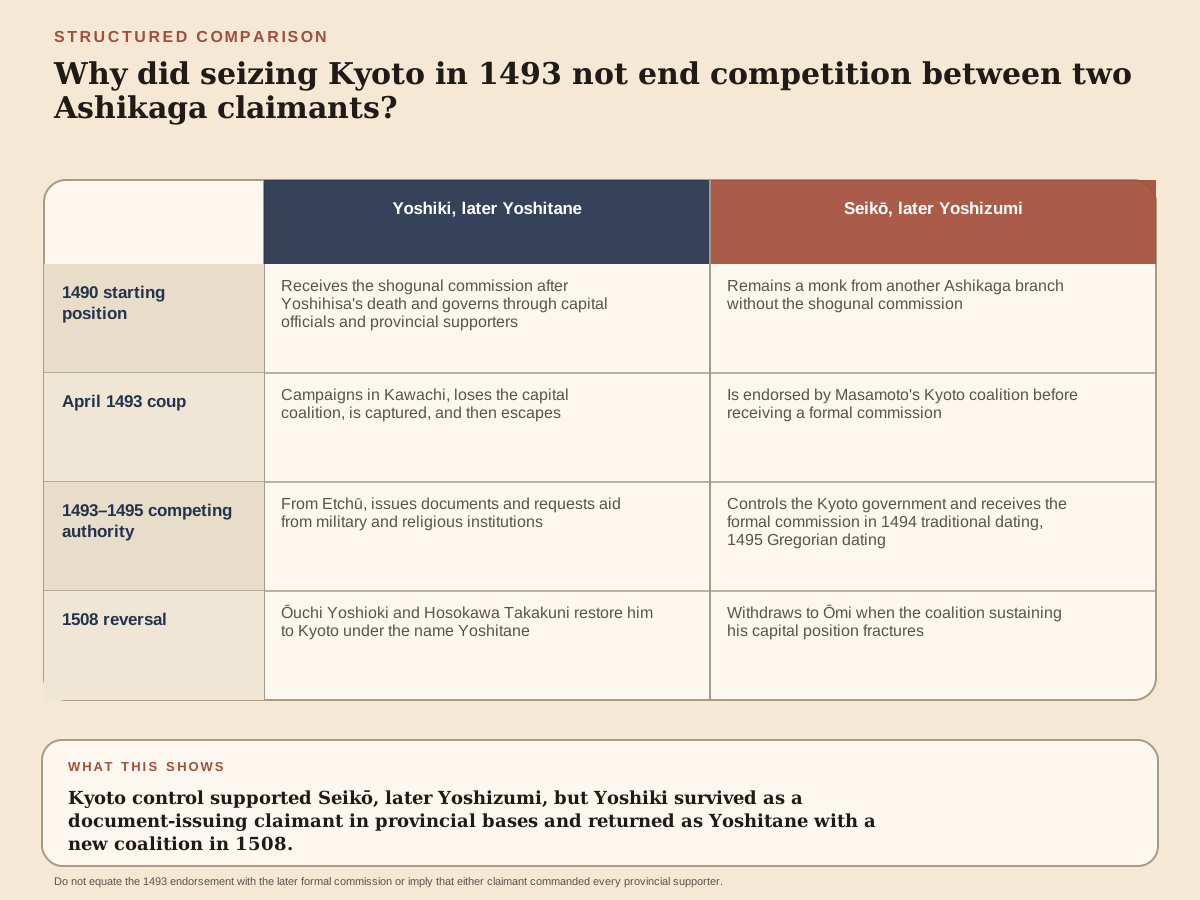
They backed Seikō, a monk whose father Ashikaga Masatomo belonged to another branch of the ruling family. Their candidate could claim Ashikaga descent. His later name Yoshizumi is familiar, but he had not yet received the formal shogunal commission when the coup occurred.
Yoshiki was the son of Yoshimi, Yoshimasa's younger brother, and later took the name Yoshitane. He followed Yoshihisa, who had died while campaigning in Ōmi in 1489, but received the shogunal commission in 1490. These relationships matter because the coup would replace one member of the recognized Ashikaga family with another. Masamoto's position depended on changing the holder of that office, rather than supplying an alternative dynasty.
The expedition put the shogun behind a particular answer to the Hatakeyama succession. Masanaga sought defeat of the rival branch in Kawachi, while Yoshiki could use personal command to uphold an appointment and direct service. Governors and the shogun's own military followers participated. Those resources made intervention possible, but they did not make the participating houses a single force with identical interests. Moving the ruler away from Kyoto left opponents with access to the offices and dynastic candidate needed to organise his displacement.
On the twenty-second day of the fourth Japanese month of 1493, the Kyoto coalition moved against Yoshiki and endorsed Seikō. The shogun’s absence made control of the capital and its government offices central to the intervention.
The Kawachi army’s political cohesion broke down. Koike Tatsunori’s study distinguishes several governors’ objections to the favored adviser Hamuro Mitsutada from an identical prior decision to overthrow Yoshiki. Akamatsu Masanori attempted mediation from the Sakai area. The coalition supporting the expedition could not be assumed to remain intact once the Kyoto coup intervened.
Masamoto dispatched Uehara Motohide, his deputy in Tanba, into Kawachi. Masanaga’s forces occupied Shōkakuji. Relief attempts and movements involving neighboring positions failed to secure the camp; Hisayoshi eventually escaped toward Kii.
On the twenty-fifth day of the intercalary fourth month, the camp fell. Masanaga died by suicide and Yoshiki was captured. Military defeat separated the shogun from the Hatakeyama commander who had sustained his expedition.
Yoshiki was brought to Kyoto under guard. In the sixth month he escaped, and in the seventh reached Hōjōzu in Etchū. Jinbō Naganobu provided a provincial base from which the displaced ruler could seek support.
The Kyoto candidate and the escaped shogun developed separate channels of recognition. Seikō’s formal commission followed in the twelfth Japanese month of 1494, which falls in Gregorian 1495. Treating the 1493 endorsement as that appointment erases the interval during which his position was being established.
The change in Kyoto also reversed the status of the campaign's target. Motoie was pardoned and recognized as governor of Kawachi in place of Masanaga. An army sent to uphold the government’s order now faced a rival able to invoke the new Kyoto alignment. Masamoto's intervention thus joined a dynastic replacement to a provincial appointment, which helped transform the shogun's expedition into the defense of an isolated camp.
The assault developed through neighboring positions. Hisayoshi's camp at Fujiidera was defeated in the intercalary fourth month, and he joined his father's forces at Shōkakuji. A relief force from Kii was subsequently beaten near Sakai. Those failures narrowed the remaining camp's options. Koike's study also identifies exhausted provisions as a reason for Yoshiki's surrender. Neither the older local account nor that later interpretation supports assuming that every governor had wanted the same overthrow from the outset.
The replacement still required formal recognition. The scholarly biography records Seikō's return to secular life and a junior fifth rank after his selection, followed by the shogunal commission in the next Japanese year. Military control of Kyoto could constrain the political choice, but appointment was an actual institutional step. Masamoto did not take the Ashikaga name or shogunal title for himself.
Masamoto’s side gained control of the Kyoto government, while Masanaga’s death altered the Hatakeyama balance in Kawachi. Hisayoshi survived, so the defeated branch’s claims did not disappear with its commander.
Yoshiki remained politically active in Etchū. A museum chronology records appeals to Kyushu military houses and documents he issued after his escape. These acts show a claimant retaining administrative and diplomatic activity outside Kyoto.
Seikō’s eventual commission gave the Kyoto coalition a formally appointed shogun. The office continued through a change of ruler, while another Ashikaga claimant sought military help to recover it. Neither side’s ability to command provincial supporters was unlimited.
Historical disagreement · Did Yamashiro’s local networks end in 1493?
Yamashiro’s provincial league was disrupted during this period. The traditional account ends its government in 1493, but recently studied Kakoi family documents indicate continuing local self-defense networks.
A changed provincial political arrangement did not extinguish every organization that had participated in it.
The Etchū base supplied more than a refuge. In late 1493, Yoshiki requested assistance from the Ōtomo and Sagara houses against Masamoto. In 1494, he issued a prohibition to Kanjuji's Sairin'in and sought help from large temples in Kii. These actions linked a provincial residence to institutions and military houses elsewhere. His loss of Kyoto had not ended the practice of making requests and issuing documents under his own authority.
Masamoto tried to restrict those connections. In 1494 he asked the court to prohibit courtiers and religious institutions from communicating with Yoshiki at Hōjōzu. The same museum chronology records Yoshiki ordering the shogunal banner raised there. A claimant outside the capital could cultivate recognition, and the Kyoto government could try to prevent it. The two centers were competing through communications and institutions as well as armies.
Yamashiro shows a different consequence of the changed balance. Its league had developed while local leaders were seeking the departure of both Hatakeyama armies. Masanaga's death and the new provincial alignment altered the setting in which that arrangement operated. The recently studied family documents preserve continuing self-defense connections, so the end of the league's traditional period of government should be distinguished from the disappearance of the local people and networks that had sustained it.
Masamoto’s adopted heirs and followers later competed over succession within the Hosokawa house. His assassination in 1507 opened a further struggle over its provincial resources and control in Kyoto. The coalition that had displaced Yoshiki itself fractured.
In 1508, Ōuchi Yoshioki and Hosokawa Takakuni brought Yoshiki back to Kyoto. Yoshizumi withdrew to Ōmi. Support from new military partners reversed the ruler’s displacement fifteen years after the coup.
Repeated changes made control of the shogunate depend on sustaining armed allies and managing access to the capital. Military houses still sought an Ashikaga ruler’s appointments and documents, while rival rulers offered competing routes to recognition.
Some histories place the beginning of the Sengoku age at the Meiō coup. The practical change was a forcible replacement followed by enduring rival claims and unstable supporting coalitions. For local communities, the consequences also included renewed provincial campaigns and disruption of arrangements intended to restrain competing armies.
The later Hosokawa dispute repeated the connection between household succession and control of government. Masamoto had no children and took adopted heirs from different houses. Sumiyuki, a son of the court noble Kujō Masamoto, and Sumimoto from the Awa Hosokawa branch acquired competing supporters. Followers of Sumiyuki killed Masamoto in 1507 and drove Sumimoto away; Takakuni initially helped defeat Sumiyuki, then turned against Sumimoto the following year. That shifting sequence supplied the coalition through which Yoshiki returned with Ōuchi support.
Supporting a displaced Ashikaga ruler offered regional houses a route to requests, appointments and political alliances, but also drew them into the ruler's struggle with another coalition. The surviving chronology includes attacks on Yoshiki's Etchū base by Motoie's forces. A provincial sponsor therefore gained a claimant's presence without acquiring immunity from his opponents. The capital, court recognition, Ashikaga descent, documentary activity and military partners each supplied something the competing rulers needed. None by itself gave either side secure command over all the others.
The Meiō coup can consequently mark a change at the center without beginning every province's Sengoku history in the same year. The Hatakeyama war and the Yamashiro league had earlier origins, while later Hosokawa disputes created another cycle of displacement. What 1493 demonstrates is the survival of the shogunal office as a resource sought by rival coalitions, together with the vulnerability of its holder when those coalitions divided.