
Skip to content
Chronicle

Search History Omakase

Start typing to search.

    Read The Kogosho Conference Demands Yoshinobu’s Office and Lands

    Read the article below. Interactive reading tools are available when scripts load.

    Overview

    The Kogosho Conference Demands Yoshinobu’s Office and Lands

    On January 3, 1868, the restoration proclamation accepted Yoshinobu’s return of governing authority and resignation as shogun, abolished the shogunate and regency, and established provisional governing offices. Iwakura Tomomi participated in defining the new structure under imperial authority and armed palace protection.

    The Kogosho conference then addressed Yoshinobu’s remaining position. Yamauchi Yōdō favored his inclusion in deliberation. Iwakura and allies pressed for resignation from his court office and surrender of Tokugawa lands. Asano Nagakoto of Aki participated in mediating the discussion, which ended with those demands established as the government’s direction.

    The proclamation itself had not transferred the Tokugawa house’s territories or soldiers. The conference’s demand therefore dealt with resources and status that remained after authority was returned. Yoshinobu’s departure to Osaka left these matters unresolved in practice, and confrontation followed at Toba–Fushimi. The meeting set a condition for political participation whose implementation became part of the dispute leading to war.

    Sources and notes

    1. 王政復古大号令・原文 · JACAR / National Archives Fukko-ki vol8
    2. 大政奉還後の実務 · Ibaraki Prefectural History Museum
    3. 浅野長勲と小御所会議 · Hiroshima Castle / Hiroshima WEB Museum

    About these sources

    Back

    1867-1868 | The Kogosho Conference Demands Yoshinobu’s Office and Lands小御所会議

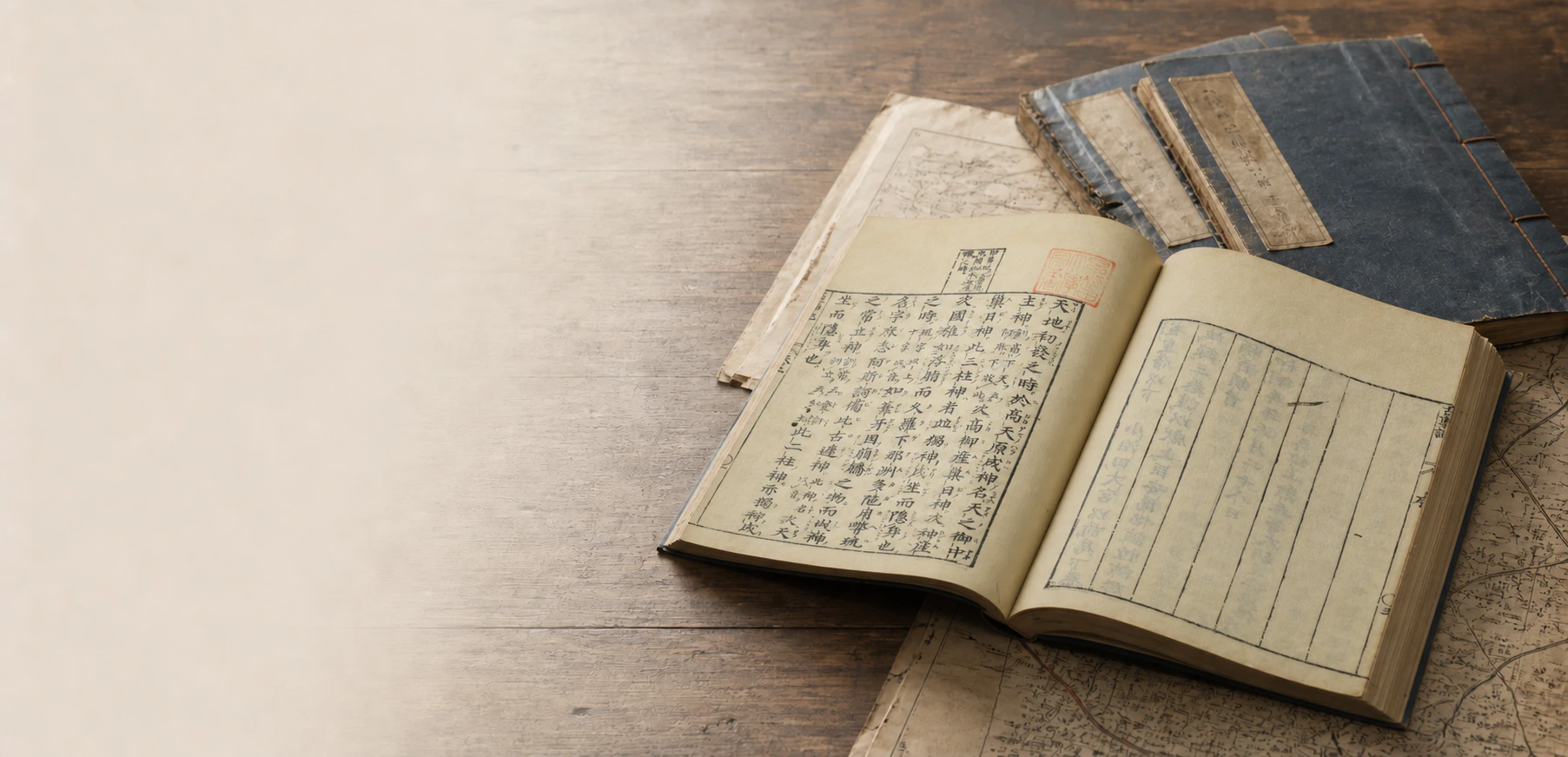
    The Kojiki in an open-book still life

    The Kogosho Conference Demands Yoshinobu’s Office and Lands

    On January 3, 1868, the restoration proclamation accepted Yoshinobu’s return of governing authority and resignation as shogun, abolished the shogunate and regency, and established provisional governing offices. Iwakura Tomomi participated in defining the new structure under imperial authority and armed palace protection.

    The Kogosho conference then addressed Yoshinobu’s remaining position. Yamauchi Yōdō favored his inclusion in deliberation. Iwakura and allies pressed for resignation from his court office and surrender of Tokugawa lands. Asano Nagakoto of Aki participated in mediating the discussion, which ended with those demands established as the government’s direction.

    The proclamation itself had not transferred the Tokugawa house’s territories or soldiers. The conference’s demand therefore dealt with resources and status that remained after authority was returned. Yoshinobu’s departure to Osaka left these matters unresolved in practice, and confrontation followed at Toba–Fushimi. The meeting set a condition for political participation whose implementation became part of the dispute leading to war.

    Sources and notes ViewHide
    1. [1]

      王政復古大号令・原文JACAR / National Archives Fukko-ki vol8

    2. [2]

      大政奉還後の実務Ibaraki Prefectural History Museum

    3. [3]

      浅野長勲と小御所会議Hiroshima Castle / Hiroshima WEB Museum

    Reading context

    Reading preferences

    Text size
    Glossary intensity

    Choose how much explanation appears as you read.

    Saved on this device. All terms remain available in the glossary.

    Browse the glossary →
    History Omakase

    Opening reading…