
Skip to content
Chronicle

Search History Omakase

Start typing to search.

    Read Bashō and Sora Visit Nikkō

    Read the article below. Interactive reading tools are available when scripts load.

    Overview

    Bashō and Sora Visit Nikkō

    Bashō’s account places the Nikkō visit on the first day of the fourth month in the Japanese calendar of 1689. He describes worship at the mountain shrine and praises a light that reaches throughout the realm, bringing security to its people. His poem joins that sacred radiance to the fresh green leaves around him.

    The passage also gives Sora a place in the visit. Bashō describes his companion’s shaven head and dark robe, and includes Sora’s verse linking the nearby mountain’s name, Kurokami—“black hair”—with the change of clothing. The travelers then climb toward a waterfall and look out from behind its falling water. Worship, wordplay and a demanding ascent occupy the same itinerary.

    The shrine honored the ruling house’s founder, Ieyasu, and most of its buildings had been enlarged under his grandson Iemitsu. Bashō’s recorded praise fits this dynastic setting, while the mountain and waterfall supply further material for poetry. The literary passage preserves his chosen public response; it leaves his unrecorded private political feelings unresolved.

    Sources and notes

    1. 東照宮の歴史・日光の社寺たんけん · Nikkō shrines and temples educational resource
    2. おくのほそ道・旅立、日光、松嶋、平泉、立石寺 · Matsuo Bashō / Aozora Bunko

    About these sources

    Back

    1689 | Bashō and Sora Visit Nikkō芭蕉と曾良の日光訪問

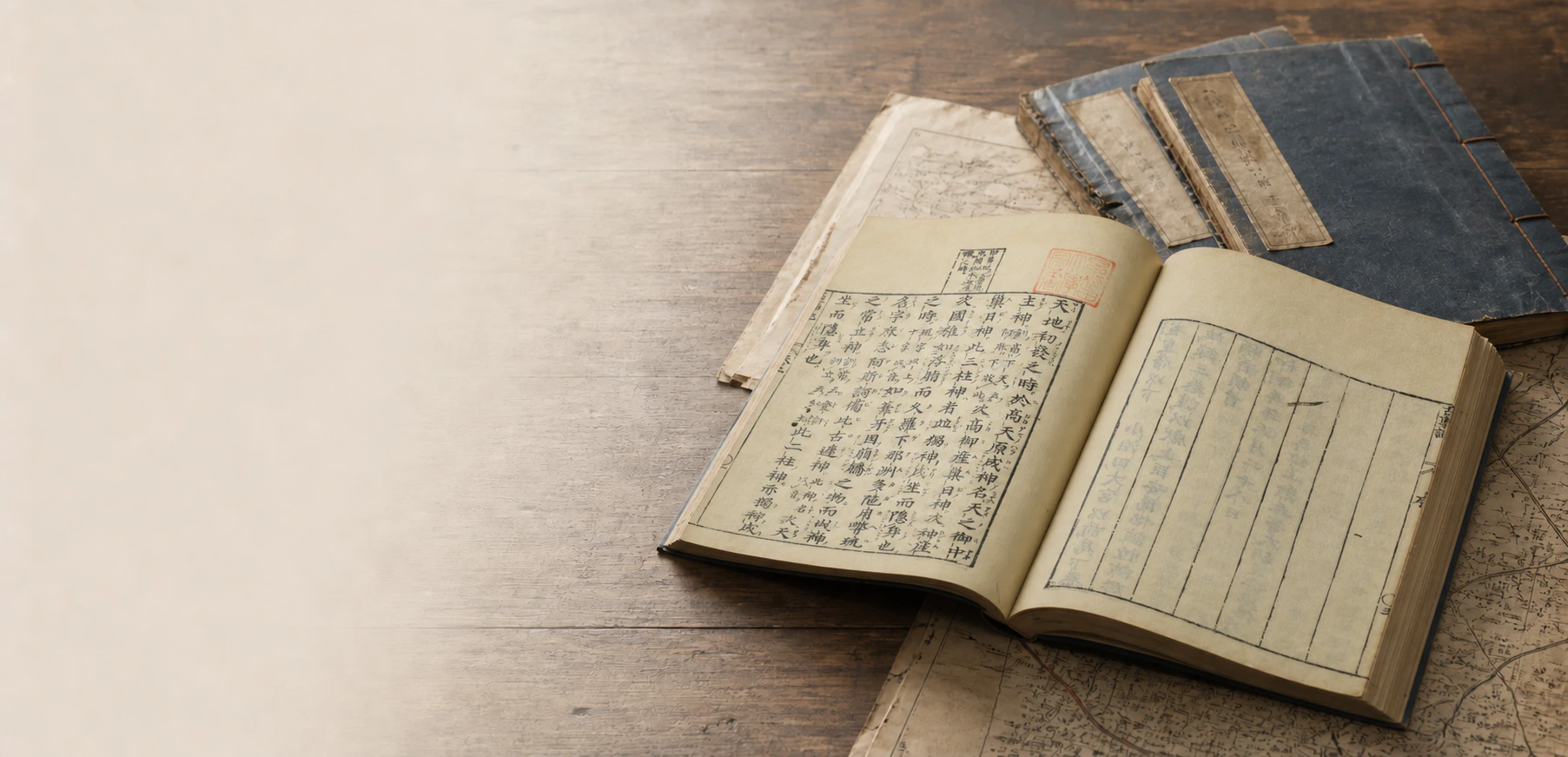
    The Kojiki in an open-book still life

    Bashō and Sora Visit Nikkō

    Bashō’s account places the Nikkō visit on the first day of the fourth month in the Japanese calendar of 1689. He describes worship at the mountain shrine and praises a light that reaches throughout the realm, bringing security to its people. His poem joins that sacred radiance to the fresh green leaves around him.

    The passage also gives Sora a place in the visit. Bashō describes his companion’s shaven head and dark robe, and includes Sora’s verse linking the nearby mountain’s name, Kurokami—“black hair”—with the change of clothing. The travelers then climb toward a waterfall and look out from behind its falling water. Worship, wordplay and a demanding ascent occupy the same itinerary.

    The shrine honored the ruling house’s founder, Ieyasu, and most of its buildings had been enlarged under his grandson Iemitsu. Bashō’s recorded praise fits this dynastic setting, while the mountain and waterfall supply further material for poetry. The literary passage preserves his chosen public response; it leaves his unrecorded private political feelings unresolved.

    Sources and notes ViewHide
    1. [1]

      東照宮の歴史・日光の社寺たんけんNikkō shrines and temples educational resource

    2. [2]

      おくのほそ道・旅立、日光、松嶋、平泉、立石寺Matsuo Bashō / Aozora Bunko

    Reading context

    Reading preferences

    Text size
    Glossary intensity

    Choose how much explanation appears as you read.

    Saved on this device. All terms remain available in the glossary.

    Browse the glossary →
    History Omakase

    Opening reading…