
Skip to content
Chronicle

Search History Omakase

Start typing to search.

    Read Bashō and Sora at Matsushima and Hiraizumi

    Read the article below. Interactive reading tools are available when scripts load.

    Overview

    Bashō and Sora at Matsushima and Hiraizumi

    After visiting Shiogama, Bashō and Sora hired a boat across Matsushima Bay. Bashō describes islands rising, lying low and overlapping, their pines bent by sea winds. At an inn overlooking the water, he opens poems sent by friends before departure. Matsushima was already celebrated; his account responds to a place surrounded by earlier writing.

    At Hiraizumi, the landscape changes. Bashō sees fields where Fujiwara Hidehira’s residence had stood and climbs Takadachi, associated with Yoshitsune’s final resistance. In his verse, summer grass covers warriors’ vanished ambitions. Sora supplies a second poem about the aged retainer Kanefusa. Their chosen figures connect the visit with inherited stories of the defeated.

    The account then turns to Chūsonji’s halls. Its Golden Hall holds the Fujiwara rulers’ coffins and Buddhist images, protected by an enclosing building against wind and rain. Bashō’s rain poem makes that survival the counterpart to the grass-covered ruins. The two stops supplied different scenes: scenery experienced through a boat trip and friends’ poems, followed by political loss and a religious building that continued to preserve the dead.

    Sources and notes

    1. おくのほそ道・旅立、日光、松嶋、平泉、立石寺 · Matsuo Bashō / Aozora Bunko
    2. 日本三景の由来 · Nihon Sankei official association

    About these sources

    Back

    1689 | Bashō and Sora at Matsushima and Hiraizumi芭蕉と曾良の松島・平泉訪問

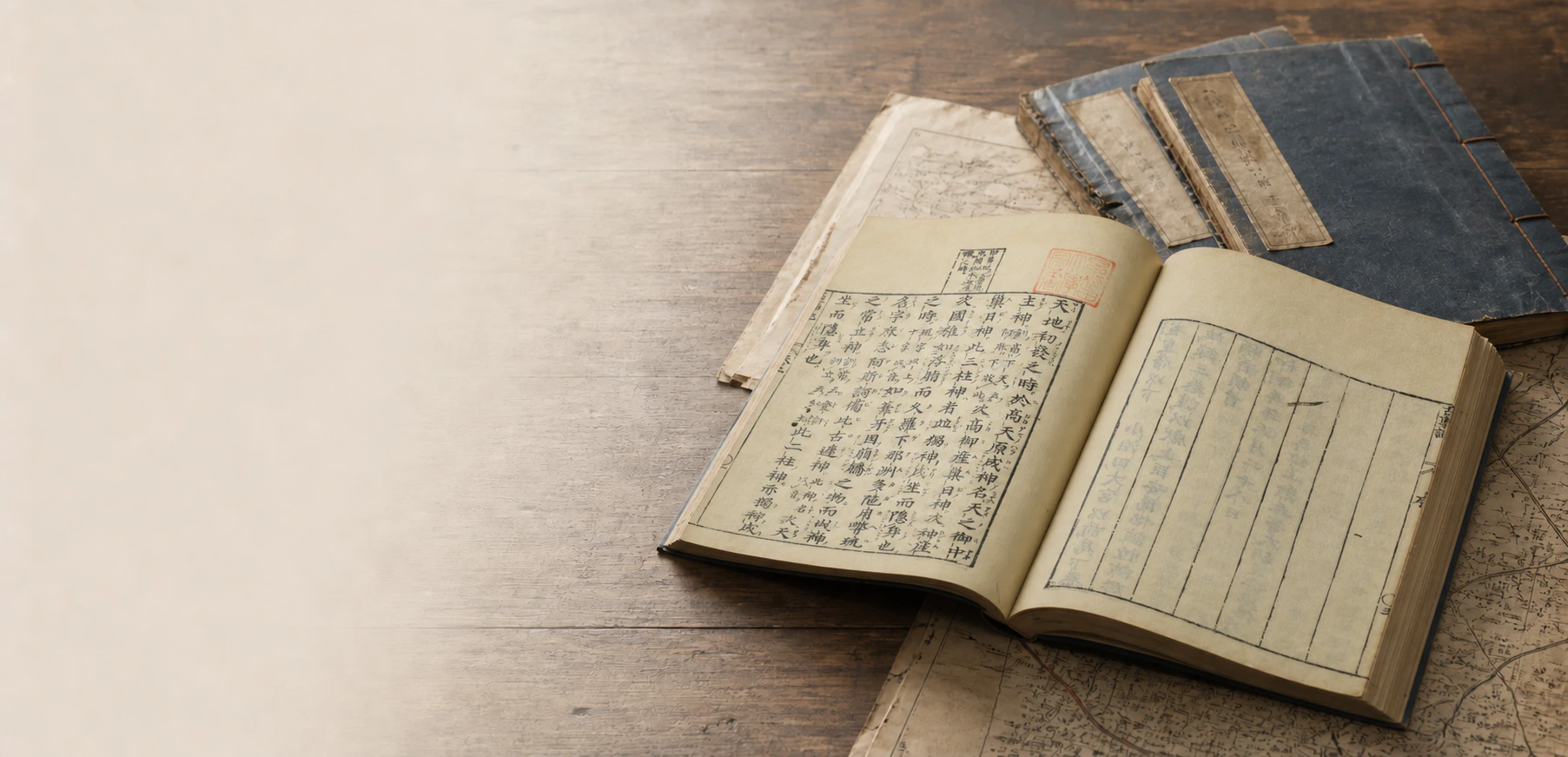
    The Kojiki in an open-book still life

    Bashō and Sora at Matsushima and Hiraizumi

    After visiting Shiogama, Bashō and Sora hired a boat across Matsushima Bay. Bashō describes islands rising, lying low and overlapping, their pines bent by sea winds. At an inn overlooking the water, he opens poems sent by friends before departure. Matsushima was already celebrated; his account responds to a place surrounded by earlier writing.

    At Hiraizumi, the landscape changes. Bashō sees fields where Fujiwara Hidehira’s residence had stood and climbs Takadachi, associated with Yoshitsune’s final resistance. In his verse, summer grass covers warriors’ vanished ambitions. Sora supplies a second poem about the aged retainer Kanefusa. Their chosen figures connect the visit with inherited stories of the defeated.

    The account then turns to Chūsonji’s halls. Its Golden Hall holds the Fujiwara rulers’ coffins and Buddhist images, protected by an enclosing building against wind and rain. Bashō’s rain poem makes that survival the counterpart to the grass-covered ruins. The two stops supplied different scenes: scenery experienced through a boat trip and friends’ poems, followed by political loss and a religious building that continued to preserve the dead.

    Sources and notes ViewHide
    1. [1]

      おくのほそ道・旅立、日光、松嶋、平泉、立石寺Matsuo Bashō / Aozora Bunko

    2. [2]

      日本三景の由来Nihon Sankei official association

    Reading context

    Reading preferences

    Text size
    Glossary intensity

    Choose how much explanation appears as you read.

    Saved on this device. All terms remain available in the glossary.

    Browse the glossary →
    History Omakase

    Opening reading…