Read the article below. Interactive reading tools are available when scripts load.
Quick
In the fifth month of 1221, retired emperor Go-Toba ordered the pursuit of Hōjō Yoshitoki, Kamakura’s leading official. Armed supporters attacked the Kyoto quarters of Iga Mitsusue, a warrior aligned with Kamakura. The order challenged the man who helped administer a government whose founder’s direct male successors had died.
The dispute followed negotiations over an imperial child for Kamakura and over estate stewards. The government instead had a young Fujiwara child, the future Kujō Yoritsune, in its care. His formal appointment as shogun came in 1226. Masako, Yoritomo’s widow, remained a central political authority in 1221.
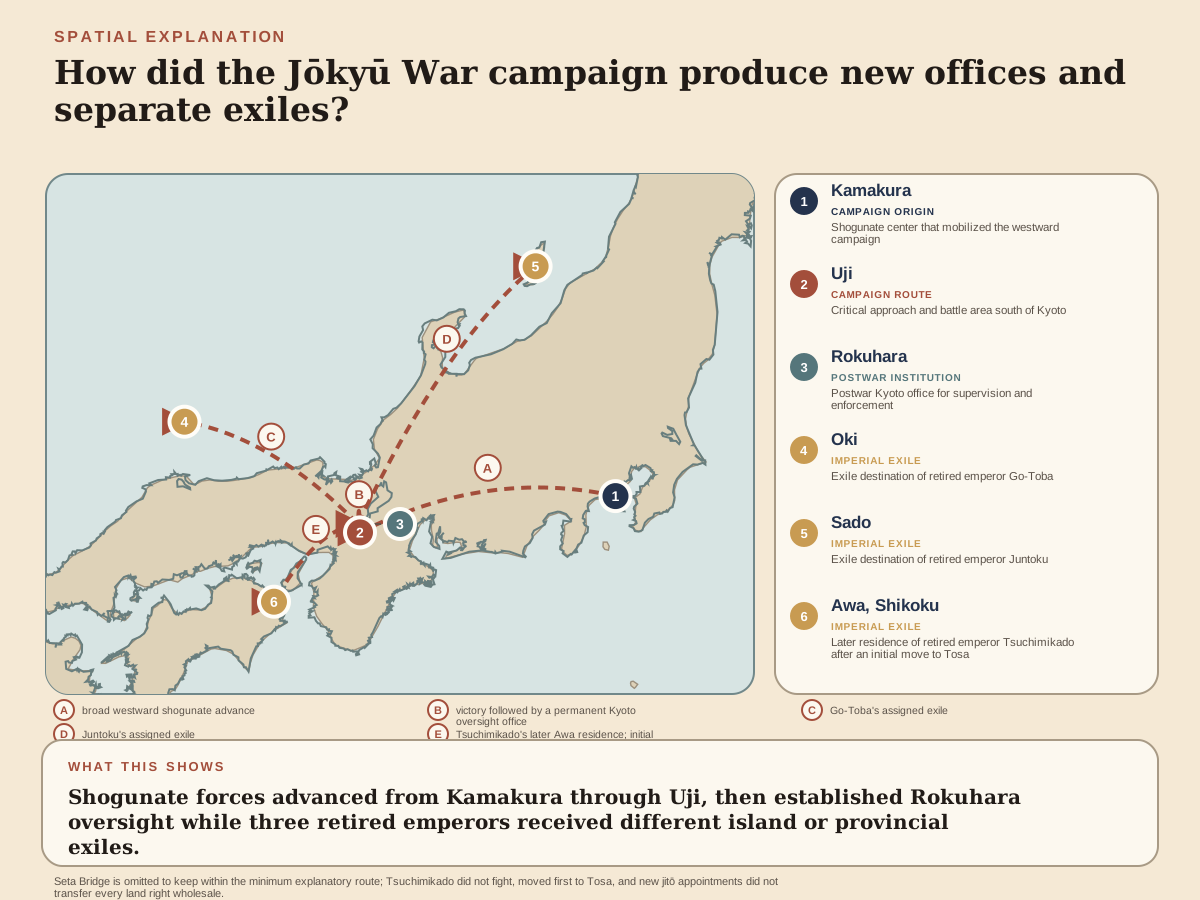
Kamakura rallied followers and sent forces west. The later account of Masako’s appeal has Adachi Kagemori convey her message: the security and rewards associated with Yoritomo’s government were at stake. Hōjō Yasutoki, Yoshitoki’s son, and Tokifusa, Yoshitoki’s brother, led the advance. Go-Toba’s supporters were defeated in Mino and Owari, then at the Uji and Seta crossings on the thirteenth and fourteenth days of the sixth month. Kamakura’s army entered Kyoto the next day.
Go-Toba was exiled to Oki and Juntoku to Sado. Tsuchimikado, who had not joined the rising, left for Tosa and later lived in Awa. The reigning child Chūkyō lost the throne; Go-Horikawa succeeded. Yasutoki and Tokifusa remained in Kyoto’s Rokuhara quarter.
Confiscated rights and new stewards brought Kamakura’s followers into additional western estates. Temple proprietors contested intrusions, and the government sometimes upheld their complaints. The victory gave Kamakura greater power over appointments, security and landholding disputes. Court and temple authority continued within that altered relationship.
Classic
Sanetomo’s assassination in 1219 ended succession through Yoritomo’s direct male descendants. Kamakura’s offices and followers survived, with Masako and Hōjō Yoshitoki exercising authority. Negotiations with Kyoto over an imperial successor failed to produce a prince for Kamakura. The young Fujiwara child later named Kujō Yoritsune came east instead; he did not receive the shogunal commission until 1226.
Retired emperor Go-Toba governed through his own household, officials and warrior connections. Disputes over the replacement of stewards in estates brought that network into conflict with Yoshitoki. Such appointments controlled access to dues and local enforcement. They also tested whether retired imperial authority could override decisions supported by Kamakura.
In the fifth month of 1221, Go-Toba gathered armed supporters in and around Kyoto. On the fifteenth, Iga Mitsusue’s quarters were attacked and an order called for Yoshitoki’s pursuit. The named target matters: the document demanded action against a particular official. It did not spell out the abolition of every Kamakura institution. Go-Toba was then a retired emperor; his Buddhist vows followed his defeat.
Yoshitoki’s office, the shikken, belonged to Kamakura’s warrior government, rather than to the court’s system of imperial regency. Kamakura confirmed followers’ holdings and handled their claims, while the court conferred rank and supplied the shogunal commission. The two authorities overlapped in the same warriors and estates. Go-Toba’s order therefore required a choice between connected obligations, rather than a defense of one independent state against another.
That overlap also gave the crisis its reach beyond the two capitals. A dispute over a stewardship concerned who could collect dues or enforce a claim in an estate. Removing Yoshitoki could threaten the officials and relationships through which Kamakura’s followers had obtained recognition. It was those relationships, as well as imperial authority, that the leaders would invoke when mobilizing for war.
News reached Kamakura in the fifth month. Its leaders had to decide whether to remain behind the eastern approaches or send an army toward Kyoto. They chose an advance, gathering warriors into a force that could confront the retired emperor’s supporters before those supporters established control farther east.
The appeal attributed to Masako was conveyed through Adachi Kagemori in the later narrative. It reminded followers of Yoritomo’s benefits and asked them to defend the government. This was a claim on service within an existing lord–follower relationship. The surviving narrative is later than the appeal itself, and warrior families divided: Miura Taneyoshi joined Go-Toba’s side while his elder brother Yoshimura supported Kamakura.
The advance followed three routes. Yasutoki and his uncle Tokifusa led the Tōkaidō force; Takeda Nobumitsu and Ogasawara Nagakiyo led troops along the inland Tōsandō; Hōjō Tomotoki headed the Hokurikudō force with Yūki Tomohiro and Sasaki Nobuzane. The campaign thus used the Pacific-side road, the inland approach and the Japan Sea route. It was a coordinated westward mobilization, rather than a single army moving along an unnamed road. Warriors from the western provinces, including men already attached to Kamakura, also served Go-Toba’s coalition. Its defenders attempted to hold crossings in Mino and Owari but lost their positions there in the sixth month. Defenders then concentrated at Uji and Seta, where waterways obstructed the approaches to Kyoto.
Fighting on the thirteenth and fourteenth forced those crossings. Kamakura’s army entered Kyoto on the fifteenth, about a month after the pursuit order. The speed of the advance deprived Go-Toba’s network of time to turn an imperial command into effective resistance across the provinces.
The divisions within the Miura family show why a warrior’s status alone did not determine his allegiance. The later narrative has Yoshimura pass his younger brother Taneyoshi’s overture to Yoshitoki instead of joining him. Kamakura’s leaders secured that support and acted on their decision to advance. The campaign succeeded through an army capable of carrying their answer west, not through a pursuit order or an appeal acting by itself.
The victors imposed a settlement on the imperial household. Go-Toba went to Oki and Juntoku to Sado. Tsuchimikado had not participated and was not assigned the same responsibility; he departed for Tosa and subsequently moved to Awa. Chūkyō was deposed and Go-Horikawa placed on the throne. Go-Horikawa’s father Morisada assumed retired rulership as Go-Takakura despite never having reigned himself.
Yasutoki and Tokifusa stayed at Rokuhara. A surviving 1221 order issued in their names prohibited violence by warriors. Enforcement inside the capital accompanied the succession settlement: a victorious army had to be restrained as well as supplied and rewarded.
The confiscation of defeated supporters’ rights permitted appointments of new stewards in western estates. These appointments did not automatically transfer every proprietor’s revenue or jurisdiction. A letter associated with 1222 records Daigoji’s complaints about four estates, including Sone in Ise, where Honma Saneshige had received a new stewardship. The government ordered action respecting the temple’s grievance.
Warriors who joined the losing side could lose holdings and office. Proprietors and inhabitants faced new officials, contested demands and changed obligations. The outcome therefore extended beyond the exile of prominent rulers to the administration of particular estates.
The new appointments were known as shinpo jitō. In 1223, a rate schedule defined the income due to these newly installed stewards. Regulation followed the creation of the offices because appointment alone did not settle how collections should be divided. Existing proprietors and stewards possessed other rights, so the new category did not turn every confiscated holding into an estate owned outright by its recipient.
This was a material reward for wartime allegiance, but also a source of continuing administration. The new official could assert rights derived from Kamakura’s settlement; the temple or other proprietor could dispute demands that exceeded them. The Sone complaint illustrates both the intrusion and the availability of a government response. The installation of a steward and the resolution of a proprietor’s grievance were separate acts.
Kamakura’s continuing headquarters at Rokuhara made communication with Kyoto and western officials a regular part of government. Its victory also demonstrated that an imperial pursuit order could fail when the targeted official retained organized warrior support. Future succession negotiations took place with this result in view.
Land disputes outlasted the fighting. Article 16 of the 1232 Goseibai Shikimoku addressed claims that holdings had been wrongly confiscated in connection with the Jōkyū conflict and allowed correction where clear evidence justified it. The clause distinguished claims that could be corrected on clear evidence from an indiscriminate reopening of the whole settlement. Rules and individual decisions were needed because an award made after victory could be challenged as a wrongful confiscation.
The court continued to confer rank, sustain ritual and govern through its own institutions; temples continued to assert estate rights. Kamakura’s enlarged authority operated among these jurisdictions. The war did not instantly produce uniform administration of all western Japan.
Different records preserve different aspects of the conflict. Ninnaji’s contemporary day-record fragments survive alongside later Jōkyūki narratives and images. Go-Toba took Buddhist vows after defeat and continued composing poetry in exile. Those activities and their later commemoration belong to the history of the defeated ruler, alongside the institutions established by his opponents. These materials connect the rapid campaign to the longer histories of government, land claims and imperial commemoration.
Western stewardship was a lasting relationship, but its spread must be established estate by estate. In Iyo, the Omiya family at Yugejima is identifiable as a new eastern stewardship; a 1239 estate record refers to the more recent Kamakura-appointed steward. The family’s origins lay in Musashi. This example supplies a concrete western connection without assuming that every estate underwent the same migration or that all new appointments are recoverable from surviving records.
The repeated work of reporting, restraining warriors and judging estate claims made Rokuhara more than a wartime camp. Yoshitoki had survived the order against him, and Yasutoki’s later government faced disputes within the enlarged field of Kamakura authority. Imperial succession, temple estates and warrior holdings remained connected. Victory changed the balance among their institutions without abolishing the court or producing one uniform system of western landholding.