
Skip to content
Chronicle

Search History Omakase

Start typing to search.

    Read Epidemic and Harvest Loss amid the Civil War of 1360–1361

    Read the article below. Interactive reading tools are available when scripts load.

    Overview

    Epidemic and Harvest Loss amid the Civil War of 1360–1361

    Records describe serious epidemic disease in 1360–1361 in Kyoto and beyond. One 1361 account says deaths fell especially heavily on people of lower status and reports Go-Kōgon’s dedication of a copied Heart Sutra to Gion. Its language about the whole realm expresses the scale perceived by the writer; it cannot supply a complete geographic count or a securely identified pathogen.

    Summer cold and snow appear in chronicles and more immediate notes. The Taiheiki’s dramatic description of frozen travellers and animals is a later narrative, while shorter records also describe intense cold. These entries establish reported abnormal conditions without proving that all diseases and crop failures had one climatic cause.

    In Wakasa, Tara estate’s cultivators reported barley damaged by a condition called somo and asked Tōji to send an inspector. The problem concerned what could be harvested and what dues should be assessed. Inspection offered a procedure for checking a claimed loss, rather than relying solely on a statement made by either cultivator or official.

    Military extraction continued in the same estate. In the tenth month of 1361, Hosokawa Kiyouji’s followers collected more than fifty-eight koku, a rice-volume measure, of provisions for his position at Tamaki castle. Other records pursued arrears. The named cases place harvest damage, assessment and armed demands within the same locality. They support a concrete account of cumulative pressures, without inventing price rises, a general temple relief program or a uniformly devastated national population.

    Sources and notes

    1. 中世天変地異資料集1360–1361 · Historiographical Institute, University of Tokyo
    2. 福井県史年表1351–1400 · Fukui Prefectural Archives

    About these sources

    Back

    1360-1361 | Epidemic and Harvest Loss amid the Civil War of 1360–1361戦乱下の疫病と凶作

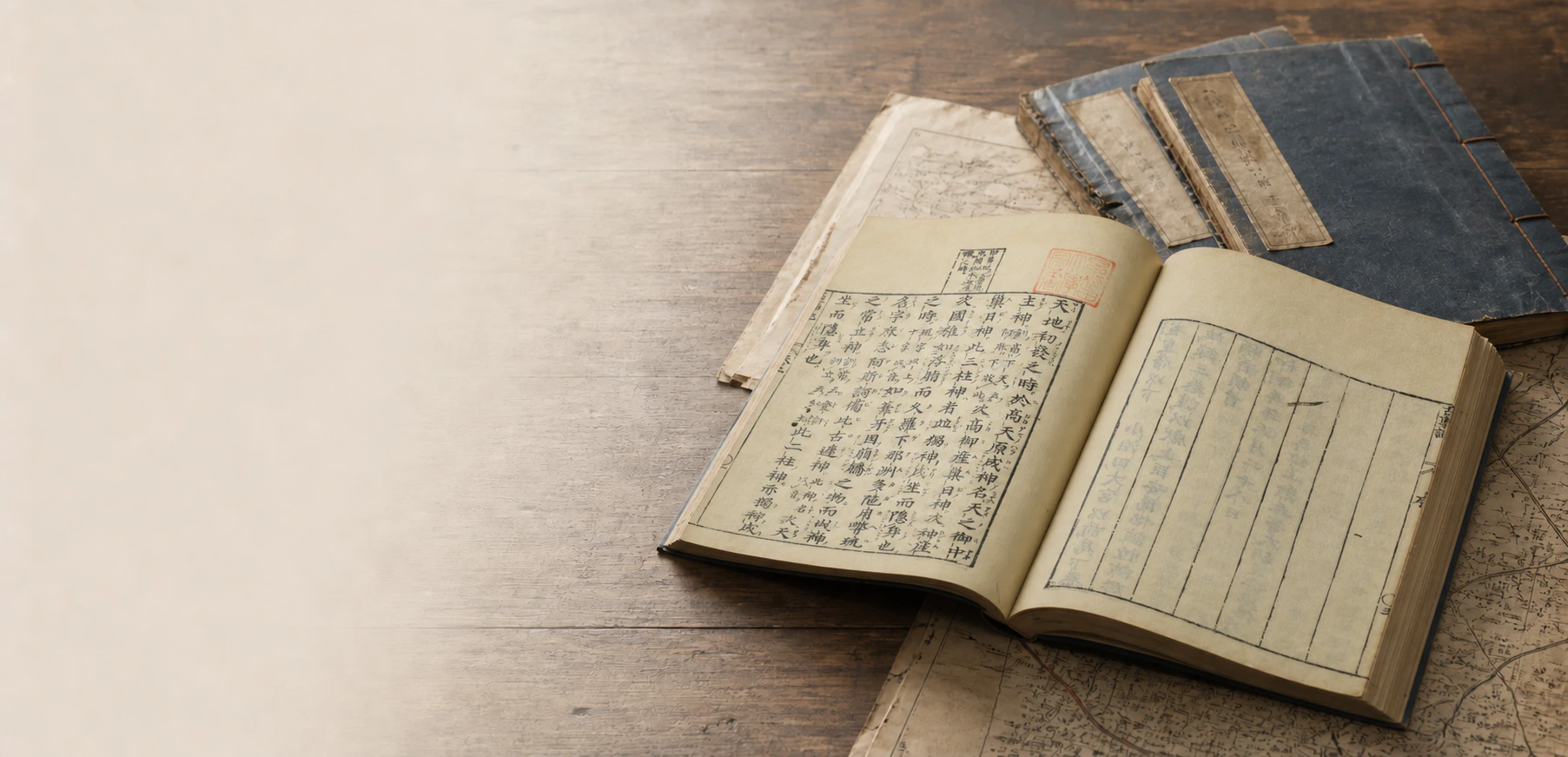
    The Kojiki in an open-book still life

    Epidemic and Harvest Loss amid the Civil War of 1360–1361

    Records describe serious epidemic disease in 1360–1361 in Kyoto and beyond. One 1361 account says deaths fell especially heavily on people of lower status and reports Go-Kōgon’s dedication of a copied Heart Sutra to Gion. Its language about the whole realm expresses the scale perceived by the writer; it cannot supply a complete geographic count or a securely identified pathogen.

    Summer cold and snow appear in chronicles and more immediate notes. The Taiheiki’s dramatic description of frozen travellers and animals is a later narrative, while shorter records also describe intense cold. These entries establish reported abnormal conditions without proving that all diseases and crop failures had one climatic cause.

    In Wakasa, Tara estate’s cultivators reported barley damaged by a condition called somo and asked Tōji to send an inspector. The problem concerned what could be harvested and what dues should be assessed. Inspection offered a procedure for checking a claimed loss, rather than relying solely on a statement made by either cultivator or official.

    Military extraction continued in the same estate. In the tenth month of 1361, Hosokawa Kiyouji’s followers collected more than fifty-eight koku, a rice-volume measure, of provisions for his position at Tamaki castle. Other records pursued arrears. The named cases place harvest damage, assessment and armed demands within the same locality. They support a concrete account of cumulative pressures, without inventing price rises, a general temple relief program or a uniformly devastated national population.

    Sources and notes ViewHide
    1. [1]

      中世天変地異資料集1360–1361Historiographical Institute, University of Tokyo

    2. [2]

      福井県史年表1351–1400Fukui Prefectural Archives
    Reading context

    Reading preferences

    Text size
    Glossary intensity

    Choose how much explanation appears as you read.

    Saved on this device. All terms remain available in the glossary.

    Browse the glossary →
    History Omakase

    Opening reading…