Skip to content
Chronicle

Search History Omakase

Start typing to search.

    Illustration for The Baekje Restoration and Defeat at Baekgang

    661–663 | Asuka period

    The Baekje Restoration and Defeat at Baekgang

    百済復興運動と白村江の戦い

    Choose a reading depth

    Overview

    Baekje fell to Tang and Silla forces in 660, but restoration leaders including Boksin and Dochim continued resistance. They requested the return of Prince Buyeo Pung, who was in Wa, and sought military aid. Empress Saimei's court accepted the request and moved west to organize men, ships and supplies.

    Saimei reached northern Kyushu in 661 and died at Asakura before the expedition was complete. Prince Naka no Ōe continued government without immediately taking the throne. Pung returned to the peninsula, but the restoration coalition fractured; Boksin was killed amid conflict within its leadership.

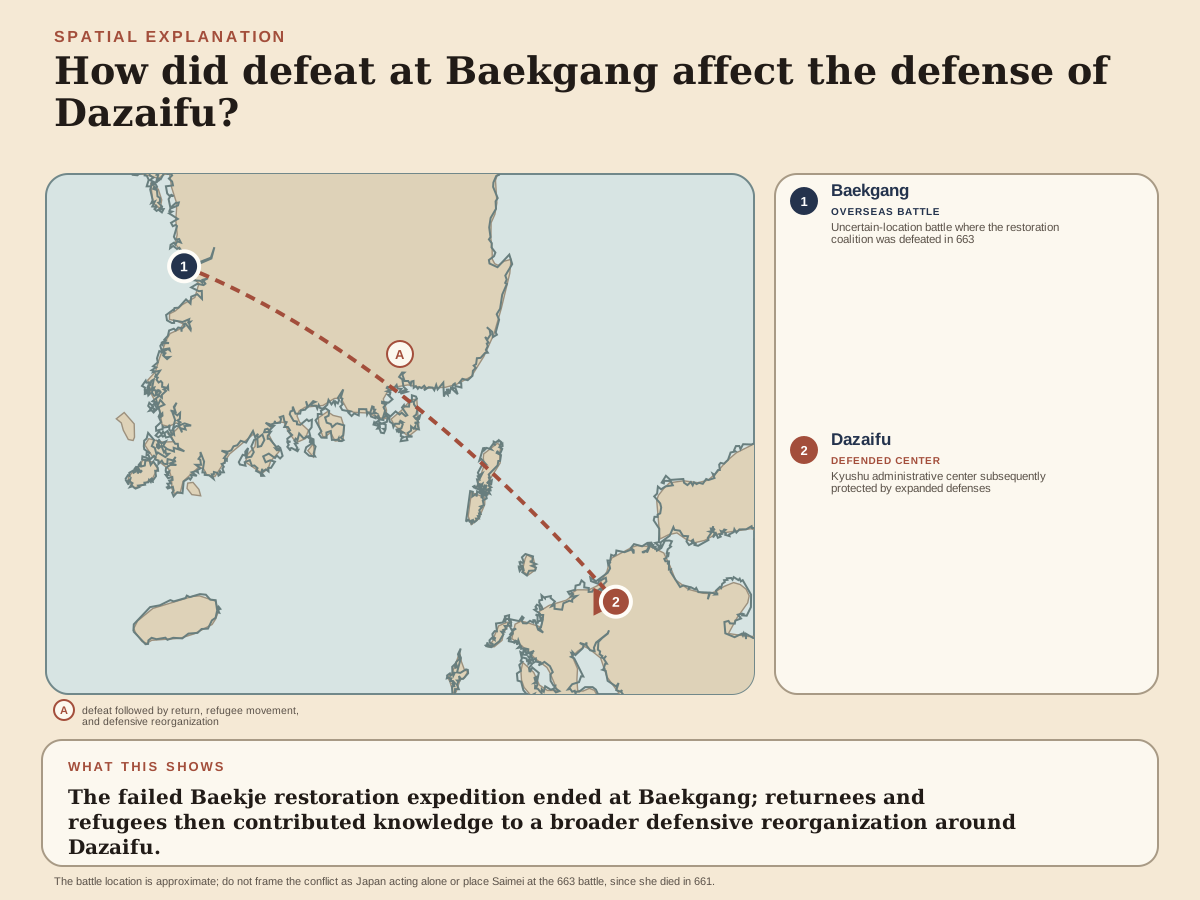
    In 663, forces from Wa attempted to support the restoration at Baekgang. Tang naval forces defeated repeated attacks while Silla and Tang pressure broke the remaining Baekje position on land. Pung fled toward Goguryeo, surviving restoration supporters and refugees crossed to Wa, and the intervention ended in withdrawal.

    Read The Baekje Restoration and Defeat at Baekgang

    Read the article below. Interactive reading tools are available when scripts load.

    Quick

    The Baekje Restoration and Defeat at Baekgang

    Tang and Silla forces overthrew Baekje in 660. Resistance continued under leaders including Boksin and Dochim, who sought Buyeo Pung, a Baekje prince then in Wa, as a dynastic center. They also asked the Yamato court for military help. The request drew on long-standing exchanges of rulers, envoys, specialists and refugees between the archipelago and the Korean peninsula.

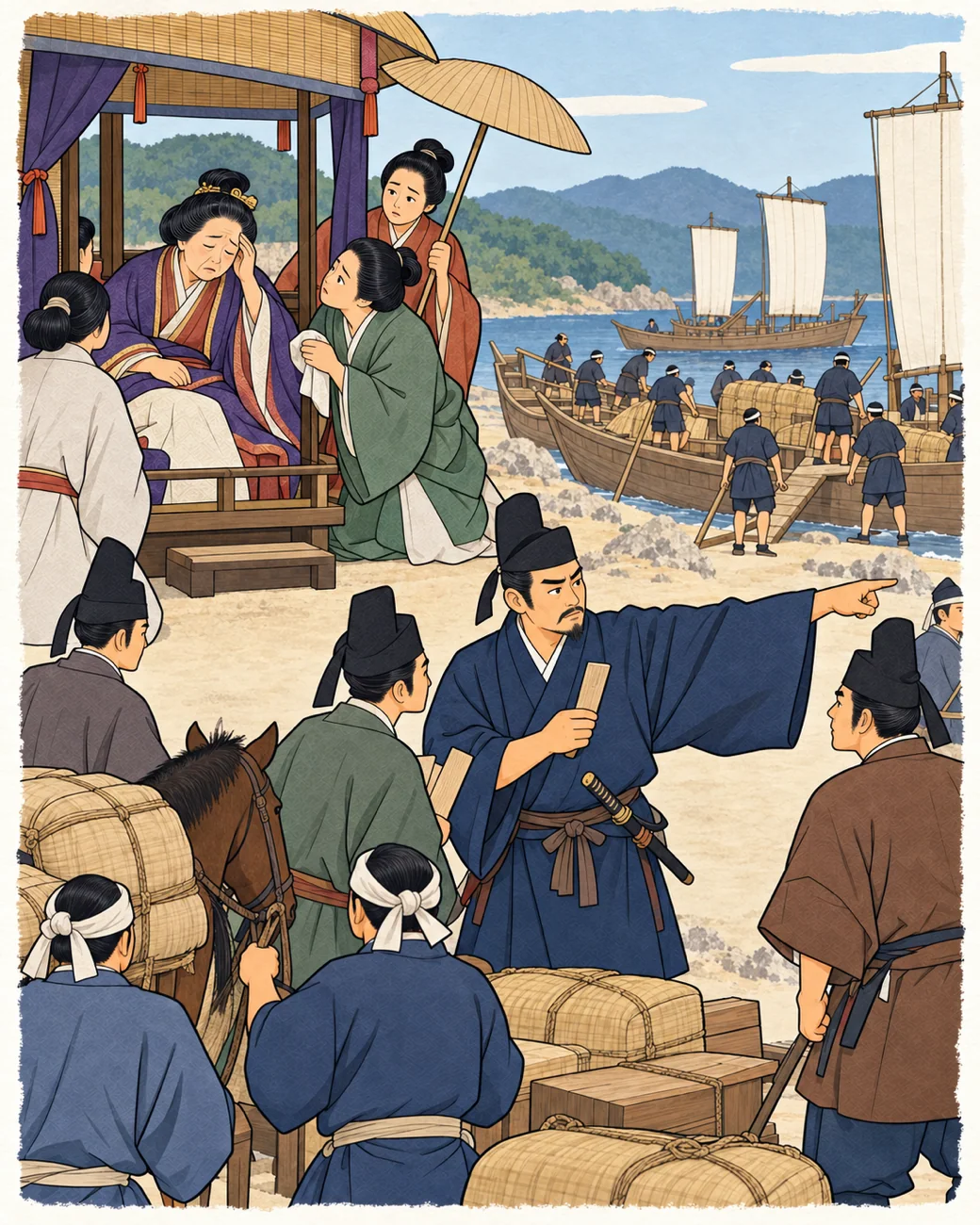
    Empress Saimei accepted the restoration appeal and traveled toward northern Kyushu in 661. The move placed the sovereign near the ports and supply routes needed to assemble forces. The Nihon shoki records preparations involving ships, arms and provisions. Saimei died at Asakura that year. Her personal phase therefore ends with mobilization; it must not be stretched across every decision made in 662 and 663.

    Prince Naka no Ōe continued government after his mother's death without immediately acceding. Pung returned to the peninsula and joined the restoration leadership. The coalition was already fragile. Conflict among Boksin, Dochim and Pung culminated in killings, including Pung's execution of Boksin as reported in the sources. Military aid from Wa entered a struggle whose political center was divided.

    In 663 the fleet from Wa reached the Baekgang area. The Japanese chronicle describes repeated attacks against Tang ships and a crushing defeat; the Korean institutional account places the battle within the combined Tang-Silla destruction of the restoration. Abe no Hirafu is named among commanders of a rear division, but the sources do not justify making him commander of every naval action. Pung fled toward Goguryeo, and the remaining restoration collapsed.

    Survivors and Baekje refugees moved to Wa. The court later built defenses in northern Kyushu and western Honshu and employed immigrant knowledge in its institutions. These measures followed defeat and fear of further conflict. They show a changed security environment, but they do not make Baekgang the sole cause of all later administrative reform.

    Classic

    Baekje's fall and a prince abroad

    Baekje's defeat in 660 did not immediately end political resistance. Boksin and Dochim organized a restoration movement while the Baekje king was in captivity. They needed a royal figure who could connect their cause to the fallen dynasty. Buyeo Pung, a prince living in Wa, supplied that claim. The request for his return and for military aid joined an internal Korean struggle to the Yamato court's existing relationships across the sea.

    Wa's rulers had long exchanged embassies, religious specialists, texts and political support with peninsula kingdoms. Supporting Pung was therefore more than an improvised rescue. It was an attempt to preserve a favorable dynastic and diplomatic relationship at a moment when Tang and Silla power had transformed the region. The surviving Japanese and Korean accounts agree on the restoration's broad direction while arranging dates and agency differently.

    Saimei was in her second reign. Her government had already sponsored major works and northern expeditions, showing that mobilization could draw resources far from the palace. The Baekje appeal required a still greater maritime effort: commanders, ships, weapons, provisions and a western base close to the crossing.

    From Saimei's mobilization to the 663 fleet

    In 661 Saimei's court traveled west. The sovereign's presence near northern Kyushu made the expedition a royal undertaking, while named officials carried its military and logistical work. Abe no Hirafu, already known for northern voyages, later appears among the commanders sent in the Baekje campaign. The record supports a command role, not personal control of the whole intervention.

    Saimei died at Asakura before the operation reached its conclusion. Naka no Ōe took charge of government but delayed formal accession. That sequence matters: the 661 decision belonged to Saimei's reign, while the continuation of war across 662 and 663 belonged to the government that survived her. Pung's return was likewise a process recorded differently in Japanese and Korean chronologies, not a single securely synchronized departure date.

    Inside the restoration, Pung and Boksin turned against one another. Boksin was killed, weakening a coalition that also faced Tang and Silla armies. In 663 forces from Wa crossed in divisions. Hirafu is named among the rear commanders. The fleet attacked near Baekgang while the restoration stronghold faced pressure on land.

    The Japanese chronicle describes repeated attempts to break the Tang naval line, followed by burning ships, disorder and heavy losses. Exact fleet and casualty totals are not secure enough to reproduce as settled fact. The strategic result is clearer: the naval support failed, the land position collapsed, and Pung fled toward Goguryeo.

    Restoration collapses and people cross the sea

    The defeat ended the attempt to restore Baekje through this coalition. Forces from Wa withdrew, and Pung did not establish a restored kingdom. The result also displaced people. Baekje elites, specialists and other refugees crossed to the archipelago, where the court resettled communities and drew on their knowledge. Movement continued after military failure, but under changed political conditions.

    The Yamato court strengthened defenses after the campaign. Water fortifications, mountain works and garrisons in northern Kyushu and western Honshu responded to a perceived threat that Tang or Silla forces might continue eastward. These projects required labor and local resources. They were protection against a possible war, not evidence that an invasion actually followed.

    Saimei's death had a separate domestic outcome. Naka no Ōe governed for years before formally acceding as Tenji. The distinction between holding authority and taking the throne shaped the postwar court and cannot be explained only through Baekgang.

    Defeat inside an interconnected East Asia

    Baekgang exposes the cost of dynastic commitment across the sea. Saimei's court attempted to preserve an allied royal house, while Tang and Silla fought to secure a new order on the peninsula. The campaign was not an isolated Japanese overseas adventure. It was one front in a conflict whose principal political communities and battlefields lay in Korea.

    The event also changed how the archipelago used people and knowledge arriving from Baekje. Refugee lineages entered defense, learning and administration. Their later contributions should not be treated as compensation that cancels military defeat; they were part of the human aftermath of a destroyed kingdom and a failed restoration.

    Later state building occurred in this security environment, but the event cannot bear every causal claim sometimes placed on it. Legal codes, registers and capitals had longer histories and other pressures. Baekgang's secure importance lies in the scale of mobilization, the destruction of the restoration alliance, the movement of refugees and the defensive response that followed.

    Sources and notes

    1. 백강 전투 / Battle of Baekgang · National Institute of Korean History, 우리역사넷
    2. Nihongi, Book XXVI · Nihon shoki compilers; W. G. Aston, translator
    3. Nihongi, Book XXVII · Nihon shoki compilers; W. G. Aston, translator
    4. Abe no Hirafu source package · Nihon shoki Book XXVII and Akita Prefectural Museum research
    5. 那津官家と激動の東アジア · Fukuoka City Museum

    About these sources

    Reading preferences

    Text size
    Glossary intensity

    Choose how much explanation appears as you read.

    Saved on this device. All terms remain available in the glossary.

    Browse the glossary →
    History Omakase

    Opening reading…