Overview
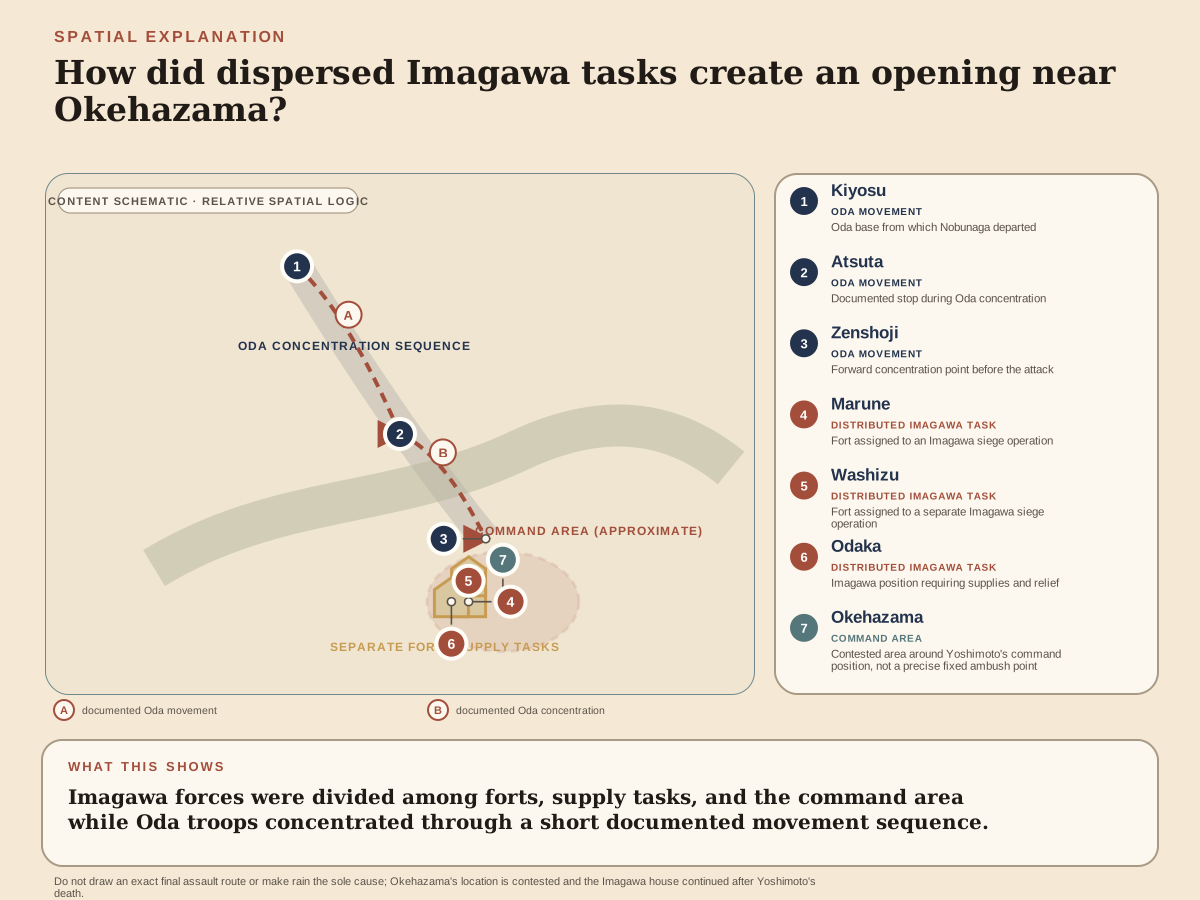
Imagawa Yoshimoto’s 1560 advance threatened Oda positions in southern Owari. His troops supplied Ōdaka Castle and attacked the nearby Marune and Washizu forts. Matsudaira Motoyasu, later Tokugawa Ieyasu, served on the Imagawa side. The opening operations dispersed forces among several positions.
Nobunaga moved from Kiyosu through the Atsuta area and his frontier forts. Ōta Gyūichi’s account follows his concentration of troops at Zenshōji and movement through Nakajima before the attack on Yoshimoto’s command group. It records heavy rain followed by the Oda assault and identifies Mōri Shinsuke as the warrior who took Yoshimoto’s head. Its speeches and providential explanation belong to the narrator’s reconstruction.
Yoshimoto’s death broke the campaign’s command. Imagawa positions were abandoned or surrendered, and Motoyasu returned to Okazaki. He subsequently developed greater independence and allied with Nobunaga in 1562. The Imagawa house survived under Yoshimoto’s son Ujizane, while Nobunaga still had to secure his position and conquer Mino.
Estimates of the armies and reconstructions of the approach differ. Rain is present in Gyūichi’s narrative, but a complete route concealed by the storm is not established by it. The victory secured Nobunaga against the immediate invasion and altered the Owari–Mikawa balance; Yoshimoto’s distant objectives remain less certain than those results.