The Kamakura government depended on a coalition of gokenin houses whose service was never free of rivalry. The Miura possessed deep prestige and land; the Hōjō held the regency and controlled access to the shogun. Changes after the Jōkyū War increased the stakes of competition at the center.
The Miura had been one of the great eastern warrior houses since Minamoto Yoritomo's rise. By Tokiyori's regency, their offices, kinship and military resources made them both pillars of the shogunate and possible competitors. Tension increased after other balancing figures died or were removed.
Tokiyori was born in 1227 at Rokuhara in Kyoto, where his father Tokiuji served in the Kamakura government’s supervisory establishment. The family returned to Kamakura in 1230, and Tokiuji died that year. Tokiyori’s grandfather Yasutoki, the regent, helped raise him after the loss. His mother Matsushita Zenni was a daughter of Adachi Kagemori. The boy’s connections therefore reached both the dominant Hōjō line and another influential warrior household whose support would later matter to his government.
In 1237 Shogun Yoritsune acted as sponsor at Tokiyori’s coming-of-age ceremony, giving him a character from his own name. Yoritsune belonged to the Kujō aristocratic family, which supplied shoguns after the Minamoto line had ended. The ceremony joined the young Hōjō to the formal head of the regime through a recognized relationship. Tokiyori later held court offices and rank, adding marks of official standing within the government’s aristocratic framework. The Hōjō directed much of the regime’s work, but their position continued to operate beside a shogun and through appointments acknowledged within that framework.
In 1246 Tokiyori’s brother Tsunetoki was seriously ill and handed over the regency before dying. The succession transferred the main household’s leadership and a central government office to Tokiyori. As shikken, or regent, he worked with councils and senior officials under the shogun’s formal leadership. The distinction between directing decisions and holding the shogunal title created space for different households to gather around different officeholders. Tokiyori’s succession gave him substantial resources, but other Hōjō branches and established warrior families retained positions of their own.
The current shogun Yoritsugu was still a child, while his father, the former shogun Yoritsune, remained an influential figure in Kamakura. Warriors and members of collateral Hōjō branches gathered around Yoritsune. Tokiyori had once received his coming-of-age name through that same man. Ceremonial familiarity did not assure a shared interest once leadership passed to a new regent. His first months in office would require dealing with this competing network. The bonds through which he had entered the political world could now connect him to people whom his government treated as threats.
Mobilization occurred within Kamakura's valleys and compounds. Once negotiation failed, Hōjō allies attacked Miura positions and drove surviving leaders toward Yoritomo's memorial hall. The sources were written through victors' institutions and do not recover every private decision.
In 1247 armed confrontation spread through Kamakura. Hōjō and allied forces defeated Miura Yasumura's coalition. Many Miura retainers and relatives gathered at Yoritomo's memorial hall and died there, giving the victory a setting charged with the memory of the shogunate's founder.
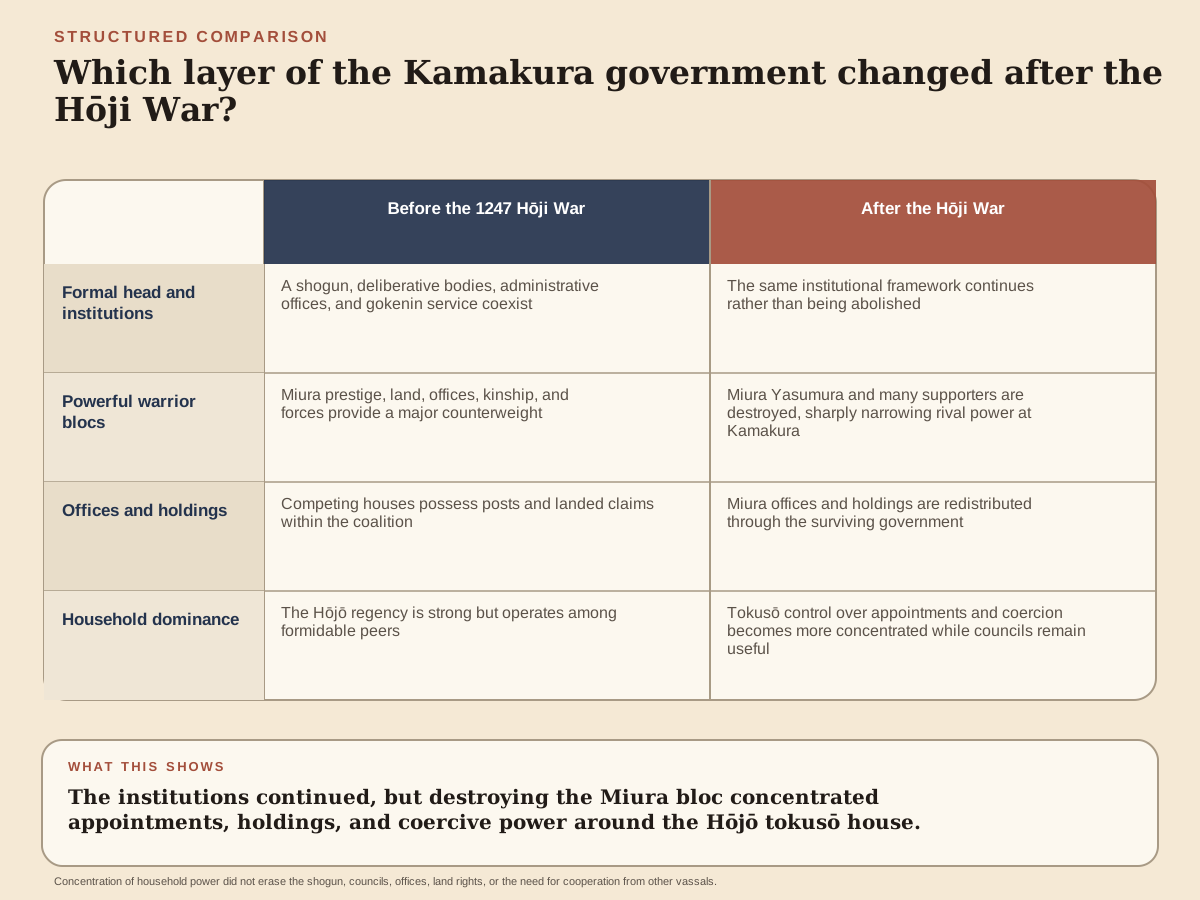
The defeat dismantled the Miura's central power and strengthened the Hōjō tokusō household. Tokiyori still governed through councils, offices and vassal cooperation, but the range of houses able to challenge the regent inside Kamakura had narrowed sharply.
Tokiyori took the regency in 1246 amid concern about people gathered around former Shogun Yoritsune. Hōjō Mitsutoki belonged to the Nagoe branch and was accused of seeking the regency through that connection. Tokiyori’s government used armed control in Kamakura to break the opposition. Mitsutoki took vows and was exiled to Izu, while Yoritsune was sent back to Kyoto. Several senior officials lost their posts. The charges explain how the government presented a danger; the actual removals show the practical means through which a competing circle was dismantled.
Miura Yasumura and many supporters died, and their offices and holdings were redistributed. Tokiyori emerged with the strongest rival military bloc removed. The victory also warned other vassals that old service to Yoritomo did not guarantee security against the regent's house.
Yoritsune’s father Kujō Michiie had held a powerful position in Kyoto and served as intermediary between the court and Kamakura. Tokiyori’s government requested his replacement by Saionji Saneuji, and the change was carried out. The office handled communications through which the warrior regime’s concerns reached court society. Removing one family’s intermediary position weakened a connection around the former shogun while advancing another aristocratic house. The struggle thus crossed the distance between the ruler’s residence at Kamakura and court appointments in Kyoto. Tokiyori’s authority was strengthened through changes in access and representation as well as through armed force in the east.
In 1247 the confrontation extended to the Miura, a powerful warrior household with a long-standing place in the Kamakura regime. Tokiyori drew on Adachi Kagemori, his maternal grandfather, in the struggle against them. The fighting known as the Hōji conflict destroyed Miura Yasumura and many members of his family and following. Other associated opponents were also eliminated. The Miura had possessed forces and offices from which they could participate in, or challenge, decisions at the regime’s center. Their destruction removed that capacity through the loss of people, property and political positions.
Tokiyori’s family emerged with a stronger position, but Adachi backing had been part of the victory. Hōjō Shigetoki then joined him as co-signatory, a senior official working beside the regent. The ruling arrangement continued to require partners and experienced administrators even after major rivals had fallen. Warrior retainers, called gokenin, depended upon the regime to recognize land rights and organize service. The purges had narrowed their field of powerful representatives. Measures to settle disputes and reduce burdens would consequently matter to the relationships on which the strengthened government still depended.
Tokusō power became more concentrated, preparing the political structure inherited by later Hōjō leaders. The event helps explain why consultative institutions could coexist with family dominance: councils remained useful, but the household controlling appointments and coercion had fewer equals.
The Hōji War was an internal civil war at the seat of warrior government, not a frontier campaign. It remade the coalition that controlled the shogunate.
Tokiyori's later reputation for consultation and justice must be read beside this violent consolidation. Institutional rule and household supremacy developed together.
Tokiyori’s government depended on warriors whose service was supported by rights to land. Travel to Kyoto for guard duty and disputes over dues, inheritance and local authority could strain those rights and resources. In 1247 the government shortened the standard Kyoto guard term from six months to three. It also took steps against local stewards’ unilateral control and addressed disputes between stewards and cultivators. Such measures reduced specific burdens within an unequal order; they worked through existing statuses and claims rather than giving everyone identical rights. The practical issue was how to maintain service and settle conflict among people tied to the same government.