

Skip to content
Chronicle

Search History Omakase

Start typing to search.

    Illustration for Hideyoshi Subordinates Shikoku, Kyushu and the Kantō

    1585–1590 | Sengoku period

    Hideyoshi Subordinates Shikoku, Kyushu and the Kantō

    秀吉の四国・九州・関東平定

    Choose a reading depth

    Overview

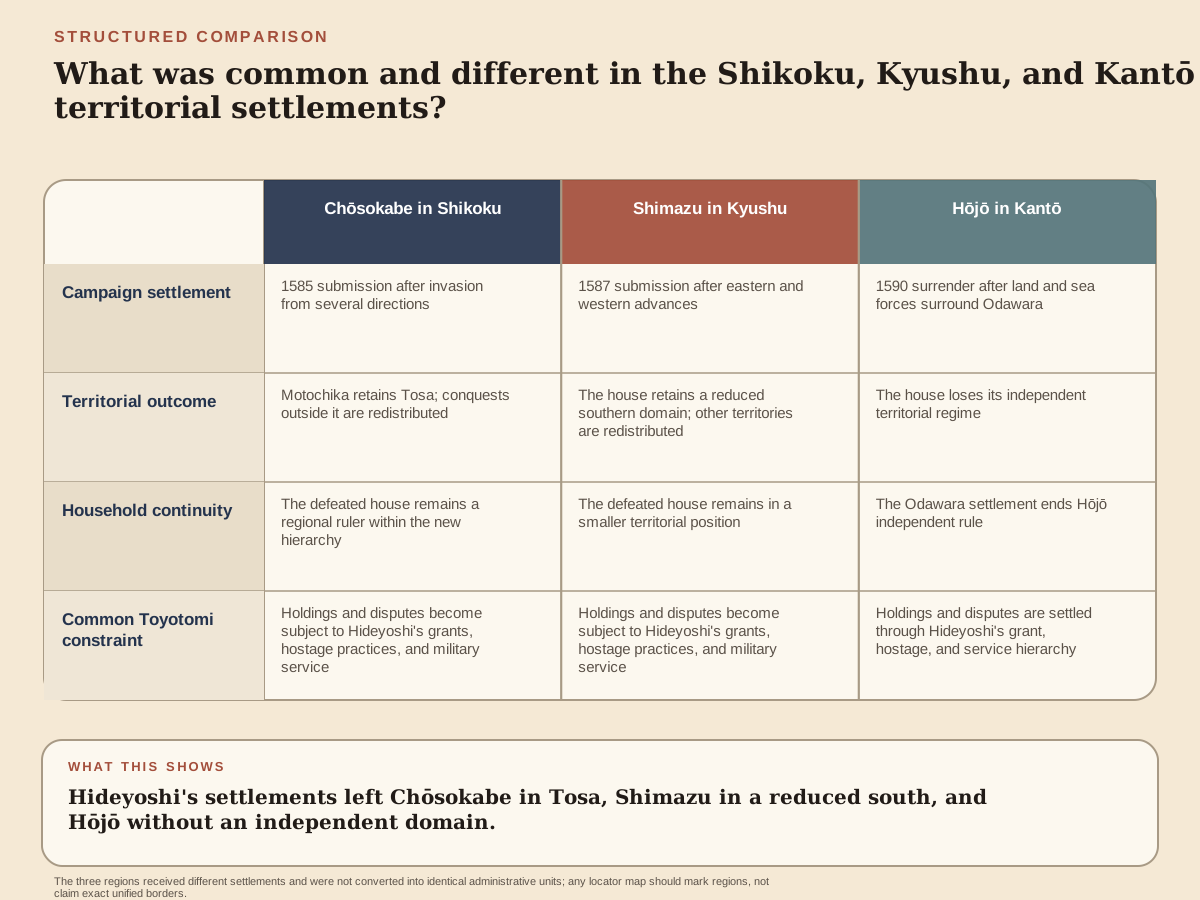
    In 1585, Hideyoshi demanded that Chōsokabe Motochika relinquish his conquests outside Tosa. Negotiations failed, and armies led by Hidenaga and allied commanders entered Shikoku from several directions. Motochika submitted and retained Tosa; the other provinces were redistributed to Hideyoshi’s supporters.

    The Shimazu advance against the Ōtomo brought a further appeal for assistance. After failed ceasefire demands, Hideyoshi and Hidenaga led armies into Kyushu in 1587 along western and eastern approaches. Shimazu submission left the house with a reduced southern domain. Hideyoshi redistributed other territories and took Hakata under direct authority. His missionary-expulsion order also restricted religious activity, although trade continued.

    In 1590, the seizure of Nagurumi Castle after Hideyoshi’s territorial adjudication supplied the immediate justification for attacking the Hōjō. Land and sea forces surrounded Odawara, and its surrender ended their independent domain. Date Masamune and other northern rulers also entered Toyotomi settlements.

    The campaigns imposed a hierarchy of land grants, hostages and military service. Daimyō continued governing through their own retainers, but their holdings and territorial disputes were increasingly subject to Hideyoshi’s decisions. The settlements covered different houses on different terms and did not make every northern, island or maritime community an identical administrative unit.

    Read Hideyoshi Subordinates Shikoku, Kyushu and the Kantō

    Read the article below. Interactive reading tools are available when scripts load.

    Quick

    Hideyoshi Subordinates Shikoku, Kyushu and the Kantō

    In 1585, Hideyoshi demanded that Chōsokabe Motochika relinquish his conquests outside Tosa. Negotiations failed, and armies led by Hidenaga and allied commanders entered Shikoku from several directions. Motochika submitted and retained Tosa; the other provinces were redistributed to Hideyoshi’s supporters.

    The Shimazu advance against the Ōtomo brought a further appeal for assistance. After failed ceasefire demands, Hideyoshi and Hidenaga led armies into Kyushu in 1587 along western and eastern approaches. Shimazu submission left the house with a reduced southern domain. Hideyoshi redistributed other territories and took Hakata under direct authority. His missionary-expulsion order also restricted religious activity, although trade continued.

    In 1590, the seizure of Nagurumi Castle after Hideyoshi’s territorial adjudication supplied the immediate justification for attacking the Hōjō. Land and sea forces surrounded Odawara, and its surrender ended their independent domain. Date Masamune and other northern rulers also entered Toyotomi settlements.

    The campaigns imposed a hierarchy of land grants, hostages and military service. Daimyō continued governing through their own retainers, but their holdings and territorial disputes were increasingly subject to Hideyoshi’s decisions. The settlements covered different houses on different terms and did not make every northern, island or maritime community an identical administrative unit.

    Toyotomi Hidenaga came from Owari, in present-day Aichi, and was the younger brother of Hideyoshi, who became Japan’s military ruler. His birth is placed in 1540 or 1541, and reference works differ over his father. Hidenaga served in the campaigns through which Hideyoshi acquired lands, officers and command experience under Oda Nobunaga. The family relationship gave him a place close to Hideyoshi, while his own military responsibilities made that proximity useful.

    Classic

    Conditions behind Hideyoshi Subordinates Shikoku, Kyushu and the Kantō

    In 1585, Hideyoshi demanded that Chōsokabe Motochika relinquish his conquests outside Tosa. Negotiations failed, and armies led by Hidenaga and allied commanders entered Shikoku from several directions. Motochika submitted and retained Tosa; the other provinces were redistributed to Hideyoshi’s supporters.

    Toyotomi Hidenaga came from Owari, in present-day Aichi, and was the younger brother of Hideyoshi, who became Japan’s military ruler. His birth is placed in 1540 or 1541, and reference works differ over his father. Hidenaga served in the campaigns through which Hideyoshi acquired lands, officers and command experience under Oda Nobunaga. The family relationship gave him a place close to Hideyoshi, while his own military responsibilities made that proximity useful.

    From 1577 Hidenaga took part in Hideyoshi’s advance through the Chūgoku region, the western part of Honshu. His commands at Takeda and Izushi in Tajima brought him into the management of Tajima and Harima, in western Honshu. These commands lay within an expanding military front against the Mōri sphere. Holding castles and administering territory required more continuing work than a single successful engagement. Hidenaga’s growing position belonged to the establishment of Hideyoshi’s authority along that front.

    Nobunaga’s death in 1582 removed the superior under whom the brothers had served. Hidenaga followed Hideyoshi in the battle of Yamazaki, the struggle around Shizugatake and the conflict known as Komaki–Nagakute. Hideyoshi’s rise was still contested among commanders and Oda relatives. Hidenaga’s service in these campaigns placed his resources alongside his brother’s claim. That experience preceded the larger representative command he received when Hideyoshi turned against the lords of Shikoku.

    Hideyoshi Subordinates Shikoku, Kyushu and the Kantō in motion

    The Shimazu advance against the Ōtomo brought a further appeal for assistance. After failed ceasefire demands, Hideyoshi and Hidenaga led armies into Kyushu in 1587 along western and eastern approaches. Shimazu submission left the house with a reduced southern domain. Hideyoshi redistributed other territories and took Hakata under direct authority. His missionary-expulsion order also restricted religious activity, although trade continued.

    In 1590, the seizure of Nagurumi Castle after Hideyoshi’s territorial adjudication supplied the immediate justification for attacking the Hōjō. Land and sea forces surrounded Odawara, and its surrender ended their independent domain. Date Masamune and other northern rulers also entered Toyotomi settlements.

    The campaigns imposed a hierarchy of land grants, hostages and military service. Daimyō continued governing through their own retainers, but their holdings and territorial disputes were increasingly subject to Hideyoshi’s decisions. The settlements covered different houses on different terms and did not make every northern, island or maritime community an identical administrative unit.

    The immediate settlement

    Hideyoshi entrusted Hidenaga with command of the Shikoku campaign in 1585. Acting as his brother’s representative gave Hidenaga authority in a major operation involving other military forces. The defeat of the Chōsokabe house helped extend Hideyoshi’s settlement beyond the main island. Hidenaga subsequently received extensive territorial holdings and made Kōriyama his residence. Military service and regional government were joined in his position: he carried the national ruler’s authority into a campaign and exercised lordship within the resulting order.

    Ōtomo Sōrin ruled in northeastern Kyushu and faced the advancing Shimazu. His 1586 letter, discussed by the historian Kotake Fumio, describes his journey to Osaka to seek Hideyoshi’s military support. After receiving assurances, he visited Hidenaga. Sōrin reported words directing private matters toward the tea master Sen no Rikyū and public affairs toward Hidenaga, and urged his retainers to cultivate both men. The letter gives the approaching lord’s view of access and assistance. Its language records a political encounter and reported speech, rather than a formal chart dividing all government between two men.

    In 1587 Hidenaga commanded the route through Hyūga on Kyushu’s eastern side in the war against the Shimazu. The campaign made military support for opposing lords effective through force. His earlier dealings with Sōrin and his campaign position show different parts of the same political role: receiving an appeal, connecting it with Hideyoshi’s authority and undertaking command. The title Yamato Dainagon by which he became known combined his regional base with advancement to the court’s Senior Counselor rank that year. His standing rested on several forms of recognition rather than one modern ministerial office.

    The event's longer afterlife

    Yamato Kōriyama lay in the Nara basin, close to established religious centers and routes into the central region. Hidenaga entered in 1585 and undertook major castle enlargement. His holdings also extended through Kii and Izumi. A figure of approximately one million koku expressed assessed agricultural resources rather than money in a treasury; some reference accounts give a lower total. The extent of those holdings made his house an important base for Hideyoshi’s government in the central provinces. Their administration required deputies, local negotiations and records across varied landscapes.

    The prefectural history of Wakayama Castle describes Hideyoshi ordering Hidenaga to establish the castle in 1585. Tōdō Takatora handled the building, while Kuwayama Shigeharu entered as Hidenaga’s castle deputy. Hidenaga’s main residence remained at Kōriyama. Such appointments show the division of responsibilities within a territorial house: the lord held authority over the province while another man supervised the local center and its garrison. The castle’s later history under other houses added buildings and arrangements of its own, so its surviving appearance cannot all be assigned to this first phase.

    Sources and notes

    1. 四国征伐 · Yamamoto Dai, Nipponica, and Shimomura Isao, Heibonsha
    2. 九州征伐 · Moriyama Tsuneo, Heibonsha, and attributed dictionaries
    3. 伊達政宗に関する資料(2) · Sendai City Museum
    4. 小田原合戦 · Odawara City historical corridor
    5. 羽柴秀長 · Hashimoto Masanobu 橋本政宣 / Britannica / Kōdansha
    6. 豊臣秀長 · Katō Masumiki 加藤益幹
    7. 十津川宝蔵文書(3)~(5) · Totsukawa Village Board of Education 十津川村教育委員会
    8. 羽柴秀長書状 · Wakayama Prefectural Museum 和歌山県立博物館
    9. 箱本制度 · Yamatokōriyama City 大和郡山市
    10. 豊臣秀長と大和郡山 · Yamatokōriyama City project / municipal historical presentation 大和郡山市
    11. 和歌山城 · Wakayama Prefecture 和歌山県
    12. 豊臣政権の九州国分に関する一考察―羽柴秀長の動向を中心に― · Kotake Fumio 小竹文生
    13. 歴史年表・茶町 · Yamatokōriyama City 大和郡山市

    About these sources

    Reading preferences

    Text size
    Glossary intensity

    Choose how much explanation appears as you read.

    Saved on this device. All terms remain available in the glossary.

    Browse the glossary →
    History Omakase

    Opening reading…