
Skip to content
Chronicle

Search History Omakase

Start typing to search.

    Read Hokusai’s Painting Commissions in Obuse

    Read the article below. Interactive reading tools are available when scripts load.

    Overview

    Hokusai’s Painting Commissions in Obuse

    Hokusai’s first Obuse visit is traditionally dated to 1842. The wealthy local patron Takai Kōzan supported his work and provided the Hekiiken studio. Their association led to paintings made for particular communal buildings and festival equipment.

    In 1844, Hokusai painted a dragon and phoenix for the ceiling of the Higashimachi festival float during its renovation. The float itself had been built in 1806. In 1845, he supplied wave paintings for the Kanmachi float; a phoenix ceiling at Iwamatsu-in followed in 1847. These projects required designs to fit surfaces that viewers encountered overhead, rather than ordinary printed sheets.

    The commissions connect Hokusai’s late painting to Kōzan’s patronage and Obuse’s festivals and temple. They supplied work and settings beyond the Edo print market. Accounts differ about what first prompted the visits, so a fire or a single invitation cannot by itself settle his reasons. The surviving ceilings document the commissions more securely than that uncertain explanation of departure.

    Sources and notes

    1. 小布施と北斎 · Hokusai-kan Museum
    2. 東町祭屋台 · Hokusai-kan Museum

    About these sources

    Back

    1842–1847 | Hokusai’s Painting Commissions in Obuse北斎の小布施での制作

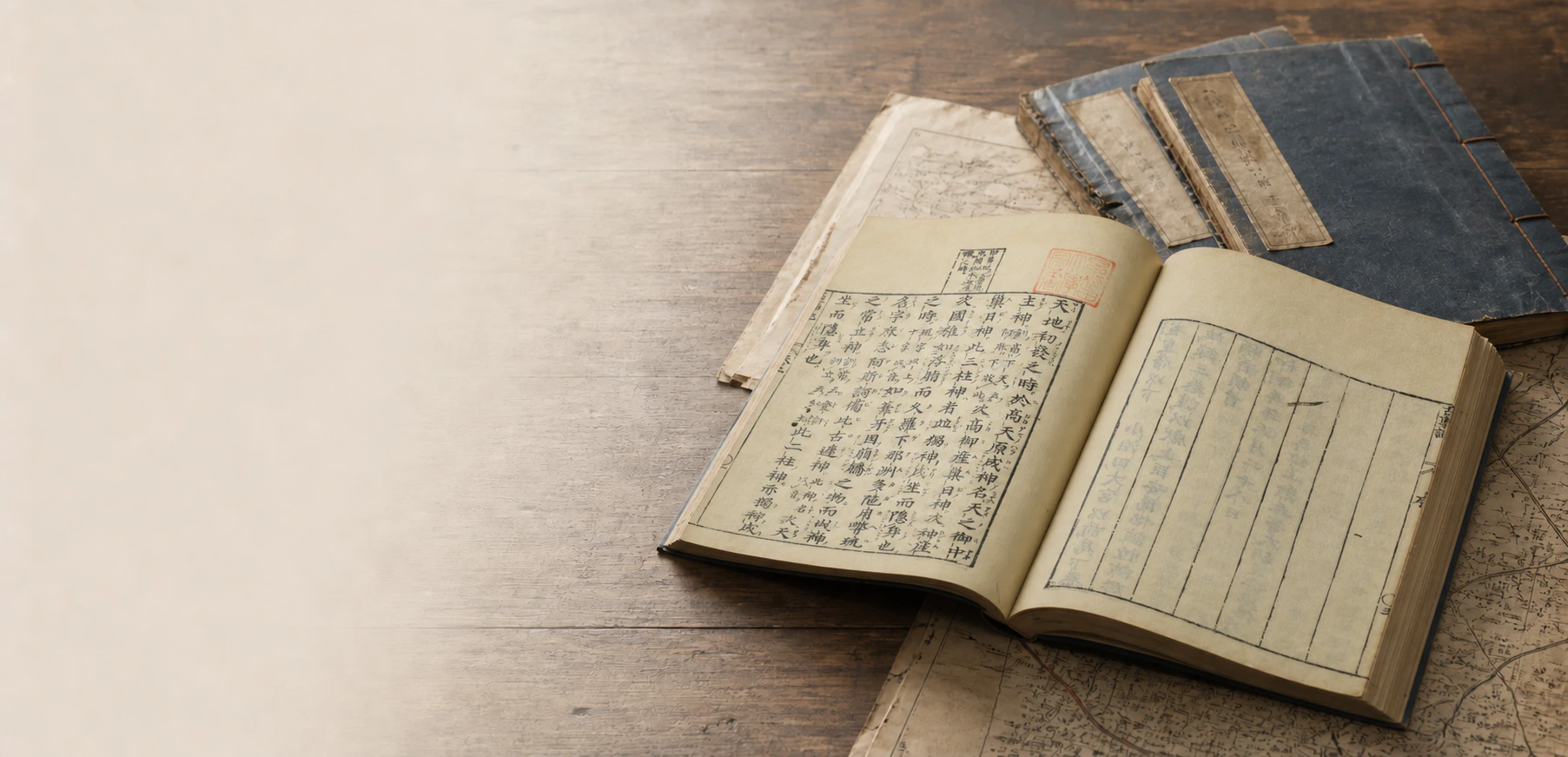
    The Kojiki in an open-book still life

    Hokusai’s Painting Commissions in Obuse

    Hokusai’s first Obuse visit is traditionally dated to 1842. The wealthy local patron Takai Kōzan supported his work and provided the Hekiiken studio. Their association led to paintings made for particular communal buildings and festival equipment.

    In 1844, Hokusai painted a dragon and phoenix for the ceiling of the Higashimachi festival float during its renovation. The float itself had been built in 1806. In 1845, he supplied wave paintings for the Kanmachi float; a phoenix ceiling at Iwamatsu-in followed in 1847. These projects required designs to fit surfaces that viewers encountered overhead, rather than ordinary printed sheets.

    The commissions connect Hokusai’s late painting to Kōzan’s patronage and Obuse’s festivals and temple. They supplied work and settings beyond the Edo print market. Accounts differ about what first prompted the visits, so a fire or a single invitation cannot by itself settle his reasons. The surviving ceilings document the commissions more securely than that uncertain explanation of departure.

    Sources and notes ViewHide
    1. [1]

      小布施と北斎Hokusai-kan Museum

    2. [2]

      東町祭屋台Hokusai-kan Museum

    Reading context

    Reading preferences

    Text size
    Glossary intensity

    Choose how much explanation appears as you read.

    Saved on this device. All terms remain available in the glossary.

    Browse the glossary →
    History Omakase

    Opening reading…