
Skip to content
Chronicle

Search History Omakase

Start typing to search.

    Read Tenkai Establishes Kan’eiji at Ueno

    Read the article below. Interactive reading tools are available when scripts load.

    Overview

    Tenkai Establishes Kan’eiji at Ueno

    Hidetada assigned the Ueno estates of three lords to a new temple project. Tenkai received the land and directed the Tendai foundation under Tokugawa patronage. The abbot’s residence was completed in 1625, the year counted as Kan’eiji’s establishment; the surrounding complex continued to grow over subsequent decades.

    The name followed Enryakuji’s example, using the reigning era, Kan’ei, with court permission. Its mountain name Tōeizan meant “Mount Hiei of the East.” The temple’s own history explains its position northeast of Edo Castle as a counterpart to Enryakuji’s protection of Kyoto’s northeast. That model describes the foundation’s protective religious role.

    Princely abbots and shogunal burial precincts developed later. A son of Emperor Go-Mizunoo became abbot, linking the temple to the court, while Iemitsu’s successors commissioned their funerary precincts there. Kan’eiji began as a prayer temple; its later buildings and burial functions enlarged the institution beyond the initial residence and foundation.

    Sources and notes

    1. 寛永寺について · Kan’eiji official institutional history
    2. Kan’eiji Temple: History · Japan Tourism Agency; Ueno/Shitaya interpretation council

    About these sources

    Back

    1625 | Tenkai Establishes Kan’eiji at Ueno天海による寛永寺創建

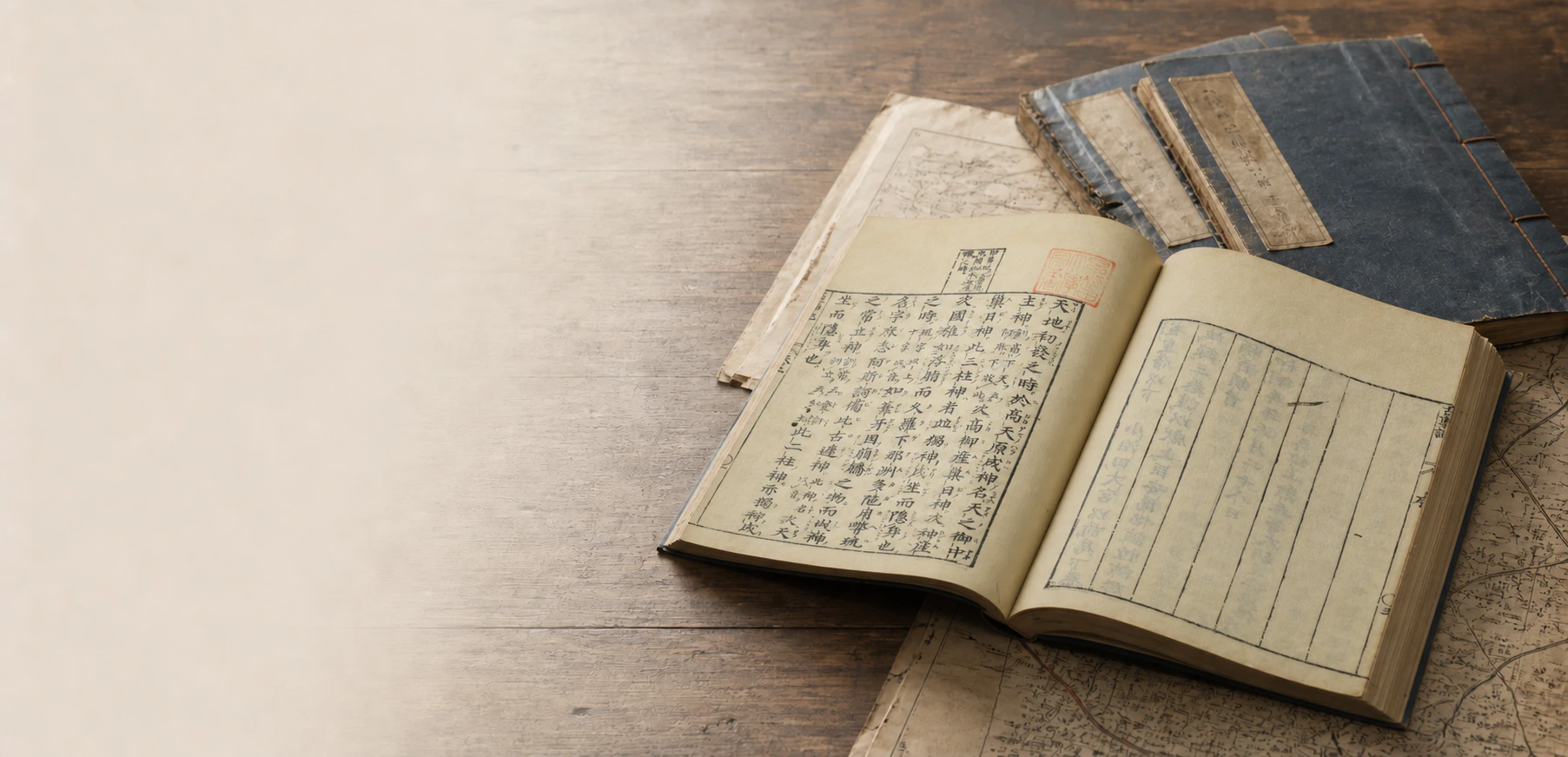
    The Kojiki in an open-book still life

    Tenkai Establishes Kan’eiji at Ueno

    Hidetada assigned the Ueno estates of three lords to a new temple project. Tenkai received the land and directed the Tendai foundation under Tokugawa patronage. The abbot’s residence was completed in 1625, the year counted as Kan’eiji’s establishment; the surrounding complex continued to grow over subsequent decades.

    The name followed Enryakuji’s example, using the reigning era, Kan’ei, with court permission. Its mountain name Tōeizan meant “Mount Hiei of the East.” The temple’s own history explains its position northeast of Edo Castle as a counterpart to Enryakuji’s protection of Kyoto’s northeast. That model describes the foundation’s protective religious role.

    Princely abbots and shogunal burial precincts developed later. A son of Emperor Go-Mizunoo became abbot, linking the temple to the court, while Iemitsu’s successors commissioned their funerary precincts there. Kan’eiji began as a prayer temple; its later buildings and burial functions enlarged the institution beyond the initial residence and foundation.

    Sources and notes ViewHide
    1. [1]

      寛永寺についてKan’eiji official institutional history

    2. [2]

      Kan’eiji Temple: HistoryJapan Tourism Agency; Ueno/Shitaya interpretation council

    Reading context

    Reading preferences

    Text size
    Glossary intensity

    Choose how much explanation appears as you read.

    Saved on this device. All terms remain available in the glossary.

    Browse the glossary →
    History Omakase

    Opening reading…