Read the article below. Interactive reading tools are available when scripts load.
Quick
Tosa leaders proposed returning governing authority to the imperial court as an alternative to armed overthrow. Gotō Shōjirō advanced the proposal under former lord Yamauchi Yōdō’s name, and Aki also urged a return. A council under imperial authority could bring major lords into national decisions.
Yoshinobu accepted this route. After consultation within the bakufu, officials presented his intention to domain representatives at Nijō Castle on November 8, 1867. The dates are the thirteenth day of the tenth month in the Japanese calendar. The following day, Ōsawa Motohisa carried Yoshinobu’s petition to the court.
The petition argued that expanding foreign relations required authority to follow one course. Yoshinobu offered to return government to the court, seek broad public deliberation and obey imperial judgment in cooperation with the lords. The court accepted on November 10, while arrangements for the new government awaited further consultation.
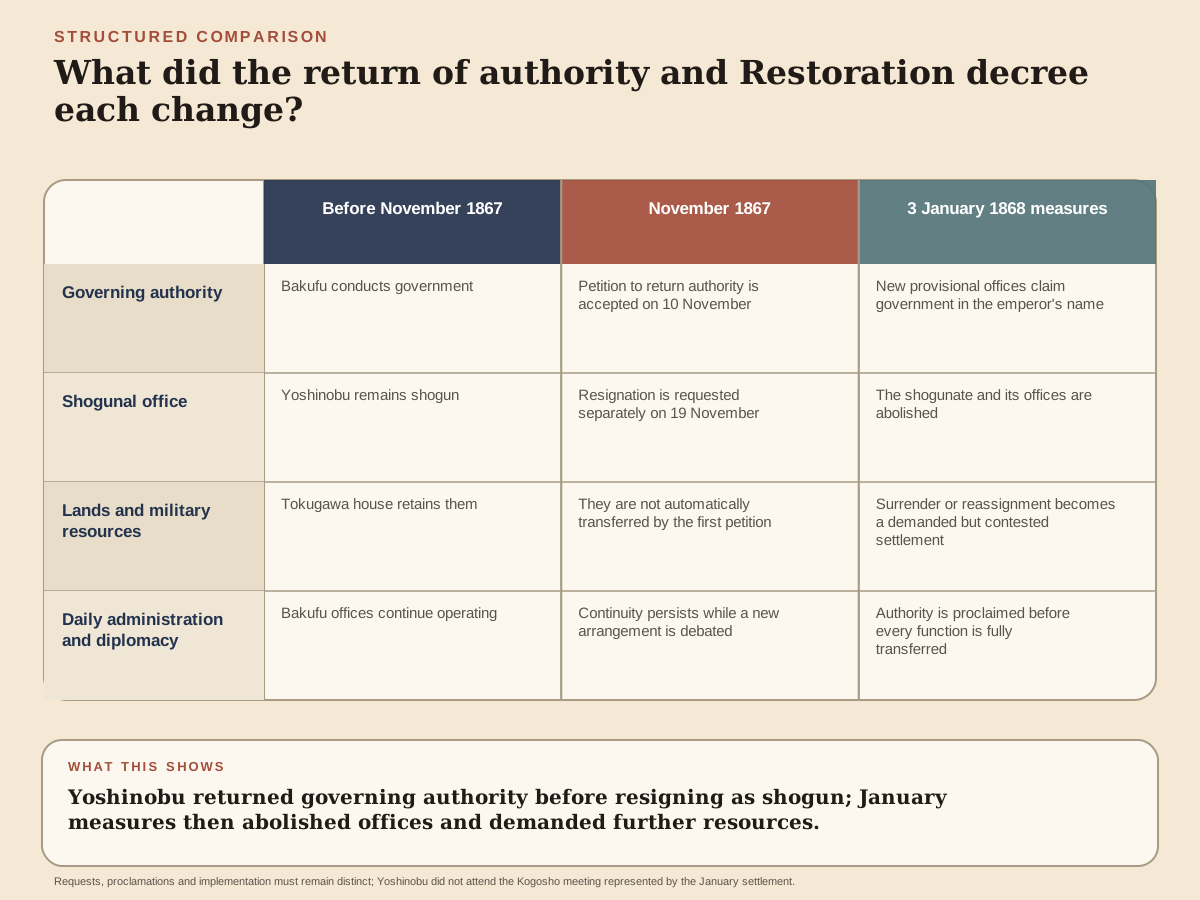
Practical work continued through the shogunate. It notified foreign representatives of the return, and British minister Harry Parkes still negotiated with its officials over opening arrangements. The Tokugawa house’s lands, forces and officials had not been transferred through the petition. Yoshinobu sought resignation from the shogunal office later in November, a separate step from returning governing authority.
The return altered the grounds for opposing the bakufu while leaving Yoshinobu a possible participant in the next government. On January 3, 1868, the restoration proclamation accepted his resignation and abolished the shogunate. Demands concerning his court office and lands then sharpened the conflict. The November transfer was real, and its practical settlement remained unfinished.
Classic
By 1867, disputes over Chōshū’s punishment and port opening had divided the shogunate from powerful domains. Advocates of armed overthrow competed with proposals for a political body under imperial authority. Yoshinobu faced these alternatives while still holding office as shogun.
Tosa pursued a return of governing authority through Gotō Shōjirō and Yamauchi Yōdō. Their proposed deliberative arrangement would allow major lords to participate in national policy. Aki also urged a return, adding another domain’s support to the proposal.
The court could confer authority but could not immediately replace the bakufu’s working administration. Diplomatic relations and ordinary government still required officials and established procedures. A transfer therefore raised a question about who would perform those duties while a new structure was designed.
Yoshinobu could retain influence through the Tokugawa house’s resources in a council of lords. His choice offered a route away from immediate overthrow, with his future position still open. It also challenged opponents to explain what further changes they required after authority was returned.
The failure of the Second Chōshū Expedition had weakened the government's ability to combine domain forces, without eliminating Tokugawa lands, troops or diplomatic experience. A council offered Tosa a way to broaden decision making while retaining resources needed to govern. For Yoshinobu, continued influence through his house was a possibility; it was not a guaranteed place specified by the eventual petition.
Ryōma belongs in the history of these alternative plans, but the proposal should not be assigned to him alone. His surviving Eight Proposals for a New Government, written after the return, addresses appointments, foreign relations, law, deliberative bodies and military organization. The name of its proposed leader is concealed and remains disputed. That document demonstrates further planning; it cannot be treated as a verbatim record of an earlier conversation aboard ship.
Gotō delivered Yamauchi Yōdō’s proposal to senior councilor Itakura Katsukiyo in late October 1867. It joined return of government with deliberation under the court. The proposal entered the bakufu through a named officer and a domain’s formal representation.
Yoshinobu’s intention was discussed with bakufu advisers before domain representatives received it at Nijō Castle on November 8. Consultation at the castle preceded the court petition; later paintings of the great hall do not establish a verbatim speech by Yoshinobu to that gathering.
On November 9, Ōsawa Motohisa entered the palace as Yoshinobu’s envoy and submitted the petition. A shogunal representative carried a written request into court procedure, making acceptance a further act rather than a decision completed within the castle.
The petition traced the history of delegated government and acknowledged failures of rule. Its immediate argument concerned growing foreign intercourse: divided authority endangered order. It proposed return, broad deliberation, imperial judgment and cooperation to preserve the country’s position abroad.
The court accepted the request on November 10 and called for lords to assemble. Government’s future organization would be determined through further discussion. In the meantime, returning authority did not remove the officials who were still conducting practical affairs.
Yoshinobu requested resignation as shogun on November 19. This concerned an imperial appointment distinct from the governing authority returned earlier. The restoration proclamation of January 3, 1868, subsequently accepted both matters while abolishing the old offices and naming new ones.
The written argument gave foreign affairs a central place. Yoshinobu acknowledged failings under inherited government and said increasing international contact made divided authority untenable. His proposed remedy joined return of authority to deliberation, imperial judgment and cooperation. This stated program is firmer evidence than a later reconstruction of what he privately expected to gain.
The return also confronted an opposing program. Satsuma, Chōshū and allied court figures sought a restoration that would remove the inherited offices, rather than leave Yoshinobu leading a council. Their subsequent proclamation accepted his two requests but abolished the shogunate and the regency and created three provisional offices. A petition, court acceptance and the establishment of a replacement government were therefore different actions by different participants.
Court acceptance ended the bakufu’s previous basis for separately exercising national government. It established the court as the authority to which future arrangements would be referred. Yoshinobu had initiated this change through a petition accepted in imperial procedure.
The Tokugawa house still held land, forces and administrative resources. Returning authority had not specified a complete transfer of those assets. A new council might include Yoshinobu, making membership and the distribution of power the next issues to resolve.
The bakufu continued diplomatic business. It informed foreign representatives of the political change, and Parkes negotiated with its officials concerning Edo and Niigata opening arrangements. This continuity gave the transfer a practical limit: a court decision had not yet supplied a replacement diplomatic service.
The court’s call for lords to assemble left the design unsettled. Opponents of Tokugawa leadership pursued a restoration government of their own. January’s proclamation and the subsequent demand for Yoshinobu’s court office and lands addressed powers the November return had left in his hands.
Those unresolved assets made the same act useful to competing arguments. Supporters could propose including the Tokugawa house for its administrative capacity; opponents could insist that inclusion would preserve too much of its former power. The petition did not decide how revenue, armed commands or council membership would be reassigned. Practical continuity was consequential precisely because the transfer of authority had occurred.
The interval therefore required further choices rather than passive waiting. The court summoned lords while bakufu officials continued handling foreign business. A council capable of working with Yoshinobu and a restoration that excluded his leadership remained competing possibilities. Acceptance had changed the grounds for opposing him, but it had not produced agreement on the next government.
The return changed the immediate case for armed overthrow. Yoshinobu had accepted imperial direction rather than simply refusing change. His opponents therefore moved toward defining a government that would exclude his leadership and alter the Tokugawa house’s remaining position.
The next proclamation treated returned authority and resignation from the shogunal office together, then abolished inherited offices and established provisional ones. It shows the additional institutional action needed after the November petition, rather than a government fully replaced on the day of acceptance.
Officials performing diplomatic and administrative work continued through the interval. Their duties depended on existing records and procedures while political leaders argued over the next structure. The transfer of authority and the reassignment of government work proceeded at different speeds.
The proposed deliberation concerned lords and selected political representatives. It supplied an alternative to immediate armed overthrow, with participation still shaped by status and domain power. Neither the petition’s appeal to public discussion nor court acceptance established elected representation for the population.
The later dispute over court office and lands shows the limits of a gracious-retirement interpretation. Yoshinobu's return was a substantive political act, but the Tokugawa house retained resources his opponents wanted reassigned. The January settlement and the fighting that followed must be understood through these remaining claims, rather than through a shogunate imagined to have disappeared completely in November.
Deliberation also required choices about membership and authority. The petition did not establish an electoral system, a revenue settlement or unified armed command. A lords' council was a real alternative within the crisis, and its defeat does not prove that no negotiated transition was conceivable. What failed to emerge was agreement among the principal powers on who would participate and what they would control.