Skip to content
Chronicle

Search History Omakase

Start typing to search.

    Read Disasters and Michizane’s Posthumous Rehabilitation

    Read the article below. Interactive reading tools are available when scripts load.

    Overview

    Disasters and Michizane’s Posthumous Rehabilitation

    After Sugawara no Michizane died at Dazaifu in 903, deaths and disasters at the court came to be associated with his resentful spirit. Fujiwara no Tokihira, a leading figure in the government that had removed him, died in 909. Deaths among imperial heirs followed. These events made the punishment of Michizane a continuing subject of religious concern.

    In 923, the court restored his rank and former office posthumously and annulled the order of demotion. Lightning struck the palace in 930, killing and injuring people, and renewed fears about his spirit. Rehabilitation had therefore preceded that famous lightning strike; it was not a single act undertaken only afterward.

    The association shaped rites of appeasement and later worship of Michizane as Tenjin. The foundation at Kitano followed in 947, outside this event's 909–930 span. The beliefs had political and ritual effects because living people acted on them. Recording those effects does not establish that a dead person's spirit caused the deaths or lightning.

    Sources and notes

    1. 特別展北野天神 · 京都国立博物館
    2. 天神信仰ならびに北野天満宮関連年表 · 北野天満宮北野文化研究所

    About these sources

    Back

    909-930 | Disasters and Michizane’s Posthumous Rehabilitation災異と道真の名誉回復

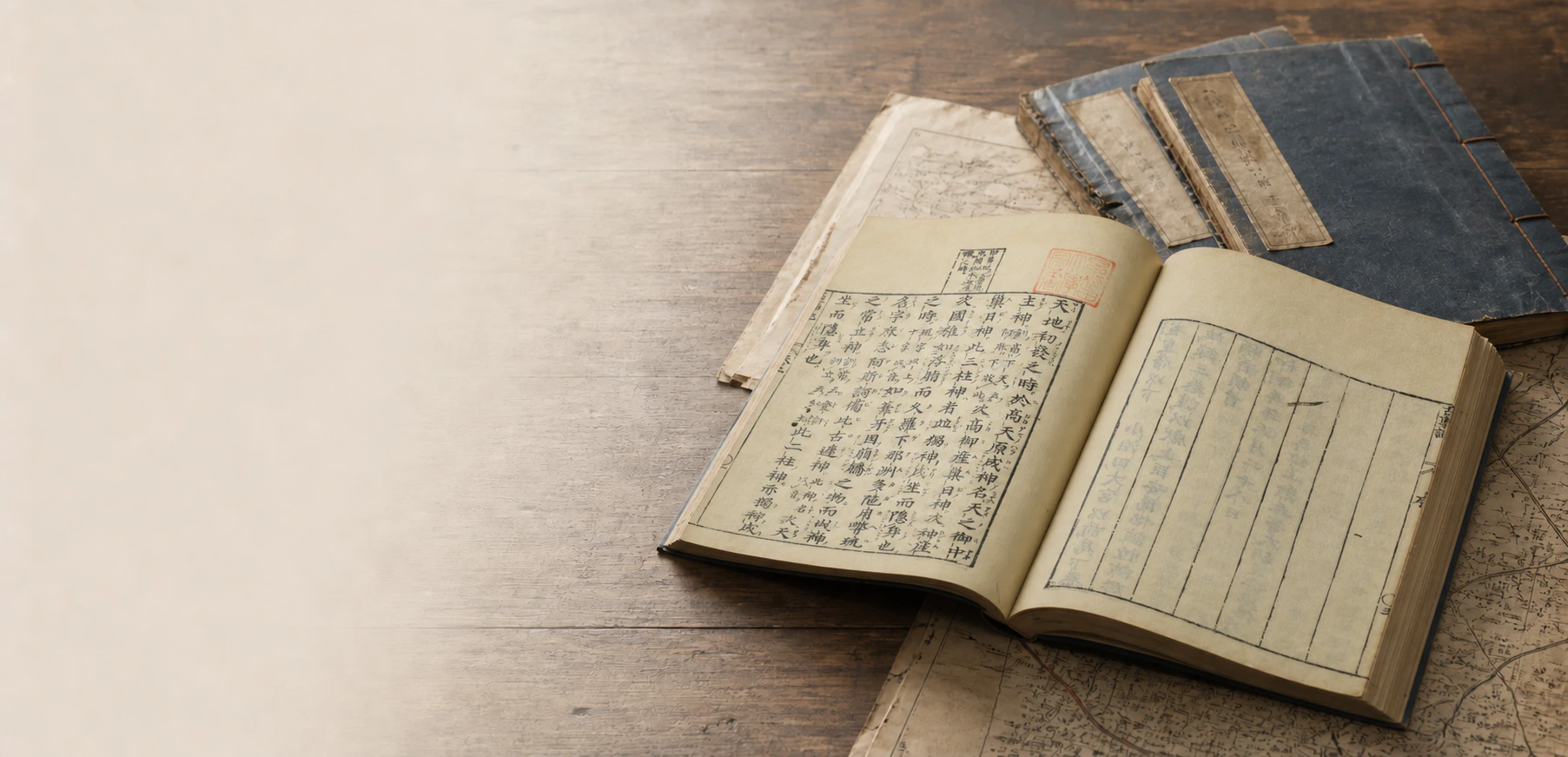
    The Kojiki in an open-book still life

    Disasters and Michizane’s Posthumous Rehabilitation

    After Sugawara no Michizane died at Dazaifu in 903, deaths and disasters at the court came to be associated with his resentful spirit. Fujiwara no Tokihira, a leading figure in the government that had removed him, died in 909. Deaths among imperial heirs followed. These events made the punishment of Michizane a continuing subject of religious concern.

    In 923, the court restored his rank and former office posthumously and annulled the order of demotion. Lightning struck the palace in 930, killing and injuring people, and renewed fears about his spirit. Rehabilitation had therefore preceded that famous lightning strike; it was not a single act undertaken only afterward.

    The association shaped rites of appeasement and later worship of Michizane as Tenjin. The foundation at Kitano followed in 947, outside this event's 909–930 span. The beliefs had political and ritual effects because living people acted on them. Recording those effects does not establish that a dead person's spirit caused the deaths or lightning.

    Sources and notes ViewHide
    1. [1]

      特別展北野天神京都国立博物館

    2. [2]

      天神信仰ならびに北野天満宮関連年表北野天満宮北野文化研究所

    Reading context

    Reading preferences

    Text size
    Glossary intensity

    Choose how much explanation appears as you read.

    Saved on this device. All terms remain available in the glossary.

    Browse the glossary →
    History Omakase

    Opening reading…