
Skip to content
Chronicle

Search History Omakase

Start typing to search.

    Read Hokusai’s Death and the Continuing Life of His Work

    Read the article below. Interactive reading tools are available when scripts load.

    Overview

    Hokusai’s Death and the Continuing Life of His Work

    Hokusai died after illness in 1849. His final decade had increasingly centered on paintings, with subjects drawn from animals, plants, classical stories and religion. Drawing books and technical manuals also remained part of his work, extending the range of an artist often remembered chiefly through his Fuji prints.

    Publication continued after his death. Hokusai Manga, begun in 1814, eventually reached fifteen volumes in 1878. The late volumes show publishers and compilers continuing to organize material under his name; they were not new drawings made by a living Hokusai. Printed works could therefore reach readers through an expanding series even after its originating artist was gone.

    In 1893, Iijima Hanjūrō published the two-volume Katsushika Hokusai den. This later biography supplied another form of preservation, assembling a life around surviving works and remembered accounts. Its publication date establishes a stage in Hokusai’s reception, without making every retrospective anecdote contemporary evidence. His death ended his own production while leaving publication and biographical interpretation in other hands.

    Sources and notes

    1. 名古屋と北斎漫画 · Nagoya City
    2. 画狂老人卍期 · Shimane Art Museum
    3. 葛飾北斎伝・書誌 · National Diet Library

    About these sources

    Back

    1849 | Hokusai’s Death and the Continuing Life of His Work北斎の死と作品の継承

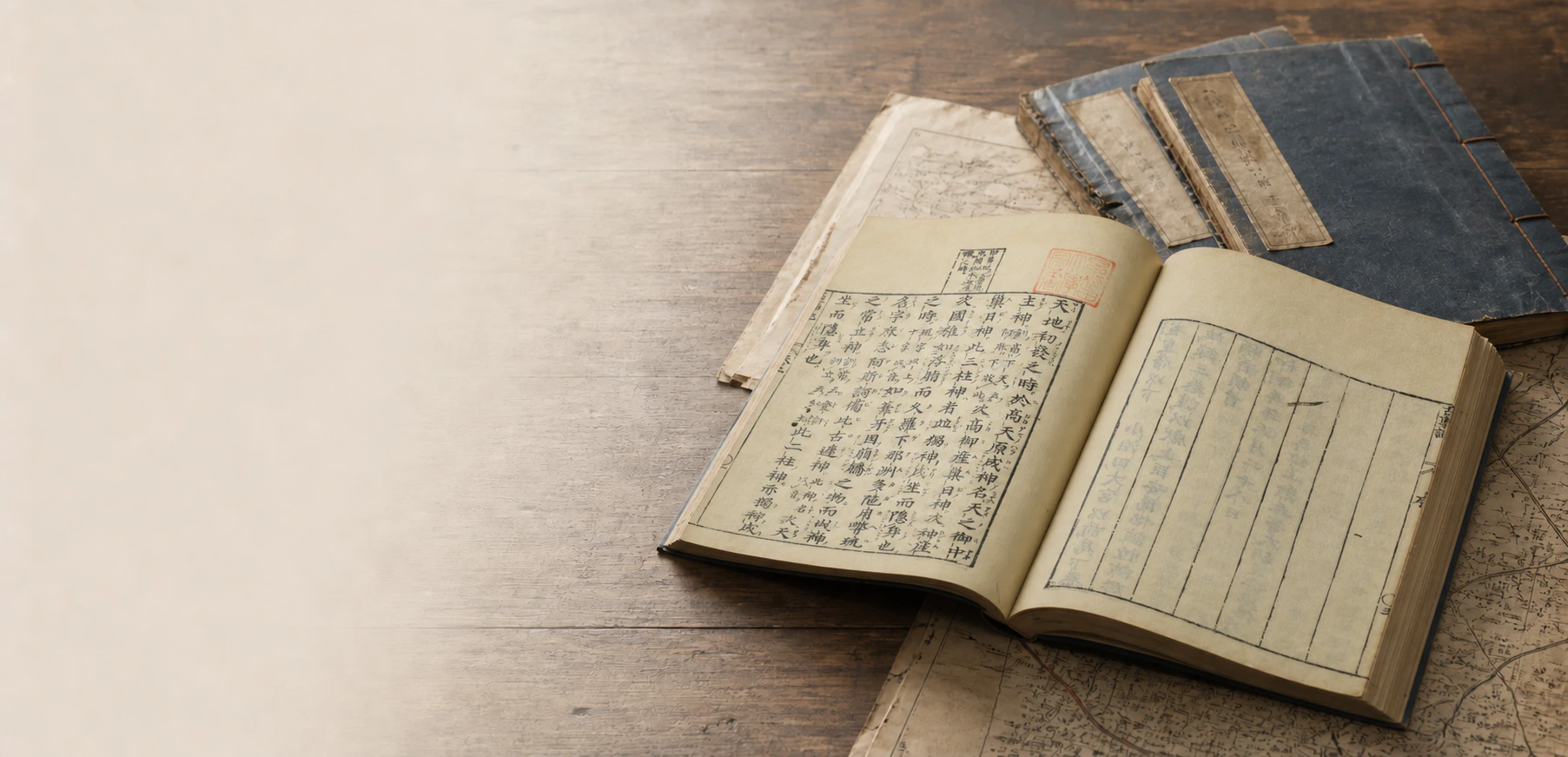
    The Kojiki in an open-book still life

    Hokusai’s Death and the Continuing Life of His Work

    Hokusai died after illness in 1849. His final decade had increasingly centered on paintings, with subjects drawn from animals, plants, classical stories and religion. Drawing books and technical manuals also remained part of his work, extending the range of an artist often remembered chiefly through his Fuji prints.

    Publication continued after his death. Hokusai Manga, begun in 1814, eventually reached fifteen volumes in 1878. The late volumes show publishers and compilers continuing to organize material under his name; they were not new drawings made by a living Hokusai. Printed works could therefore reach readers through an expanding series even after its originating artist was gone.

    In 1893, Iijima Hanjūrō published the two-volume Katsushika Hokusai den. This later biography supplied another form of preservation, assembling a life around surviving works and remembered accounts. Its publication date establishes a stage in Hokusai’s reception, without making every retrospective anecdote contemporary evidence. His death ended his own production while leaving publication and biographical interpretation in other hands.

    Sources and notes ViewHide
    1. [1]

      名古屋と北斎漫画Nagoya City

    2. [2]

      画狂老人卍期Shimane Art Museum

    3. [3]

      葛飾北斎伝・書誌National Diet Library

    Reading context

    Reading preferences

    Text size
    Glossary intensity

    Choose how much explanation appears as you read.

    Saved on this device. All terms remain available in the glossary.

    Browse the glossary →
    History Omakase

    Opening reading…