
Skip to content
Chronicle

Search History Omakase

Start typing to search.

    Read The Kobe Naval Training Center Opens and Closes

    Read the article below. Interactive reading tools are available when scripts load.

    Overview

    The Kobe Naval Training Center Opens and Closes

    Katsu Kaishū promoted a naval center at Kobe, where an existing careening basin had been built with the merchant Amiya Kihei’s private funds. Shogun Iemochi visited the site in 1863, and Kaishū received an appointment to advance naval construction and coastal defense there. The project used a working waterfront already developed for ship maintenance.

    The center opened in 1864 with teaching grounds, repair facilities and training ships, including Kankō Maru and Kokuryū Maru. Maritime instruction brought together young men from different warrior backgrounds. Ships and shore facilities allowed practical training alongside lessons; recruitment also created contacts across domain boundaries.

    The political setting curtailed the institution. After the Kinmon conflict in Kyoto, Kaishū was dismissed in 1864, and the center closed the following year. A commemorative inscription associated with the project was buried after closure and later recovered. Its short operation developed naval training and relationships but failed to establish a continuing academy under stable shogunal support.

    Sources and notes

    1. 神戸海軍操練所と網屋吉兵衛 · Kobe Customs
    2. 神戸海軍操練所碑文稿 · Kobe City Museum / Agency for Cultural Affairs

    About these sources

    Back

    1863–1865 | The Kobe Naval Training Center Opens and Closes神戸海軍操練所

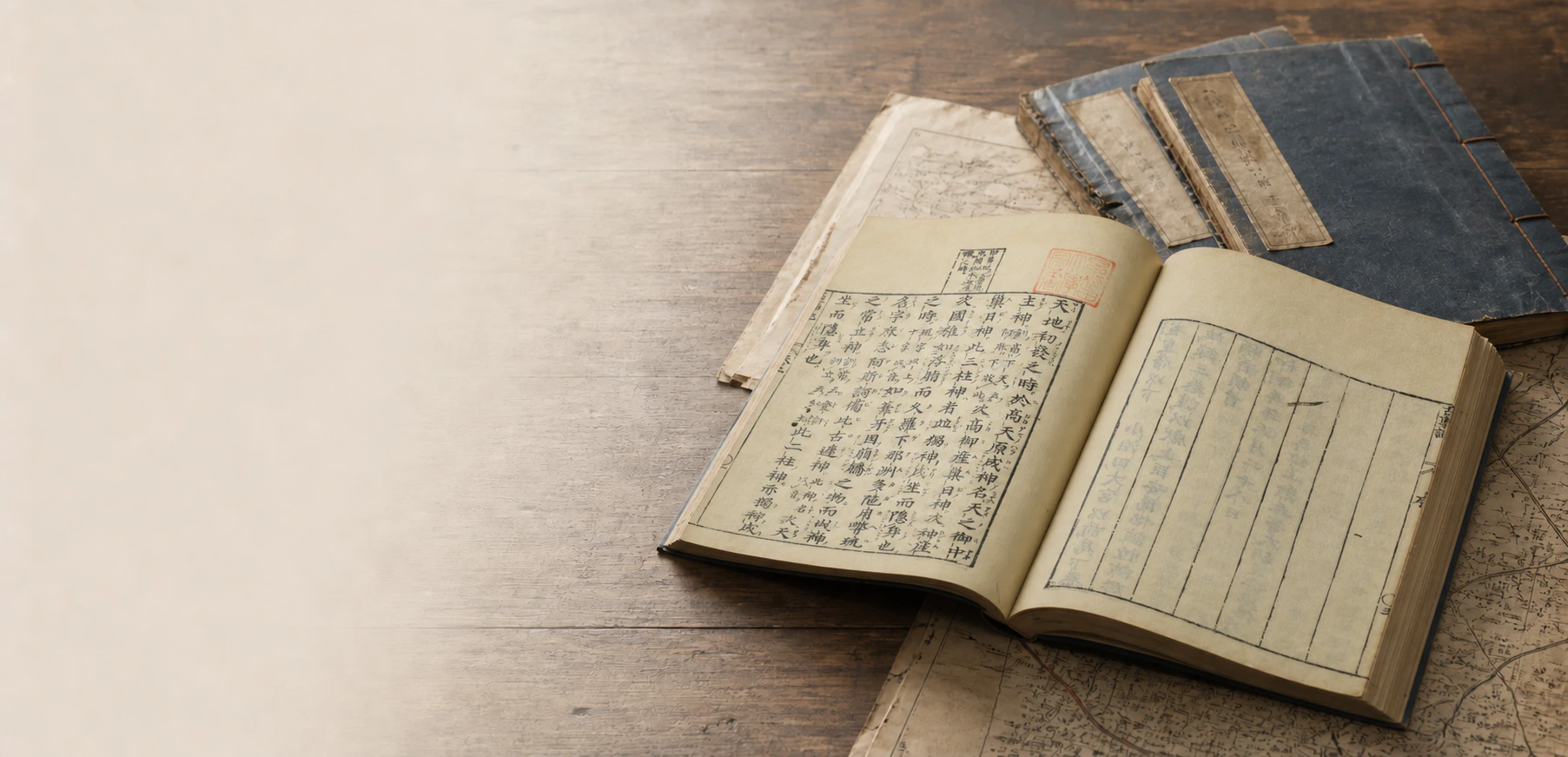
    The Kojiki in an open-book still life

    The Kobe Naval Training Center Opens and Closes

    Katsu Kaishū promoted a naval center at Kobe, where an existing careening basin had been built with the merchant Amiya Kihei’s private funds. Shogun Iemochi visited the site in 1863, and Kaishū received an appointment to advance naval construction and coastal defense there. The project used a working waterfront already developed for ship maintenance.

    The center opened in 1864 with teaching grounds, repair facilities and training ships, including Kankō Maru and Kokuryū Maru. Maritime instruction brought together young men from different warrior backgrounds. Ships and shore facilities allowed practical training alongside lessons; recruitment also created contacts across domain boundaries.

    The political setting curtailed the institution. After the Kinmon conflict in Kyoto, Kaishū was dismissed in 1864, and the center closed the following year. A commemorative inscription associated with the project was buried after closure and later recovered. Its short operation developed naval training and relationships but failed to establish a continuing academy under stable shogunal support.

    Sources and notes ViewHide
    1. [1]

      神戸海軍操練所と網屋吉兵衛Kobe Customs

    2. [2]

      神戸海軍操練所碑文稿Kobe City Museum / Agency for Cultural Affairs

    Reading context

    Reading preferences

    Text size
    Glossary intensity

    Choose how much explanation appears as you read.

    Saved on this device. All terms remain available in the glossary.

    Browse the glossary →
    History Omakase

    Opening reading…