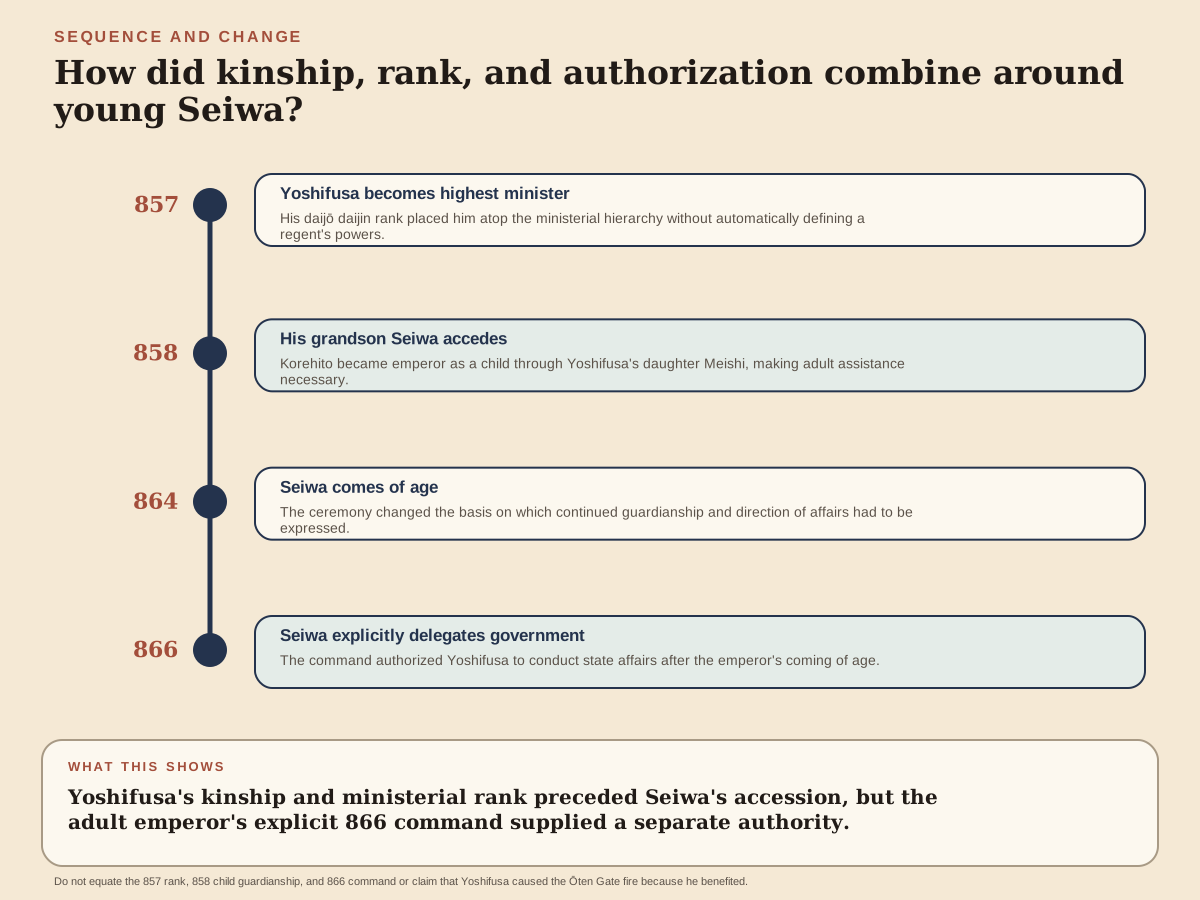
Seiwa came to the throne in 858 as a child. Yoshifusa was his maternal grandfather, already daijō daijin, the highest minister, and the leading adult of the maternal household. These positions allowed him to guide government. They did not settle the later legal language of regency: guardianship at accession and an explicit authorization to conduct government are different kinds of evidence.
Seiwa underwent his coming-of-age ceremony in 864. When an imperial command in 866 authorized Yoshifusa to conduct the affairs of government, it could not be explained only as the practical care of an infant ruler. The delegation established how a senior subject might exercise governing authority beside a sovereign who had crossed a recognized threshold of adulthood.
The Ōten Gate burned in 866. Conflict followed among senior courtiers, including an accusation against Minamoto no Makoto and a later report against Tomo no Yoshio. Questioning and punishment removed Yoshio. The twelfth-century Ban Dainagon Emaki turned the affair into a vivid sequence of fire, accusation and exposure, but that artwork is a later narrative rather than an eyewitness record.
Within the crisis, Seiwa directed Yoshifusa to handle the affairs of the realm. Some accounts treat Yoshifusa's effective regency as beginning in 858 and the 866 command as confirmation; other interpretations give the explicit command greater weight. Both dates belong in the story. The event uses 866 because that is where the surviving delegation is clearest.
Yoshifusa's adopted heir Mototsune advanced after the affair and later received authorizations of his own. That continuity made the 866 arrangement a precedent for Fujiwara government through maternal connection and delegated authority. Yet each later settlement still involved an emperor, offices and a new command. A powerful household had found a durable route to government, not acquired an unchanging private title to rule.