Read the article below. Interactive reading tools are available when scripts load.
Classic
Hideyoshi left a child heir in 1598 and charged senior lords and administrators with protecting his succession. Each leading lord also commanded a territory and retainer corps. Government required cooperation among these men because Hideyori could not direct them as his father had.
Toshiie’s death in 1599 removed a senior guardian. Ieyasu strengthened ties with other lords, including the marriage connection established with Kuroda Nagamasa before the 1600 campaign. Mitsunari and allied officials challenged actions they regarded as violations of Hideyoshi’s arrangements.
Toyotomi associations crossed the eventual battle lines. Fukushima and Kuroda joined Ieyasu, while Mitsunari, Ukita and Konishi belonged to the opposing coalition. Kobayakawa was Hideyoshi’s adopted son. Existing service and family ties created connections that commanders could use, but they did not bind everyone to one side.
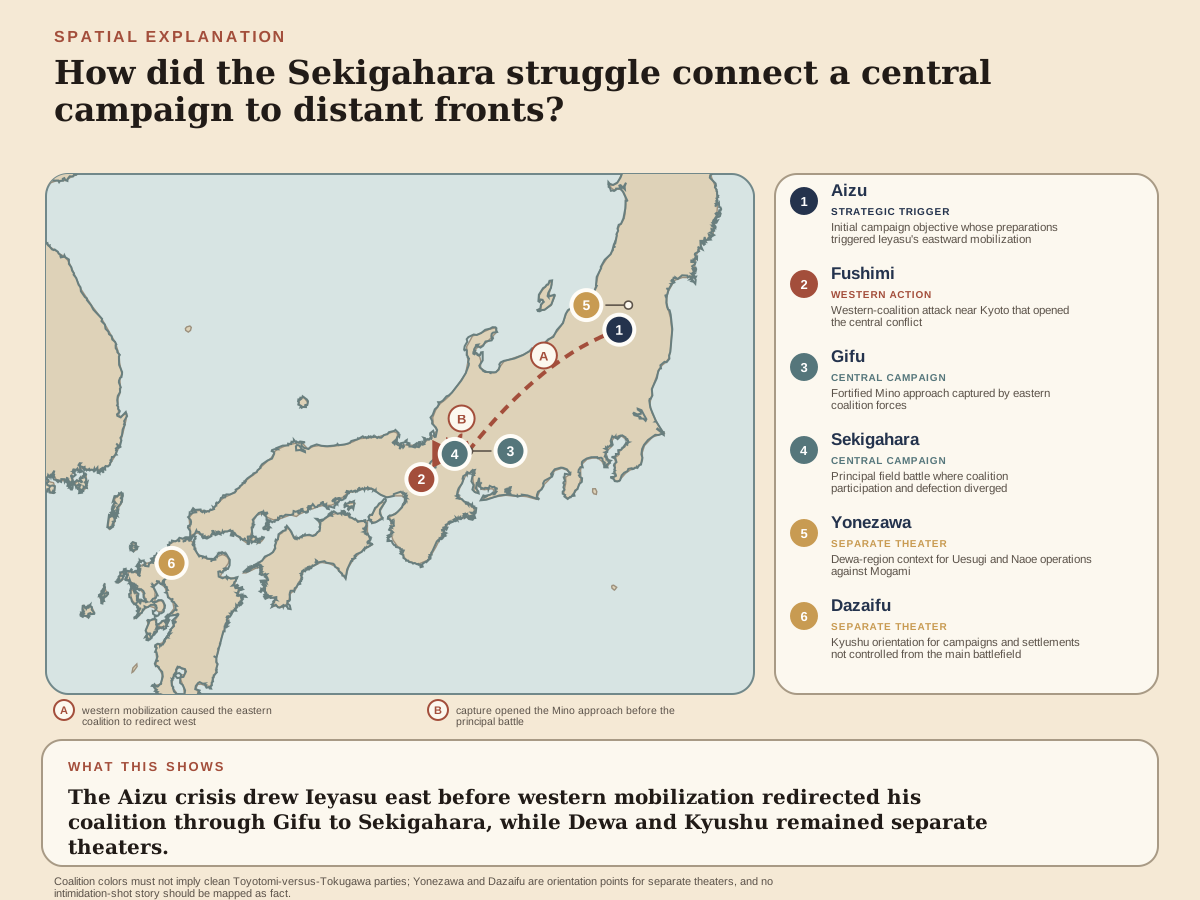
The dispute escalated around Uesugi Kagekatsu’s military preparations in Aizu. Ieyasu demanded an account and assembled a campaign against him. His departure from the Kyoto–Osaka region gave opposing leaders an opportunity to mobilize there, turning a dispute within the government into connected campaigns across Japan.
The councils depended on the leaders' own lands, retainers and continued cooperation. Membership did not supply a single independent force able to enforce an agreed interpretation of Hideyoshi's rules. Both coalitions consequently drew on men who had served his government. The invasions of Korea had also given commanders and administrators different duties and grievances; those experiences entered individual relationships rather than automatically creating two parties. The struggle was over authority within the settlement left to Hideyori, even as it opened the way for Ieyasu to supersede it.
Ieyasu led forces east in 1600. Mitsunari and allied leaders organized in the west, bringing Mōri Terumoto to Osaka as their senior figure. Western troops attacked Fushimi, the castle Ieyasu had held as a leading official of Hideyori’s government; its fall removed a stronghold near Kyoto.
The news prompted the eastern coalition to abandon its Aizu advance and move west. Fukushima Masanori and Ikeda Terumasa attacked Gifu, whose lord Oda Hidenobu had joined the opposing side. His surrender opened a key fortified approach through Mino. Ieyasu subsequently joined his advancing allies.
Letters helped assemble forces outside that route. Ieyasu offered former holdings to Tōyama Tomomasa and sought Endō Yoshitaka’s support through him. Allied forces contested castles and roads in eastern Mino. In Dewa, Naoe Kanetsugu attacked Mogami territory; at Hasedō, resistance continued while events unfolded in central Japan.
The principal armies converged near Sekigahara after operations around Ōgaki. On the fifteenth day of the ninth Japanese month, Fukushima and other eastern contingents fought Ukita’s forces, while Kuroda’s troops attacked Mitsunari. Units occupied different parts of the basin and adjacent hills, and the western coalition failed to bring all its forces into the main engagement.
Kuroda had communicated with Kikkawa Hiroie and Kobayakawa Hideaki before the battle. Mōri troops remained outside the main fighting. Kobayakawa’s troops moved from Mount Matsuo against Ōtani, and nearby units also changed sides. These actions disrupted the western force as eastern attacks continued.
Western resistance collapsed that day. Ōtani died, and surviving commanders fled or withdrew. Later narratives give different times and dramatic explanations for Kobayakawa’s action. The intimidation-shot story appears in later textual additions, while a surviving Ieyasu letter praises Kobayakawa’s service. The change of allegiance is better established than its familiar dramatic staging.
The eastern Mino correspondence made promises conditional on actual cooperation. Ieyasu's letter to Tōyama linked his restoration to Endō's recovery of Gujō, which would release Endō's existing holdings for Tōyama. Tsumaki Hirotada received repeated requests for support while Ieyasu prepared to leave Edo. The approaching army needed allies to act at separate castles and crossings; these letters record that work without proving that every promised move happened exactly as requested.
Terumoto's presence at Osaka did not place all Mōri decisions in his hands. Hiroie, his cousin, communicated with Kuroda while serving within the western coalition. The house's nominal leadership and the conduct of troops associated with it thus diverged. Their nonparticipation, Kobayakawa's attack and continued eastern pressure worked together against the western forces. Later maps offer a useful orientation, but disputed timings cannot support a precise account of what every commander knew before committing.
Shimazu Yoshihiro's force took a different route out of the defeat. It broke through eastern troops and withdrew toward the Ise road. The escape preserved Yoshihiro, while the Shimazu house still had to negotiate with the victors. Withdrawal, defection and capture were separate outcomes for forces commonly grouped under the western label.
Ieyasu’s coalition won the field. Mitsunari, Konishi and Ankokuji Ekei were captured and executed. Other defeated leaders survived under reduced territorial settlements, exile or new arrangements. Victory gave Ieyasu the authority to distinguish rewards, reductions and confiscations among individual houses.
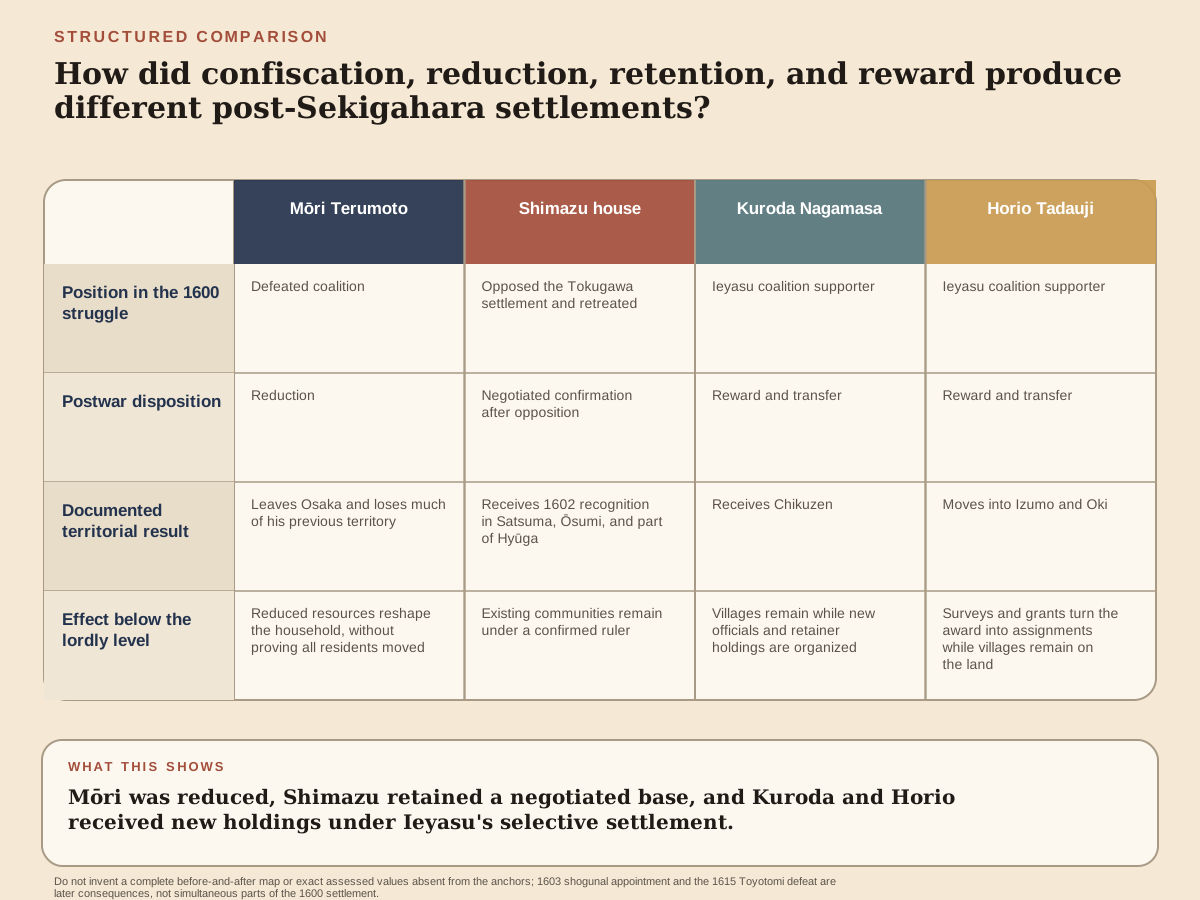
Mōri Terumoto left Osaka and lost much of his previous territory. The Uesugi were also reduced. Supporters gained lands: Kuroda Nagamasa received Chikuzen, and Horio Tadauji moved into Izumo and Oki. Confirmation and transfer orders translated military allegiance into provincial lordship.
The new rulers then had to govern. After entering Toda Castle, Tadauji distributed holdings to retainers and conducted surveys. A 1601 list promises land to six men. Such documents show how a broad territorial award became assignments and obligations within the receiving household.
The settlement did not remove every old center or give every ally all the lands promised. Date Masamune’s anticipated restoration was much larger than his actual Katta gain. Hideyori still held Osaka with his household. Ieyasu had established supremacy, while particular territorial claims and the Toyotomi heir’s future required further decisions.
Tadauji's grants separated the amount of assessed revenue from the locations supplying it. One document specified the holding's kokudaka and referred to an attached list; the separate list named the lands. Surviving documents also suggest assignments in which several retainers shared a locality. Surveys, grants and agreements with religious institutions were steps in governing the award, rather than consequences automatically executed by the national victory. A reduced lord lost resources supporting his retainer household and dependants, but these particular land records cannot reconstruct the fate of every displaced woman, child or servant.
Punishment was selective and unfolded over time. After Yoshihiro's retreat, Shimazu Iehisa handled negotiations and in 1602 the house obtained recognition of its control in Satsuma, Ōsumi and part of Hyūga. The western alignment had not meant permanent exclusion from the new order. Conversely, a grant or promise did not guarantee that the recipient would obtain every territory he expected.
Hideyoshi’s settlement redistributed lords as well as castles. Date Masamune submitted and retained a reduced northern base; Ikeda Terumasa and Ikoma Chikamasa advanced through service and territorial grants. Their different outcomes show that unification worked through selective confirmation, transfer and reward rather than one uniform absorption of regional rulers.
“Sekigahara” names a nationwide struggle more accurately than a single field when used with care. The decisive clash occurred in central Japan, but competing coalitions mobilized campaigns across regions. In the north, Uesugi power, Mogami defense, Date ambition, and Tokugawa strategy interacted. Masamune's support for Tokugawa Ieyasu, the leading challenger to Toyotomi central authority, joined a national alignment while pursuing regional security and opportunity. His forces took Shiroishi Castle from the Uesugi side and sent reinforcements to Mogami Yoshiaki, the neighboring lord resisting Uesugi attack. The northern terrain imposed its own timing. Armies needed passes, river crossings, supplies, intelligence, and defended bases. Messages between Ieyasu and allies could not make distant forces move without delay. Local lords carried memories of earlier conflict and possessed goals not reducible to obedience. An alliance worked because interests overlapped enough for action, not because Ieyasu controlled every movement from afar.
Terumasa married Tokuhime, a daughter of Ieyasu, in the 1590s, commonly dated to 1594. She had previously been married to Hōjō Ujinao, whose house was defeated at Odawara and who died afterward. Her remarriage joined the Ikeda to the largest lord beneath Hideyoshi. Both households nevertheless continued within the Toyotomi hierarchy. The bond created access through family ties before any Tokugawa supremacy had been established.
In 1597 Chikamasa and his son Kazumasa began building Marugame Castle at Kameyama in western Sanuki. The second project supplies a concrete example of father and son participating in the household’s territorial government. Takamatsu remained its coastal center; Kazumasa would move from Marugame to Takamatsu in 1602.
Rewards and reductions changed the rulers of provinces and castle towns. Horio entry into Izumo and Kuroda entry into Chikuzen began new governments whose residences and town-building developed after the campaign. Villages stayed on the assigned land as officials and retainer holdings changed around them.
Hōrinbō near Gifu obtained prohibitions on military disorder from both Oda Hidenobu and Ikeda Terumasa. The surviving orders show a local institution approaching opposing commanders for safety as battle threatened its surroundings.
Ieyasu’s appointment as shogun in 1603 gave his supremacy a recognized office. In 1605 he transferred the shogunal office to his son Hidetada, establishing succession within the family. The government continued to develop, while the Toyotomi remained at Osaka until the campaigns ending in 1615. The interval carried further construction, negotiation and war after Sekigahara’s territorial settlement.
Later scrolls and memorial sites organized the campaign into named battles, positions and commanders. The Hyogo scroll joins Fushimi, Gifu, Ueda and the final field in one retrospective narrative. Different textual versions of Kobayakawa’s action also preserved and enlarged its reputation. These later representations shaped the familiar story of the victory.
Fushimi connects the campaign to this later construction of authority. The castle taken in 1600 was rebuilt by Ieyasu in 1602, and he received his shogunal appointment there in 1603. Provincial awards likewise required continuing government: Tadauji died in 1604 before the planned move from Toda to Matsue was completed, leaving his father Yoshiharu to carry it forward. Offices, castle building and household succession gave the victory a material afterlife that a single day's battle could not complete.
The contrast between Ieyasu's surviving praise of Kobayakawa and later versions of the intimidation story also distinguishes evidence of service from explanations of its cause. A subsequent chronicle can preserve useful information and still add a scene that heightens the victor's authority. Monuments and campaign scrolls then select positions and commanders for remembrance; their labels cannot by themselves establish the intentions of all the participants in 1600.