Skip to content
Chronicle

Search History Omakase

Start typing to search.

    Read Yoshinobu Lives in Retirement When the Meiji Reign Ends

    Read the article below. Interactive reading tools are available when scripts load.

    Overview

    Yoshinobu Lives in Retirement When the Meiji Reign Ends

    The end of the Meiji reign in July 1912 did not coincide with Tokugawa Yoshinobu’s death. The former shogun was still alive in Tokyo. His position had changed through surrender, residence in Shizuoka, relocation to the capital and the grant of a dukedom in 1902.

    His Tokyo home was in Kohinata Dairokuten-chō, where he had moved in December 1901. Contacts with his brother Tokugawa Akitake included hunting, fishing and photography. Surviving household and visiting records document these exchanges and distinguish them from participation in national government.

    On December 8, 1910, Yoshinobu transferred the headship of his separate peerage house to Yoshihisa. By 1912 he was therefore its retired head, rather than the person still managing succession to the title. Iesato continued to head the main Tokugawa line, which remained distinct from the Yoshinobu branch.

    The former shogun had outlived the restoration of imperial government and the reign under which his own hereditary standing was recognized. That survival left the political transition visible within one family: national authority had been surrendered, while separate Tokugawa houses continued through appointments and inheritance under the imperial state.

    Sources and notes

    1. 勝海舟夫妻墓所・建立過程 · OtaCity KaishūMuseum
    2. 慶喜公爵家成立 · MatsudoTojōHistoryMuseum
    3. 慶喜昭武年表・1897–1913 · MatsudoTojōHistoryMuseum
    4. 明治天皇大喪の手続 · NationalArchives

    About these sources

    Back

    1912 | Yoshinobu Lives in Retirement When the Meiji Reign Ends明治末年の徳川慶喜

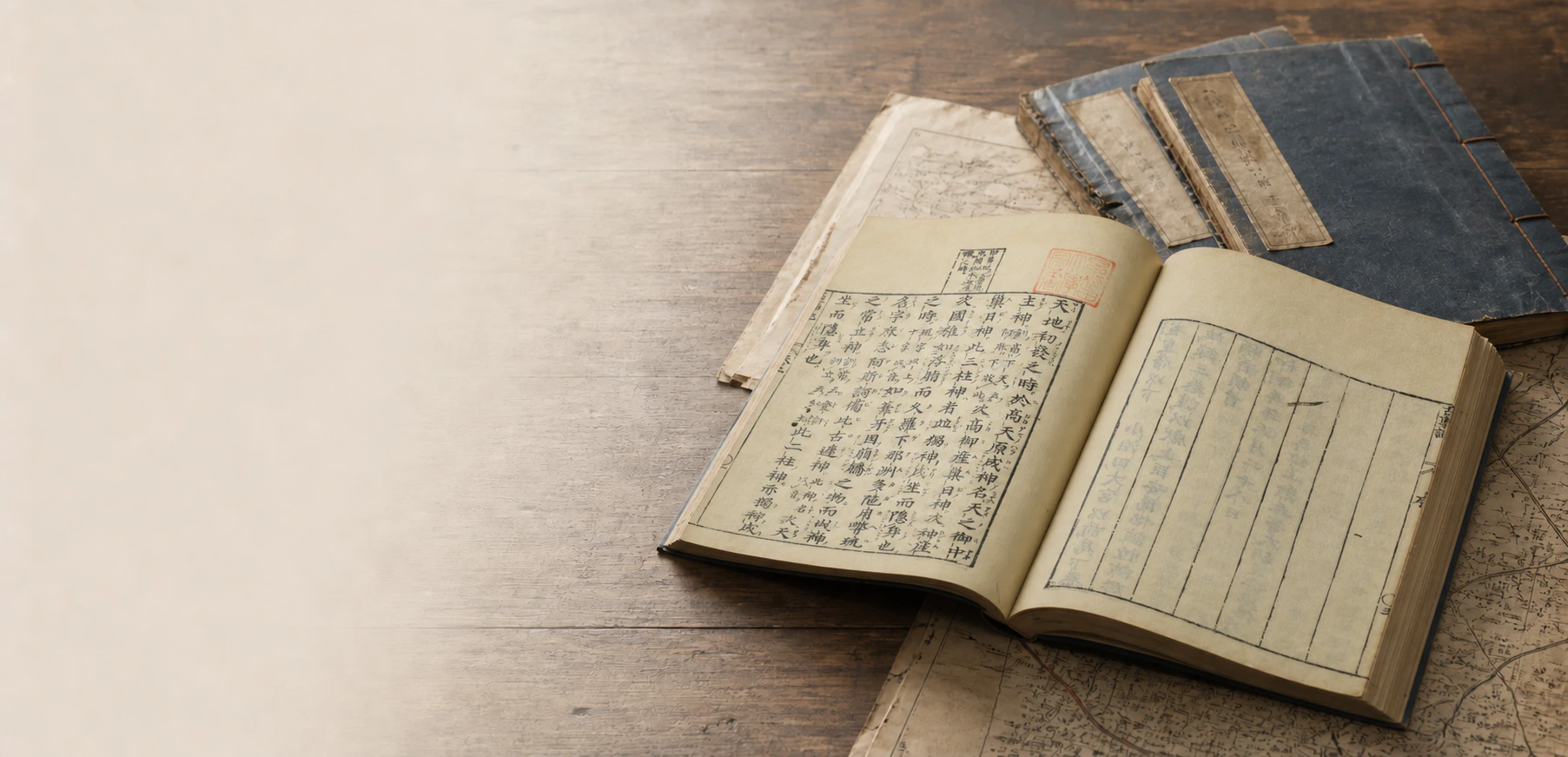
    The Kojiki in an open-book still life

    Yoshinobu Lives in Retirement When the Meiji Reign Ends

    The end of the Meiji reign in July 1912 did not coincide with Tokugawa Yoshinobu’s death. The former shogun was still alive in Tokyo. His position had changed through surrender, residence in Shizuoka, relocation to the capital and the grant of a dukedom in 1902.

    His Tokyo home was in Kohinata Dairokuten-chō, where he had moved in December 1901. Contacts with his brother Tokugawa Akitake included hunting, fishing and photography. Surviving household and visiting records document these exchanges and distinguish them from participation in national government.

    On December 8, 1910, Yoshinobu transferred the headship of his separate peerage house to Yoshihisa. By 1912 he was therefore its retired head, rather than the person still managing succession to the title. Iesato continued to head the main Tokugawa line, which remained distinct from the Yoshinobu branch.

    The former shogun had outlived the restoration of imperial government and the reign under which his own hereditary standing was recognized. That survival left the political transition visible within one family: national authority had been surrendered, while separate Tokugawa houses continued through appointments and inheritance under the imperial state.

    Sources and notes ViewHide
    1. [1]

      勝海舟夫妻墓所・建立過程OtaCity KaishūMuseum

    2. [2]

      慶喜公爵家成立MatsudoTojōHistoryMuseum

    3. [3]

      慶喜昭武年表・1897–1913MatsudoTojōHistoryMuseum

    4. [4]

      明治天皇大喪の手続NationalArchives

    Reading context

    Reading preferences

    Text size
    Glossary intensity

    Choose how much explanation appears as you read.

    Saved on this device. All terms remain available in the glossary.

    Browse the glossary →
    History Omakase

    Opening reading…