
Skip to content
Chronicle

Search History Omakase

Start typing to search.

    Read Kanamori Builds Takayama Castle and Its Town

    Read the article below. Interactive reading tools are available when scripts load.

    Overview

    Kanamori Builds Takayama Castle and Its Town

    After receiving Hida, Nagachika initially used Nabeyama but chose the older Tenjinyama castle site for his principal center. The hill overlooked an open basin and routes through the province. Rebuilding reused an established fortified location and required construction of a larger governing complex.

    The traditional chronology begins work in 1588, while a recent municipal survey also records 1590 as a possible start. It places completion of the main and second compounds by 1600, followed by the third compound under Yoshishige through 1603. The central works and the outer compound belonged to successive stages of the same project.

    Town construction placed warrior residences on higher ground, merchant areas below and temples toward Higashiyama. These arrangements connected the castle’s household and administration with the surrounding settlement. Later dismantling in 1695 removed the buildings and damaged walls. Remaining foundations, earthworks and excavated material preserve portions of the complex, rather than a complete castle attributable to a single year.

    Sources and notes

    1. 高山の歴史・金森時代 · Takayama City Cultural Properties
    2. 高山城跡 · Gifu Prefecture Cultural Heritage
    3. 高山城跡測量調査 · Takayama City Cultural Properties

    About these sources

    Back

    1588-1600 | Kanamori Builds Takayama Castle and Its Town高山城と城下町の建設

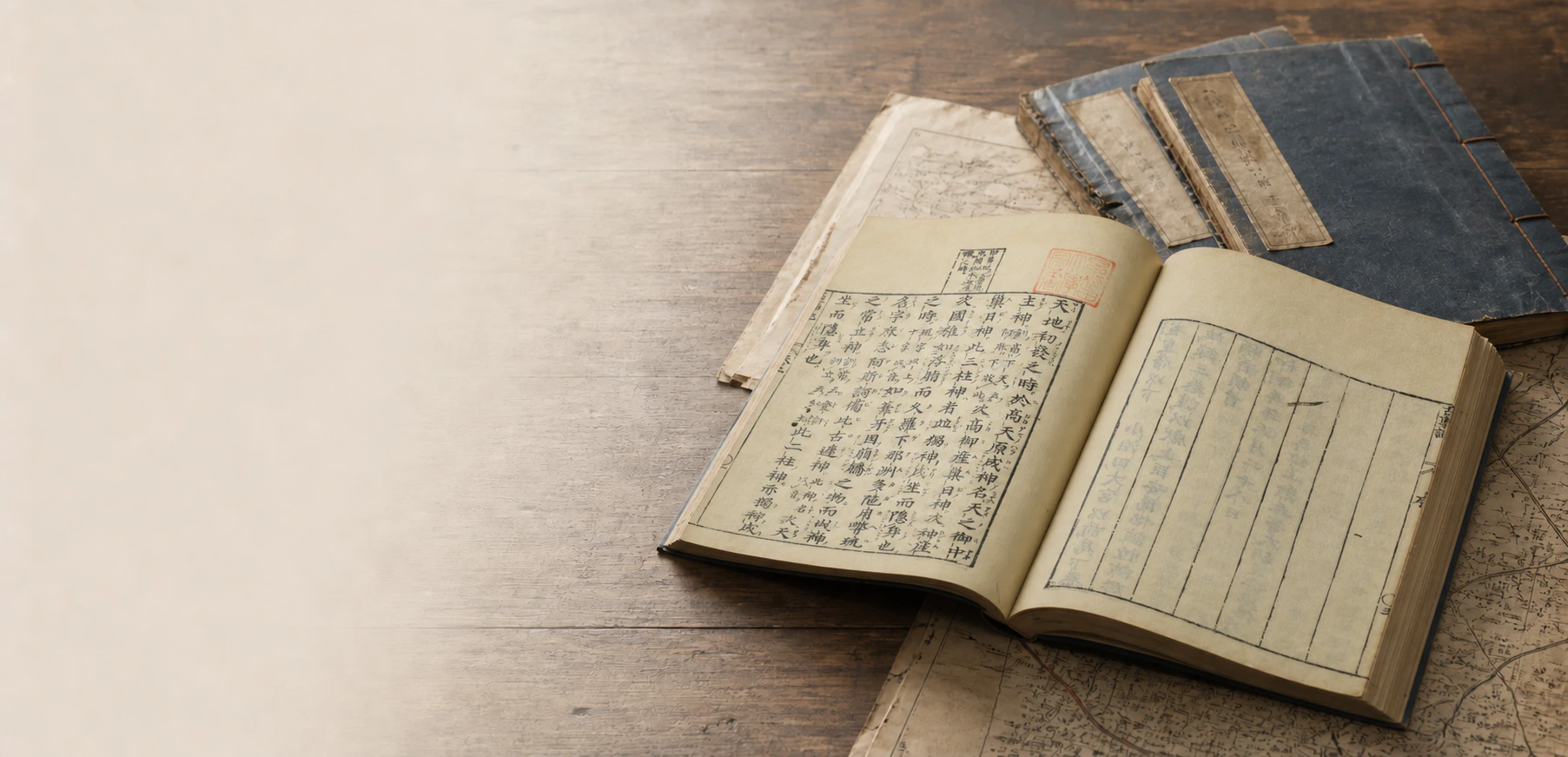
    The Kojiki in an open-book still life

    Kanamori Builds Takayama Castle and Its Town

    After receiving Hida, Nagachika initially used Nabeyama but chose the older Tenjinyama castle site for his principal center. The hill overlooked an open basin and routes through the province. Rebuilding reused an established fortified location and required construction of a larger governing complex.

    The traditional chronology begins work in 1588, while a recent municipal survey also records 1590 as a possible start. It places completion of the main and second compounds by 1600, followed by the third compound under Yoshishige through 1603. The central works and the outer compound belonged to successive stages of the same project.

    Town construction placed warrior residences on higher ground, merchant areas below and temples toward Higashiyama. These arrangements connected the castle’s household and administration with the surrounding settlement. Later dismantling in 1695 removed the buildings and damaged walls. Remaining foundations, earthworks and excavated material preserve portions of the complex, rather than a complete castle attributable to a single year.

    Sources and notes ViewHide
    1. [1]

      高山の歴史・金森時代Takayama City Cultural Properties

    2. [2]

      高山城跡Gifu Prefecture Cultural Heritage

    3. [3]

      高山城跡測量調査Takayama City Cultural Properties

    Reading context

    Reading preferences

    Text size
    Glossary intensity

    Choose how much explanation appears as you read.

    Saved on this device. All terms remain available in the glossary.

    Browse the glossary →
    History Omakase

    Opening reading…