
Skip to content
Chronicle

Search History Omakase

Start typing to search.

    Read Mutsuhito Succeeds and Is Formally Enthroned

    Read the article below. Interactive reading tools are available when scripts load.

    Overview

    Mutsuhito Succeeds and Is Formally Enthroned

    Mutsuhito succeeded Emperor Kōmei on the ninth day of the first month of the Japanese calendar in 1867. Yoshinobu still held the shogunal office. Accession supplied a new sovereign; the restoration government was established later, through decisions by courtiers and domain leaders in his name.

    Formal enthronement followed at Kyoto’s Shishinden on October 12, 1868. The ceremony announced the succession publicly through imperial appearance, offerings, proclamation and the assembled officials’ homage. It adopted Japanese ceremonial elements and a globe as an expression of interest in the wider world.

    War continued in northeastern Japan. Limited money and preparation time constrained new furnishings, so an existing imperial dais substituted for the throne destroyed in the 1854 fire. Wet ground also required officials’ positions to move from the courtyard into covered areas. These practical arrangements accompanied a solemn declaration of sovereignty. Succession, enthronement and military consolidation took place on different schedules, with the emperor’s presence serving a government whose work extended beyond the ceremony.

    Sources and notes

    1. 王政復古大号令・原文 · JACAR / National Archives Fukko-ki vol8
    2. 明治天皇の践祚・年表 · Imperial Household Agency
    3. 明治天皇の即位の礼 · Imperial Household Agency Kyoto Office

    About these sources

    Back

    1867-1868 | Mutsuhito Succeeds and Is Formally Enthroned明治天皇の即位

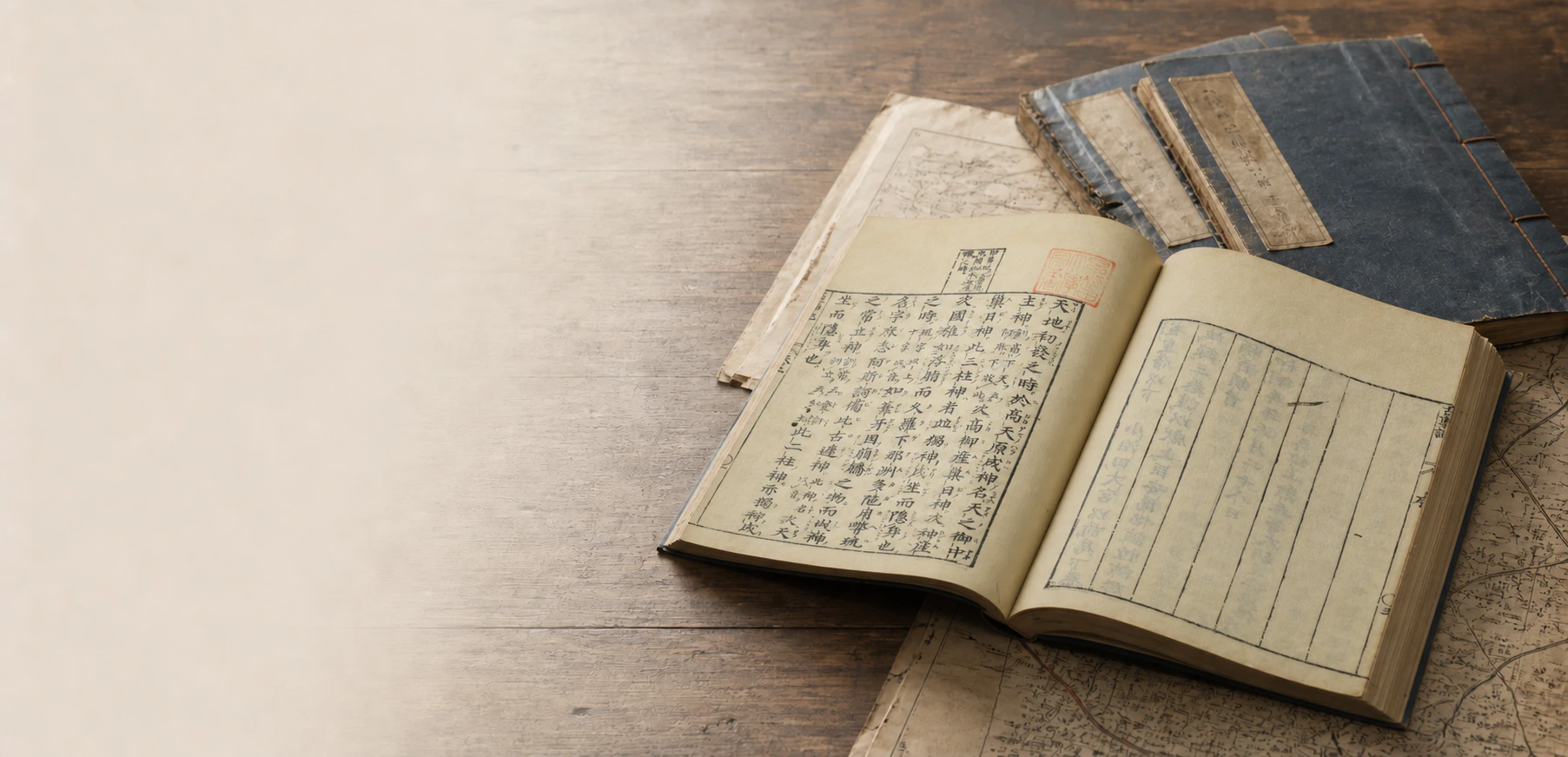
    The Kojiki in an open-book still life

    Mutsuhito Succeeds and Is Formally Enthroned

    Mutsuhito succeeded Emperor Kōmei on the ninth day of the first month of the Japanese calendar in 1867. Yoshinobu still held the shogunal office. Accession supplied a new sovereign; the restoration government was established later, through decisions by courtiers and domain leaders in his name.

    Formal enthronement followed at Kyoto’s Shishinden on October 12, 1868. The ceremony announced the succession publicly through imperial appearance, offerings, proclamation and the assembled officials’ homage. It adopted Japanese ceremonial elements and a globe as an expression of interest in the wider world.

    War continued in northeastern Japan. Limited money and preparation time constrained new furnishings, so an existing imperial dais substituted for the throne destroyed in the 1854 fire. Wet ground also required officials’ positions to move from the courtyard into covered areas. These practical arrangements accompanied a solemn declaration of sovereignty. Succession, enthronement and military consolidation took place on different schedules, with the emperor’s presence serving a government whose work extended beyond the ceremony.

    Sources and notes ViewHide
    1. [1]

      王政復古大号令・原文JACAR / National Archives Fukko-ki vol8

    2. [2]

      明治天皇の践祚・年表Imperial Household Agency

    3. [3]

      明治天皇の即位の礼Imperial Household Agency Kyoto Office

    Reading context

    Reading preferences

    Text size
    Glossary intensity

    Choose how much explanation appears as you read.

    Saved on this device. All terms remain available in the glossary.

    Browse the glossary →
    History Omakase

    Opening reading…