
Skip to content
Chronicle

Search History Omakase

Start typing to search.

    Read Zeami Is Exiled to Sado

    Read the article below. Interactive reading tools are available when scripts load.

    Overview

    Zeami Is Exiled to Sado

    Ashikaga Yoshinori exiled Zeami to Sado in 1434. The precise offense remains uncertain. The shogun favored Zeami’s nephew Motoshige, known as On’ami, and Zeami’s access to high-ranking performance occasions had already narrowed: an imperial-palace appearance was prohibited in 1429. His son and intended artistic successor Motomasa died in 1432.

    Exile removed an elderly performer from the capital’s patrons and stages, but surviving works and correspondence show continued connections. In a letter dated the sixth month of 1435, Zeami thanked his son-in-law, the performer Konparu Zenchiku, for help to his wife Juchin. The letter also discusses the performance of demons. Household support and the transmission of theatrical knowledge remained matters to negotiate across the distance.

    Zeami compiled the Kintōsho in 1436, giving literary form to his island experience. Yoshinori’s assassination in 1441 changed the political circumstances, but the date and conditions of Zeami’s return are uncertain. The episode left a clear break between his earlier work around Kyoto and his later writings on Sado. The surviving texts establish that artistic teaching continued during exile; they do not establish a documented charge or a secure account of his pardon.

    Sources and notes

    1. 能・世阿弥年譜 · Japan Arts Council cultural digital library

    About these sources

    Back

    1434 | Zeami Is Exiled to Sado世阿弥の佐渡流罪

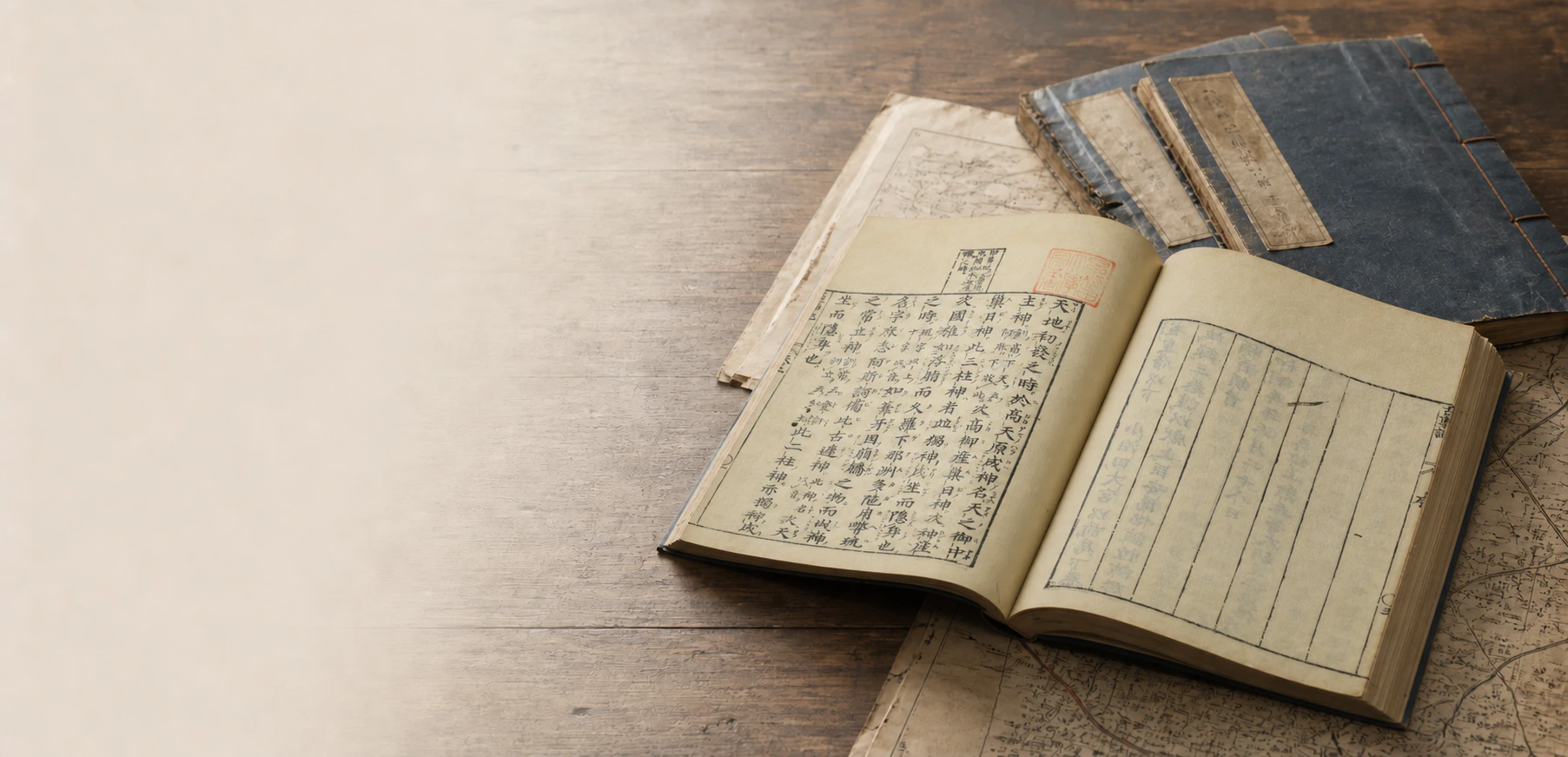
    The Kojiki in an open-book still life

    Zeami Is Exiled to Sado

    Ashikaga Yoshinori exiled Zeami to Sado in 1434. The precise offense remains uncertain. The shogun favored Zeami’s nephew Motoshige, known as On’ami, and Zeami’s access to high-ranking performance occasions had already narrowed: an imperial-palace appearance was prohibited in 1429. His son and intended artistic successor Motomasa died in 1432.

    Exile removed an elderly performer from the capital’s patrons and stages, but surviving works and correspondence show continued connections. In a letter dated the sixth month of 1435, Zeami thanked his son-in-law, the performer Konparu Zenchiku, for help to his wife Juchin. The letter also discusses the performance of demons. Household support and the transmission of theatrical knowledge remained matters to negotiate across the distance.

    Zeami compiled the Kintōsho in 1436, giving literary form to his island experience. Yoshinori’s assassination in 1441 changed the political circumstances, but the date and conditions of Zeami’s return are uncertain. The episode left a clear break between his earlier work around Kyoto and his later writings on Sado. The surviving texts establish that artistic teaching continued during exile; they do not establish a documented charge or a secure account of his pardon.

    Sources and notes ViewHide
    1. [1]

      能・世阿弥年譜Japan Arts Council cultural digital library

    Reading context

    Reading preferences

    Text size
    Glossary intensity

    Choose how much explanation appears as you read.

    Saved on this device. All terms remain available in the glossary.

    Browse the glossary →
    History Omakase

    Opening reading…