
Skip to content
Chronicle

Search History Omakase

Start typing to search.

    Read Byōdōin’s Amida Hall Is Dedicated

    Read the article below. Interactive reading tools are available when scripts load.

    Overview

    Byōdōin’s Amida Hall Is Dedicated

    In 1053 the Amida Hall at Byōdōin was dedicated, one year after Fujiwara no Yorimichi converted his inherited Uji villa into a temple. Its central seated Amida image is securely identified as a work of the Buddhist sculptor Jōchō. The patron founded and supported the temple; the attribution identifies the maker of its principal image.

    The central hall, adjoining corridors, pond and images gave visible form to Amida’s Pure Land. Smaller bodhisattva images and painted scenes accompanied the Buddha within the building. Worshippers encountered an ensemble of architecture and sacred images, rather than a single statue detached from its setting.

    The building was originally the Amida Hall. The temple’s chronology dates the growing use of “Phoenix Hall” to around the major repairs of 1670. Much of the original complex had already been lost to fire. Modern conservation has included replacement of vulnerable objects with copies and restoration of the pond margins. The surviving hall and Jōchō image preserve important eleventh-century work within a site that has also been repaired and changed.

    Sources and notes

    1. Byōdōin historical chronology · Byōdōin
    2. Byōdō-in official pamphlet · Byōdō-in

    About these sources

    Back

    1052-1053 | Byōdōin’s Amida Hall Is Dedicated平等院阿弥陀堂の供養

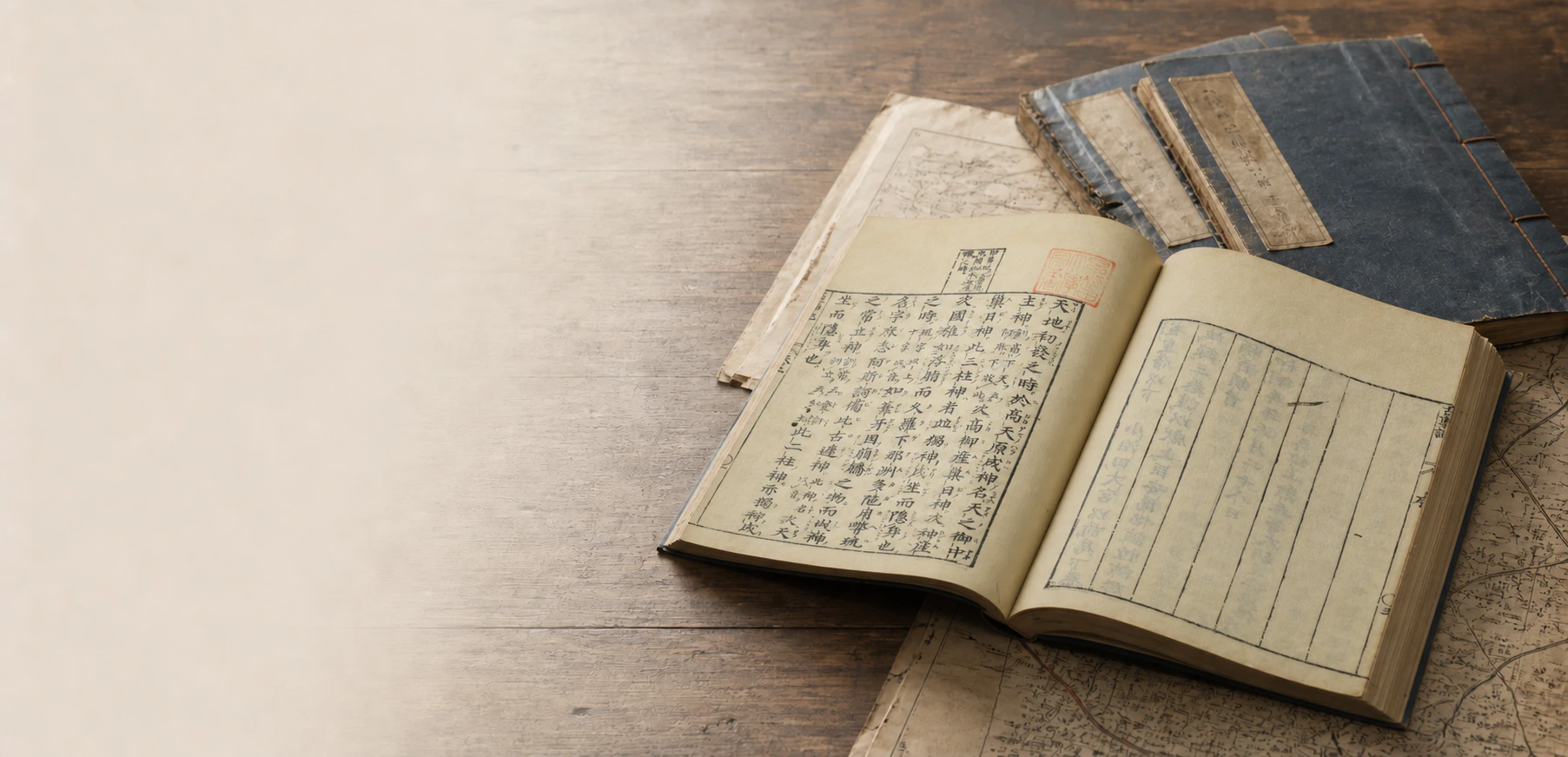
    The Kojiki in an open-book still life

    Byōdōin’s Amida Hall Is Dedicated

    In 1053 the Amida Hall at Byōdōin was dedicated, one year after Fujiwara no Yorimichi converted his inherited Uji villa into a temple. Its central seated Amida image is securely identified as a work of the Buddhist sculptor Jōchō. The patron founded and supported the temple; the attribution identifies the maker of its principal image.

    The central hall, adjoining corridors, pond and images gave visible form to Amida’s Pure Land. Smaller bodhisattva images and painted scenes accompanied the Buddha within the building. Worshippers encountered an ensemble of architecture and sacred images, rather than a single statue detached from its setting.

    The building was originally the Amida Hall. The temple’s chronology dates the growing use of “Phoenix Hall” to around the major repairs of 1670. Much of the original complex had already been lost to fire. Modern conservation has included replacement of vulnerable objects with copies and restoration of the pond margins. The surviving hall and Jōchō image preserve important eleventh-century work within a site that has also been repaired and changed.

    Sources and notes ViewHide
    1. [1]

      Byōdōin historical chronologyByōdōin

    2. [2]

      Byōdō-in official pamphletByōdō-in

    Reading context

    Reading preferences

    Text size
    Glossary intensity

    Choose how much explanation appears as you read.

    Saved on this device. All terms remain available in the glossary.

    Browse the glossary →
    History Omakase

    Opening reading…