Read the article below. Interactive reading tools are available when scripts load.
Quick
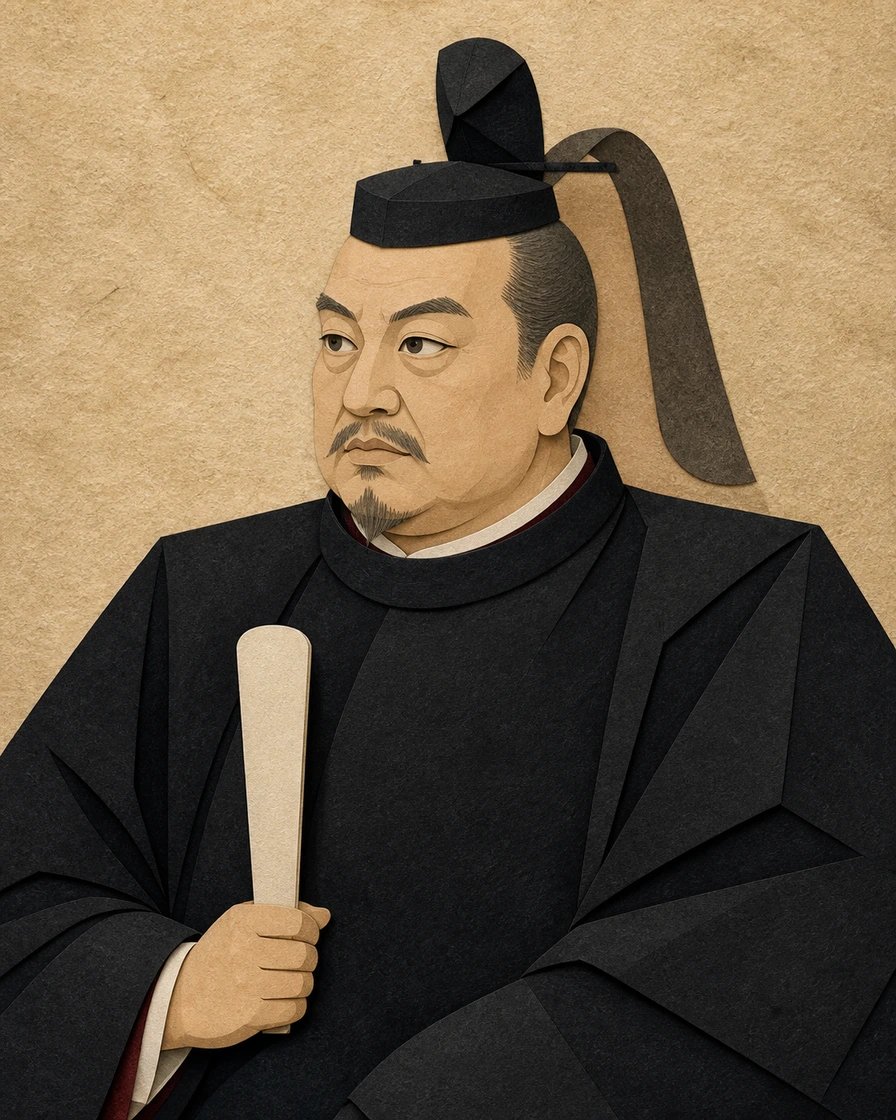
Tokugawa Ieyasu founded the military government that ruled Japan for more than two and a half centuries. He began life far from such authority. Born at Okazaki Castle in 1543, he was called Matsudaira Takechiyo. Japan was then divided among warrior lords who fought over land and alliances; his family was one of the weaker houses caught between them.
His father, Matsudaira Hirotada, held territory around Okazaki in Mikawa, roughly today's eastern Aichi Prefecture. The stronger Imagawa house lay to the east and the Oda to the west. Even the Matsudaira name covered several branches whose cooperation could not be assumed. Hirotada needed Imagawa support to keep his position.
Takechiyo's mother, Odai, came from the neighboring Mizuno family. In 1544 her marriage to Hirotada ended, and she returned to her own family. The Mizuno's movement toward the Oda was an important part of the background, though it does not settle every reason for the separation. In 1547 Takechiyo himself left home as a hostage intended for the Imagawa: keeping the heir in their custody would help guarantee his father's cooperation. The child's future depended on agreements made by adults, not on a plan to rule Japan.
Takechiyo's journey away from Mikawa did not take him straight to the Imagawa. Accounts place him first in Oda hands and under Imagawa control in 1549, although the exact circumstances of the transfers are less securely documented. His father died that same year. Imagawa Yoshimoto, the lord whose support had sustained Hirotada, brought Okazaki under his administration, while the young heir grew up at Yoshimoto's center, Sunpu, in present-day Shizuoka.
At Sunpu, a major center of warrior government, Takechiyo came of age. He used the names Motonobu and then Motoyasu, the ‘Moto’ reflecting Yoshimoto's patronage. These were successive names of the same young man. He married the woman later known as Tsukiyama-dono, from an Imagawa-connected family, and began military service. By the late 1550s he was leading Matsudaira followers in Imagawa campaigns against the Oda.
He could now command men who had served his father, but Yoshimoto still set the larger objectives. The hostage had become a working retainer, with a household and troops of his own. His new position remained dependent on the Imagawa. In 1560 Yoshimoto took his army into Oda territory, and Motoyasu went to war in his service.
At Okehazama in 1560, Imagawa Yoshimoto was killed by Oda Nobunaga while Motoyasu operated elsewhere in the campaign. Imagawa troops then withdrew from Okazaki, allowing him to enter his ancestral center. A surviving protection notice he issued to Hōzōji temple later that year shows him giving orders in his own name. Returning home gave him a base; he still had to establish authority across Mikawa.
Motoyasu moved toward cooperation with Nobunaga and fought remaining Imagawa positions. In 1563 he changed his name to Ieyasu. From that year the Mikawa Ikkō-ikki split his following. This was armed resistance by temples and congregations of Jōdo Shinshū, a school of Pure Land Buddhism, together with local warriors. Some of Ieyasu's own retainers joined them. Disputes over religious privileges and local control had become a conflict inside his house as well as outside it.
After hard fighting, negotiated return and pardon helped restore the house. Some religious institutions lost privileges or faced restriction, while former opponents could re-enter service. In 1567 Ieyasu adopted the Tokugawa surname and received court rank. These acts supplied genealogy and public status, but neither erased the civil conflict through which Mikawa rule had been rebuilt.
While Ieyasu was rebuilding his position in Mikawa during the 1560s, he was also changing its place among neighboring powers. Cooperation with Oda Nobunaga reduced danger on their shared frontier: Nobunaga could campaign farther west, and Ieyasu could break from the Imagawa. Their children, Nobunaga's daughter Tokuhime and Ieyasu's son Nobuyasu, married. This cooperation is commonly called the Kiyosu alliance, though the date and terms of one founding treaty are less certain than the alliance's practical record.
Freed to move east, Ieyasu attacked Imagawa territory while Takeda Shingen, a powerful lord to the north, advanced from another direction. Their opponent was Imagawa Ujizane, who had succeeded his father Yoshimoto. Kakegawa's surrender in 1569 ended the Imagawa house's independent rule without requiring Ujizane's death. The victors then faced one another across disputed lands; defeating a common enemy had not removed their competing claims.
In 1570 Ieyasu moved his base to Hamamatsu, in Tōtōmi, east of Mikawa, and sent forces to fight beside Nobunaga at Anegawa. He remained a territorial lord with his own army, though Nobunaga's growing power made the relationship increasingly unequal. The alliance gave him room to expand while committing him to wars beyond the defense of his own lands.
From Hamamatsu, Ieyasu tried to govern Tōtōmi, the province east of his original Mikawa lands, while facing Takeda Shingen's westward campaign. Early in 1573, Tokugawa forces met the Takeda on the Mikatagahara plateau and suffered a severe defeat. Many followers died, and Ieyasu withdrew to Hamamatsu. Shingen continued operations and captured Noda Castle before illness and death halted the campaign later that year.
The Tokugawa house survived because defeat had not cost it every strongpoint or ally. Hamamatsu remained a refuge, surviving officers could regroup, and the alliance with Nobunaga remained in place. Shingen's death gave Ieyasu time to recover. His survival depended on resources he had assembled and on an event beyond his control.
A famous portrait was later said to show Ieyasu recording his humiliation as a lifelong warning. Historian Hara Fumihiko found no documentary link between the painting and this battle; Hamamatsu City Museum adopts that reassessment. The portrait cannot securely tell us what Ieyasu thought after the defeat. What followed is clearer: Shingen's son Katsuyori took over the Takeda house, and Ieyasu would face its armies again.
At Nagashino in 1575, Takeda Katsuyori, who had succeeded his father Shingen, besieged a castle held for Ieyasu by Okudaira Nobumasa. Oda and Tokugawa relief forces defeated the Takeda army. Firearms and field defenses helped the allies, while the garrison held out and other troops attacked Takeda positions around it. Japanese historians still dispute the familiar reconstruction of exactly 3,000 guns firing in three rotating ranks; the allied victory does not depend on accepting that precise scene.
Victory did not make the Oda–Tokugawa relationship free of violence. In 1579 Ieyasu's wife Tsukiyama-dono was killed and his eldest son Nobuyasu was compelled to take his own life. Nobuyasu's wife Tokuhime was Nobunaga's daughter. Traditional accounts make her accusations and an order from Nobunaga decisive; another interpretation places the crisis in divisions between Ieyasu's household at Hamamatsu and Nobuyasu's at Okazaki. Japanese historians disagree over that explanation too. The deaths are certain; the chain of responsibility and motive remains unsettled.
In 1582 Oda and Tokugawa forces destroyed the Takeda house as a territorial power. Ieyasu received Suruga, gaining territory that had once anchored Imagawa dominance. The sequence joined military success to a catastrophic household rupture. It cannot be reduced to steady progress toward unification.
In 1582, after the victory over the Takeda, Ieyasu visited Nobunaga and traveled in the region around Kyoto and Sakai with a small entourage. Nobunaga's own commander Akechi Mitsuhide then attacked him at Honnōji temple in Kyoto; Nobunaga died in the coup. The roads and checkpoints on which Ieyasu had relied were suddenly uncertain. Far from his field army, his immediate task was to reach Tokugawa-controlled territory alive.
The return commonly called the Iga crossing took him through difficult country toward Ise, on the coast, and then by boat to Mikawa. Local warriors and guides helped him find passage, while contacts and portable valuables secured practical assistance. Anayama Baisetsu, another lord returning from the region, was killed. Accounts differ over the circumstances of that death and the exact stages of Ieyasu's journey.
A major lord briefly possessed less usable power than the communities controlling paths and boats. Once home, Ieyasu could mobilize. Before arrival, survival depended on a network that did not fit neatly inside the later Tokugawa chain of command. With Nobunaga gone, he now had to defend his gains and decide how to act in the unsettled former Takeda lands.
Nobunaga's death in 1582 destabilized the newly conquered Takeda territories. Ieyasu's forces advanced toward Kai and Shinano, inland provinces north of his coastal domains. The Hōjō, based farther east in the Kantō, and the Uesugi, approaching from the north, also competed for the region in the conflict now called the Tenshō-Jingo war. Local lords and former Takeda retainers chose and negotiated among these claimants rather than simply waiting for a new ruler.
Ieyasu entered Kai and promised to protect local holdings, using military pressure and intermediaries to attract men familiar with the region. A settlement with the Hōjō leader Ujinao left Ieyasu with Kai and much of Shinano while recognizing other territorial arrangements and a marriage alliance. Resistance by the local Sanada house and disputes over particular districts showed that the map was not fully settled.
Former Takeda retainers brought military experience and knowledge of land, taxes, and routes into Tokugawa service. Ieyasu placed them under a new command and distributed land anew. He gained a larger domain, but also inherited competing claims that had to be resolved after the armies moved on. This expansion made him stronger just as the struggle to succeed Nobunaga was producing a new leading figure.
The strongest contender to inherit Nobunaga's position was his former commander Hideyoshi, later known as Toyotomi Hideyoshi. After defeating Mitsuhide, he overcame other rivals among Nobunaga's former followers. Nobunaga's son Oda Nobukatsu resisted his growing authority and turned to Ieyasu. In 1584 the two allied against Hideyoshi.
Tokugawa forces defeated a detached army near Nagakute, but the wider war around Komaki centered on fortified positions, supply, and political allegiance. Hideyoshi retained superior resources and made a separate settlement with Nobukatsu. Ieyasu had won the best-known battle without destroying Hideyoshi's power; his ally's peace also weakened the basis for continuing the war.
Ieyasu preserved his army and reputation. The 1585 defection of senior retainer Ishikawa Kazumasa to Hideyoshi exposed Tokugawa information and sharpened pressure for reorganization. Hideyoshi then used kinship: his sister Asahi married Ieyasu, and his mother Ōmandokoro went to Tokugawa custody as a human guarantee.
In 1586 Ieyasu traveled to Osaka and publicly submitted. He entered the Toyotomi hierarchy while retaining his territory and a large army. Tactical success had helped protect his bargaining position, but expanding Toyotomi power determined who would set the terms of Japan's political order.
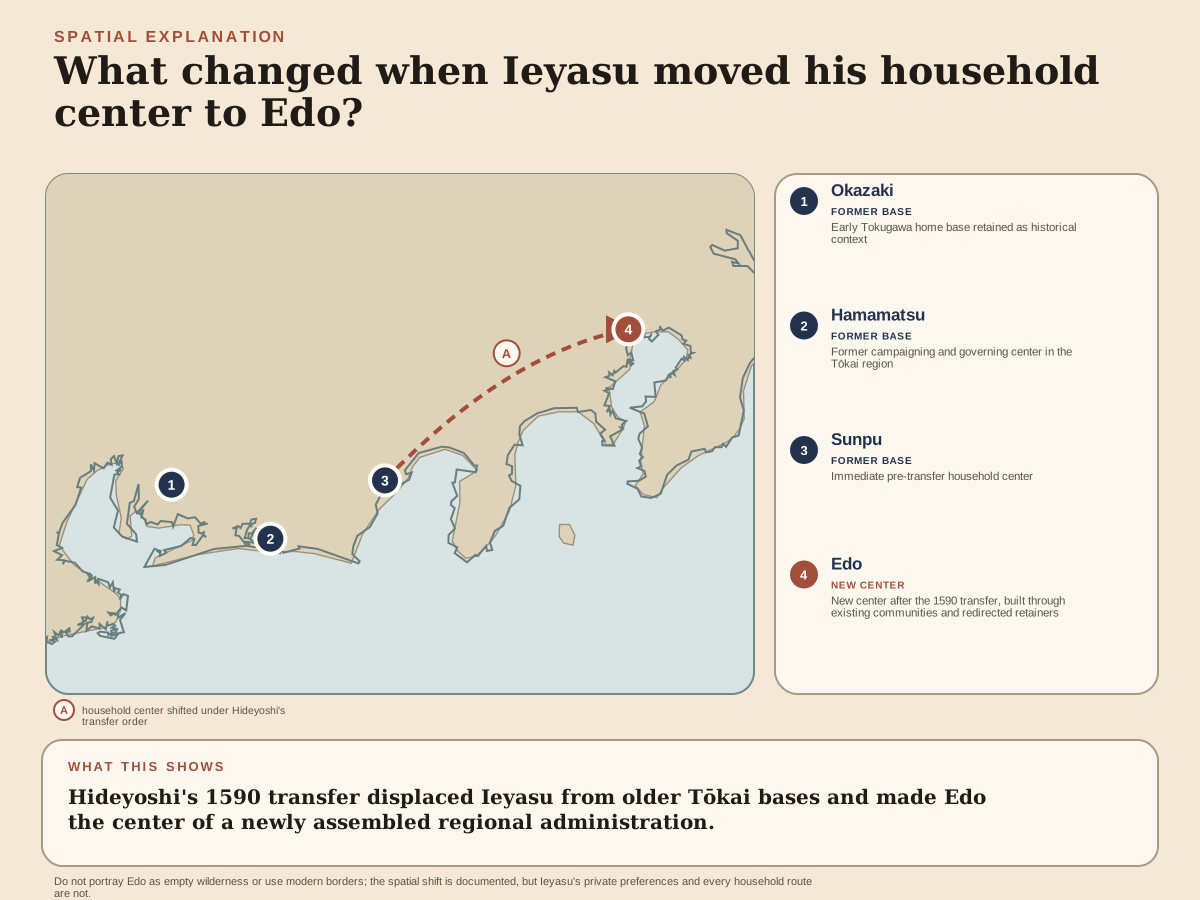
After Hideyoshi defeated the Hōjō in 1590, he transferred Ieyasu from five central provinces to a vast domain in the Kantō, the eastern region around present-day Tokyo. The move removed the Tokugawa from ancestral Mikawa and recently acquired Kai and Shinano, but gave Ieyasu lands assessed to yield substantially more income. He had to exchange an established base for resources he did not yet control on the ground.
Ieyasu entered Edo in 1590. The city later called Tokyo already had a castle and surrounding settlement; he did not start on empty land. Tokugawa officers placed retainers in castles, reviewed local land claims, and organized surveys and transport routes. Communities supplied information and labor while bearing new demands. Warrior households moving east had to rebuild ties with people whose loyalties and documents did not begin with Tokugawa rule.
Why had Hideyoshi ordered the move? Removing Ieyasu from his home ground is one explanation. Historians including Takei Hidefumi and Honda Takanari also emphasize the need to govern the newly conquered east. These purposes could coexist; no single private motive is established. For Ieyasu, the immediate work was clear: settle his followers and secure revenue. Edo grew into his principal eastern base through that work, not because its future as Japan's capital was already assured.
In 1592 Hideyoshi launched an invasion of Korea, seeking submission and a route toward conquering Ming China. Korea resisted, Ming forces intervened, and another Japanese invasion followed in 1597. The wars devastated communities on the peninsula. Ieyasu, now a powerful lord serving Hideyoshi, attended the invasion headquarters at Hizen Nagoya in northern Kyushu. His main forces did not cross to fight in Korea, but his service helped sustain the government conducting the war; remaining in Japan does not establish opposition to it.
While Ieyasu attended Toyotomi centers, his officials continued to govern and consolidate the Kantō. His house avoided the battlefield losses suffered by forces overseas. When Hideyoshi died in 1598, the Japanese armies were withdrawn, but the succession remained difficult: Hideyoshi's heir, his young son Hideyori, could not govern for himself.
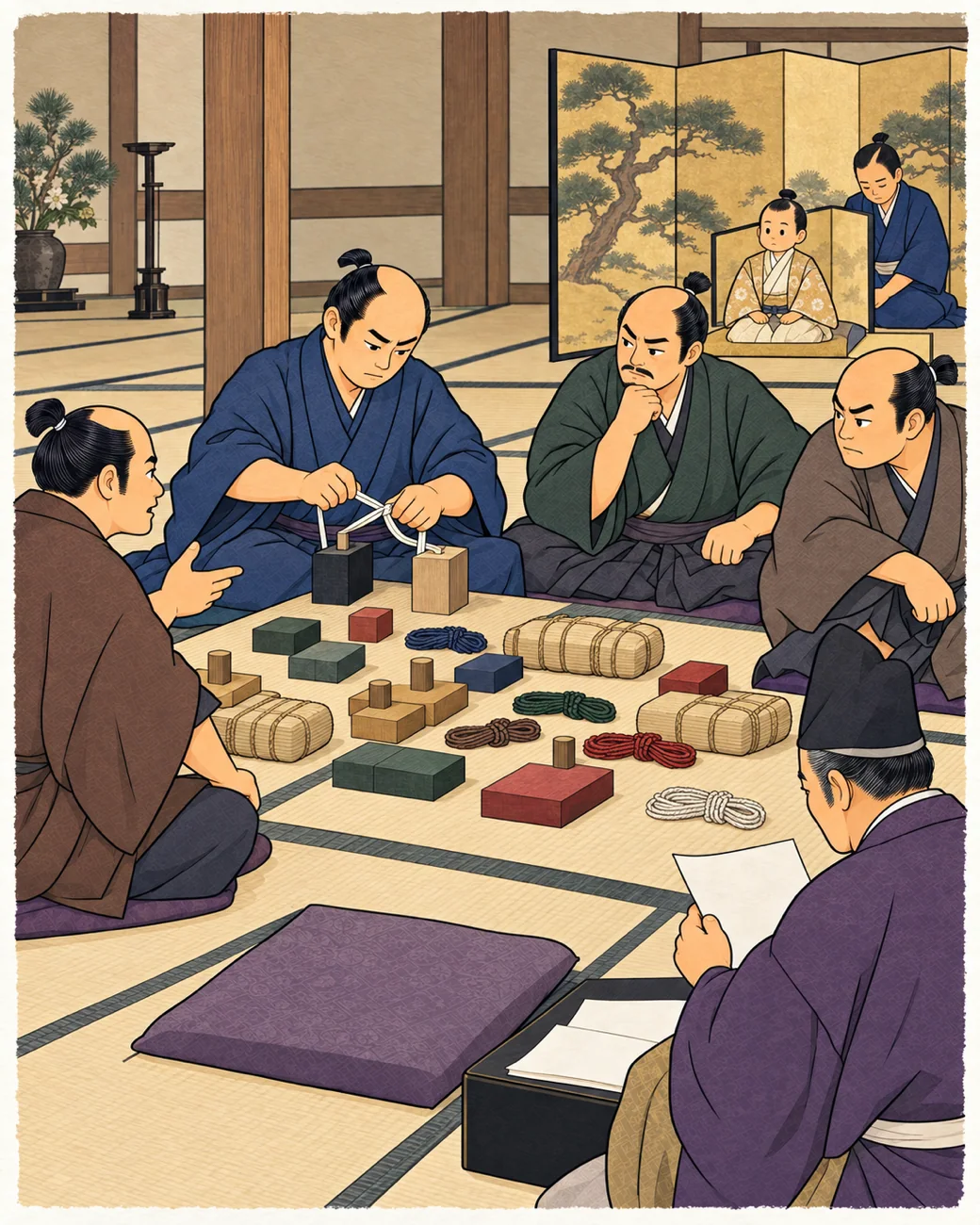
Ieyasu was one of the senior lords charged with protecting Hideyori's position. Arrangements later called the Five Elders and Five Commissioners brought great territorial lords together with experienced administrators to conduct government around the child. Ieyasu's land, army, and seniority made him exceptionally influential within that arrangement. Other leaders had reason to watch his growing alliances. The next struggle would begin inside the government he had promised to support.
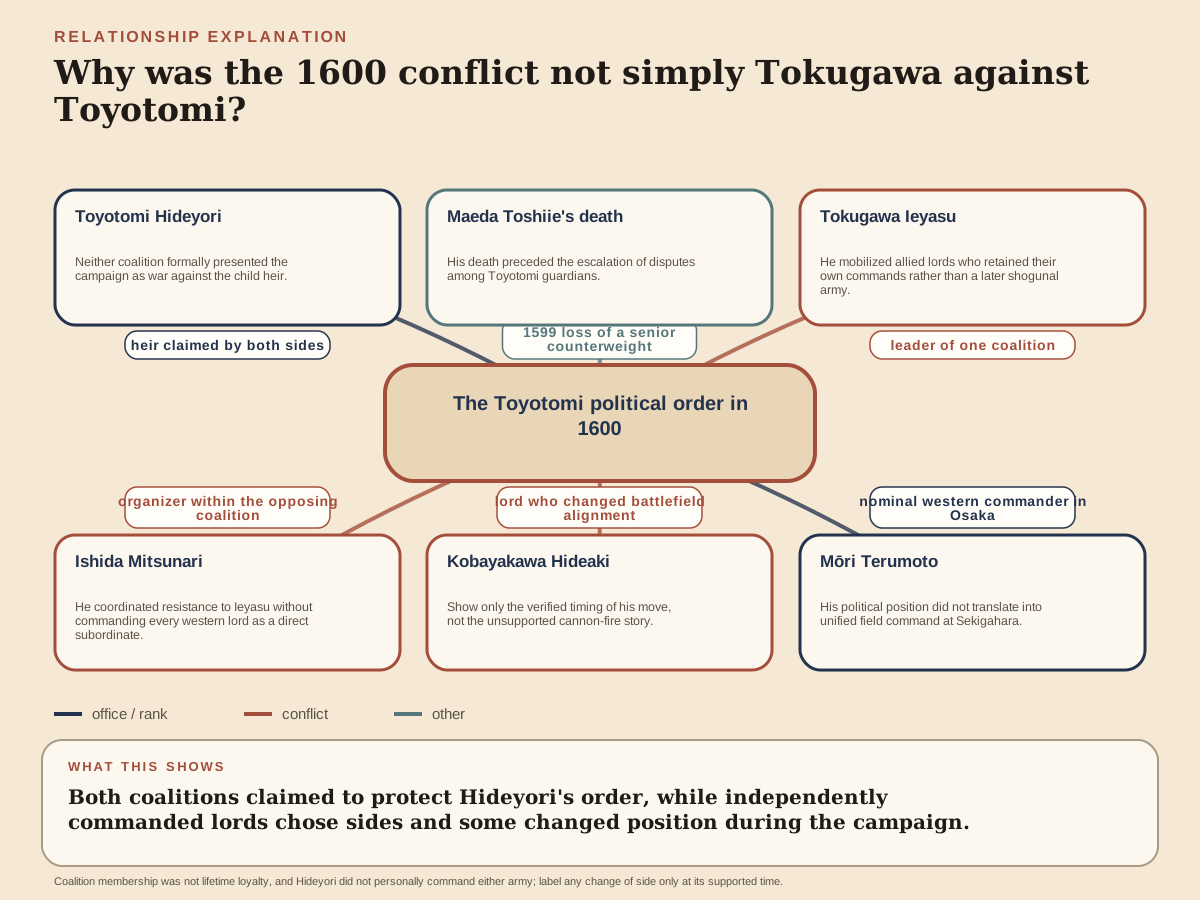
After Hideyoshi's death, Ieyasu expanded marriage and political alliances while other Toyotomi leaders accused him of breaking the arrangements intended to protect Hideyori. Maeda Toshiie, a fellow senior lord able to counterbalance him, died in 1599. In 1600 a dispute over the fortifications, armament, and obedience of the northeastern lord Uesugi Kagekatsu led Ieyasu to march east with allied forces. Ishida Mitsunari, one of Hideyoshi's senior administrators, then helped organize an opposing coalition in the west.
This was not simply Tokugawa versus Toyotomi. Lords on both sides claimed to defend Hideyori's order, even while disagreeing about who should exercise power within it. Fighting spread across Japan. Ieyasu turned back west, bringing together commanders who led their own armies and could not be treated as ordinary Tokugawa officers.
At Sekigahara in 1600, Ieyasu's coalition defeated the western field army. Kobayakawa Hideaki, a lord deployed on the western side, attacked his former allies; other western units remained inactive. Earlier negotiations helped prepare the change of sides, though the familiar story that Ieyasu forced it with cannon fire is not secure. Victory let Ieyasu punish opponents and reassign their lands. Hideyori remained at Osaka Castle, but the most powerful military position now belonged to the man who had been entrusted with helping to protect him.
Sekigahara allowed Ieyasu to redistribute political geography. Defeated houses lost or surrendered vast lands; allies received confirmations and transfers; Tokugawa relatives and trusted retainers occupied strategic corridors. Reward, punishment, security, and revenue were inseparable. Communities often changed lords without moving, while warrior households and administrators were relocated.
In 1603 the imperial court appointed Ieyasu shogun, the recognized office of leadership over Japan's warrior lords. His military government is known as the Tokugawa or Edo shogunate. The title gave public authority to his supremacy, but did not create every later Edo institution at once. Government still depended on daimyō, the territorial lords who collected revenue and commanded troops in their own domains.
Toyotomi Hideyori, Hideyoshi's son, still possessed Osaka Castle, high rank, wealth, and a recognized claim to his father's legacy. His marriage to Ieyasu's granddaughter Senhime joined the rival houses. In 1605 Ieyasu resigned the shogunal office and his son Hidetada received it. The rapid transfer showed that Tokugawa leadership could pass from father to son while the founder remained alive to support it. The Toyotomi position at Osaka was still unresolved.
Passing the title to his son did not end Ieyasu's government. Hidetada ruled from Edo, while Ieyasu established his later base at Sunpu in 1607 and continued to direct major affairs. He received foreign envoys, permitted Dutch and English trade under regulation, and sponsored printing. Father and son had to coordinate decisions; retirement was a division of work within the ruling house.
At Osaka, Hideyori, the now-grown son of Hideyoshi, and his mother Yodo-dono headed a household that retained a castle, wealth, and followers. Ieyasu met Hideyori at Nijō Castle in 1611, but their political relationship remained unresolved. Warriors without secure employment gathered at Osaka. In 1614 the Tokugawa side treated words on a bell commissioned for the Toyotomi-sponsored Hōkōji temple as an insult to Ieyasu. The inscription became a focus for a conflict already involving an armed rival house.
The Tokugawa coalition besieged Osaka in the winter campaign of 1614. Negotiations brought the fighting to an end. Acha-no-tsubone represented Tokugawa interests; Jōkō-in, Yodo-dono's sister, helped carry Osaka's position. Important defenses were then removed or filled. Accounts differ over the agreed scope and whether its implementation broke the terms, but Osaka was left much less secure.
War resumed in the summer of 1615. Osaka Castle fell, and Hideyori and his mother died; Senhime, Hideyori's wife and Ieyasu's granddaughter, survived. The Toyotomi house was destroyed as a rival center. Later in 1615 the government issued regulations for warrior houses and the court. Restrictions on castles and marriages gave the Tokugawa greater control over the means by which another great house might grow strong.
Ieyasu fell ill after a falconry outing early in 1616 and died at Sunpu that year. The exact disease remains uncertain. He left a government already headed by his son Hidetada. From this point, the story concerns what his successors made of the founder as well as what he had done during his lifetime.
He was buried at Kunōzan, near Sunpu. Memorial rites also connected Zōjōji in Edo and Daijuji in Mikawa to his house. In 1617 he received the divine title Tōshō Daigongen and was enshrined at Nikkō. Much of the magnificent complex visitors know reflects rebuilding completed in 1636 under his grandson Iemitsu, the third Tokugawa shogun. Whether the physical remains were transferred from Kunōzan to Nikkō remains disputed; the growth of worship at both places is clear.
Tokugawa government made the founder a sacred protector and a model of prudent rule. Its peace was maintained by later generations, not by Ieyasu alone. When the shogunate fell in 1867–1868 and a new government claimed to restore imperial rule, accounts hostile to the Tokugawa gained ground, while local devotion continued. By 1912, education and popular history increasingly placed Ieyasu alongside Nobunaga and Hideyoshi as three successive unifiers. That sequence helps readers follow time, but the three men did not share a coordinated plan whose ending they could foresee.
Classic
Matsudaira Hirotada needed help to hold his family's position at Okazaki. His son Takechiyo, later known as Tokugawa Ieyasu, was born into that dependence. The Matsudaira were a warrior house in Mikawa, in the region around today's eastern Aichi Prefecture. Oda expansion threatened them from the west; the stronger Imagawa house offered support from the east. Hirotada's choice of protector would determine where his son grew up.
Takechiyo was born at Okazaki Castle in 1543. [7][8] His grandfather Matsudaira Kiyoyasu had been killed by one of his own retainers in 1535, leaving Hirotada to rebuild the family's position. [9] The insecurity of the house preceded the child's birth. His mother, Odai, was the daughter of Mizuno Tadamasa, lord of nearby Kariya. [8][12]
Even within Mikawa, Hirotada could not count on every Matsudaira branch. Related families held claims of their own and could turn to different protectors. Imagawa support helped Hirotada keep his local following, while giving the Imagawa a say in the uses to which that following could be put.
His mother Odai's marriage to Hirotada joined the Matsudaira to the Mizuno. In 1544 the marriage ended, and she returned to Kariya while Takechiyo remained with the Matsudaira. The Mizuno family's movement toward the Oda forms part of the political background; it need not be treated as the only cause of the separation. No surviving record tells us how the child experienced it. Even his parents' marriage depended on relations between houses that he could do nothing to control.
In 1547 Hirotada sent Takechiyo away as a hostage, a guarantee of Matsudaira loyalty in return for Imagawa support. He did not reach the intended protector: accounts place him first in the hands of the rival Oda. The circumstances of that change are less secure than the fact that the child left home under other people's control. A high-born hostage could be treated as a guest and educated as a future lord while still being held under coercion. His captors could use the threat to him to press his family for obedience.
Tokugawa histories would make these dangers the first lessons in a life of patience. They were written with knowledge of the ending. In the 1540s, the immediate concern was the survival of Hirotada's house and the child through whom its claims might continue.
Away from Mikawa, Takechiyo would grow up among the stronger houses competing over his homeland. Returning to Okazaki as its lord was still far from assured.
Takechiyo could not choose where he lived. His custody gave stronger lords leverage over the Matsudaira, and the possibility of punishment made the arrangement coercive. Yet the image of a child hidden in a cell obscures how a valuable warrior heir was actually used.
After leaving home in 1547, he spent about two years in Oda custody. In 1549 he passed into Imagawa hands. The broad movement through rival custody is credible, although the circumstances of the transfers are less securely documented.
His father Hirotada died in 1549. Takechiyo inherited the family's claim to Okazaki, but he was a child living elsewhere, and Imagawa Yoshimoto, head of the Imagawa house, placed the castle under his own officials. Matsudaira retainers in Mikawa had to preserve ties to their young heir while working with the administration that now controlled their center. The boy's distance from home did not erase his house. It made control of that house part of Imagawa policy.
Takechiyo now lived at Sunpu, the Imagawa seat in Suruga, near today's central Shizuoka. It was a major political and cultural center. He could receive martial and literary training, learn ceremony and law, and observe a sophisticated territorial government. Tradition gives the monk Taigen Sessai a special role in his education. Sessai's importance in Imagawa politics is well established, but a complete private curriculum for the young heir is not.
Coming of age changed Takechiyo from a guarantee into a working member of the regime. In 1555 Yoshimoto gave him the adult name Motonobu, including a character from his own name. The young Matsudaira heir later changed it to Motoyasu: these are successive names of the same man. The gift expressed hierarchy, while also acknowledging that the Matsudaira identity was worth incorporating. He married the woman later known as Tsukiyama-dono, who belonged to an Imagawa-connected family. As his wife and the mother of his senior children, she made his adult household part of the Imagawa order.
By the late 1550s Motoyasu was leading Matsudaira troops in Imagawa campaigns against the Oda. His father's followers could now serve under him in the field, although Yoshimoto still chose the larger objectives. Captivity had developed into service, with real command and continuing obligations.
In 1560 Yoshimoto was killed in battle against Oda Nobunaga, the Oda lord to the west. Motoyasu had already commanded men who could follow him beyond Imagawa service. The defeat disrupted Imagawa control and gave him a chance to put that experience to work for his own house.
At Okehazama in 1560, Oda Nobunaga killed Imagawa Yoshimoto while Motoyasu was operating elsewhere in the campaign. Imagawa forces withdrew from Okazaki, and Motoyasu entered his ancestral center. From that base, he still had to establish his authority across Mikawa.
A surviving wooden placard brings that authority down to particular acts. Issued in Motoyasu's name to Hōzōji in 1560, it has five provisions: protection from the provincial military governor's entry or interference, bans on cutting bamboo and trees, on quartering troops, and on killing living creatures, and a requirement to dismount. An armed visitor was being told how to behave inside a temple's grounds. [17]
The placard is dated the ninth day of the seventh Japanese-calendar month, several months after Okehazama. Its administrative protection preserved a recognized temple privilege. Its other clauses addressed what soldiers and visitors might do to the place itself. The surviving order tells us what Motoyasu undertook to protect; it does not tell us how faithfully every visitor obeyed.
Temple protections also exposed the limits of military occupation. Religious communities held land and jurisdictional privileges; villages and local warriors had claims of their own. Motoyasu recovered positions, turned toward an alliance with Nobunaga, and tested which Matsudaira branches would follow him. In 1563 he changed his personal name to Ieyasu, the name used here from this point onward. Independence accumulated through documents, garrisons, oaths, and negotiated obedience.
From 1563, the Mikawa Ikkō-ikki split that fragile order. Temples of Jōdo Shinshū, a school of Pure Land Buddhism, and their congregations resisted interference with religious privileges. Their supporters included members of Ieyasu's own following. Honda Masanobu, later a trusted Tokugawa adviser, is among the retainers associated with the opposition. Religious allegiance could pull a warrior away from his lord; a commander could find men he had relied on fighting for a temple instead. [18][10]
Variant accounts · An arrest or the seizure of provisions?
The Mikawa Monogatari locates the immediate clash in an entry into Honshōji’s temple community to arrest a suspect. The Matsudaira ki instead describes a retainer entering Jōgūji and taking grain for military supplies. Hamada Kōichirō sets out both accounts; Okazaki’s historical guide also cautions that the starting date, place and episode vary.
Both accounts concern a violation of temple immunity, but they do not establish one identical opening incident. The wider conflict over jurisdiction and allegiance should not depend on choosing an unqualified version of that first encounter.
The fighting therefore cut through Ieyasu's household. The celebrated loyalty of the Mikawa warriors was not an inherited condition waiting to be revealed. It emerged through defection, coercion, pardon, and renewed settlement. Ieyasu reduced strongpoints and separated opponents, but he also allowed useful men to return. Reconciliation did not restore the old balance: religious autonomy was curtailed, and lordly control became harder to challenge.
Early in 1567 he adopted the Tokugawa surname and received court rank. The new genealogy and title gave him status beyond local Matsudaira kinship, although their political usefulness does not prove every ancestry claim literally true. Court recognition added a public language of office to a power still rooted in men and land in Mikawa.
Okehazama removed a superior. The Ikkō conflict showed whether Ieyasu could survive the consequences of acting without one. He emerged with a more coherent house, but not enough power to stand alone in central Japan. For that, he needed Nobunaga.
While Ieyasu was consolidating Mikawa, he was also building a relationship with the lord who had killed his former master. That cooperation is conventionally dated to 1562, before the final struggles described in the previous section. Nobunaga needed security to the east while he fought toward Mino and Kyoto. Ieyasu needed an ally as he broke from the Imagawa. Their interests gave both men reasons to cooperate.
The familiar name Kiyosu alliance suggests a single treaty with a fixed balance of rights. The cooperation itself is clear, but the date, ceremony, and full terms of one founding agreement are less secure than popular retellings imply. What mattered was repeated action. Each lord retained a house, territory, followers, and separate interests. As Nobunaga's resources expanded, however, Ieyasu's freedom narrowed even though his lordship survived.
Marriage made the relationship visible. Nobunaga's daughter Tokuhime married Ieyasu's senior son Nobuyasu. The children carried an alliance that adults expected to outlast a campaign. Their household also became a place where disputes between the two houses could later become personal danger.
In 1568 Ieyasu moved into Tōtōmi, the province east of Mikawa. It remained under Imagawa Ujizane, Yoshimoto's son and successor. At the same time, Takeda Shingen, the powerful lord based in Kai to the north, invaded Imagawa Suruga farther east. The two invaders soon disagreed over boundaries and allegiance. A common enemy's collapse brought them into direct strategic contact.
At Kakegawa in 1569, Ieyasu accepted a settlement that allowed Imagawa Ujizane to leave alive while ending the Imagawa as an independent territorial power. The result is important: a regime could be destroyed without killing every person who embodied it. Ieyasu gained land, but he also inherited castles, roads, local families, and obligations that had to be reorganized.
In 1570 he made Hamamatsu his main base, closer to contested Tōtōmi and the Takeda frontier. The move exposed his center as much as it advanced it. At Anegawa that year, Tokugawa troops fought beside Nobunaga against the Azai and Asakura, far from the immediate defense of Okazaki.
That service reveals the new balance. Nobunaga could call on Tokugawa force for campaigns in central Japan; Ieyasu increasingly depended on Oda help against stronger eastern enemies. He was not an ordinary officer whose authority came entirely from Nobunaga, but neither was he an equal partner by the end of the decade. The alliance protected Ieyasu's territorial project while tying its survival to Nobunaga's wars.
The alliance would face a severe test when Shingen invaded Ieyasu's territory. Early in 1573, at Mikatagahara, Oda support could not prevent a disastrous Tokugawa defeat.
Hamamatsu placed Ieyasu close to the roads through Tōtōmi and to the frontier he meant to defend. It also placed his new center in the path of Takeda Shingen, whose coalition had experienced commanders, dependable routes, and a larger field force. Tokugawa castles and retainers in the region had not all served Ieyasu for generations.
Early in 1573, Ieyasu chose to fight on the Mikatagahara plateau. The evidence does not preserve one decisive motive. Allowing Shingen to pass could damage allied positions, subordinate confidence, and Ieyasu's claim to defend Tōtōmi. Attacking a stronger army could destroy the house. He chose the second risk and lost badly.
Retainers died, formations broke, and Ieyasu returned to Hamamatsu. Takeda operations continued, and Noda Castle fell in 1573. The campaign ended only after Shingen became ill and died, a change Ieyasu did not cause.
Hamamatsu remained a place to which Ieyasu could retreat. He had lost men without losing every garrison or his alliance with Nobunaga. Shingen's death then gave the battered house time to recover. That survival owed something to the resources Ieyasu had assembled and something to an event beyond his control.
History and legend · The portrait after defeat
The familiar story says Ieyasu commissioned the grimacing, or shikami, portrait to remember his humiliation. Historian Hara Fumihiko traced the painting's records and found no documentary basis for connecting it to Mikatagahara; the defeat story developed much later.
Current Japanese reception: Hamamatsu City Museum adopts Hara's reassessment. The painting is a seventeenth-century portrait, not reliable evidence of a commission after the battle. Its later reputation belongs to the history of Ieyasu's image. [28][29]
The next major test came at Nagashino in 1575, when the allied armies faced Shingen's son, Katsuyori.
In 1575 Takeda Katsuyori, who had succeeded his father Shingen, besieged Nagashino Castle in eastern Mikawa. Its commander, Okudaira Nobumasa, was on the Tokugawa side. His garrison held a position that blocked Takeda movement and sent urgent appeals to Ieyasu and Nobunaga. The messenger Torii Suneemon later became a model of loyalty, although the details of his capture and death grew more elaborate in later texts and images. Before the famous field battle could happen, people inside the castle had to hold long enough for relief to arrive.
Nobunaga and Ieyasu brought relief forces, prepared defenses at nearby Shitaragahara, and deployed many firearms. Barriers helped protect the gunners while allied units fought in different parts of the battlefield. The Oda–Tokugawa army defeated Katsuyori and relieved the castle. How its gunners fought is less certain than the outcome.
Historical disagreement · Three ranks of gunfire?
The familiar account gives Nobunaga 3,000 gunners firing in three rotating ranks. Some Japanese historians still use that reconstruction; others question both the number and the firing arrangement by comparing the battle records and their later retellings.
Current Japanese scholarship: firearms' importance is better established than that precise sequence. A University of Tokyo-led research project identified the firing arrangement as a major dispute, and a 2025 multi-historian feature still describes debate over the gun count. The three-rank scene should not be read as a settled reconstruction. [30][31][32]
Tokugawa participation was not incidental. Ieyasu supplied forces and the local strategic relationship; Sakai Tadatsugu led an allied detachment against Takeda positions around Tobigasu; Okudaira men defended the castle. The victory inflicted severe losses, but Takeda Katsuyori's state survived for seven more years.
Between Nagashino and that final collapse, violence entered Ieyasu's own household. Nobuyasu, his eldest son by Tsukiyama-dono, was based at Okazaki while Ieyasu ruled from Hamamatsu. Nobuyasu's wife Tokuhime was Nobunaga's daughter. Two generations and two castle households carried the alliance. In 1579 Tsukiyama-dono was killed. Nobuyasu was removed from Okazaki and, at Futamata Castle, compelled to take his own life. He was twenty by modern age reckoning. [33][22]
Historical disagreement · Who drove Nobuyasu's death?
The traditional account makes Nobunaga's order decisive, following accusations within Nobuyasu's household. Shiba Hiroyuki instead locates the crisis in divisions between Ieyasu's household at Hamamatsu and Nobuyasu's circle at Okazaki. Hongō Kazuto questions a deep conflict between father and son, pointing to Ieyasu's later treatment of Nobuyasu's daughters.
Current Japanese scholarship: there is active disagreement. The sources checked do not establish one explanation as the field's prevailing view. Nobuyasu's death is secure; the chain of responsibility and motive is less so. [34][35]
Uncertainty does not remove Ieyasu's responsibility. Tsukiyama-dono was killed by men acting within his political world, and he did not save his senior son. The losses reshaped succession, client ties, and the maternal networks around Ieyasu's other sons. In a warrior government, family violence was also institutional violence.
In 1582 the Oda-led invasion destroyed the Takeda house, and Ieyasu received Suruga. He now ruled the center where the Imagawa had raised him. The alliance had brought military resources and territory while reaching deep into his household. Then Nobunaga died, and the superior power on which that entire arrangement rested vanished in a single morning.
In 1582 Ieyasu visited Nobunaga after the victory over the Takeda, then traveled in the Kyoto–Sakai region with a small party. While he was at Sakai, Nobunaga's commander Akechi Mitsuhide attacked his own lord at Honnōji in Kyoto. Nobunaga died. The journey had assumed that Oda roads, checkpoints, and hosts would remain reliable. News of the coup turned those supports into uncertainties. Most Tokugawa troops were far away, and rank could not summon them across hostile ground.
The immediate problem was geographic. Ieyasu had to reach a coast from which he could return to Mikawa. The route later called the Iga crossing ran through mountain communities with recent experience of violent Oda campaigns. Exact stages differ among reconstructions, so no polished itinerary should be mistaken for a travel journal.
Local families knew the passes and could help travelers through them or block their way. Hattori Hanzō, a Tokugawa retainer with Iga connections, became the most famous figure in accounts of the escape. Those accounts also depend on the assistance of less celebrated local people. Ieyasu's rank carried little immediate force among strangers who had to decide whether helping him was worth the risk. [37]
Distant estates could not immediately buy a traveler passage. Portable valuables and personal connections mattered on the road. After reaching Ise, Ieyasu still needed a vessel and people able to take him across the water to Mikawa. The mountain crossing was only part of the escape.
Anayama Baisetsu, a former Takeda lord who had submitted to the Oda–Tokugawa side, did not survive the same fractured environment. His death is secure, but accounts differ over its circumstances. His fate shows how little protection high status offered when the institutions around it collapsed.
Ieyasu returned too late to punish Mitsuhide. Another of Nobunaga's commanders, Hideyoshi, defeated the coup force first. Only in Mikawa could Ieyasu again command castles, troops, and messengers.
Honnōji first reduced him to a vulnerable traveler. Once home, it opened the former Takeda lands to competition. His next expansion depended on converting a successful escape into faster political action than his rivals could manage.
The Takeda house had fallen only months before Honnōji. Oda commanders, new garrisons, surrendered local lords, and displaced families occupied an unsettled region. Nobunaga's death removed the authority that had assigned their positions.
Ieyasu advanced from Suruga and Mikawa, the Hōjō moved from the Kantō, and Uesugi interests pressed from the north. The conflict known as the Tenshō-Jingo war was not one field battle. It was a contest over castles, roads, land claims, supplies, and the decisions of local people who could change sides.
Local landholders had to decide whose assurances they could trust. Ieyasu confirmed holdings to attract support while the outcome was still unsettled. A grant made by the Takeda might therefore become a claim that the Tokugawa undertook to protect. Such promises helped him recruit men who knew the district; those men, in turn, helped make the promises enforceable.
Former Takeda retainers entered service for survival, land, revenge, or a patron able to protect their dependents. Later genealogy often recast those choices as inherited loyalty. Even the red-armored formations associated with Ii Naomasa represented reorganization under a new command, not an intact Takeda army changing flags.
In 1582, negotiation with Hōjō Ujinao followed costly maneuver and insecure supply. The settlement placed Kai and much of Shinano under Ieyasu, recognized Hōjō interests elsewhere, and linked the houses by marriage. It did not give either side instant control of every place on the map. The local lord Sanada Masayuki's shifting alignment and later resistance at Ueda exposed that limit.
Kai brought taxable land and experienced warriors into Ieyasu's reach. It also brought disputed claims. Confirming one man's holding could defeat another man's hope of recovering it. The former Takeda territories enlarged his resources by drawing him into obligations that continued after the armies moved on.
Bringing former Takeda men into Tokugawa service gave Ieyasu experience in governing a conquered region. That experience would matter again in later transfers of territory. For now, expansion had left him facing another problem: Hideyoshi was taking the leading place among Nobunaga's former commanders.
After defeating Mitsuhide in 1582, Hideyoshi overcame further rivals among Nobunaga's former commanders. He would later receive the surname Toyotomi. By 1584 he was strong enough to challenge Nobunaga's surviving sons over who would direct their father's former following. Oda Nobukatsu, one of those sons, could invoke his father's name but lacked the resources to dominate the other commanders. Ieyasu allied with him, supplying military strength and gaining a public basis for resistance to Hideyoshi.
At Nagakute in 1584, Tokugawa intelligence and rapid movement caught a detached force heading toward Mikawa. The deaths of Ikeda Tsuneoki and Mori Nagayoshi, and the failure of Hideyoshi's nephew Hidetsugu, made the victory politically damaging for Hideyoshi. Yet the battle did not destroy his main army or his ability to mobilize across several regions.
Fortifications around Komaki and fighting over surrounding castles prevented either side from forcing a quick decision. Ieyasu could win through local concentration; Hideyoshi could replace losses and widen the war. Then Nobukatsu made a separate peace. Because Ieyasu had entered as the ally of an Oda claimant, that settlement weakened the public basis for continued resistance.
The process of submission still took time. Ieyasu's strength made confiscation risky, so Hideyoshi combined pressure with guarantees. The defection of Ishikawa Kazumasa in 1585 sharpened the danger. As a senior Tokugawa official and negotiator, he carried knowledge of castles, command practices, diplomacy, and personalities into Hideyoshi's camp. Tokugawa military reorganization followed, although no single defection explains every later adoption of Takeda-derived structures.
Women bore the settlement physically. Hideyoshi sent his sister Asahi to marry Ieyasu after breaking or transforming her previous marriage. His mother Ōmandokoro then went into Tokugawa custody as a still stronger guarantee. Official ceremony could call these acts family intimacy; both sides understood the danger to the women if trust failed.
In 1586 Ieyasu went to Osaka and acknowledged Hideyoshi's superior order before witnesses.
Submission preserved the Tokugawa house. Ieyasu kept territory, followers, and command identity, and he entered Toyotomi service as an unusually powerful great lord. Nagakute was a tactical success; survival through negotiation was a strategic achievement. The national hierarchy, however, belonged to Hideyoshi. Ieyasu's next opportunity would come from obeying an order that looked capable of weakening everything he had built.
In 1590 Hideyoshi's campaign against Odawara destroyed the Late Hōjō as an independent ruling house in the Kantō, the region around today's Tokyo. Ieyasu had joined the campaign on Hideyoshi's side. He was now ordered to exchange his old provinces for Hōjō lands farther east. The move separated him from Mikawa graves, temples, creditors, local alliances, and familiar routes. It also granted him a domain with a much greater assessed yield. Such assessments expressed the value of land in rice, making different lords' resources comparable.
Both calculations could be rational. Hideyoshi placed a formidable lord far from the central corridor and made him govern a newly conquered region. The new domain offered Ieyasu more land and warriors, with ports and roads linking its settlements. Those assets existed on paper before they could be made to work for him.
The Hōjō government had fallen, but cultivators and local landholders still had claims that the new lords had to address. Tokugawa retainers received estates and moved their households east. They had to establish which earlier claims they would recognize and who would collect the revenue.
The human cost disappears when the transfer is described as a promotion on a map. Military families left homes and local networks; some dependents stayed; new residents entered communities that were neither empty nor politically neutral. Administration became a second conquest.
Ieyasu entered Edo, the settlement that would grow into Tokyo, in 1590. Ōta Dōkan had built a castle there in 1456–57, more than a century before his arrival. Edo already connected settled districts to the bay and to routes used under the Hōjō. Wet lowlands and flooding presented difficulties, but the familiar image of an empty reed marsh erases the place that earlier inhabitants had made. [43]
Historical disagreement · Removal or an eastern assignment?
The transfer is often read as Hideyoshi taking a dangerous rival away from his home ground. Takei Hidefumi places the move within Toyotomi plans to govern the Kantō and respond to instability farther north; Honda Takanari also adopts this interpretation, emphasizing Edo's existing regional connections.
Current Japanese scholarship: the administrative interpretation has identifiable support among specialists. It can coexist with a wish to constrain Ieyasu; the evidence does not establish Hideyoshi's single private motive, or one exclusive explanation as the field's consensus. [44][45]
Edo was one center among several. Castle towns such as Odawara and Kawagoe continued to organize surrounding districts, while Ieyasu still attended Hideyoshi's court. Edo's castle and waterways developed through successive building campaigns. The great shogunal city familiar from later maps took shape over generations.
Land surveys translated production and obligation into Tokugawa records. Officials relied on local guides and testimony, negotiated measures, and made classifications that could change taxes or possession. Temples and shrines sought renewed guarantees, while patronage connected religious institutions to the new government.
Ieyasu had to settle his followers and secure revenue before the grant's value could be realized. He turned displacement into a base while remaining responsible to the Toyotomi regime that had ordered the move. The next demands from Hideyoshi would reach far beyond Japan.
In 1592 Hideyoshi sent armies across the sea to invade Korea, using bases in northern Kyushu to direct the war. Ieyasu was one of the great lords required to serve this mobilization, but his main army did not cross to Korea. His house therefore avoided the battlefield losses and long supply strain suffered by lords ordered overseas, leaving him with a relative advantage when the wars ended. That absence does not prove principled opposition.
Ieyasu answered Toyotomi commands at Hizen Nagoya, the invasion headquarters in northern Kyushu. Its name should be distinguished from Nagoya in Owari, near his old home. The headquarters was surrounded by the camps of participating lords; archaeological records identify one assigned to Ieyasu. His presence there places him inside the mobilization, even though his principal forces remained in Japan.
Hideyoshi sought Korean submission and a route toward the conquest of Ming China. Korea's Joseon state resisted. Admiral Yi Sun-sin attacked Japanese shipping, and Ming armies entered the war on Korea's side. Resistance also came from local civilian and monastic forces. The invasion failed at immense cost to the people it had targeted, including civilians killed or carried away to Japan. Ieyasu served the government responsible for that war. His role differed from Hideyoshi's direction of the invasion and from the actions of commanders overseas, but remaining in Japan did not put him outside the regime.
At the same time, Tokugawa officials continued to consolidate the Kantō while Ieyasu attended Toyotomi centers. A great lord's household could administer land in his absence, and that institutional depth protected his resources.
The birth of Hideyoshi's son Hideyori in 1593 transformed the succession. Until then, Hideyoshi had relied on his adult nephew Hidetsugu as his heir. Hidetsugu's removal and the destruction of his household in 1595 left the regime dependent on promises around one child. Ieyasu became one of the senior lords expected to protect that settlement.
The great lords later called the Five Elders, including Ieyasu, were to help govern for Hideyori; the Five Commissioners handled much of the administration. These groupings were not a modern cabinet created complete in one meeting. Great lords brought their own lands and armies; administrators controlled documentary and fiscal knowledge. Ieyasu's scale made him indispensable and difficult to restrain. Oaths mattered only if other signatories could coordinate against a breach.
His marriage alliances with other great houses could be presented as stabilizing the realm or condemned as violating the settlement. Either way, they changed the coalitions available after Hideyoshi's death. When the ruler died in 1598 with troops still in Korea, senior authorities cooperated to complete the withdrawal. The system did not collapse instantly.
Ieyasu entered the succession crisis with resources accumulated under the Imagawa, Oda, and Toyotomi orders. He was ambitious and actively tested limits, but the evidence does not require a secret plan maintained unchanged for decades. His challenge grew from his place inside the government whose heir he had sworn to protect.
After Hideyoshi's death in 1598, his young son Hideyori remained the recognized Toyotomi heir. Ieyasu and the other senior lords were supposed to govern around him. There was no Tokugawa shogunate yet. The conflict that led to Sekigahara began within this government, as lords and administrators disputed who could exercise authority and which actions violated Hideyoshi's settlement.
Ieyasu expanded marriage alliances while acting through the senior position the Toyotomi order had given him. His opponents could accuse him in the language of that order, not in the language of loyalty to a separate nation. The death of Maeda Toshiie removed a lord with enough rank and standing to counterbalance him. Violence among other senior figures showed that the government was losing ways to contain disagreement.
In 1600 Ieyasu confronted Uesugi Kagekatsu, another senior Toyotomi lord, over fortifications, armament, and obedience to the central authorities. He marched east against Uesugi with numerous daimyō, the lords who commanded their own territorial armies. While they were away, Ishida Mitsunari, one of Hideyoshi's senior administrators, helped organize armed opposition to Ieyasu in the Kyoto–Osaka region. Mitsunari's coalition challenged Ieyasu's growing control of the government. The famous Naoe letter belongs to the Uesugi dispute, but its surviving forms require caution; the conflict does not depend on accepting every word of that text.
Mitsunari needed allies whose forces exceeded his own. Mōri Terumoto, a great lord of western Japan, gave the western coalition a powerful name. Ōtani Yoshitsugu would fight at Sekigahara. On Ieyasu's side stood Fukushima Masanori, who owed his rise to Hideyoshi. For men such as Fukushima, opposing Mitsunari could be compatible with loyalty to the Toyotomi heir. The familiar division into eastern and western armies conceals disagreements within each camp.
The war reached households as well as armies. Attempts to control daimyō families in Osaka led to confinement, escape, and violence. Hosokawa Gracia's death had religious and household meanings that cannot be reduced to a romantic suicide. At Fushimi, Torii Mototada's defense delayed the western coalition and later became a Tokugawa monument to loyalty; its commemorative use should not erase the suffering of defenders and attackers.
Sekigahara was only one concentrated front. Uesugi and Date forces maneuvered in the northeast, fighting spread through Hokuriku, alliances shifted in Kyushu, and castles changed hands elsewhere. Ieyasu turned west after councils and correspondence with allied lords who commanded their own armies. His son Hidetada was delayed around Ueda and missed the main battle, proof that Tokugawa movement was not mechanically synchronized.
The main armies met at Sekigahara in 1600. Terrain, visibility, earlier negotiation, and uncertain commitment shaped the result. Some western units fought hard, some remained inactive, and the forces of Kobayakawa Hideaki turned against their western allies, attacking Ōtani's side. Political contact had prepared the defection, but the familiar story that Ieyasu forced it with a theatrical cannon volley lacks strong evidence. Commanders could promise and threaten; they could not know exactly when another lord would move. Ieyasu's coalition won the battle.
After victory, Mitsunari and fellow western leaders Konishi Yukinaga and Ankokuji Ekei were executed. Confiscations and transfers put much of the defeated side's land at Ieyasu's disposal. Yet Hideyori still lived at Osaka Castle. Ieyasu entered Osaka and met the child after the campaign.
That continuity is crucial. A coalition assembled through Toyotomi relationships made Ieyasu preeminent within the same political world. The Tokugawa state grew from what he did with victory; it was not already complete when his army marched onto the field.
Sekigahara made Ieyasu the arbiter of an enormous settlement. Opposing houses lost land or disappeared, while allies expected payment. Tokugawa relatives and trusted commanders received positions near Edo, along major roads, and around potential rivals. Large allied lords still governed substantial domains at a distance.
Land redistribution changed who collected taxes and labor without moving most cultivators. Officials had to transfer ledgers, inspect boundaries, and judge claims created under earlier rulers. Later categories of hereditary Tokugawa lords, long-serving retainers, and outside daimyō grew from these placements, but they were not yet a finished chart. Political usefulness could outweigh genealogy.
In 1603 the imperial court appointed Ieyasu seii taishōgun, usually shortened to shogun: a traditional office that placed him at the head of the warrior lords. The court did not command his armies, but it supplied a recognized title through which military supremacy could appear as lawful public authority. Tokugawa claims of Minamoto descent served the same need for eligibility and prestige, even where every genealogical link cannot be accepted literally.
Government still depended on the daimyō, the territorial lords who collected revenue and commanded troops in their own domains. Ieyasu could punish or transfer a lord, but he also needed those domains to function. The new shogunate combined Tokugawa household government with arrangements inherited from the Toyotomi. Its officials and laws developed over time.
Nor did Edo become the only center. Ieyasu worked through Fushimi, Kyoto, Osaka, Edo, and later Sunpu. This early government was connected across several places before it was centralized in later memory.
Hideyori also remained more than a private child. Osaka Castle, treasure, the Toyotomi name, court rank, and ties to great lords gave his household continuing public weight. In 1603 Ieyasu's granddaughter Senhime married him. The marriage could promise reconciliation and place a Tokugawa family member inside Osaka, while transferring the risk of future conflict to a young woman.
In 1605 Ieyasu resigned and his son Hidetada became shogun. This was not withdrawal. It demonstrated that the office could pass from father to son while the founder remained alive to manage the transition. Hidetada held the title and built authority from Edo; Ieyasu retained senior influence, land, diplomatic contacts, and the prestige of victory.
Shogunal office gave Tokugawa power lawful form and a tested succession. It did not erase the court, the daimyō, or the Toyotomi. The question left unresolved was whether two dynastic centers could coexist under an increasingly hereditary military order.
Ieyasu's retirement divided Tokugawa rule between two centers. His son Hidetada held the shogunal title at Edo; Ieyasu returned to Sunpu, the city of his Imagawa youth, in 1607. A letter in Ieyasu's own hand shows how their work overlapped. Hidetada had asked how to carry out the transfer of Ogasawara Yoshitsugu, an official serving Ieyasu's son Tadayoshi. Ieyasu sent instructions. Two years after passing on the title, the father was still answering the shogun's questions about moving a retainer. [53][13]
Foreign policy combined invitation and restriction. Dutch and English merchants gained regulated access, and William Adams served as an intermediary and technical adviser. Iberian traders and missionaries faced a changing policy in which commerce, Christianity, maritime security, and European power were never separated perfectly. The later prohibition of Christianity did not follow one unchanging attitude: trade could be useful while converted communities and overseas religious ties appeared politically dangerous.
Alongside the work of government, one question remained unsettled: would Hideyoshi's son Hideyori accept a subordinate place under the Tokugawa? Hideyori and his mother, Yodo-dono, still occupied Osaka Castle. At Nijō Castle in Kyoto in 1611, Ieyasu met the grown heir face to face. The meeting left the relationship between the two houses unresolved.
Osaka Castle drew ronin and warriors whose prospects had narrowed after Sekigahara. Some served from Toyotomi loyalty, others from opposition, employment, or survival. A surviving armed household could gather discontent even if its members did not share one ideology.
In 1614 a bell cast for the Toyotomi-sponsored Hōkōji temple brought the conflict into words. The inscription used the two characters of Ieyasu's name separately in a phrase about the country's peace; the Tokugawa side treated the wording as an insult. Sūden, a monk advising Ieyasu, took part in pressing the accusation. Katagiri Katsumoto, a Toyotomi retainer trying to mediate, failed to reconcile the two households. The bell became a focus for a dispute already involving an armed castle and an adult heir. [57]
In the winter campaign of 1614, the Tokugawa coalition brought large armies and artillery against Osaka's strong defenses. The works of Toyotomi commander Sanada Nobushige and other defenders made direct assault costly, while nearby residents endured requisition, fire, flight, and violence. Negotiation mattered. Acha-no-tsubone, a woman of Ieyasu's household, represented Tokugawa interests. On the Osaka side was Jōkō-in, Yodo-dono's sister and the widow of Kyōgoku Takatsugu. Kinship gave these women access that commanders needed.
Evidence and interpretation · The terms and the demolition work
The familiar story makes filling the inner defenses an unexpected breach of an agreement limited to the outer moat. Nakamura Hiroshi’s reconstruction separates the extent of demolition from responsibility for carrying it out. Drawing on the Ōsaka Tōjinki, he describes agreed destruction of the second and third enclosures, with the Toyotomi side initially responsible for the second. His account nevertheless reports protests when Tokugawa troops undertook that work as well.
A dispute over implementation is not the same as proof that all demolition beyond the outer moat was excluded from the agreement. Nor does agreement under siege remove the coercion: the settlement left Osaka far less able to withstand another attack.
War resumed in the summer campaign of 1615. Sanada and other forces attacked fiercely enough to threaten Ieyasu's position, but the Tokugawa coalition prevailed. Hideyori and his mother Yodo-dono died as the castle fell. Senhime, Hideyori's wife and Ieyasu's granddaughter, escaped. Hideyori's young son Kunimatsu was captured and killed; other relatives and followers faced execution, displacement, or confinement. The campaign eliminated people who might embody a future claim.
The laws issued in 1615 reached into the means by which great houses built strength. The Warrior House Laws restricted castle building and required oversight of repairs; marriages also came under shogunal control. Hidetada promulgated the rules, drafted with Sūden's involvement. Separate regulations addressed the imperial court and nobility. The Tokugawa now claimed authority over the fortifications and family agreements on which their own rise had depended. [56]
In the same year, 1615, work at Sunpu continued beyond the business of war. Sūden and the scholar Hayashi Razan supervised an edition of the Daizō ichiranshū, a classified digest of Buddhist writings. About 100,000 pieces of copper type were prepared. The National Archives records an edition of 125 copies, which Ieyasu ordered distributed to temples. A book credited to his patronage was also the work of editors, type makers and printers. [55]
Ieyasu fell ill after a falconry journey and died at Sunpu in 1616. Observers recorded his sickness and treatment, but the evidence does not support a confident modern diagnosis. The popular story that sea bream fried in oil killed him compresses an uncertain illness into a cautionary meal. Food may have accompanied the illness without identifying its cause.
Shortly before death, the court appointed him grand minister. Another commission remained unfinished. At Sunpu, printers were preparing the Gunsho chiyō, a Chinese anthology assembled as guidance for rulers. Sūden and Razan had brought in craftsmen and monks to prepare the edition. Ieyasu died before the completed volumes could be put into his hands. [61]
After his death, Ieyasu's family and religious advisers carried out the memorial arrangements. His burial at Kunōzan connected the founder's remains to the Sunpu region and to his son Hidetada's rule. Zōjōji in Edo and Daijuji in Mikawa carried different funeral and ancestral functions, creating a geography of remembrance rather than one exclusive tomb story.
In 1617 Ieyasu received the divine title Tōshō Daigongen. Tenkai, Sūden, and other clerical networks helped shape the settlement. A shrine at Nikkō extended the cult above the Kantō. Nikkō's later prominence should not erase the initial burial at Kunōzan or the other institutions through which his family commemorated him.
Much of the Nikkō complex seen today belongs to the 1636 reconstruction ordered by Ieyasu's grandson Iemitsu. Its gates, lacquer, carving, processional routes, and inner shrine made political hierarchy visible. Calling the entire monument Ieyasu's creation would erase his grandson's program and the labor demanded from artists, builders, daimyō, and workers.
Tōshōgū shrines spread across the domains. Lords used them to display connection to the ruling house, while festivals and local institutions adapted worship to their own communities. Official and family histories likewise shaped a founder who was prudent, patient, learned, and loyal until necessity required action. The famous maxim comparing life to a long road under a heavy burden expresses that received character, but its authorship and exact wording are too uncertain to read as autobiography.
His successors kept the order going through generations in which no war on the scale of Sekigahara or Osaka swept across Japan. That achievement required continuing bargains with domain governments and restraints on those who challenged the settlement. The peace remembered under Ieyasu's name was maintained by people born long after him.
When the shogunate fell in 1867 and 1868, the founder acquired new meanings. Restoration histories could cast him as a usurper who subordinated the emperor, while former Tokugawa communities preserved loyalty and shrine ritual continued. By the late nineteenth and early twentieth centuries, education and popular culture increasingly arranged Nobunaga, Hideyoshi, and Ieyasu as three successive unifiers with contrasting personalities. The sequence helps chronology but falsely suggests a relay race whose finish all three men could see.
The child whose custody had secured his father's alliances became the ruler who could decide where other lords lived and whom their children married. He preserved his house through the rise and fall of stronger neighbors, then arranged for his son to inherit the shogunate while he was alive to support him. At Osaka, he destroyed the rival household around whose child heir he had once promised to govern. The long-lived settlement carried both decisions within it.