Three Construction Layers at Osaka Castle
Attraction
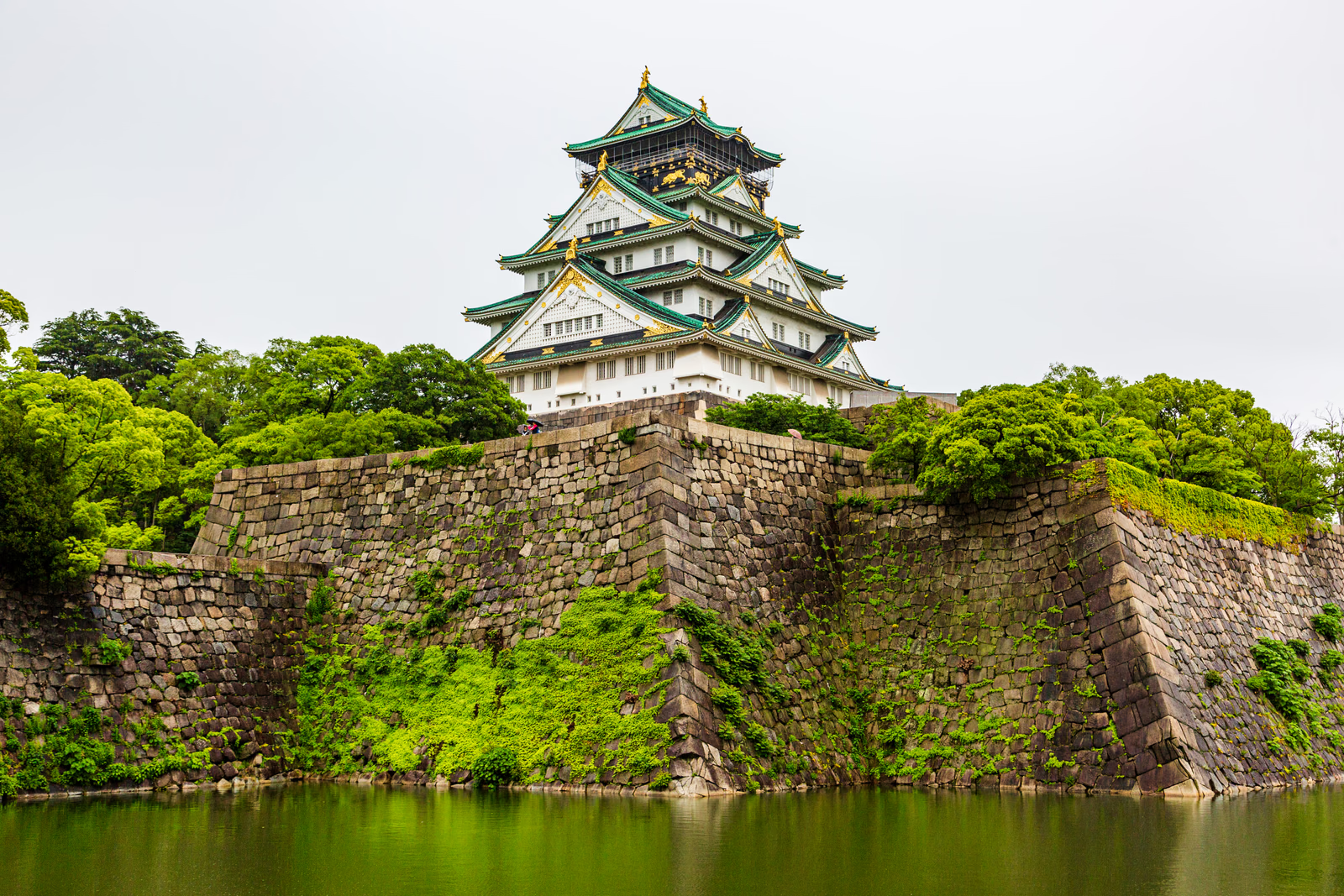
The name 'Osaka Castle' hides a sequence of different castles. Hideyoshi began a major castle here in 1583. That Toyotomi stronghold fell in 1615. The Tokugawa shogunate then rebuilt the site on a new scale, and most of the monumental stone walls, moats and surviving gates visitors see today belong to that later phase. Above them stands a third keep, completed in reinforced concrete in 1931. The first task is therefore chronological: stop reading the site as one building campaign. At Osaka, chronology must be recognized before any single feature makes sense.
Current visibility
The accessible viewpoint for “Three Construction Layers at Osaka Castle” can change with active work at Osaka Castle; current official notices govern access, with the castle compound, the reconstructed building, and the stone walls defining the historical reference.
Tokugawa Stone Walls beneath a Toyotomi Memory
Attraction
Osaka Castle is famous as Hideyoshi's castle, which makes the visible defenses easy to misdate. The official castle history states that the stone walls, moats and surviving old structures now visible are all from the Tokugawa period or later. This is one of the site's most productive contradictions: the Toyotomi name dominates popular memory, but Tokugawa engineering dominates the physical surface. The walls therefore document conquest and replacement as much as continuity. Victory at Osaka did not only change rulers; it changed the physical castle visitors still read today.
Current visibility
The surviving setting at Osaka Castle anchors “Tokugawa Stone Walls beneath a Toyotomi Memory”; its physical context is the stone walls, the castle compound, and the moat.
Buried Remains of Toyotomi Osaka
Attraction
After the Toyotomi castle fell in 1615, the Tokugawa shogunate covered much of the earlier castle with massive fills and built its own walls above. Most Toyotomi remains are therefore still archaeological layers rather than the masonry visible around the park. One major exception has changed the visitor experience: the Osaka Castle Toyotomi Stone Wall Museum, opened in April 2025, allows visitors to descend underground and see a section of the Tsumenomaru wall uncovered in a 1984 excavation. This makes archaeology essential to understanding the site while preserving an important distinction. The wall in the museum is authentic Toyotomi-period fabric, but it is one opened section of a much larger buried castle; the park's monumental surface walls are Tokugawa work. Current museum access can be suspended if the exposed wall's condition requires it, so consult the official notice rather than assuming the underground view is always available.
Current visibility
Most Toyotomi-period remains are buried beneath later Osaka Castle layers, but the Toyotomi Stone Wall Museum now exposes one authentic wall section underground; current access can change if conservation conditions require it.
The 1931 Reinforced-Concrete Keep
Attraction
The current keep is not Hideyoshi's surviving tower and not a Tokugawa keep. It was completed in 1931 with civic donations, using modern reinforced-concrete construction while aiming to evoke the Toyotomi-period image. From the beginning it also functioned as a museum. That makes it doubly historical: it reconstructs an earlier castle while also documenting how modern Osaka chose to remember the past. In September 1997 it was registered as a national Tangible Cultural Property, recognizing that modern history of the reconstruction itself. A reconstruction can become a historical object in its own right once enough time and civic meaning accumulate around it.
Current visibility
The keep is the 1931 reinforced-concrete reconstruction and museum, not a surviving Toyotomi or Tokugawa tower; current museum access follows operator conditions.
The Museum Interior of the 1931 Keep
Attraction
Visitors sometimes feel a mismatch between the dramatic exterior and the museum interior. That mismatch is intentional rather than a failure of restoration. The 1931 keep was conceived as a modern monument with museum functions, and today's galleries continue that role. Exhibitions cover Hideyoshi, Sengoku politics, Osaka Castle and the Summer War, with historical artifacts changing over time.
Current visibility
The object or display discussed as “The Museum Interior of the 1931 Keep” remains identifiable at Osaka Castle, with the museum display, the interior, and the exterior fabric as its concrete on-site context.
Attraction
Osaka Castle's decisive political meaning comes not only from Hideyoshi building it, but from the Toyotomi house losing it. The 1615 Summer War ended Toyotomi political independence and cleared the way for full Tokugawa remaking of the site. The defeat ended the Toyotomi house as an independent political power and confirmed Tokugawa supremacy. The castle's layered fabric is the physical consequence of a political regime being destroyed and replaced.
Current visibility
The place-specific feature discussed as “The Summer War” is anchored by the castle compound and the surviving building, but today's access or operating condition at Osaka Castle requires a current official check.
Toyotomi, Tokugawa and Modern Osaka Castles
Attraction
Osaka Castle is easiest to remember as three overlapping stories. Hideyoshi established the site as a center of national power from 1583. Tokugawa conquest then replaced much of that physical castle with the defensive landscape that survives most visibly today. Modern Osaka added the 1931 keep, itself now historic. None of these layers cancels the others.
Current visibility
The present precinct at Osaka Castle still carries “Toyotomi, Tokugawa and Modern Osaka Castles”; visitors can ground the text in the castle compound.