The Original Site and the Attack of 1582
Attraction
The Honno-ji Incident occurred at the temple's former site, southwest of the present precinct. In June 1582 Akechi Mitsuhide turned against Oda Nobunaga and surrounded the temple, where Nobunaga died during the attack. The dense modern neighborhood preserves no complete battlefield or sixteenth-century hall. A marker and archaeological knowledge identify a location whose historic fabric was consumed by fire and later urban change. That absence is the central reading task. Nobunaga's authority had connected court politics, warfare, castles and commercial policy across Japan, yet his immediate protection in Kyoto was limited. The original site makes the suddenness of the reversal more intelligible than a generalized story of betrayal.
Current visibility
“The Original Site and the Attack of 1582” is carried by archaeological evidence at Honno-ji: Original Site and Present Temple, chiefly the battlefield terrain and the ground markers; no intact structure from the historical phase is claimed.
A Relocated Temple Is Not the Battlefield
Attraction
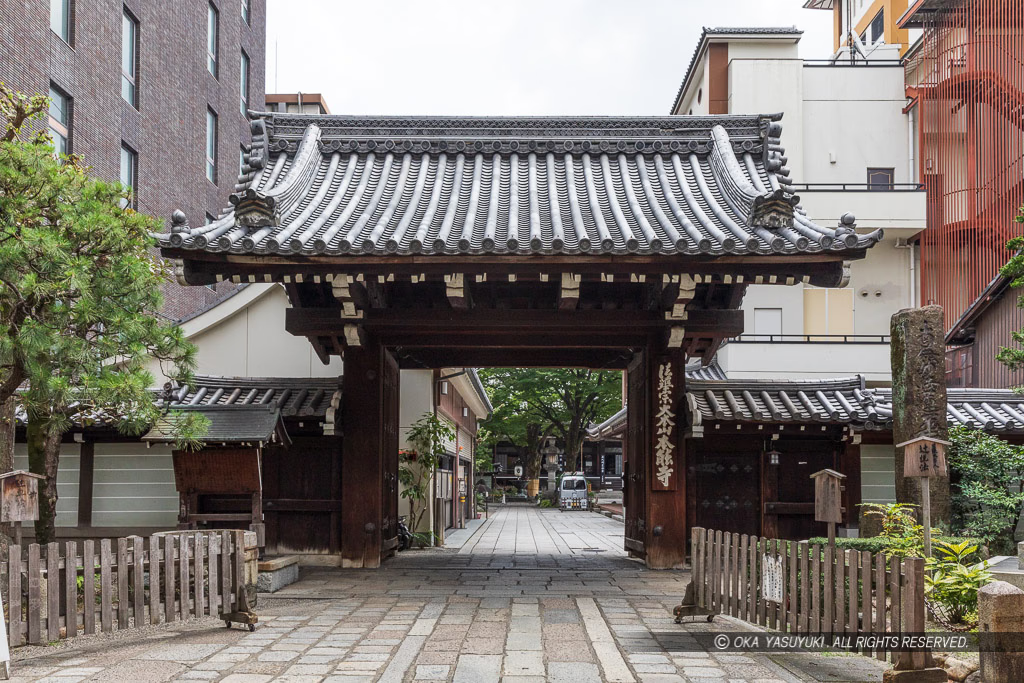
Toyotomi Hideyoshi relocated Honno-ji during his reorganization of Kyoto, so the current temple is institutionally continuous but geographically separate from the 1582 attack. Visitors should not be told that Nobunaga died within its present buildings. The relocated precinct preserves Nichiren Buddhist worship and a memorial relationship with Nobunaga, demonstrating how an institution can carry history after its address changes. This distinction gives the Place unusual value: original location without original temple, and continuing temple without original location. Reading both prevents a common tourism shortcut and reveals Hideyoshi's role in reshaping the city after he inherited much of the political opportunity created by Nobunaga's death.
Current visibility
The fabric discussed under “A Relocated Temple Is Not the Battlefield” survives at Honno-ji: Original Site and Present Temple after relocation; the relocated buildings and continuing ritual setting preserve institutional history, not the terrain of the original battlefield.
From Assassination to the Reorganization of Power
Attraction
Honno-ji was the opening rupture, not the complete explanation of what followed. Mitsuhide's success lasted only until Hideyoshi defeated him at Yamazaki. Nobunaga's retainers then competed over heirs, territories and the authority to continue unification. Ieyasu's escape from the Kyoto region and later choices belonged to the same unstable aftermath. The two Honno-ji locations help separate event from memory: the former site anchors the attack; the current temple anchors institutional survival and commemoration. Neither alone explains 1582. Together they show how one destroyed urban compound became a hinge connecting Nobunaga, Mitsuhide, Hideyoshi and Ieyasu without implying that later outcomes were inevitable on the night of the assault.
Current visibility
The present temple and site interpretation anchor this account of the political reorganization after 1582; no surviving battlefield fabric is implied at the relocated precinct.