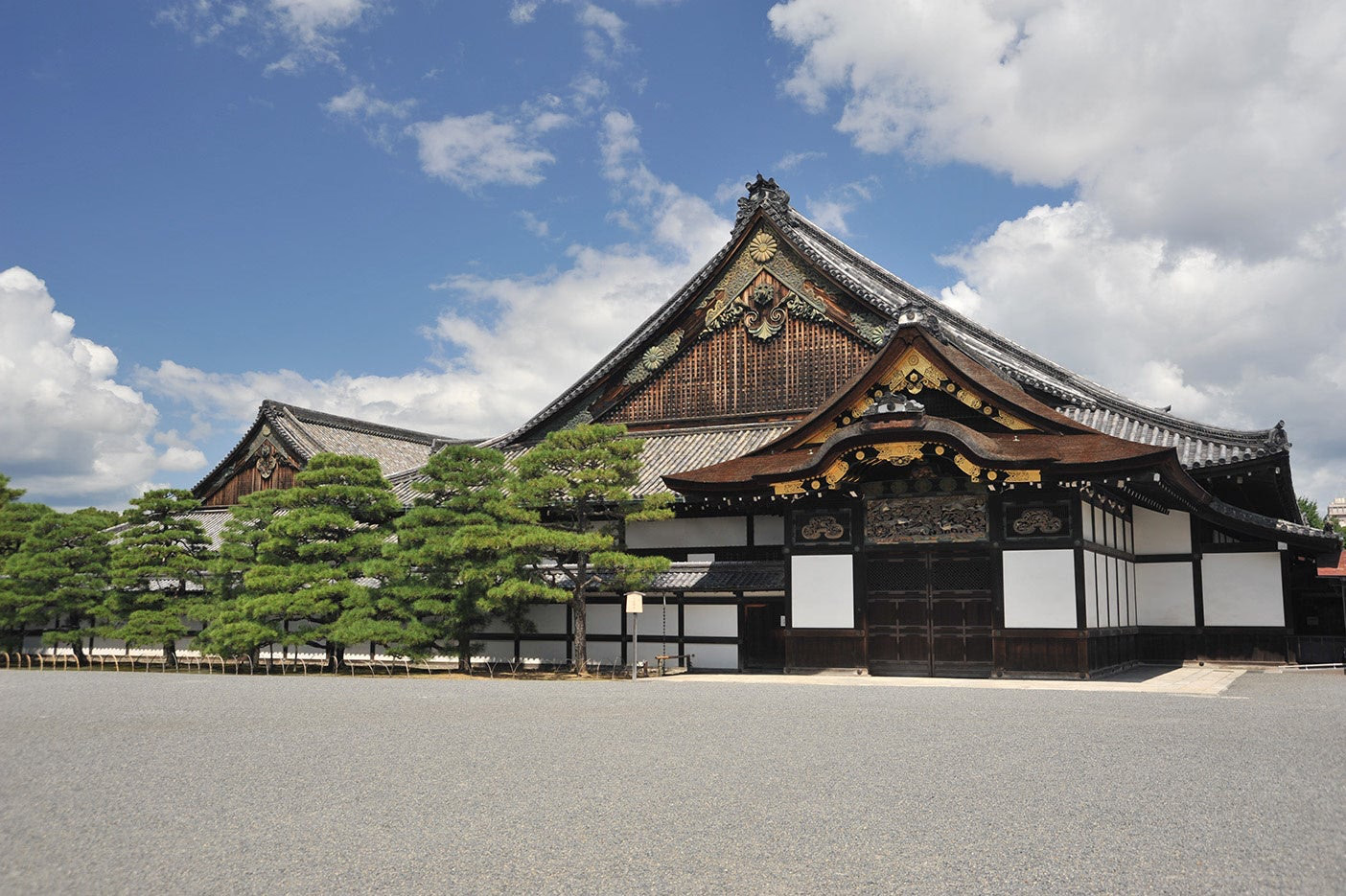
Ninomaru Palace and the Architecture of Audience
Attraction
Nijo Castle was completed in 1603 for Tokugawa Ieyasu as the shogun's Kyoto base near the imperial court. The surviving Ninomaru Palace turns political rank into a sequence of gates, waiting rooms and audience chambers. Kano-school wall paintings, carved transoms and differing room scales helped visitors recognize where they stood within shogunal hierarchy before any conversation began. The palace reached an especially elaborate form for Emperor Go-Mizunoo's visit in 1626, when architecture mediated a carefully staged relationship between warrior government and court. Floors popularly called nightingale corridors form part of the sensory experience, but they should not displace the palace's main historical function. This was an administrative and ceremonial instrument in which access, sight and seating converted authority into space.
Current visibility
“Ninomaru Palace and the Architecture of Audience” remains part of Nijō Castle, but interior or path access can vary; verify current official conditions before promising entry to the audience space, the castle compound, and the gate sequence.
The Ohiroma and Yoshinobu's Decision in 1867
Attraction
In the tenth month of 1867 in the Japanese calendar, the fifteenth shogun Tokugawa Yoshinobu gathered senior domain representatives at the Ninomaru Palace and announced his intention to return governing authority to the imperial court. The Ohiroma rooms give that constitutional maneuver a physical setting, but screens and mannequins should not turn a contested political process into one frozen scene. Yoshinobu sought to preserve Tokugawa influence within a reorganized order; conflict continued, and the Boshin War followed. Nijo Castle is historically powerful because the place built for Ieyasu's authority also witnessed its formal relinquishment more than 260 years later. The same architecture frames both the beginning and the end of shogunal rule, while the different decisions between 1603 and 1867 remain visible through changed use rather than a simple rise-and-fall story.
Current visibility
“The Ohiroma and Yoshinobu's Decision in 1867” can still be read at Nijō Castle through the audience space; the visibility claim concerns that setting, not a past moment preserved intact.
Honmaru, Loss and Imperial Reuse
Attraction
Fire destroyed the original Honmaru Palace and keep, leaving walls, moats and foundations to mark the castle's inner enclosure. The palace buildings now standing there were transferred from the former Katsura-no-miya residence in the imperial precinct during Nijo's period as an imperial villa. They are historic structures, but not surviving Tokugawa Honmaru buildings. That distinction reveals how the new regime reused the former shogunal site after 1868. Nijo later hosted imperial functions and was eventually transferred to Kyoto City. The layered compound therefore records more than the end of the shogunate: it shows the castle absorbed into imperial and civic systems, with relocation and preservation creating the ensemble seen today.
Current visibility
The fabric discussed under “Honmaru, Loss and Imperial Reuse” survives at Nijō Castle after relocation; the palace rooms, the moat, and the foundation stones should be read without assuming the current position is original.