Attraction
The current Sangedatsumon was built in 1622 and is the outstanding surviving architectural anchor of old Zojoji. Its name refers to liberation from the three worldly afflictions of greed, anger and ignorance, so the gate belongs to Buddhist practice as well as architectural history. Because so much of the surrounding complex was destroyed in 1945, this gate should calibrate the visitor's sense of what genuinely survived. A ten-year restoration campaign began in April 2025, so scaffolding or protective covering may affect how much of the gate can be seen; consult the temple’s current notice before planning a visit around it.
Current visibility
Sangedatsumon is surviving 1622 fabric, but a restoration campaign begun in 2025 may obscure it with scaffolding or protective covering; consult the temple's current notice.
Daiden and the Tokugawa Family Temple
Attraction
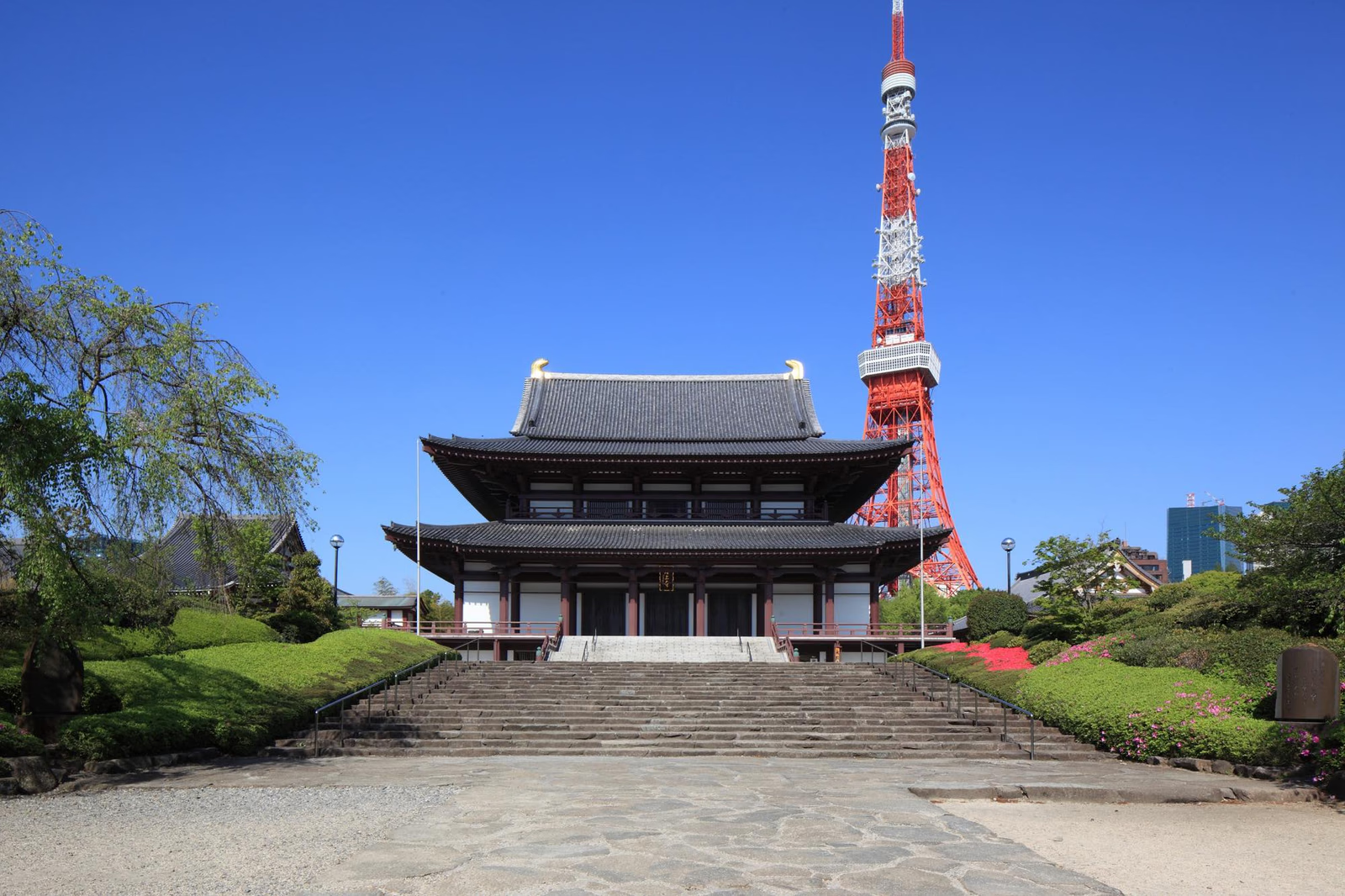
Zojoji was founded in 1393 and moved to Shiba in 1598 after Tokugawa Ieyasu established himself in Edo. Under Tokugawa patronage it became both family temple and major administrative center for Jodo studies, with a precinct vastly larger than today. That institutional scale matters because the Tokugawa connection was not limited to burial. Religion, education, urban land and dynastic memorialization were organized together here. The present main hall is a postwar rebuilding, so its value lies in restored ritual function rather than early Edo material survival. Its broad stairs and worship interior re-establish the center of a precinct drastically reduced by fire, war and urban change. From the forecourt, compare the modern hall with the surviving seventeenth-century Sangedatsumon and with the concentrated shogunal graves behind. These three elements represent different survival categories: rebuilt worship space, original gate and reorganized funerary remains. Together they explain how Zojo-ji continued as an institution after losing much of its monumental complex. The rebuilt hall is therefore evidence of continuity through use, not material antiquity.
Current visibility
The present precinct at Zōjō-ji still carries “Daiden and the Tokugawa Family Temple”; visitors can ground the text in the administrative landscape, the burial precinct, and the main hall.
Attraction
Zojoji's Kuromon is traditionally associated with Tokugawa Iemitsu's patronage in the mid-seventeenth century. It survived, but its present position is not its original one: the temple records later relocation as the precinct changed through the Meiji period and again in 1980. This is a useful object for showing that 'original building' does not automatically mean 'original location'.
Current visibility
The place-specific feature discussed as “Kuromon” is anchored by the documentary evidence and the surviving building, but today's access or operating condition at Zōjō-ji requires a current official check.
Attraction
Zojoji contains the graves of six shoguns, including Iemochi, along with Kazunomiya and many other Tokugawa family members. But the grand mausoleum compounds that once stood here were destroyed in 1945. In the postwar period human remains were studied, cremated and reinterred in the present grave area. Surviving stone and bronze tomb elements therefore belong to a reorganized memorial landscape, not an intact Edo necropolis.
Current visibility
“Tokugawa graves” is materially legible at Zōjō-ji, especially through the burial precinct and the memorial described in the Highlight.
The Taitokuin Mausoleum Model
Attraction
The original Taitokuin mausoleum was built in 1632 by Iemitsu for his father Hidetada and later destroyed in the 1945 air raids. Zojoji now displays a remarkably detailed one-tenth-scale model made for the 1910 Japan-British Exhibition and later returned on loan. The model is valuable because it preserves information about a lost architectural world while carrying its own Meiji-era exhibition history.
Current visibility
The object or display associated with “The Taitokuin Mausoleum Model” is not guaranteed on every visit to Zōjō-ji; check current gallery or special-opening notices, while reading the burial precinct and the museum display as the stable context.
Ankokuden and the Black Amida
Attraction
Ankokuden houses the Black Amida image associated with Tokugawa Ieyasu and offers a more intimate devotional focus beside the large main hall. The image's traditional connection with victory and protection belongs to institutional belief and Tokugawa memory, not to a claim that visitors can verify from appearance alone. Observe the active pattern of prayer, offerings and amulet distribution while respecting interior rules. The hall shows how a temple famous for vanished mausoleums remains sustained by living worship rather than heritage loss alone.
Current visibility
Ankokuden remains a living worship space beside the main hall; viewing the Black Amida image and entering the interior depend on current temple arrangements.
Attraction
Rows of small Jizo figures commemorate children and receive caps, bibs, toys and pinwheels from families. Their repetition creates a powerful memorial field, but each offering belongs to an individual act of remembrance. Do not rearrange objects for photographs. The statues add contemporary grief and care to a precinct otherwise dominated by shogunal history.
Current visibility
“Rows of Jizo Statues” can be assessed from the exterior at Zōjō-ji; the on-site cues are the sculpture group, the memorial, and the present landscape, and routine interior entry is not implied.
Attraction
Zojo-ji's great bell gives sound a monumental place in the precinct. Its scale required a substantial open tower and a coordinated ringing method. Look at suspension, striker and clearance rather than treating the bell as a bronze ornament. Scheduled ringing, especially at New Year, is current ritual information; the permanent highlight is the link among casting, architecture and public sound.
Current visibility
The place-specific feature discussed as “The Great Bell” is anchored by the ritual setting, but today's access or operating condition at Zōjō-ji requires a current official check.
Surviving Mausoleum Gates
Attraction
Several gates and transferred fragments outlived the destruction of Zojo-ji's Tokugawa mausoleums. They are not complete tomb complexes, but material witnesses to their former scale and ornament. Use the precinct map to identify them, then compare surviving carving and metalwork with the Taitokuin model. Fragment and model together make loss more legible than either alone.
Current visibility
“Surviving Mausoleum Gates” can be assessed from the exterior at Zōjō-ji; the on-site cues are the burial precinct and the gate sequence, and routine interior entry is not implied.
Daimon and the Reduced Temple Precinct
Attraction
Daimon marks the principal entrance to the modern temple district and gives its name to the surrounding Shiba Daimon neighborhood. The present concrete gate dates to 1937, replacing an earlier entrance associated with a gate granted from Edo Castle. Its position helps recover the scale of a precinct that once extended much farther through Shiba. Read Daimon with Sangedatsumon rather than confusing them: one announces the outer urban threshold, while the surviving 1622 gate anchors the historic sacred approach.
Current visibility
“Daimon and the Reduced Temple Precinct” is materially legible at Zōjō-ji, especially through the temple precinct, the present landscape, and the gate sequence described in the Highlight.