A Palace Site Used from 1331 to 1869
Attraction
The court moved among residences after the founding of Heian-kyo, and the present Kyoto Imperial Palace site became the regular imperial residence after an enthronement here in 1331. It remained so until Emperor Meiji transferred his primary residence to Tokyo in 1869. That five-century continuity belongs to the location, not to one unchanged group of buildings. Fire repeatedly destroyed the palace, and most of the structures now seen were rebuilt in 1855. This distinction is essential: the enclosure preserves the geography of a long-lived court, while its architecture gives unusually direct evidence for the final Tokugawa years. Read walls, gates and sequences of courtyards as controls on access. The palace was both a household and a political institution, not the timeless ceremonial backdrop implied by an undifferentiated label such as 'ancient Kyoto.'
Current visibility
The present precinct at Kyoto Imperial Palace still carries “A Palace Site Used from 1331 to 1869”; visitors can ground the text in the archaeological site, the surviving building, and the reconstructed building.
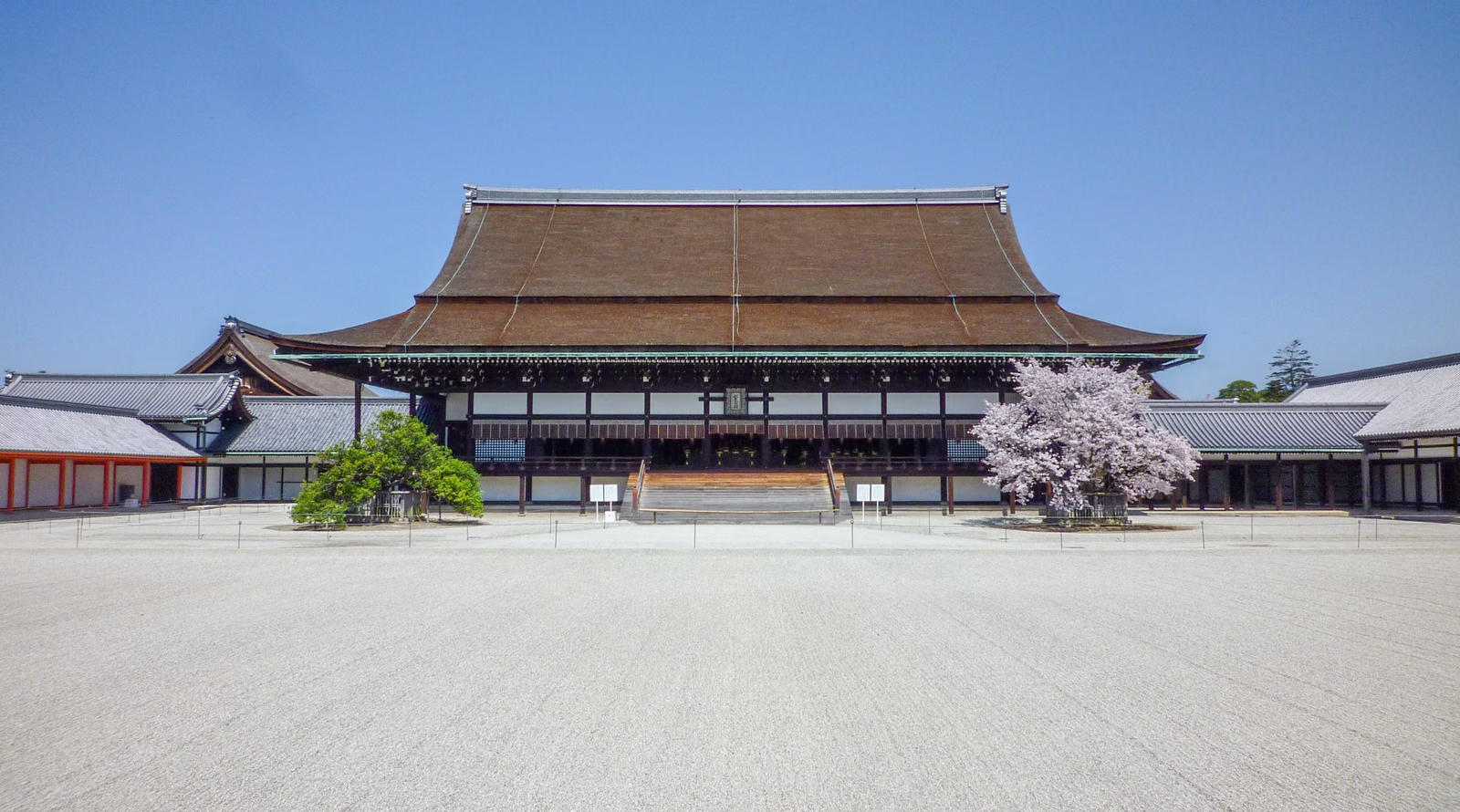
Shishinden and the Architecture of Enthronement
Attraction
Shishinden is the palace's most formal hall, rebuilt in a deliberately archaizing style for state ceremony. The present building held the enthronements of the Meiji, Taisho and Showa emperors before modern ceremonies moved to Tokyo. Its broad south court, raised floor and central throne positions turn political hierarchy into measured space. Visitors see the exterior and courtyard relationship; ordinary access does not include walking through the hall. That limitation should shape the description. The building is not a surviving Heian hall, even though its form invokes earlier court architecture, and the thrones kept inside belong to continuing imperial ceremonial culture rather than a museum reconstruction. Shishinden therefore reveals how the late Tokugawa court used architectural revival to claim continuity, and how the modern state subsequently reused Kyoto's ceremonial authority.
Current visibility
“Shishinden and the Architecture of Enthronement” can be assessed from the exterior at Kyoto Imperial Palace; the on-site cues are the reconstructed building, the ritual setting, and the surviving building, and routine interior entry is not implied.
Ogakumonjo and the Politics of the 1850s and 1860s
Attraction
The Ogakumonjo was designed for study, poetry and audiences, but in the palace's final decades rooms of this kind also formed part of an increasingly active political court. Treaty approval, shogunal succession, the marriage of Princess Kazunomiya and competing loyalist strategies all drew Kyoto into national decision-making. No single room can be assigned every debate, so the palace should not be presented as a theatrical set in which each event occurred at one marked spot. Its value is spatial: formal halls, residential zones and controlled audience rooms show the institutional setting through which court nobles, imperial family members and shogunal envoys negotiated. The 1855 rebuilding means visitors are looking at architecture contemporary with that political resurgence, not a later tourist evocation of Bakumatsu Kyoto.
Current visibility
“Ogakumonjo and the Politics of the 1850s and 1860s” can be assessed from the exterior at Kyoto Imperial Palace; the on-site cues are the palace rooms and the audience space, and routine interior entry is not implied.
Hamaguri Gate and the Armed Court of 1864
Attraction
Hamaguri Gate on the western side of Kyoto Gyoen anchors the 1864 conflict often called the Kinmon or Hamaguri Gate Incident. Choshu forces attempted to regain political influence in Kyoto and fought troops defending the imperial compound; fire and street combat spread through the city. The gate is a boundary object rather than a complete battlefield. Its timber, masonry and position show how fighting reached the edge of court space, while the open national garden around it reflects later transformation after aristocratic residences disappeared. Do not imply that the quiet present landscape preserves every combat position. The historical value comes from the contrast: a palace long associated with ritual became a military objective because possession of the court's authority could decide who acted in the emperor's name.
Current visibility
The present precinct at Kyoto Imperial Palace still carries “Hamaguri Gate and the Armed Court of 1864”; visitors can ground the text in the gate sequence, the streetscape, and the battlefield terrain.