Read the article below. Interactive reading tools are available when scripts load.
Quick
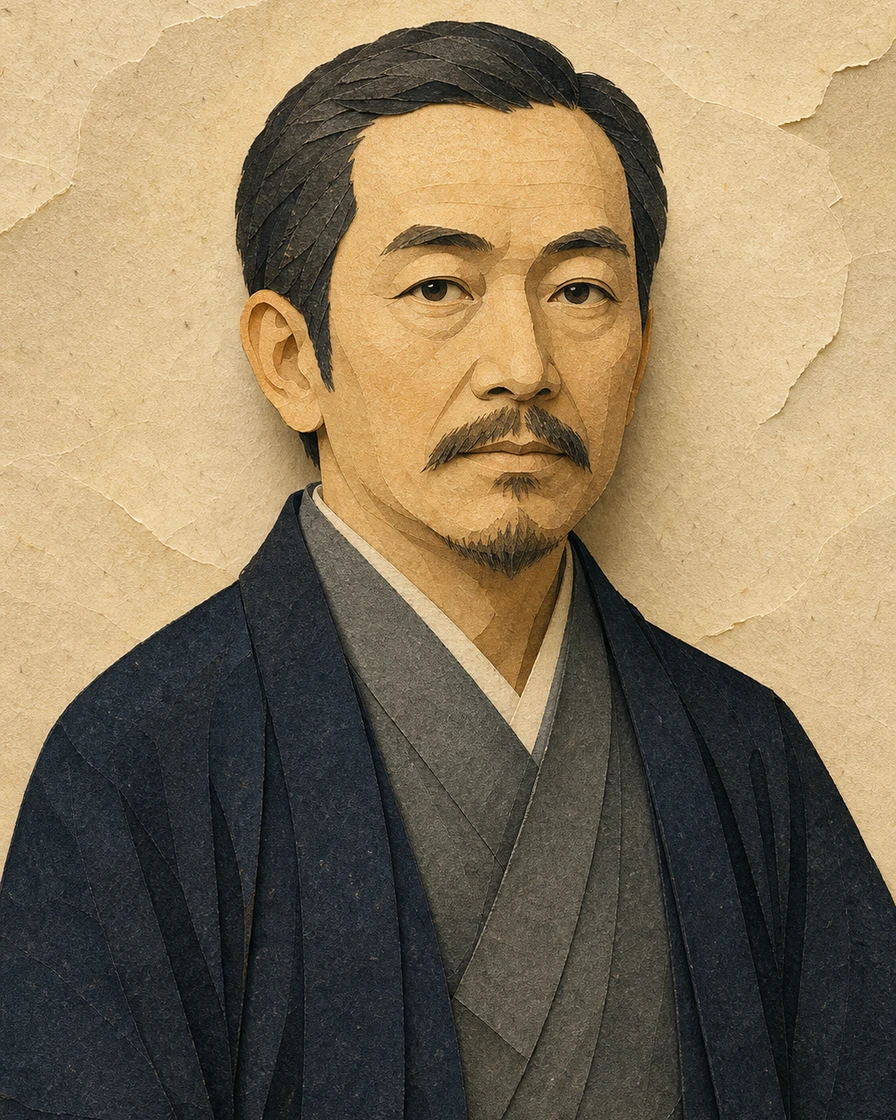
Iwakura Tomomi was born in Kyoto in 1825 as the second son of the court noble Horikawa Yasuchika. In 1838 Iwakura Tomoyasu adopted him as heir. The Iwakura house was a lower-ranking noble family without a great domain or army; its useful resources were rank, palace knowledge and access to the emperor. [1][2]
In 1854 Iwakura became a chamberlain, an attendant serving Emperor Kōmei, and gained closer court service in 1857. Perry's American squadron had forced the bakufu—the Tokugawa government headed by the shogun—to negotiate new foreign relations. The 1854 agreement allowed limited port access; later demands sought commercial trade. Kōmei opposed opening and wanted consultation. Iwakura could help organize court objections, although the palace lacked the ships and officials to carry out an independent foreign policy. [2][15]
In 1858 senior bakufu official Hotta Masayoshi sought imperial approval for the proposed United States commercial treaty. Iwakura helped mobilize a protest in which eighty-eight courtiers pressed Regent Kujō Hisatada and opposed sanction. Kōmei did not approve. The bakufu nevertheless signed the treaty on 29 July 1858 under foreign pressure, followed by similar agreements with other powers. Court refusal did not prevent opening, but it weakened the claim that the bakufu alone could decide national diplomacy. [1][7][15][18]
The protesters did not necessarily share a detailed military or commercial alternative. Objections combined exclusion, sovereign procedure, distrust of the bakufu, and concern for court position. Iwakura himself sought information about foreign conditions rather than treating ignorance as policy. The event made a lower noble nationally relevant through collective palace action. It also sharpened a crisis: Japan acquired treaty obligations that the emperor had not sanctioned, while the court gained political authority without the administrative means to manage them. [18]
After opposing treaty sanction, Iwakura supported reconciliation between court and bakufu. He helped promote the marriage of Kōmei's sister Kazunomiya to Shogun Iemochi. The policy aimed to strengthen court influence and reduce the danger of institutional conflict. Kazunomiya was not an empty diplomatic token. She had been betrothed to Prince Arisugawa Taruhito, resisted the new match, and accepted under political and familial pressure with conditions concerning religion, court customs, and policy. Court women and bakufu negotiators shaped the practical agreement. [1][7][17]
She traveled to Edo in 1861 and married Iemochi in 1862. The procession required extensive labor and supplies from towns on the Nakasendō, the inland road between Kyoto and Edo. Reconciliation failed to settle foreign policy. Radical opponents condemned Iwakura for helping the bakufu, putting his position and safety at risk. [15][17]
In 1862 pressure from court and domain radicals forced Iwakura to resign, shave his head, and leave central Kyoto. He first moved through religious refuges and later settled in Iwakura village north of the city; the surviving house dates his residence there chiefly from 1864 to 1867. Exclusion cut him off from office, audience, and regular information. Family and attendants sustained daily life. Visitors such as Matsuo Ainosuke and other intermediaries carried news; over time activists and officials, including contacts linked to Satsuma, came to consult him. [1][2][7][14]
The balance around Kyoto changed while he was away. Satsuma helped expel Chōshū from the palace in 1863, then gradually turned against the bakufu after further conflicts. Iwakura resumed political writing and gained new contacts. His court knowledge became useful to leaders considering how to replace Tokugawa government, but he still needed permission to return. [2][7][14]
Kōmei died in early 1867, and his young son, the emperor known as Meiji, succeeded him. Iwakura was allowed back into Kyoto and eventually restored to secular court office. His knowledge of palace procedure now connected with Satsuma leaders, especially Ōkubo Toshimichi, who were moving toward confrontation with the government of Tokugawa Yoshinobu, the last shogun. Iwakura worked with court nobles including Nakayama Tadayasu and others, while the scholar Tamamatsu Misao helped formulate language for restoring direct imperial government. Chōshū's exclusion from court and Satsuma's military position remained separate problems that required negotiation. [1][2][12][13][15]
Yoshinobu's return of governing authority threatened to keep the Tokugawa house central in a new council of lords. Iwakura and allies sought a different settlement: a palace declaration creating an executive without Yoshinobu at its head. Court access and Satsuma's military support now gave them a chance to attempt it. Secret orders to overthrow the bakufu helped authorize the allies' course. The Yamakawa historical dictionary treats their irregular form as evidence of fabrication; Reimeikan's museum account describes their delivery without settling authenticity. [15][16]
On 3 January 1868, court and domain allies seized palace initiative, announced restoration of imperial government, abolished the shogunate and old court-regency offices, and named a new governing structure. That night the Kogosho Conference debated Tokugawa Yoshinobu. Tosa's Yamauchi Yōdō and others argued that Yoshinobu should join deliberation; Iwakura and allies pressed for his resignation of court office and surrender of lands before admission. Satsuma troops around the palace shaped what procedure could accomplish. The decision did not instantly transfer every territory, army, or bureaucracy. [15][16]
Yoshinobu withdrew to Osaka; fighting at Toba–Fushimi opened the Boshin War between the new imperial government and Tokugawa supporters. The new government's claim became national through military, fiscal, and administrative campaigns. Calling the event either a pure legal restoration or only a military coup loses its combined form. Iwakura used inherited palace procedure to create a new order under armed coalition protection. [15][16]
The new government repeatedly changed its offices. Sanjō Sanetomi and domain leaders shared the apex; no stable cabinet yet existed. The Charter Oath promised broad deliberation through a text drafted by Yuri Kimimasa, Fukuoka Takachika, and Kido Takayoshi and sworn by Meiji. Iwakura helped make court ceremony serve the new state but was not its sole author. The court shifted its political center to Tokyo. Lords returned governing registers in 1869; domains were abolished in 1871 under central military backing. New ministries gathered revenue, military, foreign, and local authority. Court nobles were not simply replaced by samurai revolutionaries. Iwakura and Sanjō supplied imperial access, rank, and continuity at the top. Their survival also meant that modernization preserved inherited privilege while reorganizing it. [1][2][15]
Iwakura left Yokohama on 23 December 1871 as head of a mission seeking diplomatic goodwill, treaty revision and knowledge of foreign institutions. Four vice ambassadors and specialist officials accompanied him. Five girls—Tsuda Ume, Yamakawa Sutematsu, Nagai Shige, Ueda Tei and Yoshimasu Ryō—also traveled to study in the United States, where their lives would follow paths separate from the official delegation. The embassy first crossed the United States, receiving elaborate public attention. [4]
Interpreters and officials recorded what they saw, and Kume Kunitake later compiled the major published account. Meanwhile, leaders in Tokyo were allowed to unify domestic administration but were supposed to restrain new institutional changes. Reforms and a 1873 reorganization of the central council exposed disagreements over that boundary. The travelers would return to a government whose personnel and authority had changed during their absence. [4][6]
In Washington the delegation moved from preliminary inquiry toward treaty negotiation, then discovered that its authority was inadequate. Ōkubo and Itō returned to Japan for fuller credentials. When they rejoined, fundamental disagreements remained and the United States negotiation ended without revision. The embassy continued through Britain and continental Europe, ultimately visiting twelve treaty countries over about one year and ten months. It inspected constitutional systems, industry, schools, courts, militaries, prisons, municipal services, and imperial institutions. [4][5]
Failure clarified that foreign governments linked treaty revision to Japanese legal reforms while also protecting their own advantages. Institutions could improve Japan's bargaining position; compliance with foreign standards would not by itself remove power politics. Reports were produced by specialized officers and later organized for government use. Iwakura's conclusion favored strong central institutions and controlled adaptation, not a simple conversion to parliamentary democracy. The Western states admired by the mission were themselves empires. [4]
Iwakura returned on 13 September 1873 to a dispute over sending Saigō Takamori, a senior councillor, to Korea. Korean officials had rejected diplomatic documents whose new imperial language implied Japanese superiority. One interpretation sees Saigō's proposed mission as a potential pretext for war if he were killed; Mōri Toshihiko argued that he intended peaceful negotiation. Namihira Tsuneo's 2010 study summarizes both and leaves his intention undecided. Iwakura and Ōkubo opposed immediate dispatch to give domestic reform priority. When Sanjō, the government's chief minister, fell ill, Iwakura carried his opposing opinion to Meiji after the council had supported Saigō. [4][9]
On 24 October the emperor accepted indefinite postponement. Saigō, Itagaki, Soejima, Etō, and Gotō left office. The result consolidated Iwakura and Ōkubo's coalition. This was not a permanent rejection of coercion abroad. Japan sent forces to Taiwan in 1874 and imposed an unequal treaty on Korea after the 1875 Ganghwa incident. The crisis concerned timing, method, authority, and government control as much as peace. [4][9]
On 14 January 1874, nine former Tosa samurai attacked Iwakura's carriage near the Kuichigai slope in Akasaka after he left the temporary imperial palace. They blamed him for blocking the Korea policy and hoped violence would change the government. He was injured but survived. The attack demonstrated that loyalty to the emperor did not guarantee loyalty to the ministers governing in the emperor's name. Former samurai could understand themselves as defending national honor while assaulting a Right Minister. [9][14]
Police pursued the attackers. In the same month Itagaki and other former councillors petitioned for an elected assembly. These were separate responses to exclusion after the Korea-policy split: one used assassination, while the other demanded a place for public deliberation. The government had to answer both a security threat and a challenge to its authority. [9]
Iwakura worked to make the court and the kazoku—the status group joining former court nobles and domain lords—durable within the new state. From the mid-1870s he led noble organizations that addressed education, discipline, investment, and collective identity. The Kazoku Kaikan organized noble households. Banking and investment in the Japan Railway Company offered uses for their capital; Gakushūin educated their children. Officials, financiers, educators, former lords, and technical managers did the work; Iwakura did not personally operate bank or railway. [1][2][3][11]
The programme protected resources for an inherited elite at a time when most subjects lacked political voice. It also tried to convert stipend settlements into institutions capable of sustaining education and capital rather than simple consumption. Ritual and finance were connected. A modern emperor-centered state needed ceremonies and households that appeared continuous, while those households required property, training, and organizations. Iwakura treated noble survival as national architecture, not private nostalgia. [1][11]
As movements demanded a national assembly, Iwakura commissioned or adopted constitutional principles probably drafted by Inoue Kowashi. A Grand Outline based on them went to Meiji in July 1881. The proposal favored a constitution granted by the emperor, gradual implementation, a Prussian model, two chambers, restricted voting, and a cabinet kept at distance from parliamentary majorities. It answered constitutional pressure without accepting popular sovereignty. Ōkuma Shigenobu, a senior government official, proposed a faster British-style parliamentary route. The 1881 political crisis ended with Ōkuma's removal and a promise to open the Diet in 1890. [3]
Iwakura's principles helped define the victorious government's direction. He later led an office investigating internal regulations but died before Itō Hirobumi's European constitutional research was complete and before the 1889 Constitution was drafted and promulgated. He shaped its basic route; Inoue, Itō, other drafters, advisers, councilors, activists, and later practice retained their own authorship. [2][3]
Iwakura died on 20 July 1883 while still one of the state's senior figures. The government organized a state funeral and posthumously elevated his rank. Family, ministries, religious officials, and attendants turned death into a national ceremony. He did not see the 1889 Constitution or the first Diet in 1890. Their emperor-centered and bicameral structure reflected principles he had supported, but final drafting and operation belonged to survivors. The mission already had a public archive. [2][3][10]
Kume Kunitake's account appeared in 1878, alongside the separate records assembled for government use. After Iwakura's death an imperial commission began a biography, Iwakura Kō Jikki, compiled by Tada Yoshikoto and published in 1906. These named publications helped shape his public memory before 1912. Their official setting foregrounded service to the emperor, not a universal judgment of his policies. [4][8][14]
Classic
Iwakura Tomomi was born in Kyoto on 26 October 1825, the second son of the court noble Horikawa Yasuchika. His childhood name was Kanemaru. In 1838 Iwakura Tomoyasu adopted him as heir to another noble household. The Iwakura house stood well below the great families that supplied the emperor's regents. Adoption gave a younger son a house to inherit, but no army or large provincial revenue. Rank and access to the palace would be his principal resources. [1][2]
Kyoto remained the emperor's city, while the bakufu—the Tokugawa warrior government headed by the shogun—administered national affairs from Edo, present-day Tokyo. Court titles conferred prestige, but the palace depended on the shogunal order for much of its financial support. Iwakura learned the formal language and procedures through which nobles approached the sovereign. Classical study, poetry and calligraphy belonged to that training. A proposal needed a patron who could bring it forward; birth in a court household did not guarantee that it would be heard. [1][15]
In 1854 he became a chamberlain, an attendant serving Emperor Kōmei. The appointment came during a foreign-policy crisis. Commodore Matthew Perry's American squadron had arrived the previous year demanding new relations. The 1854 Convention of Kanagawa allowed American ships limited access for supplies and assistance; it was not yet the commercial agreement that would open treaty ports. Bakufu officials had to explain their policy to the court while facing pressure from foreign governments and disagreement among Japan's lords. [2][15]
Kōmei opposed opening the country and wanted the court consulted. That stance gave attendants such as Iwakura an opportunity to enter national politics. They could help carry objections and organize support among nobles, but neither they nor the emperor had a navy or a port administration with which to conduct an alternative policy. Iwakura's influence still depended on senior court families and on gaining the emperor's confidence. [15]
His service expanded in 1857 to include closer attendance on Kōmei. The difference between the first port agreement and the commercial treaty now being requested mattered: foreign trade would bring permanent settlements and new legal obligations. Palace approval became a question the government could no longer treat as ceremony alone. Iwakura had acquired a place within those discussions before he had the power to determine their outcome. [2][15]
In 1858 Senior Councillor Hotta Masayoshi came to Kyoto seeking imperial approval for a commercial treaty with the United States. The bakufu faced foreign pressure, but signing without Kōmei's consent threatened its standing at home. Iwakura helped organize eighty-eight courtiers who protested before Regent Kujō Hisatada. Their appearance challenged the convention that lower nobles should leave national policy to the senior houses. The participants did not need agreement on every aspect of foreign relations to act together. Blocking immediate approval united men concerned with exclusion, court prerogative or the regent's handling of the request. [1][7]
Kujō Hisatada occupied a difficult position between bakufu request, Kōmei's views, and court pressure. The protest constrained him and demonstrated that formal palace hierarchy could be disrupted from within without troops entering the compound. Kōmei's refusal forced the bakufu to choose between foreign risk and internal legitimacy. Ii Naosuke's government signed the treaty without sanction on 29 July 1858. Similar treaties followed with the Netherlands, Russia, Britain, and France. The treaties opened ports and established commercial rules on unequal terms. Extraterritoriality allowed foreign consuls rather than Japanese courts to judge their own nationals. Court opposition did not cancel those obligations. Foreign representatives dealt with the bakufu as the executing government. Political effect emerged from the mismatch. Opponents could now accuse the bakufu of acting against imperial will, while the bakufu could argue that delay threatened national security. [15][18]
The treaty dispute joined international pressure to a domestic argument about who could authorize policy. Iwakura's contribution was organization inside the palace: a lower noble became harder to disregard when he spoke with fellow courtiers. His interest in information about foreign countries did not settle how Japan could resist their demands. The protesters could withhold approval, but they could neither renegotiate the signed treaty nor administer the opening ports. This gap gave opponents of the bakufu a powerful charge—disobedience to imperial will—without providing them a workable foreign policy.
The Ansei Purge that followed punished opponents of shogunal policy and succession choices. It showed that the bakufu retained coercive means even as its legitimacy weakened. Iwakura survived inside a court whose alliances remained unstable. The five commercial treaties also multiplied executing relationships at the ports. Port officials and foreign consuls now implemented arrangements that Kyoto had opposed but could not administer. This institutional distance kept imperial sanction politically potent after the signature date. The protest's durable achievement was procedural: it made imperial approval a contested requirement in national politics. Once that claim existed, domains and activists could compete to define the emperor's will. The result expanded Iwakura's field of action and increased the danger of losing it. [18]
The assassination of Ii Naosuke, the bakufu's senior minister, in 1860 weakened the shogunal government and gave renewed urgency to reconciliation with Kyoto. Iwakura supported a marriage between Kōmei's sister, Princess Kazunomiya, and Tokugawa Iemochi, the young shogun. A family connection could carry the emperor's conditions into the government without abolishing it. Kazunomiya had already been betrothed to Prince Arisugawa Taruhito. She resisted the change, and accepting the match required negotiations over both policy and her future household. Her objections are recorded; more elaborate romantic accounts cannot supply everything she felt. [1][7][17]
Kōmei attached conditions to the marriage, including expectations about exclusion policy and the treatment of his sister. Kazunomiya's household and bakufu officials negotiated the customs and attendants she would take to Edo. Iwakura promoted the agreement, but the princess's acceptance and the emperor's consent remained necessary. Her 1861 procession traveled along the Nakasendō, the inland highway linking Kyoto and Edo. Post towns supplied horses, lodging and labor for an enormous party. The union was visible well beyond the two courts because communities along the road helped pay its practical cost. [1][7][15][17]
In Edo Castle, Kazunomiya's court customs met the established hierarchy of the Tokugawa women's quarters. Her marriage to Iemochi in 1862 opened a channel between households, but disagreement over foreign policy continued. Activists invoking sonnō jōi—"revere the emperor, expel the foreigners"—condemned Iwakura and associated courtiers as betraying the court to the bakufu. Threats against him made the cost of reconciliation personal. Kinship had not resolved how the country would enforce exclusion, honor treaties or manage the competing claims of powerful domains. [15][17]
Reconciliation temporarily increased the court's leverage and created relationships that survived its political failure. For Kazunomiya it also meant abandoning her earlier betrothal and leaving Kyoto under intense pressure. The communities supporting her journey had little say in the bargain. Iwakura had sought a settlement without civil war, but its burdens were unevenly distributed. When he later allied with opponents of the bakufu, these earlier commitments and costs remained part of his career.
In 1862 opponents of the Kazunomiya marriage drove Iwakura from office and central court life. He took Buddhist tonsure, shaving his head as a sign of religious withdrawal, and adopted the name Yūzan. Political threats followed him to his first refuges at Reigenji and Saihōji, both temples outside the palace. He moved farther north to Iwakura village; the surviving residence chiefly represents his years there from 1864 to 1867. Losing office deprived him of formal access to the emperor. Family obligations and private contacts continued, but a proposal could no longer be carried forward through his own court service. [1][2][7]
Family, attendants and local supporters supplied Iwakura with a residence, money and news. Visitors including Matsuo Ainosuke, a palace functionary, and the intermediaries Kagawa Keizō and Inoue Iwami connected him to politics beyond the village. Meanwhile, the alliances around Kyoto changed. Aizu and Satsuma helped expel Chōshū and radical nobles from the palace in 1863. Chōshū's failed advance the following year brought fighting and fire to the city. Bakufu campaigns against Chōshū and attacks by foreign powers followed. Satsuma's earlier defense of court–bakufu cooperation gradually gave way to opposition; Iwakura's old policy no longer defined the available sides. [2][7][14]
By 1865 Iwakura was again writing political proposals and cultivating wider contacts. The Tosa activists Sakamoto Ryōma and Nakaoka Shintarō, as well as Satsuma's Ōkubo Toshimichi, had reasons to consult a man who understood court procedure. Each pursued projects of his own. Agreement was difficult while Kōmei remained attached to reconciliation and the bakufu continued trying to strengthen its administration. In a diary entry of 10 March 1867, Iwakura still envisaged a sweeping reform without bloodshed. His alternatives developed as the political setting changed, rather than emerging fully formed at the start of seclusion. [2][7][14]
Exclusion initially deprived Iwakura of the audience access that had made his petitions effective. Intermediaries gradually restored information and contact. As armed domains considered a new political order, his knowledge of palace procedure became useful again. The village network could prepare proposals and alliances, but it still needed a pardon before he could act openly at court. [2][7][14]
Emperor Kōmei died in early 1867 and was succeeded by his young son, the emperor known as Meiji. Iwakura gained permission to re-enter Kyoto, although restoration to secular court status came later. The new reign changed the palace relationships on which he had depended. Kōmei had supported cooperation with the Tokugawa government; the anti-bakufu nobles and domain leaders now had more room to prepare a different settlement. Ōkubo Toshimichi, a leading Satsuma official, supplied an important link to a domain with troops and revenue. The last Tokugawa shogun, Yoshinobu, was meanwhile reorganizing his government and could still command substantial resources. [1][2][15]
Satsuma possessed troops, money, and a leadership divided but increasingly skeptical that Yoshinobu's system would give major domains equal power. Iwakura possessed court procedure and relationships. The alliance joined palace access to a provincial military base. Satsuma lay in southern Kyushu; Chōshū, another powerful domain, occupied the western tip of Honshu. Chōshū remained politically and legally burdened by its earlier exclusion and wars with the bakufu. An anti-bakufu coalition had to resolve how Chōshū could be rehabilitated without losing the court support needed to do it. Domain activists and court nobles performed separate negotiations. Tamamatsu Misao contributed historical and conceptual language for direct imperial rule. His scholarship helped frame “restoration” not as simple novelty but as return to legitimate form. Iwakura could use that language in court while domain leaders negotiated the force needed to uphold it. [12][13]
Tosa leaders proposed that Yoshinobu return governing authority to the emperor and take part in a new council of lords. Iwakura and the Satsuma allies feared that his lands, troops and experienced staff would let him dominate it. They also sought orders authorizing action against him. The documents known as the secret imperial orders to overthrow the bakufu were delivered to Satsuma and Chōshū in the traditional tenth month of 1867. Their authority needs qualification: the 2016 Yamakawa historical dictionary calls them fabricated orders, citing their irregular form and prolonged secrecy. Kagoshima's Reimeikan museum describes their delivery and attributes the initiative to Iwakura without deciding that authenticity question. The two descriptions agree on their political use; they do not establish that ordinary court authorization had been followed. The orders gave the allies language for armed action while Yoshinobu pursued his own route to reform. [15][16]
Yoshinobu's return of governing authority in late 1867 threatened to place him at the center of reform before the coalition could exclude him. Iwakura and his allies sought a palace declaration abolishing the old offices and creating a new executive. Restored access let him turn proposals into court business. The unresolved question was whether the troops and resources of allied domains could enforce the resulting commands. [1][2][15][16]
On 3 January 1868, Iwakura's court and domain allies took control of palace access and announced a restoration of imperial government. Their declaration abolished the shogunate, the regency and the old court offices, replacing them with a new governing hierarchy. The young emperor authorized a settlement prepared by advisers and protected by allied troops. Iwakura's procedural knowledge helped turn the coalition's demands into appointments and orders carrying court authority. Opponents excluded from the palace had no equal opportunity to shape that first settlement. [15][16]
Ōkubo and Saigō Takamori, Satsuma's military leader, connected that form to Satsuma's political and military resources. Yoshinobu had already returned governing authority to the emperor. Tosa leaders argued that this act entitled him to participate in constructing the next system. His house controlled immense land and troops, which made inclusion both plausible and threatening. At the Kogosho Conference, held in the palace's small audience hall, the former Tosa lord Yamauchi Yōdō criticized decisions made without Yoshinobu. Matsudaira Yoshinaga, the former Fukui lord, also sought a less punitive route. Iwakura insisted that resignation of office and land return precede participation. The debate concerned material power, not etiquette alone. Satsuma forces near the palace and allied control of gates limited the range of safe outcomes. Armed pressure did not render every spoken argument meaningless; it defined the conditions under which the arguments counted. [15][16]
Urban residents near the troops faced requisitions and uncertainty while the coalition imposed its first settlement. Yoshinobu initially accepted parts of the demand while mobilization continued. Provocation, disorder, and competing troop movements led to battle at Toba and Fushimi. The court branded the Tokugawa side enemies, giving the new government an imperial banner and command claim. The Boshin War, the 1868–1869 civil war between the new imperial government and Tokugawa supporters, extended through Edo and the northeastern domains to Hokkaido. Saigō and the Tokugawa negotiator Katsu Kaishū helped arrange Edo's surrender; commanders and local officials shaped settlements elsewhere. Iwakura did not personally direct every battlefield from Kyoto. Fiscal survival remained uncertain. Domain contributions, merchant loans, requisitions, and new paper money supported a government whose authority preceded stable revenue.
The government needed revenue and military success to extend the declaration beyond Kyoto. Its imperial claim helped justify contributions, loans and requisitions, while allied domain forces did much of the fighting. Iwakura defended the exclusion of Yoshinobu from the first settlement and gave the coalition a form the court could recognize. His authority depended on the armed allies who made that form enforceable; their victory in turn depended partly on being able to act in the emperor's name. [15][16]
Iwakura and fellow court noble Sanjō Sanetomi held senior places in the new government alongside leaders from the victorious domains. Kido Takayoshi worked on centralization, Ōkubo on administration and finance, and Saigō on military affairs. Their interests often conflicted. Offices changed as the leadership designed institutions while the war continued. Court access remained a resource: Iwakura and Sanjō connected new appointments and commands to the emperor, helping a domain-backed regime claim authority beyond its original allies. [1][2]
The Charter Oath, the new regime's 1868 statement of governing principles, promised wider deliberation and the pursuit of knowledge. Yuri Kimimasa drafted an initial version, Fukuoka Takachika revised it, and Kido made further changes before Meiji swore the text before nobles and lords. Iwakura belonged to the leadership presenting this programme as an imperial commitment. Oath and audience gave unfamiliar commands recognizable authority. Beyond the ceremony, northern opponents and the Hokkaido regime continued resisting the new center, imposing further demands on its troops and finances. [15]
The move toward Tokyo changed court geography. Meiji's presence in the former shogunal city gave the government access to bakufu infrastructure and eastern political space. Kyoto households lost some proximity and economic activity. Iwakura helped connect ancient court continuity to a capital practice that weakened Kyoto's monopoly. Return of domain registers in 1869 made lords acknowledge imperial ownership while often leaving them as governors. Abolition in 1871 replaced the domains with prefectures under a more decisive central action supported by imperial guards. The two stages should not collapse into voluntary surrender. Court and domain elites received new ranks and compensation. Former hereditary privilege was transformed rather than eliminated. Ordinary subjects obtained uniform institutions and new burdens without choosing the elite settlement. [15]
Foreign affairs exposed dependence. Treaty powers expected recognizable ministries and consistent enforcement. Iwakura became Foreign Minister in 1871, but diplomats, translators, port officials, and legal advisers performed the work. His tenure was brief before the mission. The post of Right Minister placed him near the formal summit below Sanjō's Great Minister. It expressed revived court nomenclature within a new bureaucratic order. Ancient title and modern centralization could coexist because both concentrated authority around the emperor. Iwakura's achievement was to keep court capacity central while domain specialists built administration. [1][2]
The cost was an oligarchic structure where hereditary and victorious elites negotiated over subjects rather than with them. By 1871 the leadership believed foreign investigation could strengthen both institutions and treaty position. Sending several top officials abroad risked governance at home, but it promised comparative knowledge that no court archive alone could supply.
On 23 December 1871 Iwakura departed Yokohama as head of a mission to the United States and Europe. It sought diplomatic goodwill, information for treaty revision and knowledge of foreign institutions. His rank as Right Minister gave him standing with foreign governments. Vice ambassadors Ōkubo, Kido, Itō Hirobumi and Yamaguchi Naoyoshi brought different political connections and expertise. Kume Kunitake kept the central record, while ministry specialists conducted their own investigations. Students also traveled with the delegation, some intending to remain overseas after the official party moved on. [4][6]
Tsuda Ume was only six by modern age; Yamakawa Sutematsu, Nagai Shige, Ueda Tei, and Yoshimasu Ryō were also young. Officials imagined their education in relation to national and household roles, while each faced language, placement, illness, and dependence on host families. Two returned early because of illness; Tsuda, Yamakawa, and Nagai remained for roughly a decade. Their later contributions to education and music belonged to their own labor and networks. Their route separated from the official party in the United States. Elida DeLong and other women helped place or accompany the girls. [4]
In San Francisco, ceremony created an image of a government eager to learn and deserving recognition. Iwakura was photographed in Japanese court dress before later adopting Western formal clothing. Clothing changes were diplomatic adaptation, not evidence that identity had been exchanged. Newspapers interpreted the delegation through admiration, ridicule, and Orientalist expectation. Hosts could celebrate modernization while their governments preserved unequal treaty benefits. Public warmth was a resource, not a binding concession. Rail travel and visits to schools, factories and public institutions gave officials material for their reports. Visits were curated by hosts and limited in time. Observers saw institutions functioning, not every conflict and exclusion beneath them.
An agreement with the leaders remaining in Tokyo called for consultation and restraint in introducing new systems, while allowing policies to unify domestic administration after domain abolition. The resident government introduced schooling, conscription and land-tax reforms. Its reorganization of the central council in 1873 also shifted power among ministries and produced resignations. Officials presented this change as an adjustment within the existing system, a description that exposed how contestable the agreement's limits had become. Reports of unrest and policy changes reached travelers who had not taken part in the decisions. Iwakura also had to coordinate vice ambassadors and specialists whose investigations sometimes took them away from the main party. By the time they returned, both the country's institutions and the balance among its leaders had changed. [4][6]
The embassy left with treaty revision among its aims but without a simple mandate to conclude any agreement it chose. Encouraging signals in Washington led leaders to expand ambition. Diplomatic optimism collided with the legal requirement for full powers. Iwakura, Kido, Ōkubo, and Itō debated the move. Ōkubo and Itō returned across the Pacific to obtain new credentials, delaying the mission for months. The extraordinary journey exposed a government still learning the formal mechanics by which sovereignty was recognized. Their return did not solve the substantive conflict. United States officials defended jurisdictional and commercial arrangements; the Japanese side could not accept all conditions or negotiate one treaty without consequences for most-favored-nation relations with others. Talks ended. The episode was embarrassing because Iwakura's title promised plenipotentiary authority. [4][5]
After the Washington failure, the delegation concentrated on investigation and goodwill. Britain offered cabinet government alongside global empire; the new German Empire a powerful monarchy and military administration. Other countries presented different arrangements of crown, legislature and bureaucracy. The twelve-country route did not provide equal study everywhere. Some specialists spent longer on particular subjects and produced separate reports on law, education or finance. These investigations converted short visits into material officials could consult after returning home. [4][5]
Kume's later published account synthesized another layer. The reports usually described institutions from the official vantage arranged by their hosts. Brief official visits gave only a partial view of the people living under those arrangements. Treaty powers' demand for predictable law encouraged codification, courts, and religious toleration. These could protect Japanese subjects and facilitate commerce. They were also produced under an external standard that treated Western jurisdiction as the measure of civilization. [4]
Monarchy, aristocracy, centralized administration, and gradual reform attracted a court noble responsible for holding together a fragile government. Foreign comparison widened his tools while reinforcing concern about uncontrolled party politics. The mission also showed empire as normal state practice. Railways and schools existed beside colonial extraction and military competition. Later Japanese expansion cannot be attributed mechanically to the tour, but a “learning democracy” narrative that omits imperial models is false. When the embassy returned in September 1873, the home government had changed. Officials who stayed had built authority and developed policies toward Korea, Taiwan, conscription, and legal reform. Comparative knowledge entered an immediate contest over who could decide. The diplomatic failure was therefore productive without becoming success. It denied revision, delayed the route, and damaged confidence. It also forced leaders to distinguish international courtesy from equality and to connect foreign policy with domestic institution-building. [4][5]
While Iwakura was abroad, the government had approved sending Saigō Takamori to Korea to resolve a diplomatic dispute. Korean officials had rejected documents using Japan's new imperial language, which carried implications of superiority.
Historical disagreement · What did Saigō intend as envoy to Korea?
Saigō's intended mission remains disputed. The conventional interpretation treats his letters about possible murder as evidence that dispatch could prepare a justification for war. Historian Mōri Toshihiko instead argued that he intended peaceful negotiation and used the prospect of murder to persuade his fellow councillor Itagaki Taisuke. Namihira Tsuneo's 2010 study of the Ryukyu settlement summarizes the conventional war-pretext interpretation and Mōri's peaceful-negotiation argument, then leaves Saigō's intention undecided.
The same letters thus support sharply different readings of the proposed mission. The disagreement matters because postponing an envoy was not necessarily the same decision as stopping an already agreed invasion. [4][9]
Iwakura returned with comparative evidence and the prestige of embassy leadership. He and Ōkubo argued that finances, law, treaty revision, and internal administration were not ready for an unpredictable external mission. That position was “domestic priority,” not moral pacifism. Kido's illness and reservations, Itō's mediation, and the positions of fellow councillors Soejima Taneomi, Itagaki Taisuke, Etō Shinpei and Gotō Shōjirō created more than two camps. Men could oppose one Korean mission while supporting other uses of force; they could support Saigō without identical objectives. The council moved toward sending Saigō. Sanjō, the Great Minister, faced incompatible advice and suffered a severe collapse. Medical language from the period and later diagnoses do not permit simple psychological certainty, but his incapacity changed who could carry the decision to the emperor.
With Sanjō incapacitated, Iwakura acted at the government's apex and placed his opposing opinion before Meiji alongside the council's earlier decision. On 24 October the emperor accepted postponement. Five councillors resigned, removing major figures from the leadership and allowing Ōkubo to consolidate a regime centered on the new Home Ministry. Iwakura remained its senior court noble. His intervention mattered because it changed the alternatives reaching the emperor after colleagues had already supported dispatch. [4][9]
Yet resignation did not automatically cause every later rebellion. Economic disruption, stipends, local politics, and different leaders shaped separate movements. The following year makes the peace label especially unsafe. Japan launched an expedition to Taiwan framed around Ryukyuan victims and negotiated with Qing under military pressure. In 1875 the gunboat Un'yō provoked conflict near Ganghwa, leading to the unequal 1876 treaty with Korea. Iwakura did not necessarily design every later operation, but he remained in the government whose capacity enabled them. Postponing Saigō was compatible with more controlled external coercion after additional preparation. The crisis therefore produced both restraint and concentration. One risky initiative stopped; a coalition favoring centralized domestic capacity gained power; opponents lost office; Korean agency remained unrecognized in Japanese institutional debate.
The split concentrated decision-making among a smaller leadership. Former colleagues and their supporters pursued different responses outside office, including demands for an elected assembly. Postponement settled one proposal, but it left unresolved how an emperor-centered government could accommodate opposition to its ministers.
On 14 January 1874, nine former Tosa samurai attacked Iwakura's carriage at the Kuichigai slope in Akasaka as he returned from the temporary imperial palace. Takechi Kumakichi was among the attackers. They blamed Iwakura for postponing Saigō's mission and removing leaders they supported. The assault drew on a dangerous distinction: men professing loyalty to the emperor could treat his ministers as betrayers. Iwakura was injured but survived. His attendants and guards also faced an immediate threat on a public road in the new capital. [9][14]
The surviving clothes associated with Kuichigai include Iwakura's formal garments, sash and short sword, now catalogued among his historical materials. They anchor the assault in a minister's journey through the capital, without requiring a reconstructed account of every movement. Police authorities pursued the assailants, and the government prosecuted the attack. The assailants' claim to imperial loyalty offered no protection from its classification of their violence as a crime. Three days later, on 17 January, Itagaki Taisuke and other former councillors submitted a memorial asking for an elected assembly. [9]
The chronological proximity invites merger, but petitioners used institutional argument rather than the Kuichigai attackers' method. Both responses arose from exclusion after the 1873 split. One tried force from below; the other argued that government without public deliberation produced arbitrary rule. Iwakura opposed rapid popular control while remaining willing to consider controlled constitutional development. Former samurai grievance was not only foreign policy. Stipend reform, lost offices, conscription, social status, and local economic distress altered lives. Korea supplied language through which broader displacement could be expressed. Ordinary residents near the road experienced disruption and investigation without joining the plot. Attendants and drivers faced immediate danger. Their presence prevents the attack from becoming an isolated duel between Iwakura and “the samurai class.” [9]
The government soon faced the Saga Rebellion and other armed resistance. Their causes included lost status, stipend reform and local grievances as well as arguments about foreign policy. Kuichigai showed how quickly a minister could become a target after a government split. The petition for an assembly offered a separate answer to exclusion: public deliberation rather than an attack on the men in office. Iwakura remained at the government's summit, where he would support controlled constitutional development but resist the immediate transfer of power to an elected majority. [9]
The Restoration attacked domain sovereignty, not hierarchy as such. Court nobles supplied dynastic continuity; former lords carried regional prestige, wealth claims, and potential opposition. They were combined as kazoku, a new hereditary nobility joining former court nobles and domain lords around the emperor. Stipend commutation created financial danger. Families accustomed to recurring income received bonds or settlements they might spend, mismanage, or lose. Iwakura feared that impoverished nobles could not perform the public and political roles assigned to them. The Kazoku Kaikan, the nobility's association, offered collective organization. It was neither a legislature nor a private social club alone. It aimed at education, discipline, mutual coordination, and management of elite interests. Iwakura's leadership helped make heredity administratively legible. The Fifteenth National Bank, established in 1877, mobilized noble capital. [1][2][11]
Former stipends and bonds could be pooled into banking rather than dispersed. Financial officers and depositors, not Iwakura's intention alone, determined operation and risk. Gakushūin opened in Tokyo in 1877 to educate noble children. Curriculum and school discipline trained an elite for service in a state where old court accomplishments no longer sufficed. Teachers, administrators, mothers, and students produced the institution's actual culture. The Japan Railway Company, founded in 1881, offered another investment route and contributed to infrastructure beyond direct state construction. Engineers, laborers, landholders, managers, and passengers made railway value. Noble capital did not lay track by itself. Ōtori Keisuke, a former Tokugawa officer who entered Meiji service, and other advisers proposed industrial uses for elite wealth. Their plans show that Iwakura's programme was a site receiving technical proposals, not a single noble imagination dictating economic modernization. [1][2][11]
This institutional conversion could reduce political instability. Former lords invested in the central order had reasons to support it. Educated heirs could enter diplomacy, military, and household service rather than rebuild territorial power. It also preserved inequality. Farmers' taxes and wider economic production sustained the state that guaranteed elite status. Women in noble households carried marriage and ceremonial obligations without equal control of national policy. Most men and all women lacked a national vote. Court ritual provided another function. Ceremonies, imperial journeys, titles, funerals, and audiences made a novel capital and bureaucracy appear attached to an unbroken dynasty. Iwakura's knowledge helped coordinate that continuity. “Tradition” was being selected and redesigned. Some old offices disappeared; others were revived in new form; Western court practices entered dress, architecture, and protocol. [1][11]
The five-rank peerage introduced in 1884 came after Iwakura's death. His work had protected the broader kazoku order from which it developed, not settled all its later rules. Schools and investment organizations offered old elite households new ways to remain influential without recovering domain sovereignty. They also preserved inherited advantages. Modern banking, education and infrastructure could strengthen a hierarchy organized around the emperor rather than dissolve it. [1][3]
“Constitution” named several competing solutions in early Meiji politics. Activists drafted rights-centered and sometimes locally rooted proposals; Ōkuma Shigenobu, a senior government official, favored a cabinet dependent on parliament; government elders sought legal stability around the emperor and bureaucracy. Iwakura accepted that indefinite rule through improvised councils could not last. The Freedom and People's Rights movement had made assemblies, rights, and constitutional limits national questions. His answer was to control source, timing, and institutional balance. The document associated with his constitutional principles was probably drafted by Inoue Kowashi. This authorship boundary is essential. Iwakura supplied commission, authority, preference, and sponsorship; Inoue supplied legal formulation and would later work on the Constitution itself. An imperial-granted constitution placed constituent authority in the emperor rather than the people. [3]
It could still bind institutions after promulgation, but subjects received the framework from above instead of ratifying it. Gradualism allowed time for administrative preparation and limited immediate party leverage. It could be defended as protection against unstable institutions. It also gave existing rulers the privilege of deciding when subjects were ready. The Prussian model appealed because monarchy and bureaucracy remained strong alongside a legislature. The principle pointed toward a family of constitutional relations later investigated and adapted by Itō’s mission; Iwakura died before reviewing the completed Constitution. Bicameralism supplied differentiated representation. An upper chamber could anchor nobles and imperial appointees; a lower chamber could admit a restricted electorate. Two chambers slowed legislation and protected the executive from one popular majority. [3]
Limited suffrage preserved propertied male participation. Women and most men would remain outside. The design treated taxation or property as qualification for political judgment, turning economic hierarchy into electoral structure. Keeping the cabinet at distance from the assembly addressed Iwakura's fear that parties could capture administration. Ministers would advise the emperor rather than rise and fall automatically with lower-house confidence. That choice later generated conflict over accountability. Ōkuma's 1881 proposal made the alternative immediate. His British-style route, factional position, and connection to the Hokkaidō sale crisis contributed to his expulsion. The imperial promise of a Diet in 1890 conceded a deadline while removing the advocate of faster parliamentary government. Iwakura's principles did not emerge alone. Government officials had been ordered to consider constitutions; the Genrōin, an appointed advisory senate, had drafts; private associations, teachers, journalists, and rural activists produced many proposals. [3]
The official route won through power as well as argument. In December 1882 Iwakura became head of the Internal Regulations Investigation Bureau. The office belongs to the preparatory stage, not the later cabinet or Privy Council process. Itō was abroad studying European constitutions when Iwakura approached death. Inoue Kowashi, Itō Miyoji, Kaneko Kentarō, Hermann Roesler, a German legal adviser, and others would perform later drafting. The Constitution promulgated in 1889 contained many principles consistent with Iwakura's outline, but he did not inspect its final articles. His constitutionalism was therefore real and bounded: rule through stable law, representative chambers, and controlled rights under emperor-centered sovereignty. Calling it liberal democracy would be false; calling it refusal of constitutional government would also be false. [2][3]
Iwakura died on 20 July 1883, still holding senior office. The government organized a state funeral and elevated him posthumously to Great Minister. Public ceremony placed service to the emperor at the center of his remembered career. The arrangements joined court ritual to the national administration he had helped establish. He died before the later peerage legislation and the promulgation of the Constitution, leaving colleagues to complete projects he had supported. [2][3][10]
Honor did not give him new agency over policy. It gave survivors a language for locating him above ordinary political conflict. Family members preserved papers and household memory. Archives carry extraordinary evidentiary value while reflecting elite capacity to collect, copy, and publish. The poor and politically excluded left fewer organized document series, which can make the leader appear more causally complete than he was. The mission's memory had already been structured before his death. Kume Kunitake's True Account of the Ambassador Extraordinary and Plenipotentiary's Journey through America and Europe appeared in 1878 as a vast official-style narrative. The title centralized the ambassador even while the volumes recorded a collective itinerary. Specialist reports created another archive. Judicial, educational, financial, industrial, and ceremonial investigators organized knowledge by ministry. [4][8][14]
Photographs presented ranked leaders; student biographies later revealed trajectories beyond the central group. The five female students complicate celebratory memory. Their dispatch can symbolize openness, but their vulnerability, unequal expectations, host dependence, and later struggle for women's education cannot be credited to Iwakura's enlightened intention alone. The Constitution of 1889 adopted emperor-centered, bicameral, limited-franchise, and executive-protective principles consistent with Iwakura's outline. Itō and his team drafted the actual text after European research. Iwakura neither approved each clause nor observed how the Diet contested budgets. The kazoku peerage system established in 1884 and later noble institutions likewise extended a programme he had supported. Legal details made after death belong to their authors. “He created the peerage” is too broad; “he worked to preserve a national hereditary elite” is well supported. [3]
An official biography gave these records another public form. Work on Iwakura Kō Jikki, the record of Iwakura's career, began by imperial command after his death; the edition compiled by Tada Yoshikoto appeared in 1906 under the Imperial Household Ministry's Empress's Household Office. Its compilation gathered papers as well as accounts of service. Together with Kume's published mission narrative, it supplied named, pre-1912 vehicles for remembering Iwakura. The official commission placed loyalty and imperial service prominently in that memory. It cannot stand for the judgment of everyone affected by the new government. [4][8][14]