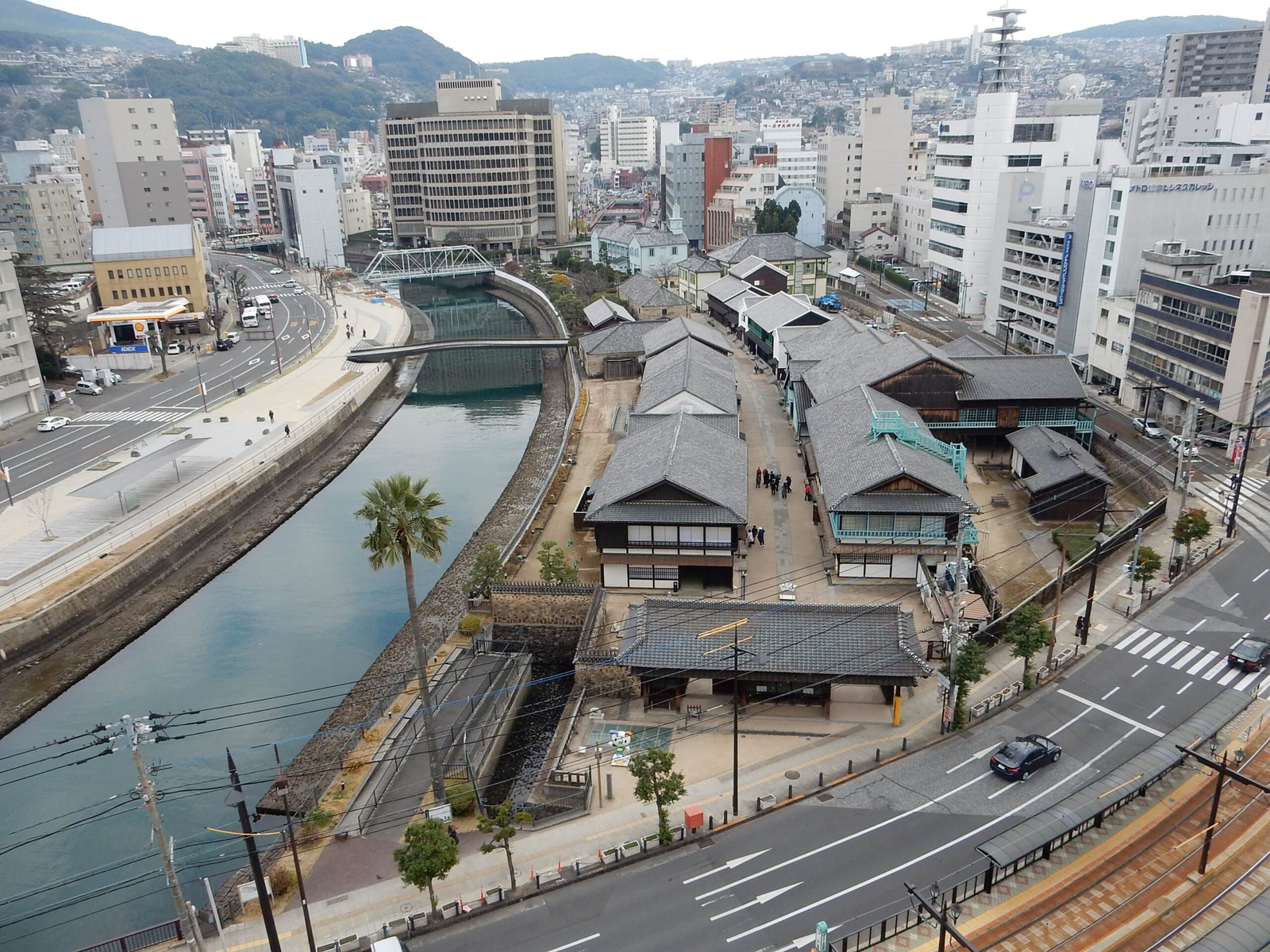
Attraction
Dutch ships brought textiles, sugar, glass, books, instruments and news; exports included copper, ceramics and lacquerware. Interpreters and officials transformed these goods and reports into knowledge that could circulate under shogunal control. Physicians and scholars associated with rangaku depended on networks extending through Nagasaki even when they did not live permanently on Dejima. Rooms reconstructed as warehouses, residences and offices help separate functions: storage, accounting, diplomacy, medicine and surveillance were intertwined but not identical. Displays are interpretations of documented use rather than untouched interiors. Dejima's historical importance lies in this managed permeability. Regulation restricted contact, yet the same regulated channel transmitted information that later supported medicine, mapping and institutional responses to foreign pressure.