Original-Site and Relocated Buildings
Attraction
Official Glover Garden material identifies nine traditional buildings. The Former Glover, Ringer and Alt residences have remained on this hillside since the foreign-settlement era; six other Western-style buildings were moved here from elsewhere in Nagasaki. That distinction should appear before any biography. Relocation does not make a building worthless, but it changes what the building can prove about place.
Current visibility
“Original-Site and Relocated Buildings” is materially legible at Glover Garden, especially through the surviving building and the garden described in the Highlight.
Attraction
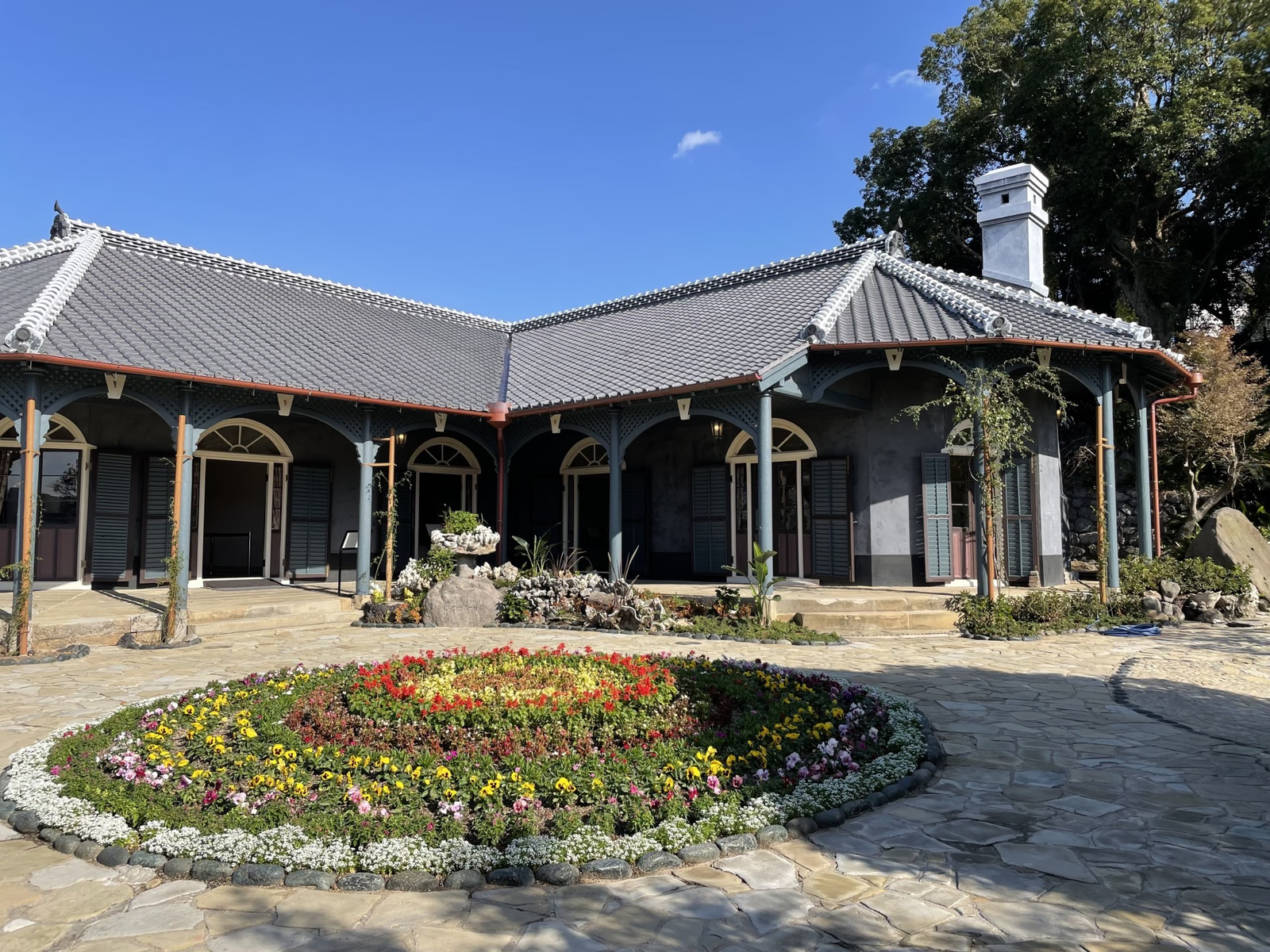
The Former Glover House was built in 1863 and is the site's strongest direct connection to Thomas Glover. It is often described simply as Western architecture, but its fabric is more hybrid: a timber structure with a hipped tiled roof and broad veranda combined with Western residential planning. That mix reflects a treaty-port environment where foreign clients, Japanese builders and local materials met in practice. The house matters because both the person and the place relationship are unusually direct here. The house turns 'Westernization' from an abstract slogan into a collaboration visible in material and form. Since 1961 the house has been a nationally designated Important Cultural Property. UNESCO also includes it among the component assets of Sites of Japan’s Meiji Industrial Revolution.
Current visibility
The present precinct at Glover Garden still carries “Former Glover House”; visitors can ground the text in the surviving building and the harbor.
The Harbor below Glover House
Attraction
Glover's house makes less sense if the harbor is treated as scenery. His business depended on ships, trade, imported technology and connections moving through Nagasaki. The settlement's hillside residences overlooked the very port through which that world operated. This is where the biography can deep-link outward into trade and industrial history.
Current visibility
The present landscape at Glover Garden keeps “The Harbor below Glover House” legible through the harbor, rather than through one preserved interior.
The Former Ringer and Alt Residences
Attraction
Two other important residences—the Former Ringer House and Former Alt House—also remain on the hillside from the settlement era. Their presence prevents the garden from collapsing into a single-person story. Glover was prominent, but Nagasaki's foreign settlement was a network of merchants, households and institutions. These buildings should therefore be read comparatively: different residents occupying the same treaty-port landscape, using related hybrid architectural solutions while participating in a wider commercial community.
Current visibility
“The Former Ringer and Alt Residences” is materially legible at Glover Garden, especially through the garden, the surviving building, and the harbor described in the Highlight.
Glover Garden as Historic Site and Heritage Curation
Attraction
Glover Garden is partly historic site and partly later heritage curation. That is not a flaw if the layers remain explicit. The Former Glover, Ringer and Alt residences preserve the original hillside settlement context; relocated buildings broaden the story of Meiji Nagasaki; the harbor connects both to trade and industrial change. The final interpretive move is to stop asking whether the garden is 'authentic' as one object and instead ask which type of authenticity each component carries. The whole garden becomes credible when its curation is made visible rather than hidden.
Current visibility
The present landscape at Glover Garden keeps “Glover Garden as Historic Site and Heritage Curation” legible through the garden, the surviving building, and the harbor, rather than through one preserved interior.