Read the article below. Interactive reading tools are available when scripts load.
Quick
Tokugawa Yoshinobu was born on 28 October 1837 at the Mito Tokugawa residence in Edo's Koishikawa district. He was the seventh son of Tokugawa Nariaki, lord of Mito, one of the three senior Tokugawa branch houses. His childhood name was Shichirōmaro. Although born in the shogun's capital, he was raised chiefly in Mito. Nariaki wanted his sons formed within the discipline of his domain rather than the luxury he associated with Edo. As a child he studied at the Kōdōkan, the domain school opened in 1841, which joined classical learning to practical and martial training. [1][6]
Mito scholarship emphasized the enduring imperial line alongside the house's service to the Tokugawa shogun, head of the warrior government. For Yoshinobu those loyalties began within one education. Later treaty disputes would set them against competing interpretations of service. His place as a younger son made adoption, rather than inheritance of Mito, the next likely change in his life.
In 1847 Yoshinobu left the line of Mito succession and became head of the Hitotsubashi Tokugawa house. He was still a child, eleven by the inclusive Japanese count. The transfer brought a new household, name, staff, income, obligations, and ceremonial position within Edo's Tokugawa order. Hitotsubashi was one of the Gosankyō, three houses created from shogunal sons to support continuity of the ruling line. Unlike Mito, Kii, and Owari, they were not simply great territorial domains with consolidated provincial governments. [1][3]
The transfer made him eligible for future succession without naming him the shogun's heir. Shogun Tokugawa Ieyoshi favored the adoption, supported by Senior Councillor Abe Masahiro. Coming-of-age ceremonies in Kōka 4's twelfth month, early 1848 Gregorian, gave the boy the adult name Yoshinobu. His natal connection to Nariaki remained politically visible, so Hitotsubashi status brought both new opportunity and the Mito associations opponents would later distrust. [3]
By 1857 the ailing shogun Tokugawa Iesada had no child, and succession became urgent as American commercial treaty demands divided the government. Two candidates dominated. Hitotsubashi Yoshinobu, about twenty, was supported by Nariaki, Shimazu Nariakira of Satsuma, Matsudaira Yoshinaga of Fukui in Echizen, and other lords who wanted a politically active adult. Tokugawa Yoshitomi of Kii was a younger but close-lineage alternative backed by another coalition. The dispute was not simply age against ability. It concerned who could influence the next government, whether outside lords should shape shogunal policy, and how the regime should respond to treaty demands. [3][14]
Yoshinobu's sponsors presented maturity and reputation as qualifications; opponents saw Nariaki's son and his allies as a threat to established authority. In 1858 Ii Naosuke became tairō, the extraordinary great elder above the senior councillors. His government supported Yoshitomi, who was designated heir and later took the name Iemochi. The decision was legally effective within the Tokugawa order. Yoshinobu's defeat did not prove that he lacked support, nor did his later career prove he was the only proper choice. Candidate reputations were produced by rival networks. The settlement selected a successor while deepening conflict around treaties, the court, and participation in government. [14][17]
After the succession decision and commercial treaties, Yoshinobu joined Nariaki and other senior Tokugawa lords in confronting the government. Their unscheduled entry into Edo Castle challenged policy and procedure. Ii Naosuke's administration answered with punishment. Yoshinobu was barred from appearing at the castle, then compelled to relinquish the Hitotsubashi headship and placed under confinement. The sanctions belonged to the broader Ansei Purge, which removed, confined, or punished lords, retainers, scholars, and court-linked activists who opposed the settlement. [1]
Political absence did not make Yoshinobu the secret director of later resistance. Networks hostile to Naosuke continued to act, and in 1860 seventeen former Mito samurai and one former Satsuma samurai assassinated the tairō outside Sakurada Gate. Yoshinobu neither held office nor controlled every group associated with his natal domain. The assassination broke Naosuke's leadership but did not immediately restore the defeated candidate. Edo still had a young shogun, senior councillors, domain tensions, treaty obligations, and an active court. Yoshinobu's enforced retirement became a reserve political possibility: the man removed as dangerous could later be recalled because the government that removed him could no longer stabilize the crisis. [13][19]
In 1862 Yoshinobu was restored to the Hitotsubashi headship and appointed shōgun kōken-shoku, guardian of the shogun. He returned to national politics beside Matsudaira Yoshinaga, who became president of political affairs. Iemochi remained the fourteenth shogun. The appointments did not arise from Edo alone. Shimazu Hisamitsu brought Satsuma troops toward Kyoto and Edo, while the court sent Ōhara Shigetomi with demands for reform. Yoshinaga, his reform adviser Yokoi Shōnan, court nobles, domain agents, and shogunal officials shaped the arrangement. [1][3][13][14]
The Bunkyū reforms eased alternate attendance, the system requiring most domain lords to spend regular periods in Edo and keep their families there. They also addressed military and naval capacity and prepared Iemochi's Kyoto visit. Yoshinobu acquired responsibilities without a separate national army or treasury. He served the shogun chosen over him in 1858, now within an arrangement whose highest personnel had been reshaped by court and domain pressure. [13][14]
Yoshinobu traveled west before Iemochi and entered a political world no Edo title could master. In 1863 the shogun came to Kyoto, the first shogunal visit since 1634. Emperor Kōmei and influential nobles demanded action against foreigners; Chōshū, Satsuma, Aizu, and other domains competed to define imperial policy. As guardian, Yoshinobu had to translate between court commands and a treaty-bound government. A declared deadline for expelling foreigners did not provide the ships, coastal coordination, or unified army required. [3][13]
Some domains attacked foreign vessels; the shogunate negotiated, delayed, and tried to prevent uncontrollable war. Iemochi's presence gave the court a visible shogun to petition. It also exposed differences among Yoshinobu, Matsudaira Yoshinaga, councillors, and domain leaders. Offices were resigned, restored, or redefined as coalitions shifted. Kyoto did not replace Edo with one new command center. It became a second working capital in which access to the emperor, control of gates, armed retainers, written orders, and rumors affected decisions. Yoshinobu gained unusual court experience, but remained simultaneously Tokugawa guardian, imperial intermediary, and target of suspicion from both cities. [3]
In spring 1864 Yoshinobu left the shogunal guardianship and received newly created responsibilities for guarding the imperial palace and directing Osaka Bay defense. The change tied his authority more directly to Kyoto and Kōmei while he remained a Tokugawa house head. That summer Chōshū forces advanced on the capital, seeking restoration of their expelled court influence. Negotiation failed, and on the Japanese seventh-month nineteenth day fighting reached palace gates. Yoshinobu helped organize defense alongside Aizu, Satsuma, Kuwana, and other forces. Extensive destruction during the fighting is secure, but the surviving evidence does not assign every fire to a single force. [3]
Chōshū units were defeated and driven from Kyoto. The Kinmon fighting was not a clean duel between future supporters and opponents of imperial government. Yoshinobu, later remembered for returning authority, defended Kōmei's palace against men later celebrated within the Meiji victory story. Alignments of 1864 cannot be borrowed from 1868. Military success brought urban catastrophe. Fire spread across large parts of Kyoto, destroying homes and displacing residents. Official reports record operations; burned neighborhoods show another consequence. Securing the palace strengthened Yoshinobu at court while making coercive power central to his Kyoto position. [13]
After Kinmon, Kyoto politics often rested on coordination among Hitotsubashi Yoshinobu, Aizu lord Matsudaira Katamori, and Kuwana lord Matsudaira Sadaaki. Historians call this alignment Ichikaisō, joining characters from Hitotsubashi, Aizu, and Kuwana. The name is useful, but the three did not form a permanent cabinet. Yoshinobu held Tokugawa and court-connected offices; Aizu supplied the protectorate; Kuwana contributed another security command. They depended on Kōmei's confidence, retainers, councillors, and changing domain support. The network defended the capital and pressed action against Chōshū. [3]
The first Chōshū campaign ended in 1864 through submission and negotiated punishment. In 1866 a reorganized Chōshū resisted a second campaign, exposing the shogunate's weak coordination. Yoshinobu lacked a great territorial base, while Aizu and Kuwana carried heavy deployment costs. Their cooperation depended on Kōmei's confidence and a shifting emergency, not a permanent administration with one policy. A Mito group known as the Tengu marchers headed west to petition him in 1864. Yoshinobu led forces to stop them; they surrendered to Kaga troops near Tsuruga. Shogunal authorities subsequently executed hundreds. His action against the march and those later sentences were distinct stages. [3][13]
Iemochi died at Osaka Castle in 1866 while the second Chōshū campaign was failing. Yoshinobu did not become shogun in one automatic moment. He first succeeded to leadership of the Tokugawa main house, then delayed before accepting appointment as the fifteenth shogun late in Keiō 2, corresponding to January 1867 in the Gregorian calendar. The interval mattered. Domain contingents were unreliable, defeats had broken confidence, and government needed an armistice. Katsu Kaishū helped negotiate a military pause with Chōshū, while officers handled armies, finance, succession, and the dead shogun's household. [1][8][13]
Iemochi's widow Kazunomiya, later called Seikan’in, faced a separate household question: adoption of the child Kamenosuke, later Iesato. He became head of the Tokugawa main house in 1868, not shogun in 1866. Yoshinobu accepted an office whose authority was shrinking and obligations expanding. He remained chiefly in the Kyoto–Osaka region rather than establishing a long Edo reign. Emperor Kōmei died soon after investiture. Yoshinobu lost the sovereign with whom he had built years of working access, and a young Meiji succeeded under different advisers. The office sought in 1858 finally became his when military defeat had weakened it and the court relationship supporting his Kyoto politics was changing.
During his brief shogunate Yoshinobu tried to make Tokugawa government more concentrated and functional. With French support, the bakufu (a warrior government headed by a shogun) expanded military training, reorganized units, and continued projects such as the Yokosuka arsenal. A French military mission arrived to instruct selected forces. Administrative reform assigned councillors defined portfolios for domestic affairs, foreign affairs, finance, army, and navy. Men with foreign knowledge, including the European-trained scholars Nishi Amane and Tsuda Mamichi, entered Yoshinobu's circle. Government sought revenue and trained personnel rather than relying only on inherited service obligations. [9][11]
Yoshinobu sent his younger brother Tokugawa Akitake to the 1867 Paris Exposition with a mission whose financial and administrative work involved the retainer Shibusawa Eiichi. Separate Satsuma participation challenged the delegation's claim to represent Japan. At home, training and departmental work remained unfinished. Debt, domain resistance and the gathering political confrontation denied the reforms time to consolidate before he returned authority. [3]
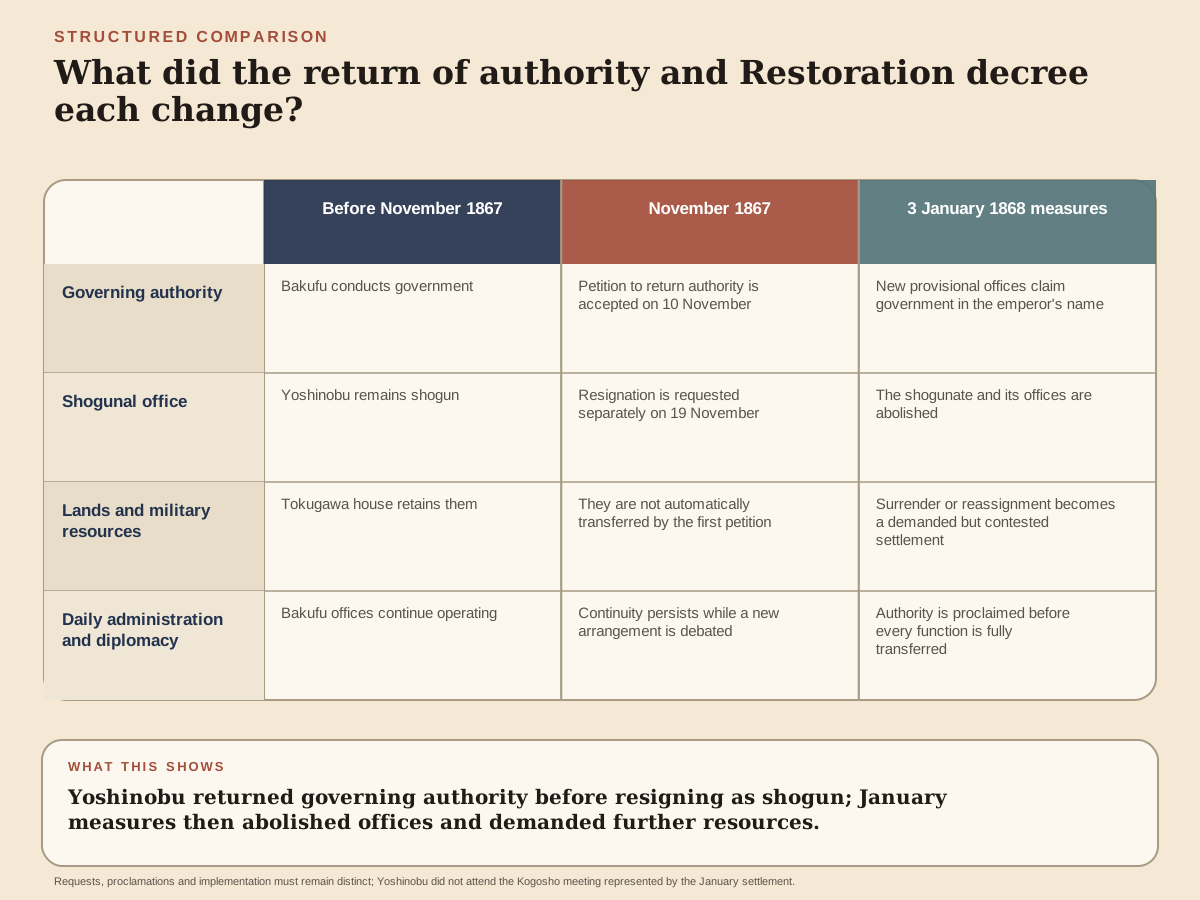
In autumn 1867 Tosa leaders urged Yoshinobu to return the governing authority long exercised by the shogunate to the imperial court. Former lord Yamauchi Yōdō sponsored the proposal, and his senior retainer Gotō Shōjirō carried its political work. Other plans for a council of major lords were already circulating. On the Japanese tenth-month fourteenth day, corresponding to 9 November, Yoshinobu submitted his request. The court accepted it next day. He also sought release from the shogunal title, but returning authority did not instantly erase every office, transfer every territory, or create a replacement administration. [1][8][13]
The Tokugawa house still held major military, fiscal and diplomatic resources. The National Diet Library interprets the return as an attempt to recover its influence within a changed framework, rather than retirement from politics. It disrupted arguments for armed overthrow but did not settle who would control those resources in the new government. A court-centered council could still leave Yoshinobu highly placed; his opponents sought to prevent that outcome. [1][11]
The interval after authority return left Yoshinobu highly placed and materially powerful. On the Japanese twelfth-month ninth day, corresponding to 3 January 1868, court and domain leaders led by Satsuma and Chōshū seized palace gates and issued the Restoration proclamation in young Emperor Meiji's name. The decree abolished the shogunate and old court regencies and announced new offices. At the Kogosho meeting, participants debated whether Yoshinobu must surrender court rank and Tokugawa lands. Yamauchi Yōdō and Matsudaira Yoshinaga resisted treating him as absent and condemned; harder-line actors pressed the demand. [8][13]
Yoshinobu was not inside the meeting. He withdrew from Kyoto to Osaka, restraining immediate retaliation while seeking a route back into court politics. The demand called jikan nōchi—return of office and lands—would reduce material advantage untouched by his earlier act. This was a coup in the sense of rapid seizure and reconstitution of court authority, issued as imperial restoration and dependent on military control of the palace. It did not command every domain automatically. By excluding Yoshinobu and targeting Tokugawa capacity, it transformed constitutional rivalry into a confrontation armed followers could understand as existential. [1][13]
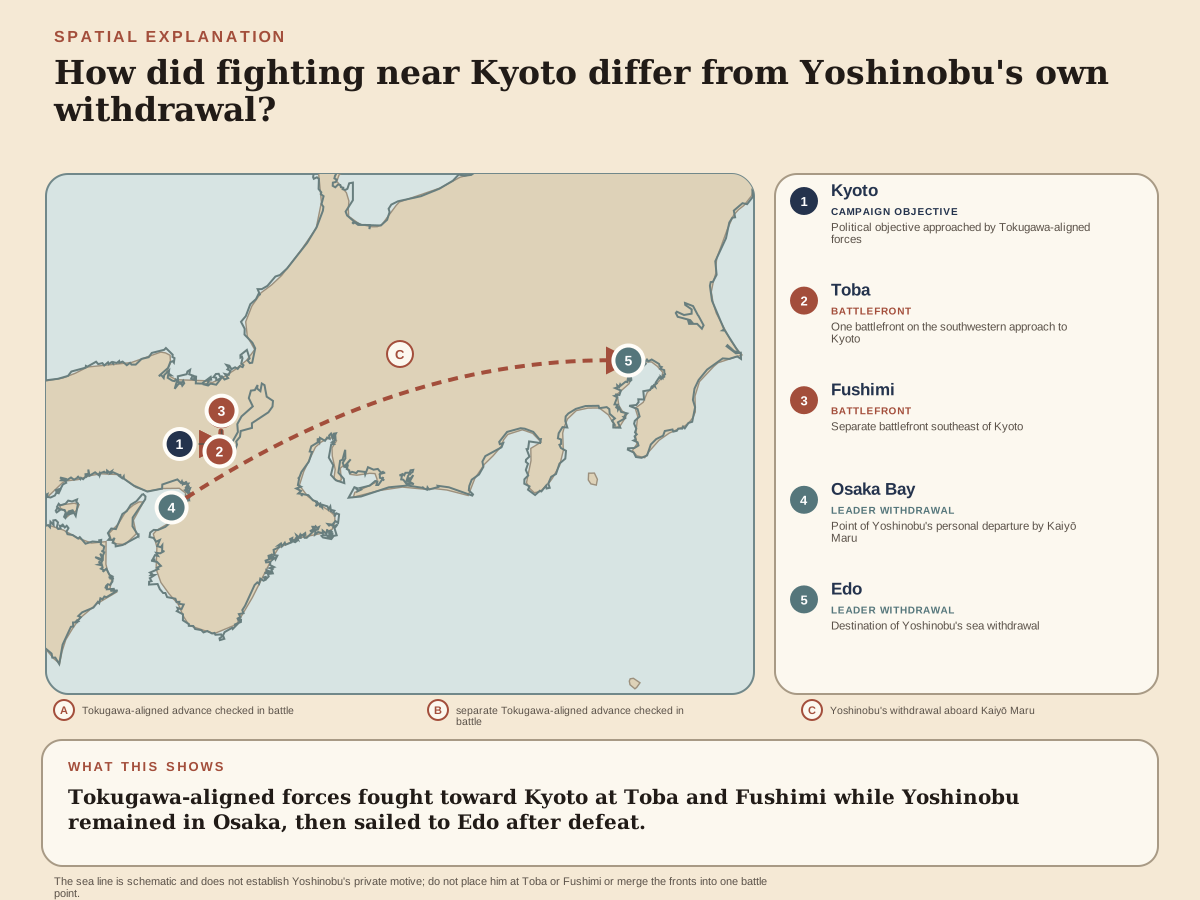
Tension broke into war in early 1868. Tokugawa, Aizu, and Kuwana forces advanced from Osaka toward Kyoto with a petition challenging the Satsuma-dominated settlement. Violence associated with Satsuma-backed activists in Edo and the shogunal attack on the Satsuma residence had further inflamed old-bakufu troops. Fighting began near Toba and Fushimi on the Japanese first-month third day. Yoshinobu remained at Osaka Castle while his forces met Satsuma and Chōshū units. The old-bakufu side had numerical and material resources but suffered divided command, difficult deployment, and the political shock of facing forces bearing an imperial banner. [13]
Resistance could now be classified as war against the emperor's government. After defeat and retreat, Yoshinobu left Osaka with Matsudaira Katamori, Matsudaira Sadaaki, and senior men. They traveled by warship Kaiyō Maru to Edo, leaving troops without principal leaders. Departure damaged Yoshinobu's reputation and accelerated collapse. Its private motive remains disputed. Fear, avoidance of wider war, recognition that imperial classification made victory ruinous, and loss of confidence may all have mattered. Evidence supports the act and consequences more securely than either “cowardly flight” or a secret plan for peace. [7]
Back in Edo, Yoshinobu did not move instantly from ship to passivity. He met French minister Léon Roches and explored defense or mediation while officers argued over resistance. After the court announced a personal imperial campaign against him, he changed course. On the Japanese second-month eleventh day Yoshinobu ordered submission and prepared to leave Edo Castle. He entered confinement at Kan'eiji next day, reduced household display, and instructed supporters not to make the city a battlefield in his name. [8]
Some forces continued the Boshin War, the civil conflict between the new government and forces of the former regime. Katsu Kaishū negotiated for the Tokugawa side and Saigō Takamori for the new government, aided by Tokugawa intermediary Yamaoka Tesshū. Seikan’in, the widowed Kazunomiya, petitioned through court relatives; Tenshōin, widow of Shogun Iesada, used separate connections. Edo Castle passed to the new government without general assault in the Japanese fourth month. Yoshinobu moved to Mito; Iesato received a reduced inheritance in Shizuoka. The castle settlement avoided one devastating battle without ending the war. [1][8][15][16]
Released from confinement in 1869, Yoshinobu lived for decades in Shizuoka while Iesato headed the Tokugawa main house. The former shogun did not take Meiji government office or direct the former retainers building new careers. Political absence helped separate his person from the house the settlement preserved. He maintained a household and pursued hunting and photography alongside painting and craft. Objects and images survive, but they should not reduce thirty years to picturesque retirement. [1][2][10]
He moved to Tokyo in 1897. In 1902 Emperor Meiji elevated him to duke and authorized a separate Tokugawa Yoshinobu house within the peerage, Japan’s hereditary nobility, preserving Iesato's position as main-line head. Recognition brought the defeated ruler into the new order without restoring his former office. On 8 December 1910 he transferred his own house’s headship to his seventh son, Yoshihisa. Yoshinobu was still alive in 1912, the endpoint here, with public memory divided over his retreat and submission. [1][2]
Classic
The future Tokugawa Yoshinobu was born on 28 October 1837 at the Mito house's Koishikawa residence in Edo, present-day Tokyo. His childhood name was Shichirōmaro. He was the seventh son of Tokugawa Nariaki, lord of Mito; his mother, Yoshiko, came from the imperial Arisugawa family. The household moved him the following year to Mito, northeast of Edo in present-day Ibaraki. There Nariaki linked his upbringing to the domain's education and martial discipline. The Kōdōkan, a school for men serving the domain, opened in 1841 and became part of the boy's learning environment. [1][6]
Mito historical scholarship emphasized an enduring imperial line while the Mito Tokugawa house served the shogunal order. The shogunate, the warrior government headed by the shogun, governed under court titles. Reverence for the sovereign could therefore criticize a policy without yet demanding abolition of Tokugawa government. Nariaki promoted coastal defense and opposed luxury; his son's education joined those concerns to service within the ruling family. Yoshinobu would later face coalitions and offices his father had not controlled. [6]
As a seventh son, Shichirōmaro had little prospect of inheriting Mito ahead of his older brothers. Adoption offered a place in another elite house. His father's directions to the attendant Inoue Jinzaburō combined that prospect with practical training: a son sent to another family should know both scholarship and martial skills. Riding beyond the formal practice ground belonged to the instruction, alongside swimming and archery. [1][6]
Teachers and attendants carried out the program. Classical reading and calligraphy accompanied visits to the newly opened Kōdōkan, where the boy received instruction and observed other students' training. Nariaki's authority shaped the schedule without supplying every lesson personally. The education joined Tokugawa service to reverence for the emperor, an allegiance that foreign-policy conflict would later make difficult to reconcile. [6]
Hitotsubashi was one of the Gosankyō—three Tokugawa branch houses, alongside Tayasu and Shimizu, closely tied to the shogunal family. It differed from Mito, Kii and Owari, the great territorial houses whose lords governed provinces and commanded established retainer organizations. Hitotsubashi's revenues, personnel and scattered holdings were administered within the shogunal establishment. Heading it brought high lineage and access to the main house without a comparable provincial base. That distinction would shape Yoshinobu's dependence on office, allies and borrowed military resources. [3]
In 1847 Shichirōmaro became head of Hitotsubashi. Shogun Tokugawa Ieyoshi favored the transfer, with the support of Senior Councillor Abe Masahiro. Adoption changed the boy's legal household and the retainers for whom he would become responsible. At coming-of-age ceremonies in the twelfth month of Kōka 4, falling in early 1848 Gregorian, he received the adult name Yoshinobu, with a character granted by Ieyoshi. His Mito kinship remained visible, but he now represented a different house within the shogunal establishment. [1][3]
Hitotsubashi gave Yoshinobu high lineage and proximity to the main house without an autonomous great domain. Future power would depend on office, staff and allied lords rather than a provincial army he could summon alone. The transfer preserved a succession option for the Tokugawa family; it did not appoint him the shogun's heir. [3]
Hitotsubashi retainers retained their own service relationships; they did not become Mito men simply because Nariaki's son headed the house. Yoshinobu had entered a body of offices and personnel he had not built. Mito relatives could still supply contacts and advisers, making his natal and adopted connections useful to supporters and suspect to opponents. [3]
By 1857 Tokugawa Iesada, the thirteenth shogun, was ill and had no child. The armed American mission of Matthew Perry in 1853 had led to limited foreign access; wider commercial negotiations now made the choice of successor urgent. Yoshinobu's adulthood supported the claim that he could act immediately, while Hitotsubashi status kept him within the succession-capable family. His Mito birth connected him to Nariaki's defense politics and contentious relations with senior councillors. Shimazu Nariakira, lord of Satsuma in southern Kyushu, and Matsudaira Yoshinaga, lord of Fukui in Echizen on the Sea of Japan coast, supported him and sought wider participation by powerful domains in national decisions. Tokugawa Yoshitomi of Kii, south of Osaka, was much younger but had a close genealogical claim and a great-domain organization. His supporters could defend continuity against an adult candidate backed by a reform coalition. Age, lineage and governing interests did not select one automatic answer. [3][14]
Ii Naosuke became tairō, the extraordinary great elder who stood above the senior shogunal councillors. Appointed in 1858, he could coordinate the senior government during crisis and give the Kii settlement administrative force. Yoshitomi later took the name Iemochi. Iesada's position and the role of his inner household remain subjects of interpretation; it is too simple to erase the shogun and say Ii privately invented the succession. Securely, the Naosuke government implemented Yoshitomi's designation and defeated the Hitotsubashi coalition. Foreign relations transformed a family question into a constitutional one. Negotiations led by the American consul general Townsend Harris raised whether the shogunate could sign without prior imperial approval and whether the court should enter decisions long managed from Edo. Yoshinobu's supporters overlapped with critics of Naosuke's procedure, but “Hitotsubashi faction” was not one unified platform. [14][17]
The Hitotsubashi coalition contained different foreign-policy positions. Some wanted opening under stronger preparation, others emphasized imperial authorization. Its supporters also worked through Kyoto, where nobles and domain agents could influence the arguments reaching the emperor. The Kii settlement was effective within the shogunal household without securing agreement from those seeking wider participation. Defeat left the Hitotsubashi side with networks and grievances that reached beyond the succession itself. [3][14]
Reports of Yoshinobu's learning and capacity served the adult candidate's campaign, while opponents emphasized Nariaki's contentious politics and the risk of an independent coalition. These were rival assessments, not a common examination. Iesada's household and senior officials made the formal choice. The implemented outcome is clearer than the distribution of private influence within his household, and Yoshinobu's eventual accession does not settle how the earlier choice should be judged. [3][14][17]
After the succession settlement, Yoshinobu joined Nariaki and Tokugawa Yoshikatsu, lord of Owari, in an unscheduled appearance at Edo Castle to protest government policy. Access followed rank and procedure; arriving without the expected summons let Naosuke's administration classify protest as indiscipline. Yoshinobu was first barred from castle attendance, then forced to retire from the Hitotsubashi headship and confined. His birth could not be cancelled, but orders could end office, restrict movement and block contacts. Houses, audiences and custody gave the sanctions their practical force. [1]
Daimyō and high house heads received retirement or confinement suited to status. Retainers, activists, scholars, and intermediaries could lose office, face detention, exile, or death. Court involvement in treaty politics, especially communications bypassing Edo's preferred channel, made information itself an object of repression. One label—Ansei Purge—must not flatten different procedures and consequences. Yoshinobu later benefited from a memory of persecution, but his penalty was not identical to the harshest sentences. A high Tokugawa prince could be neutralized while remaining available for future dynastic use. The state punished him strongly enough to end a coalition's immediate challenge but did not eliminate the lineage asset Hitotsubashi represented. On 24 March 1860, seventeen former Mito samurai and one former Satsuma samurai killed Ii Naosuke outside Sakuradamon, a gate of Edo Castle. The attack cannot be transferred to Yoshinobu through kinship. [1][13][19]
Domain factions were fractured, Nariaki did not command every dissident, and the confined former head was not operational chief of the assassination. Naosuke's death did not reverse every decision. Iemochi remained shogun; treaties remained; officials tried court–shogunate cooperation; foreign and domestic violence intensified. The state lost the man who had concentrated responsibility without recovering consensus. This explains why Yoshinobu's absence gained value. He had been marked dangerous because he connected Tokugawa lineage with reforming lords and court-sensitive politics. After Naosuke, those connections could be represented as resources. Rehabilitation would not prove every part of the purge wrong; it would show that the government's definition of necessary service had changed. Confinement also altered the evidence available to historians. Official orders record status changes more clearly than daily conversation. [13][19]
In 1862 Yoshinobu returned to the Hitotsubashi headship and became guardian of the shogun, shōgun kōken-shoku. Iemochi remained the fourteenth shogun; the appointment brought the defeated 1858 candidate into public service without reopening the succession. The young shogun's government faced treaty obligations, political violence and demands from Kyoto. Shimazu Hisamitsu, the influential head of Satsuma's ruling family, moved troops toward Kyoto and Edo and used court connections to press reform. Imperial envoy Ōhara Shigetomi carried demands that Edo could not easily dismiss. Senior councillors still issued appointments, and several plans circulated, but court and domain pressure had entered personnel decisions formerly managed chiefly within the shogunate. Matsudaira Yoshinaga became president of political affairs, a coordinating office distinct from Yoshinobu's guardianship. [1][3][13][14]
Yokoi Shōnan, Yoshinaga's reform adviser, supplied influential reform arguments but did not personally enact the entire program. Separating these men prevents every 1862 measure from becoming proof of Yoshinobu's solitary modernizing genius. Reform of alternate attendance eased the requirement that most lords spend regular periods in Edo and keep their families there. Domains could redirect resources toward defense. The change also weakened a practice through which the shogunate organized lordly presence and hostageship. Reform did not automatically increase central control. Military reorganization faced similar limits. Training, procurement, coastal defense, personnel reassignment, and foreign knowledge required money and cooperation from officers whose status rested on inherited service. [13][14]
A new title authorized Yoshinobu to press work; it could not instantly convert the bakufu (a warrior government headed by a shogun) into a centralized state. Iemochi's coming Kyoto journey mattered even more. It visibly answered court demand that the shogun participate in imperial politics. Yoshinobu was sent as intermediary, strategist, and potential rival. Hitotsubashi rank allowed him to speak as Tokugawa family, while the memory of court-supported rehabilitation made Edo officials doubt him. The office joined authority to dependency. Yoshinobu influenced policy because other actors believed the shogunate needed him. The same coalition meant he could not command it. When court wishes, Iemochi's dignity, senior-council procedure, Satsuma aims, and Yoshinobu's judgment diverged, “guardian” supplied no constitutional rule automatically settling the dispute. The word “guardian” can also mislead English readers by suggesting private care of a minor.
The appointment defined public responsibilities while Iemochi retained his own household and senior councillors. Attendance reforms affected more than the men receiving titles: less travel and easier family movement altered domain budgets and Edo residences. Military work depended on instructors, craftsmen and stipend holders who had to implement it. Yoshinobu could press the reforms through office, but results required cooperation from men whose obligations and livelihoods the reforms changed. [13][14]
For more than two centuries, shoguns received court titles and communicated with Kyoto while governing chiefly from Edo. Iemochi's 1863 journey reversed the normal direction of visibility. The shogun entered a city crowded with nobles, domain residences, armed guards, activists, petitioners, and rival intelligence networks. The last shogunal precedent dated to Iemitsu in 1634, when the balance of power was different. Yoshinobu went ahead as negotiator, but the guardian's office did not define how an imperial order should be implemented. Emperor Kōmei strongly opposed the treaties and wanted foreigners expelled. The shogunate had signed international agreements, operated treaty ports, and understood the military dangers of immediate general war. Accepting an expulsion date could satisfy court pressure while leaving its operational meaning unresolved. [3][13]
The gap between command and capacity mattered. Coastal defense was divided among shogunate posts and domains. Forces varied in weapons, training, and willingness. Foreign powers could retaliate against ports and shipping. Chōshū's firing on foreign vessels at Shimonoseki showed that one domain could act in the emperor's name without producing coordinated national expulsion. Later bombardments showed the cost of fragmentation. Court politics was not one voice. Kōmei possessed sovereign and ritual authority, but nobles differed over expulsion, reconciliation, and domain allies. Activist samurai worked through particular patrons. Satsuma and Aizu could both claim service to the throne while opposing Chōshū. On 30 September 1863, the eighteenth day of the eighth Japanese calendar month, a palace coup excluded Chōshū and its allied nobles. Court personnel and domain influence had changed without a change of emperor. [3][13]
Matsudaira Katamori, lord of Aizu, guarded Kyoto through his appointment as protector of the capital. His troops supplied force that Yoshinobu's dynastic standing could not replace. Iemochi performed audiences and made commitments to Kōmei while Yoshinobu advised and mediated. The offices worked together without merging: troops controlled access, the shogun represented Tokugawa government, and the guardian negotiated between demands that Edo and Kyoto understood differently. [3][13]
Yoshinobu became skilled in this field, but skill did not mean control. Repeated efforts to withdraw and unstable offices reveal the difficulty of maintaining one mandate when each constituency could interpret mediation as betrayal. Travel and communication imposed their own chronology. A decision made in Kyoto required copying, messengers, relay horses, reception in Edo, discussion, and return. Steamships and improved coastal movement shortened some journeys but did not create instantaneous government. Meanwhile a rumor could move through activist and domain networks in altered form. Political actors often responded to partial news, and the time between order and answer gave local officials room to interpret. The city's material concentration intensified pressure. Court gates, noble compounds, domain residences, temples, markets, and roads placed political rivals within walking distance while their fiscal and military bases lay elsewhere.
Control of gates could permit or prevent an audience. Supplies and lodging sustained the shogun's following. Kyoto's importance grew through this concentration of people and armed access, even though its claim to authority still depended on the emperor.
In spring 1864 Yoshinobu left the guardianship and received newly created commands for imperial-palace security and Osaka Bay defense. The arrangement tied his authority more closely to Kōmei without making him shogun. Chōshū, a domain at the western end of Honshu, had lost court influence in the previous year's coup. Its armed contingents now approached Kyoto to seek access, vindication and reversal of the coalition around the emperor. Fighting reached the palace gates on the nineteenth day of the seventh Japanese calendar month of 1864. Once forces advanced against orders, palace defenders treated them as threats to imperial security. Matsudaira Katamori, lord of Aizu in northeastern Honshu, held the Kyoto protectorate and supplied troops. [3]
Kuwana, a domain near the mouth of the Kiso River, under Lord Matsudaira Sadaaki, held another security role. Satsuma troops, whose domain later overthrew Tokugawa government, fought on the defending side. Yoshinobu coordinated from a Tokugawa and court position. Calling the arrangement either “bakufu army” or “imperial army” alone loses how authority was assembled. Battle geography mattered. Palace gates, noble residences, narrow streets, temples, and domain compounds made Kyoto a political map in wood and tile. Fire did not remain within objectives. Reporting held by the National Museum of Japanese History records the Chōshū entry and conflagration; sources differ over responsibility for particular fires. Extensive destruction is secure, not a single culprit for every block. [3][13]
Yoshinobu's use of force defended an imperial–Tokugawa arrangement against Chōshū. Victory increased his credit with Kōmei and strengthened cooperation with Aizu and Kuwana. It also made the conflict with Chōshū more personal. The men holding the palace gates could claim service to the emperor in 1864, although later coalitions would change which forces received that recognition. [3]
The fighting brought disaster to Kyoto's residents. Fire spread beyond military objectives, forcing households to flee and destroying commercial stocks and tools. Refuge and rebuilding became urgent problems for people with no command at the palace gates. Reports and urban records preserve extensive damage more securely than responsibility for every fire. The coalition's military success therefore carried a cost far beyond its rival domain leaders. [13]
Historians use Ichikaisō for the recurring coordination of Hitotsubashi, Aizu and Kuwana, combining characters from their names. It was not a fixed cabinet with formal membership and one program. It is better understood as shorthand for three connected centers: Yoshinobu's Hitotsubashi and palace-defense position, Katamori's Aizu protectorate, and Sadaaki's Kuwana security role. Their resources complemented one another. Yoshinobu carried Tokugawa lineage, court experience, and access to national decision. Aizu maintained men and policing institutions. Kuwana's forces and the brothers' kinship—Katamori and Sadaaki were brothers—sustained cooperation. None could substitute fully for the others. Dependencies were equally important. Hitotsubashi supplied no consolidated large domain. Aizu and Kuwana had territories and retainers, but deployment cost money, strained administration, and tied reputation to unpopular security actions. Kōmei's support authorized their role, while Edo councillors controlled other resources. [3]
Policy unity should not be assumed. Yoshinobu could favor settlement, resign an office, or bargain in ways Aizu officers disliked. Aizu policing created priorities different from Hitotsubashi diplomacy. Satsuma at times cooperated against Chōshū and later moved toward alliance with it. A “system” existed only through continual work. The Chōshū campaigns reveal the difference between Kyoto authority and national command. In 1864, after Kinmon, the first expedition assembled domain contingents. Chōshū punished senior men, dismantled positions, and accepted terms before general invasion. This allowed the bakufu to claim submission while concealing the difficulty of coordinating a huge force. The second campaign in 1866 was not the same operational moment. Chōshū had reorganized; Satsuma no longer supported the shogunate in the same way; domains resisted costs; fighting exposed uneven command. [3][13]
The Tengu movement brought a more immediate conflict with Yoshinobu's Mito connections. After fighting divided Mito in 1864, a group led by the senior retainer Takeda Kōunsai marched west to petition him in Kyoto. They hoped their former relationship would secure his support. Yoshinobu instead led forces sent to suppress the march. Surrounded near Tsuruga, on the Sea of Japan coast, the marchers surrendered to troops from Kaga, a major domain farther north along the coast. After transfer to shogunal custody, hundreds were executed in 1865 and others received lesser penalties. His command against the march and the government's subsequent sentencing were separate stages; the executions should not all be assigned to a personal order from him. Matsudaira Yoshinaga, also known as Shungaku, later recalled Yoshinobu expressing sorrow about the fate of men he had known. That Meiji-era recollection supports an attributed account of regret, not direct access to his thoughts during the campaign.
Aizu and Kuwana paid heavily for prolonged Kyoto service. Troops stationed away from their domains consumed money and provisions while removing men from local administration. Yoshinobu could sometimes change position through resignation or a new title; the two domains remained committed through their deployed forces. Imperial favor supplied legitimacy without covering every bill. The longer the emergency continued, the more unevenly its burdens accumulated. [3]
Iemochi died at Osaka Castle in 1866 while the second Chōshū campaign was failing. Yoshinobu first accepted leadership of the Tokugawa main house and only later court appointment as shogun. The house was a lineage, estate and household; sei-i taishōgun was the court title associated with national government. Generations in which one man held both had made the distinction easy to miss. Yoshinobu's delay has been explained as reluctance, calculation or a search for stronger terms. The losing war, strained finances and divided officers supplied reasons for hesitation without proving one private motive. Multiple campaign fronts depended on domain contingents rather than one national army. [1][8][13]
Satsuma withheld its earlier cooperation while Chōshū's reorganized forces resisted. Iemochi's death removed the shogunal focus at Osaka, and Katsu Kaishū, a senior shogunal officer, helped obtain a pause in fighting. Within Edo Castle, Iemochi's widow Kazunomiya and Tenshōin, widow of the preceding shogun Iesada, faced the household succession. A 2009 Kobe University doctoral study quotes the attendant Niwata Tsuguko's entries in the seventh Japanese calendar month of 1866: Tenshōin pressed adoption of the child Kamenosuke, while Kazunomiya raised concerns about responsibility for his upbringing before accommodating the proposal. The boy later became Iesato. The entries record a household choice concerning adoption and guardianship. They do not independently establish Iemochi's deathbed instructions. Yoshinobu became main-house head and then shogun; Iesato succeeded to the family only after the 1868 defeat. [8][13]
Court investiture took place in Keiō 2's twelfth month, which fell in January 1867 Gregorian. It was distinct from Yoshinobu's earlier acceptance of main-house leadership. Kōmei died soon afterward, removing the emperor through whose confidence he had worked in Kyoto. The young successor, Meiji, was surrounded by advisers able to reorganize access. Yoshinobu received the long-sought title just as military failure and the loss of that court relationship weakened his means of using it. [1][8][13]
Officials managed news of Iemochi's death, burial and dependents while the campaign still required settlement. Yoshinobu's investiture came through the established court procedure, giving his new government formal imperial authorization shortly before Kōmei died. The later political break consequently required further court action; it did not follow from an absence of lawful appointment at the outset.
Foreign representatives also needed an identified officer and seal behind Japanese commitments. Investiture clarified who spoke for the government even though it could not repair battlefield command or compel the domains to cooperate.
Military service had long been organized through inherited status: retainers and lords owed men, weapons, and attendance according to rank and assessment. By the 1860s, effective artillery, rifles, drill, ships, transport, and arsenals required cash, standardized training, specialists, and dependable command. Yoshinobu's government tried to convert portions of service into directly funded capacity. French assistance was practical and diplomatic. Minister Léon Roches cultivated the shogunate as the government most capable of honoring agreements. French officers instructed troops; engineers and administrators supported projects; arms and credit relationships expanded. Yokosuka works, begun before Yoshinobu became shogun, linked naval construction to imported expertise. He accelerated and gathered projects he did not invent alone. Administrative portfolios addressed another problem. Councillors worked through collective deliberation, overlapping responsibility, and subordinate offices. [9]
Allocating domestic, foreign, finance, army, and navy functions aimed to identify responsibility and speed decisions. It resembled ministerial government, but councillors remained shogunal officers rather than elected ministers, and older offices continued to evolve. Nishi Amane and Tsuda Mamichi, scholars returning from European study, brought foreign political knowledge to the government. Nishi taught French to Yoshinobu. Their engagement with foreign knowledge did not produce one completed constitutional blueprint. The Paris mission joined representation to technology. His younger brother Tokugawa Akitake represented the shogunate, with Shibusawa Eiichi handling administrative and financial work in the mission. Yet Satsuma displayed separately, showing foreign audiences several Japanese political actors rather than one uncontested delegation. Money limited reform. Troops, arsenals, missions, and loans had to be funded while revenues were strained. [3][9][11]
Converting retainer service into direct funding threatened inherited expectations. Domains controlled resources the shogunate needed, and stronger Tokugawa consolidation alarmed some of the lords whose cooperation was required. The reforms remained compressed experiments under civil danger. They nevertheless left trained units, technical institutions and foreign relationships. Yoshinobu retained those resources when he returned governing authority, giving opponents reason to regard the act as repositioning rather than a complete retirement. [9]
Selected men drilled under selected instructors for a short period; language, translation, rank, and supply shaped what could be learned. Uniform appearance and imported commands could demonstrate change quickly, while logistics and officer culture changed more slowly. A trained unit was evidence of capacity-building, not proof that all Tokugawa forces shared doctrine or command. International finance added risk. Arms, machinery, shipbuilding, and overseas missions required contracts and credit whose repayment extended beyond a political season. French support was also part of rivalry among foreign representatives seeking influence and reliable treaty partners. Yoshinobu could use that competition, but foreign recognition did not settle legitimacy inside Japan. When the government changed, facilities, debts, technicians, and agreements did not evaporate; successor institutions had to appropriate, renegotiate, or repurpose them. Reform's material afterlife exceeded the regime that sponsored it. [9]
On 9 November 1867, the fourteenth day of the tenth Japanese calendar month, Yoshinobu submitted his request to return governing authority; the court accepted it the next day. Taisei hōkan, the return of governing authority, acknowledged imperial supremacy without necessarily removing the Tokugawa house from national leadership. The proposal came from Tosa, a domain on Shikoku. Its former lord Yamauchi Yōdō favored a transition preserving a role for great lords, and his senior retainer Gotō Shōjirō advanced the memorial and negotiations. Sakamoto Ryōma and others have been connected to council schemes, but authorship claims differ; no one man owned the idea. Satsuma and Tosa could cooperate on a peaceful proposal while expecting different outcomes. Returning exclusive shogunal authority also complicated the justification for an armed overthrow. Yoshinobu could enter a new assembly as Tokugawa head, with immense resources and recent governing experience. [1][8][13]
The court's acceptance did not create ministries overnight. Shogunal offices continued foreign relations and administration because no machinery could immediately replace them. Yoshinobu's attention to structure continued. After the return, Nishi Amane submitted a proposal through Yoshinobu's aide Hirayama Yoshitada. Its associated draft divided governing functions between the shogun, domains and a legislative assembly of lords and retainers. It envisioned a Tokugawa-centered order, but was not adopted. Material authority remained unresolved. [1][11]
The Tokugawa house retained lands and revenue, troops and diplomatic machinery. The National Diet Library interprets the return as an attempt to recover Tokugawa influence within a changed order. Such a strategy could coexist with efforts to avoid war and answer Tosa's proposal. It did not establish one adopted constitution. Opponents now faced a different problem: abolishing exclusive shogunal government would not by itself prevent Yoshinobu from leading its replacement. [1][11]
The memorial presented political division as a national danger and invoked the court's authority to address it. Its acceptance changed the formal position while practical administration continued. Foreign ministers still needed officials able to enforce port agreements and answer claims. Tokugawa offices held the records and relationships that the court lacked. A transition therefore had to replace functioning government as well as declare a new source of authority. [1][11]
On 3 January 1868, the ninth day of Keiō 3's twelfth month, court and domain leaders issued the Restoration proclamation in Meiji's name. Troops secured the palace gates while aligned nobles reorganized court procedure. The court noble Iwakura Tomomi and Satsuma leaders Saigō Takamori and Ōkubo Toshimichi were prominent in the coalition. The proclamation abolished the shogunate and old court regencies and announced new offices. Yoshinobu's earlier return had left him with substantial lands and forces; a new council could still have become Tokugawa-led government unless those advantages were confronted. [8][13]
New offices were announced, and young nobles and domain figures gained administrative routes. “Restoration” described legitimacy while institutional creation produced the new regime. At the Kogosho meeting, held in an audience chamber that evening, participants debated a demand that Yoshinobu surrender his court rank and Tokugawa lands. Yamauchi Yōdō argued from the peaceful transition he promoted and challenged treatment of Yoshinobu in his absence. Matsudaira Yoshinaga sought moderation. Their participation prevents the meeting from being one unanimous anti-Tokugawa will. Harder-line leaders sustained the demand, but terms still needed enforcement. Land was not symbolic. Tokugawa holdings supported retainers, offices, troops, and obligations. Returning title without revenue left an armed great house; returning lands threatened thousands whose livelihood and identity depended on it. The demand appeared as state construction to the new coalition and confiscation to followers. Yoshinobu's Osaka move was withdrawal and positioning. [13]
Withdrawal reduced the immediate risk of a Kyoto clash and placed Yoshinobu near Osaka Castle, foreign ministers and loyal troops. He continued protest and military preparation as well as restraint. A negotiated council remained possible enough for Yōdō to argue for it, while harder-line leaders sought to reduce Tokugawa power. Neither side had yet made its preferred settlement effective across the country. [1][13]
The Kogosho setting mattered procedurally. An audience chamber brought court nobles and domain lords into direct debate, but attendance was selected and the palace perimeter was controlled by the coalition acting that morning. Yoshinobu's absence was therefore not a neutral vacancy. It shaped what could be said for him, how objections were framed, and why Yōdō's protest became memorable. Deliberation occurred, but within a field produced by military possession. Meiji's age sets an evidentiary boundary. Orders were issued in the emperor's name and constituted sovereign acts; that does not mean the adolescent monarch personally designed every clause or privately weighed every exchange recorded by adult participants. Treating all coalition action as the spontaneous will of the emperor erases advisers and troops. [13]
Imperial authority changed the political classification of service, but enforcement still depended on the coalition's troops and domain support. Distant lords could wait to see which commands prevailed. Yoshinobu's followers had to decide whether the new demands meant a governable transition or the destruction of the house they served. [1][13]
The old-bakufu force did not publicly declare an intention to overthrow Meiji. Its stated purpose was to present grievances and remove hostile advisers, especially Satsuma influence, from around the sovereign. This drew on the idea that loyal subjects might attack “wicked counselors” while claiming fidelity to the ruler. That claim could not control the encounter. On the third day of the first Japanese calendar month of 1868, armed columns approaching Kyoto met roads defended by Satsuma and Chōshū. Orders, negotiations, and first firing differ across partisan records. Once guns opened, each side treated the other as aggressor. Securely, movement intended to coerce access met organized refusal and became combat. Numbers did not decide performance. Old-bakufu, Aizu, and Kuwana units differed in command, weapons, training, and purpose. Some newly trained formations represented reform; other contingents followed older structures. [13]
Roads and villages constrained deployment. Satsuma and Chōshū defended positions and coordinated more effectively at key points. The imperial banner altered political interpretation, not because cloth destroyed an army. Court authorization let the new coalition present its troops as the sovereign's army. Officers whose identities rested on Tokugawa and imperial service faced conflicting loyalty chains. Domains outside could hesitate to join a force labeled rebel. Yoshinobu's location at Osaka created another divide. He was political principal but not battlefield commander at Toba or Fushimi. Reports came through retreating officers. Foreign ministers, ships, castle, and reserves made Osaka a possible base. The city also held civilians, stores, documents, and administration exposed to disorder. Departure removed more than one man. Katamori and Sadaaki had commanded the Aizu–Kuwana partnership central to Kyoto. [13]
Yoshinobu took Katamori and Sadaaki aboard the warship Kaiyō Maru for Edo, separating their forces from their lords. Katsu Kaishū's diary records the pallor and silence of returning officers when he asked about the defeat. Osaka merchant records capture collapse, evacuation, fire, and civic burdens. Why did Yoshinobu leave? A heroic peace reading turns a consequence—avoiding immediate Osaka battle—into proven intention. A cowardice reading converts an act under military shock into personality diagnosis. Yoshinobu had pursued Tokugawa influence, allowed or failed to prevent the march, and retained means to resist. He also knew open combat under enemy-of-the-court classification threatened the house he hoped to preserve. He chose departure, did not adequately prepare followers, and caused disorganization. The choice moved confrontation away from Osaka and made later submission possible. Neither consequence alone grants access to motive. Battle records were produced by participants defending conduct. [7]
The departure did not carry the army back east with its lords. Retreating officers and men had to find transport and provisions, decide whether to disperse or regroup, and act without their principal leaders. Osaka Castle's stores and documents also remained to be protected or transferred. Yoshinobu's movement forced many separate decisions on followers while the new coalition prepared to occupy the city. [7]
Back in Edo after the defeat, Yoshinobu initially explored resistance or foreign mediation. His later submission helped make a negotiated castle transfer possible. “Bloodless surrender” describes the absence of a general battle for the castle, not the absence of violence throughout the city or the work of one heroic meeting. Research in NDL holdings records meetings with Roches and attempts to explore foreign pressure while strong-defense arguments remained alive. French weapons, ships, trained formations, and fortifications made resistance possible. Reliance on foreign power risked further loss of legitimacy and international complication. The announcement of an imperial campaign increased resistance's cost. Yoshinobu ordered submission on the eleventh day of the second Japanese calendar month of 1868 and entered Kan’eiji, a major Buddhist temple in Edo's Ueno district, the next day. His withdrawal from the castle made visible that he would not direct an Edo battle. High-status confinement was political theater and control: location, dress, guards, audiences, and correspondence communicated obedience. His command did not dissolve the old armed world. [8]
Naval units, infantry, Aizu, northern domains, and followers chose separately. Some thought submission betrayed inherited obligations. Shōgitai gathered at Ueno and later fought near the temple after Yoshinobu departed. Separating those decisions preserves agency. Katsu Kaishū, acting for the Tokugawa government, received authority to manage crisis. Yamaoka Tesshū, a Tokugawa retainer and intermediary, crossed lines to reach Saigō before principal negotiations. Katsu and Saigō Takamori, representing the new government's advancing army, adjusted terms under an approaching assault. Their work concerned weapons, warships, castle, Tokugawa treatment, order, and recognition—not only Yoshinobu's body. Female household diplomacy formed another layer. Seikan’in, the widowed Kazunomiya and Meiji's aunt, petitioned through Hashimoto kin and court intermediaries. Tenshōin, widow of Iesada and a Satsuma-born Tokugawa leader, used other channels. Their status did not command Saigō's army, but framed house survival and dynastic relationship in forms officers could not duplicate. [15][16]
An assault on Edo threatened fire, evacuation and disorder on a vast scale. That cost entered the settlement alongside demands to punish Yoshinobu and reduce Tokugawa power. The agreement preserved the house under Iesato with a smaller inheritance in Shizuoka. Yoshinobu moved to Mito after the castle transfer, and his confinement was lifted in 1869. Personal submission, family survival and continued fighting elsewhere had become separate parts of the transition. [1][8][15][16]
Yoshinobu's submission preceded the best-known Katsu–Saigō negotiations, and Yamaoka's mission helped open their route. Petitions from Tokugawa women worked through separate court connections. Once terms were reached, officials still had to guard assets, issue notices and manage the transfer. Warships that did not pass into new-government hands showed the limits of the agreement: castle terms could not automatically control every armed force associated with the old regime. [1][8][15][16]
The negotiated outcome was real, but its boundaries explain why war continued beyond Edo. Punishment and preservation were negotiated at multiple scales. Sparing Yoshinobu did not guarantee every retainer's safety; preserving the Tokugawa house did not preserve its former revenue; avoiding a castle assault did not end fighting in Ueno or the north. The outcome becomes more historically impressive, not less, when its exact limits remain visible. [1][8]
Released from confinement in 1869, Yoshinobu found that freedom did not reverse the 1868 settlement. Iesato remained head of the Tokugawa main house and received Shizuoka before domains were abolished. Yoshinobu lived within that transformed landscape but did not resume leadership. Person, lineage, and former office were institutionally separated. Shizuoka was not empty exile. Former retainers and families faced reduced stipends, migration, schooling, farming, commerce, and new state service. Yoshinobu's residence occupied social and economic space among them even when he avoided public command. Municipal evidence identifies successive homes and long local residence. The household required money, staff, marriages, property, and relations with authorities. NDL authority notes hunting and photography; surviving photographs, paintings, and crafted objects demonstrate practices. Photography required equipment, chemicals, staging, subjects, and knowledge. [1][2][10]
Avoiding office reduced the risk that Yoshinobu became a rallying point and left Iesato free to act as the recognized head of the main house. His household and pursuits continued without a return to public command. The 1897 move to Tokyo brought him closer to court and family networks after the Meiji state had consolidated its institutions and incorporated former lords. The Matsudo museum's timeline records a visit to his brother Akitake's residence in 1898 for photography and ceramics. Shared pursuits maintained family contact as well as giving structure to retirement. [1][2][10]
In 1902 Emperor Meiji granted Yoshinobu a dukedom, the highest rank in the peerage, Japan's new hereditary nobility. A separate Yoshinobu house allowed the honor to descend through his branch without displacing Iesato as head of the principal Tokugawa line. On 8 December 1910 Yoshinobu transferred his own house's headship to his seventh son, Yoshihisa, and retired. The honor incorporated a former ruler as an imperial subject; it restored neither his national office nor his leadership of the main house. [1][2]
Yoshinobu was still alive in 1912, the boundary of this account. Memories of his conduct remained divided. His departure from Osaka had left followers disorganized; submission helped limit the conflict at Edo, while reform and the return of authority had changed the terms of transition. Those acts and consequences do not establish either cowardice as a complete explanation or a secret lifelong strategy for peace. [1][2]