Read the article below. Interactive reading tools are available when scripts load.
Quick
Minamoto no Yoritomo was born in 1147, a son of Minamoto no Yoshitomo and Yura Gozen. His paternal line carried the prestige of the Seiwa Genji and memories of earlier eastern campaigns. Through his mother, daughter of an Atsuta Shrine chief priest from a Fujiwara line, he also inherited court and religious connections.
Yoritomo briefly served in the household of Empress Muneko in 1158 and received guard-related court office in 1159. He was not born outside Kyoto society as a purely provincial warrior. Nor did he inherit a unified “Minamoto clan.” Branches, half-brothers, patrons, and local allies had different interests. His childhood offered a court-facing career that the Heiji conflict would abruptly destroy.
During the Heiji conflict of 1159–1160, Yoritomo's father Yoshitomo joined Fujiwara no Nobuyori's failed bid for power. The coalition lost to forces led by Taira no Kiyomori. Yoshitomo was killed while fleeing, and Yoritomo—about twelve—was captured, stripped of office, and condemned to exile in Izu rather than execution.
Later narratives famously say Ike no Zenni, Kiyomori's stepmother, pleaded for the boy because he resembled her dead son. Her intercession may preserve a relationship or memory, but the entire judicial decision cannot be recovered from the scene. Status, age, kinship, patronage, and political calculation could all matter. Exile was severe punishment that happened to preserve the future rebel; it was not designed to create him.
Yoritomo lived in Izu for about twenty years. He remained known as Suke-dono, “Lord Assistant Captain,” after his lost guard office. Izu contained provincial administration, estates, public lands, shrines, temples, and warrior households; it was connected to Kyoto and the Kantō rather than isolated from them.
Later accounts place him under the eyes of Itō Sukechika and then close to the Hōjō. They also preserve a relationship with an Itō woman and a murdered infant son, but details and names are late and disputed. More securely, Yoritomo formed local connections, received news, and married Hōjō Masako. None proves he plotted continuously for twenty years. Exile gave him constrained participation in eastern society before 1180 created a different political choice.
Yoritomo's marriage to Hōjō Masako joined an exiled Minamoto heir to a locally established Izu household. When rebellion began, her father Tokimasa and brother Yoshitoki accepted its risks. Masako herself entered Kamakura soon after Yoritomo and became the mother of Ōhime, Yoriie, Sanetomo, and another daughter.
The Hōjō were not initially the largest eastern military house. Their centrality grew from proximity, repeated service, marriage, succession, and the later actions of Masako, Tokimasa, and Yoshitoki. Other forms of kinship mattered too: Yoritomo's wet nurse Hiki no Ama and her relatives connected protection, fosterage, marriage, and future heirs. Household government was wider than one wife supplying her husband with supporters.
In 1180 Prince Mochihito and Minamoto no Yorimasa issued a call against Taira dominance. Their own rising near Kyoto failed and both died, but the message gave distant opponents a royal language for action. Yoritomo decided to rebel in Izu with the Hōjō and a small circle of supporters.
They first attacked Yamaki Kanetaka, a local official connected to Taira authority, in August. The target made rebellion concrete: the coalition had to gather intelligence, cross terrain, distinguish buildings and defenders, and survive retaliation. Later Azuma Kagami narration gives the operation dramatic coherence, but it was written within the regime this act helped found. The victory opened a campaign; it did not yet prove that eastern houses would follow.
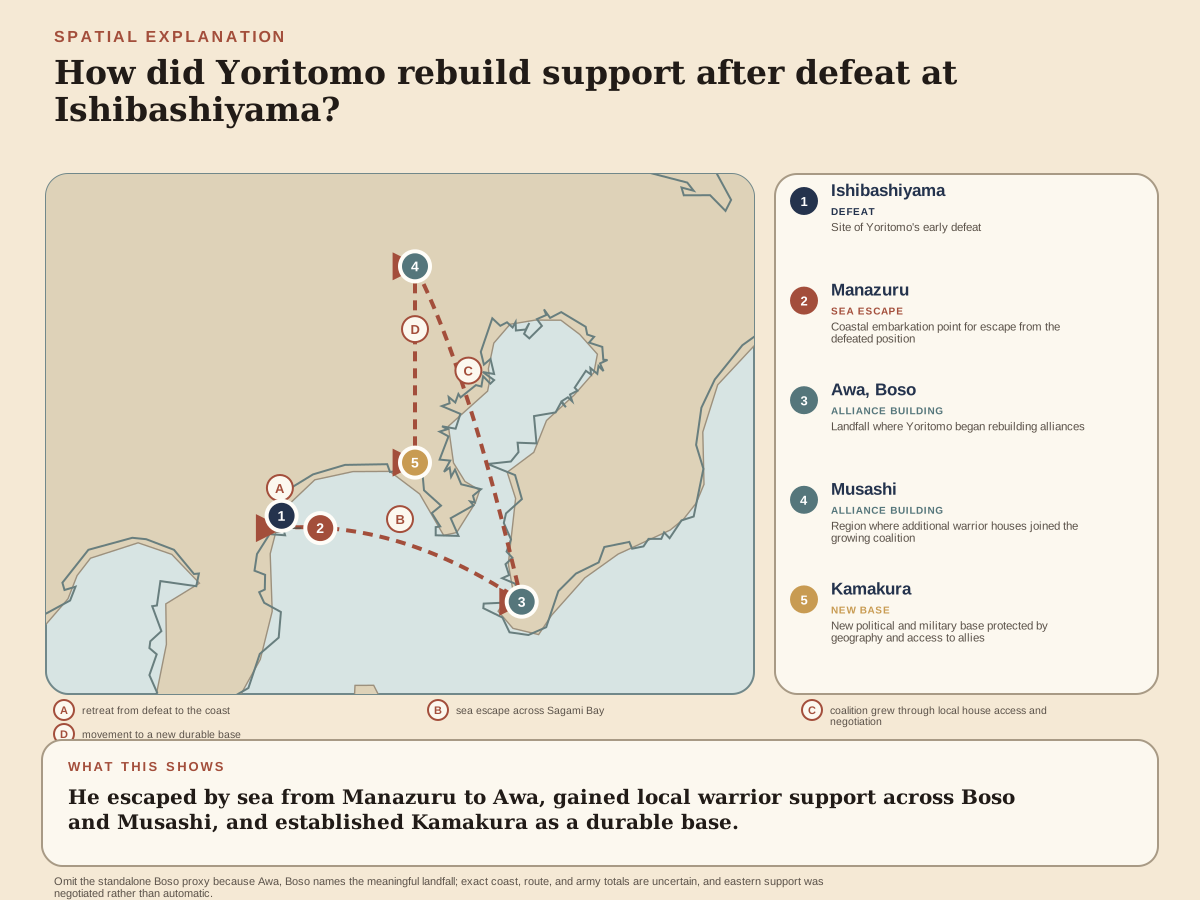
Yoritomo's small army was defeated at Ishibashiyama in August 1180 by Ōba Kagechika and other Taira-aligned eastern warriors. He escaped through mountain and coastal routes, crossed from the Manazuru area to Awa, and rebuilt. Miura survivors, Chiba Tsunetane, Kazusa Hirotsune, and other houses joined as the coalition moved through the Bōsō and Musashi toward Kamakura.
The east was therefore not naturally Minamoto territory. Support grew through local rivalries, promises, kinship, fear, and changing estimates of survival; later army numbers are not reliable headcounts. Coalition-building also used coercion. In 1183 Yoritomo had the powerful Hirotsune killed on suspicion of disloyalty, although the later record complicates his guilt. Recovery required partners, then created the problem of controlling partners strong enough to matter.
Yoritomo entered Kamakura in October 1180. The site combined defensible hills, access to Sagami, Musashi and maritime routes, and earlier Minamoto associations. He relocated the Hachiman shrine from the coastal Yui area, established his residence at Ōkura, and created places where followers assembled, worshipped, presented service, and sought decisions.
Kamakura did not become a finished capital in one season. The Samurai-dokoro began organizing warriors in 1180; roads, residences, scribal work, storehouses, ritual stages, and litigation functions accumulated. Wakamiya Ōji was developed in connection with Masako's 1182 pregnancy, and the shrine was reorganized after a 1191 fire. Present buildings are much later. Yoritomo's achievement was concentrating repeated political practice in a lived landscape, not creating an empty city or all its surviving monuments.
In late 1180 Taira forces withdrew at the Fuji River, but Yoritomo did not immediately march to Kyoto. He consolidated the east, confronted hostile or independent warrior houses, confirmed followers, and built routes of command. Kiso Yoshinaka and other Minamoto leaders pursued their own wars; shared ancestry did not make them his subordinates.
In 1183 the court recognized Yoritomo's role in restoring order across eastern routes and empowered action against those obstructing revenues. Recognition came with a condition: taxes and estate income belonging to shrines, temples, courtiers, and other proprietors were to resume. This was public authority negotiated inside the court-estate order, not a declaration of a separate eastern state. Kamakura grew by promising to police the rights it was also changing. [1]
Yoritomo did not personally lead the armies that destroyed Kiso Yoshinaka or the Taira in western Japan. His half-brothers Minamoto no Noriyori and Minamoto no Yoshitsune held major commands. Yoshitsune became famous for Uji, Ichi-no-Tani, Yashima, and Dan-no-ura; Noriyori led large forces through difficult overland and Kyushu operations.
Kamakura supplied appointments, messages, rewards, discipline, and a political center while commanders, local allies, sailors, scouts, and laborers carried the war. The Taira defeat in 1185 killed or displaced rulers, courtiers, warriors, attendants, and civilians as well as producing Minamoto victory. Yoritomo's role was essential but institutional and strategic: he made battlefield service answerable to a durable lordship instead of claiming every success as his physical deed.
After the Taira victory, Yoritomo and Yoshitsune broke decisively. Yoshitsune accepted court appointment and acted through Go-Shirakawa's center without securing Yoritomo's approval. Yoritomo denied him entry to Kamakura; the famous Koshigoe petition survives through the later Azuma Kagami tradition. Family emotion is possible, but the conflict concerned who could authorize rank, command followers, and reward service.
In autumn 1185 Go-Shirakawa briefly authorized Yoshitsune and Yukiie against Yoritomo, then reversed course when they failed to gather sufficient force. Yoritomo sent Hōjō Tokimasa to negotiate and police the capital. Authority to pursue rebels and place military or land officials expanded from this crisis, but its exact offices and geographic reach remain debated. A brother's fall became leverage for a new court–Kamakura settlement. [2]
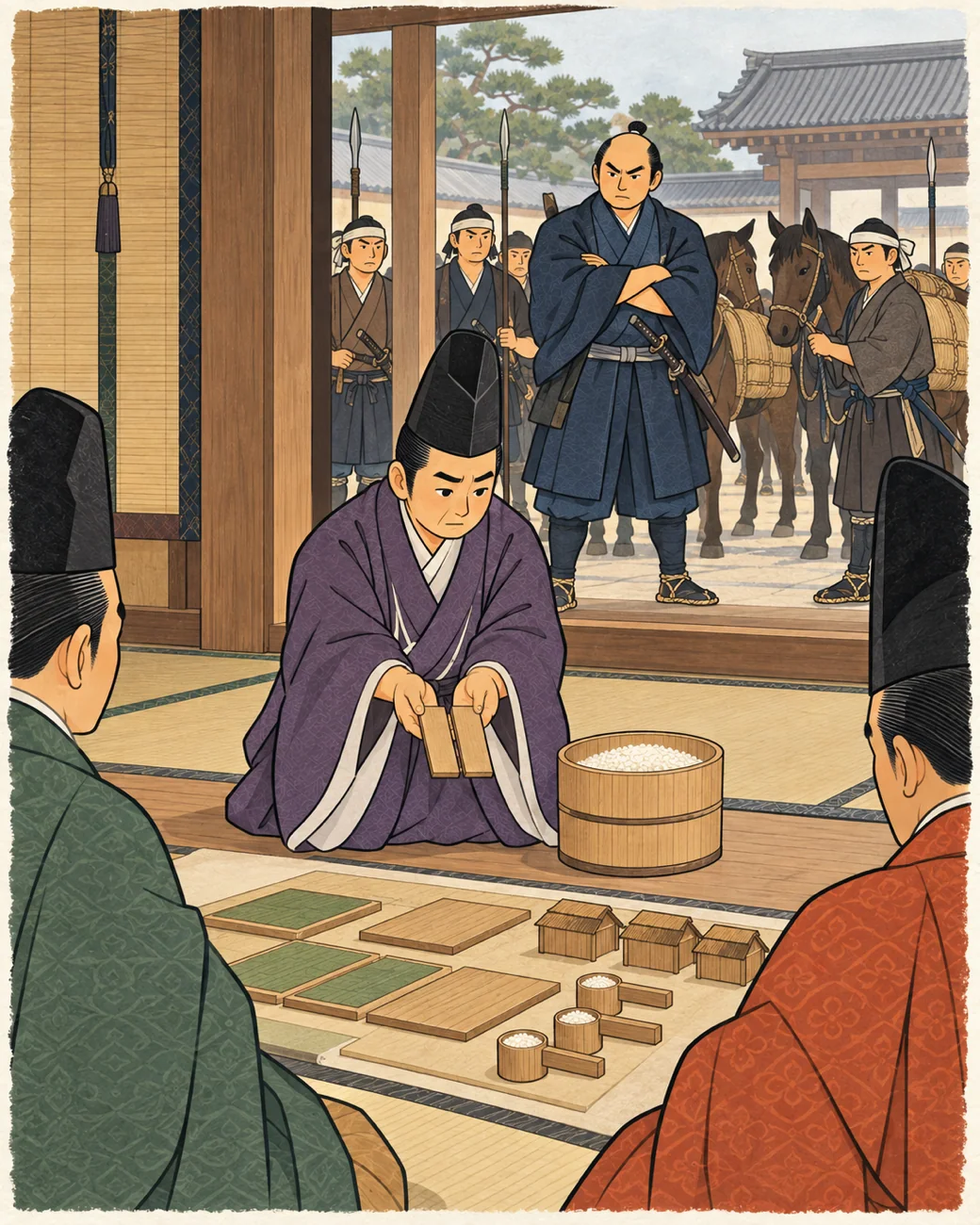
Yoritomo's direct followers, later conventionally called gokenin, served in war, guard, policing, and other duties. In return, Kamakura confirmed inherited claims, granted rights taken from defeated enemies, defended appointments, and provided access to judgment. Written orders helped make this exchange durable beyond personal conversation.
New jitō and provincial military agents did not erase the older estate system. A steward might collect specified dues or manage security while a noble, temple, shrine, or other proprietor retained title and income. Overreach produced complaints, and the court–Kamakura settlement of 1186 limited or clarified powers after the expansive claims of 1185. The new government grew through layered jurisdiction: strong enough to protect selected followers, bounded enough to negotiate with older authorities.
Fujiwara no Hidehira sheltered Yoshitsune at Hiraizumi and reportedly instructed his heirs to protect him. After Hidehira's death, Fujiwara no Yasuhira attacked Yoshitsune in 1189 under pressure from Yoritomo and sent his head to Kamakura. Yoritomo then invaded Ōshū, destroyed the Northern Fujiwara regime, and redistributed offices and rights across the northeast.
The campaign concerned more than one fugitive. Hiraizumi controlled wealth, routes, armies, temples, and a regional political network capable of remaining outside Kamakura. Yoritomo later built Eifuku-ji in Kamakura, drawing on Hiraizumi monumental models and memorializing people killed in the northern war, including enemies. Conquest, admiration, appropriation, merit-making, and political display occupied the same project.
Kamakura's government developed through different functions. The Samurai-dokoro organized warrior service; a documentary household office associated with Ōe no Hiromoto handled administration and finance; the Monchūjo tradition associated with Miyoshi Yasunobu handled complaints and investigation. Their later names and foundation dates should not imply fully formed ministries from the first day.
Yoritomo led a large ceremonial visit to Kyoto in 1190, received high court office, and demonstrated that the eastern lord could operate inside aristocratic ritual. In 1192 he was appointed seii taishōgun. The title mattered, but his government already issued documents, heard claims, commanded followers, and exercised recognized authority. A surviving 1192 order bearing his sleeve signature shows power working through paper. The shogunate formed by accumulation, not one title's magic.
In 1183 Kiso Yoshinaka sent his young son Yoshitaka to Kamakura as a hostage bound to Yoritomo's daughter Ōhime. After Yoshinaka became an enemy and was killed, Yoritomo ordered the boy's death in 1184. Later record says Ōhime and Masako helped him flee before he was caught. Ōhime's grief and illness became part of her life; plans for another marriage or court placement failed, and she died in 1197.
Consolidation also reached sons and brothers. The 1193 Fuji hunt publicly displayed young Yoriie's martial succession, then the Soga brothers' revenge killing destabilized the camp. Suspicion contributed to Noriyori's removal; the exact fate is unclear. The household that made government possible was repeatedly used to secure it. Yoritomo's success included calculated violence and family losses, not only institutional foresight.
Yoritomo died in 1199, aged fifty-one by elapsed years. The main Azuma Kagami text has a gap across the end of his life. A much later entry links his final illness to a fall from a horse; court and later sources offer illness or supernatural explanations. None securely identifies a medical cause, and assassination claims remain speculation.
His seventeen-year-old son Yoriie succeeded as Kamakura lord. Senior figures, including Masako and men from Hōjō, Hiki, Wada, Kajiwara, Miura, Adachi, and administrative houses, soon redistributed decision-making through collective arrangements and conflict. The offices, documents, gokenin ties, and court recognition survived, while effective ownership changed. Yoritomo built more than a personal army, but not the later Hōjō regency or the unchanged “shogunate” of textbooks.
Classic
Warrior lineages operated inside the court order. Rank and office authorized access, announced precedence, and connected a household to patrons who could recommend appointments. Provincial military service could generate wealth and fame, but that capital normally sought recognition in Kyoto rather than an alternative state.
Yoshitomo's lineage mattered because earlier Minamoto leaders had led campaigns and developed eastern relationships. Yet “Seiwa Genji” named a branching descent tradition, not a chain of command. Other Minamoto houses in Kai, Shinano, Hitachi, and elsewhere could invoke related ancestry without obeying Yoshitomo or his son.
Yura Gozen's position helps explain why Yoritomo received early preference among Yoshitomo's surviving sons. Her father Fujiwara no Suenori held the chief priesthood at Atsuta and court rank; her wider family had connections to women and households near the retired sovereign's circle. Maternal status could shape which child obtained court introduction even when later genealogies foreground the father.
In 1158 the young Yoritomo entered service associated with Empress Muneko's household. In late 1159 he received the office remembered in the later form ukon'e no gon no suke, a provisional assistant captain in the Right Division of the Inner Palace Guards. The surviving chronology is brief, but it gave him the designation behind the exile-era nickname Suke-dono.
The office should not be inflated into military command of the palace. At roughly twelve, Yoritomo benefited from household sponsorship and the rank-making practices of an aristocratic government. Service established social placement and future expectation more than independent operational authority.
Nor did court identity exclude martial formation. Elite boys could learn riding, archery, weapon handling, genealogy, ceremony, and the management of attendants as parts of one household education. The later opposition between cultivated courtier and practical warrior would have misdescribed the social world that produced him.
His mother's death in 1159 removed a key relationship just before political catastrophe. HO cannot recover their private bond, but it can register what maternal loss meant institutionally: fewer living intermediaries between a child and the court networks through which his position had been advanced.
This starting point changes the whole biography. Yoritomo later built a government at Kamakura, but he did so using court titles, written orders, aristocratic administrators, shrine patronage, and negotiated recognition. Those were not foreign tools discovered after rebellion. They belonged to the political language in which he had first been placed.
Lineage therefore supplied several kinds of incomplete capital: a famous paternal name, maternal access, religious connections, possible eastern memories, and enemies inherited from adult conflict. None was yet land, troops, documents of confirmation, or a permanent headquarters. Converting them into government would require other households' choices.
His mother Yura's Atsuta and court connections supplied a route distinct from Yoshitomo's Seiwa Genji prestige. Service in Empress Muneko's household in 1158 and brief guard-related office in 1159 show court placement before military defeat. These positions did not unify Minamoto branches or guarantee eastern command.
The Heiji conflict was not a simple tournament between eternal Taira and Minamoto parties. Yoshitomo and Nobuyori acted within struggles involving retired sovereigns, serving sovereigns, courtiers, access to the palace, and competing military houses. Their defeat reclassified dependants as enemies whose treatment could be negotiated individually.
Yoshitomo's death removed the adult center of Yoritomo's paternal household. Brothers and retainers died, fled, or entered other custody. Property, office, and protection were disrupted together. A child who had briefly held rank became a prisoner whose useful identity was now “son of the defeated leader.”
Exile differed from pardon. Yoritomo lost his central career, remained subject to surveillance, and was sent away from the relationships that had supported him. Izu lay within a connected political and estate landscape, but he could not assume free movement, public office, or the right to assemble armed followers.
Implementation required provincial actors. A central sentence named destination and status, while local officials and powerful residents made supervision real through residence, reporting, movement control, and response to misconduct. Their enforcement was necessarily social: the exile lived among people whose cooperation could tighten or loosen constraint.
The Ike no Zenni story gives later history an irresistible reversal: compassionate mercy toward a boy eventually enables the destruction of the Taira house. Its emotional economy is precisely why it needs source labeling. Narrative symmetry can preserve a real act and simultaneously enlarge one person's role or motive.
No surviving transcript shows Kiyomori and his advisers weighing the sentence. Age may have made exile acceptable; Yoritomo's maternal ties may have produced advocates; eliminating every child could carry reputational cost; a supervised provincial life may have seemed politically safe. These are supportable possibilities, not recovered reasons.
The result also warns against outcome bias. Exile lasted two decades. Many punished people never returned to power. The later coalition depended on events no sentencing authority could foresee: local marriages, the deterioration of Taira relations with other elites, Prince Mochihito's call, regional disputes, and Yoritomo's survival after military defeat.
Source form remains central. The Heike monogatari family of war tales developed moral and dramatic scenes across varying textual lines. The Azuma Kagami, compiled under the later Kamakura regime, began Yoritomo's public story in a way that legitimized its founder. Court records and chronological reference can secure offices and outcomes more readily than dialogue.
The historical pivot is therefore constrained survival. In 1160, exile narrowed Yoritomo's world and deprived him of recognized power. Only retrospect turns the sentence into an opening.
Yoshitomo's coalition collapsed, his father was killed, and Yoritomo lost office before exile to Izu. Ike no Zenni's intercession is a later narrative tradition whose private motive and exact effect cannot be treated as a sentencing transcript. No captured-child, execution, bereavement, or victim proxy voice is supplied.
An exiled noble-warrior could retain recognition. The old title in Suke-dono marked former court status; descent made him legible to local houses; surviving attendants or maternal connections could carry messages. Recognition was not obedience, but it prevented punishment from making him socially anonymous.
Information was another resource. The later Azuma Kagami says Miyoshi Yasunobu sent reports from Kyoto, although exact continuity and detail require caution. Religious travelers, officials, litigants, estate agents, and household messengers also moved between center and provinces. Exile limited Yoritomo's movement more than the movement of news around him.
Izu's land order supplied political education without creating a school. Rights to fields and revenues could be divided among proprietors, estate managers, provincial officers, cultivators, and local warriors. Enforcement depended on documents, force, reputation, and access to patrons. A leader who later promised confirmation and judgment had lived inside that friction.
Custody was relational rather than a modern walled prison. Local powerful men were responsible for monitoring him and had their own rivalries. An exile could dine, worship, form intimate relationships, hunt, or exchange messages while remaining legally vulnerable. The difference between tolerated daily life and authorized political action mattered.
Later Place traditions identify islands, residences, wells, shrines, and love-story sites across Izu. Some may preserve local memory; others grew from tourism and devotional retelling. A pin on a modern map cannot by itself establish where Yoritomo lived on a particular day. Place authority must pair tradition with dated evidence.
Traditions concerning Itō Sukechika's daughter and a son sometimes called Chizuru-maru expose the archive's instability. They describe Sukechika killing the infant and separating the couple. Some versions attach later romantic or suicidal conclusions. These claims should not be erased, because they shaped memory of Yoritomo's Izu life, but they cannot be narrated as transparent domestic fact.
Marriage to Masako is more securely consequential. It connected Yoritomo to Hōjō Tokimasa's household before the rebellion and created a daughter, Ōhime, during exile. The union was personal and political, but no evidence permits a calculation aimed at a future Hōjō regency or national shogunate.
Long duration also changes character inference. Survival may require restraint, accommodation, patience, resentment, religious practice, or ordinary adaptation in varying proportions. The record does not give one continuous interior state. To describe all twenty years as “waiting for revenge” makes later action consume earlier life.
By 1180 Yoritomo possessed a prestigious but damaged name, former rank, local kinship, information routes, and knowledge of eastern claims. He did not possess a ready army. The decisive resource remained other households' willingness to expose themselves when rebellion suddenly became thinkable.
Two decades of supervised exile connected him to provincial, estate, temple, and warrior networks without amounting to freedom or government. Traditions about an Itō woman and an infant son's death are late and variable. Marriage to Masako is secure; romantic scenes and foreknowledge of Hōjō rule are not.
Elite households joined emotional life to material obligation. Marriage could move attendants and information, create expectations between parents and in-laws, and produce children whose upbringing linked further families. None of those consequences required spouses to lack attachment. “Personal” and “political” are not competing explanations in a household order.
Masako's relationship with Yoritomo is preserved through stories of parental opposition, secret meetings, stormy travel, and determined choice. The narrative family varies and was shaped by later admiration. The secure center is marriage during exile, Ōhime's birth before the uprising, and Masako's transfer into the new Kamakura establishment.
Tokimasa's value in 1180 came from local knowledge, arms, messengers, and willingness to make the exile's cause his household's danger. Yet he was not commander of all Kantō forces. After Ishibashiyama he also pursued alliances separately in Kai. Hōjō power grew within a plural coalition rather than arriving as Yoritomo's complete apparatus.
Yoshitoki was young at the uprising and acquired position through years of service. Later regency makes every early appearance look like preparation for rule. Chronology instead shows opportunity accumulating because he remained close to military and household decision-making while other powerful followers won, lost, or were removed.
Wet-nurse relationships expanded political kinship. Hiki no Ama had helped sustain Yoritomo during exile; her husband and descendants became tied to his household. The future Yoriie would be raised amid Hiki connections, giving that family a route to the successor. Nursing and fosterage were not decorative domestic details; they distributed access to children and future office.
Genealogies make these connections appear tidier than lived households were. They preserve descent and marriage more readily than attendants, foster siblings, nurses' daughters, or informal dependence. The graph should therefore represent named kin securely while retaining functional household roles when individual identities have disappeared.
Masako's pregnancies also affected place-making and ritual. The broad central approach later known as Wakamiya Ōji was associated with prayers surrounding her 1182 pregnancy. Whether every construction detail is read from later record or archaeology, the wider point is clear: dynastic reproduction mobilized roads, shrine worship, escorts, and public attention.
Children were persons and succession resources. Ōhime could carry a peace arrangement with Kiso Yoshinaka's house; Yoriie and Sanetomo could become future lords; daughters could be considered for court marriage. Those uses created vulnerability and grief that a biography focused only on institutions would miss.
The household was therefore an engine of government and a field of competing futures. Hōjō, Hiki, Minamoto siblings, sons-in-law, wet nurses, and court marriage partners did not form one permanent bloc. Yoritomo could build authority through them while also creating the rival access routes that would shape succession after him.
Hiki no Ama's foster relation, Masako's marriage, Tokimasa and Yoshitoki's service, and the children's different household routes created overlapping political kinship. Ōhime, Yoriie, Sanetomo, and the younger daughter cannot be treated as one succession asset. Family relationship does not authorize proxy interiority.
Mochihito's call offered a legitimating frame. It could present resistance as service to a royal command rather than private revenge. Yet a message had no automatic legal force across the country. Recipients had to judge its authenticity, the prince's survival, the balance of power, and whether invoking it would protect or condemn them.
Miyoshi Yasunobu is remembered as a conduit of Kyoto information. Other messengers and household contacts carried news at lethal risk. The transmission chain matters because the prince and Yorimasa were dead before Yoritomo's campaign developed. Authority persisted through documents, copies, reports, and the political need of later rebels.
Choosing Yamaki connected the large claim to a vulnerable target. Kanetaka represented local administrative power and could mobilize against the exile. Removing him might release supporters, seize arms, and demonstrate resolve. It could also alert every Taira-aligned house before Yoritomo had enough troops for open battle.
The operation depended on granular knowledge. Attackers needed the timing of worship and absence, routes to residences, signals, guides, and identification of Kanetaka. Later narrative names brave individuals and near failures. HO retains named participation where evidence supports it while refusing to turn retrospective scene detail into a contemporary command log.
Violence made alliance irreversible. Tokimasa, Yoshitoki, and other participants were no longer merely relatives sympathetic to an exile; they had killed an official and exposed their households to punishment. Political community can be created through shared liability as much as through positive principle.
The Azuma Kagami begins its chronicle of Kamakura rule in 1180. That choice makes the rising a constitutional origin. The work is indispensable because it preserves documents, rosters, rituals, and institutional memory, but its later compilers knew what the uprising became. Their narrative cannot supply uncertainty automatically; the editor must restore it.
Calendrical precision can create false confidence. The chronicle supplies dated stages, yet some action reports were compiled from household memory and older records long afterward. Date, named participant, tactical detail, and attributed speech may therefore carry different confidence even when printed in the same entry.
Scale remains essential. At Yamaki, Yoritomo commanded a local attacking group, not “the samurai of Japan.” Other Minamoto branches rose independently; some eastern warriors opposed him; Taira power retained court, provincial, and military resources. A royal call could generate multiple competing movements rather than a unified Minamoto front.
The first victory therefore proved only capability and commitment. The next encounter would test whether the coalition could survive outside its chosen target. Institution lay far ahead: no permanent office, general land jurisdiction, court recognition, or secure base yet converted the rebels into government.
Scale changed only through later alliances and recognition.
Prince Mochihito and Yorimasa issued the wider anti-Taira call, but their rising failed before Yoritomo's developed. The August attack on Yamaki Kanetaka was a local operation with Hōjō and other supporters. Later national victory must not be backdated into this limited first success.
At Ishibashiyama, local knowledge and numbers favored the opposing side. Ōba Kagechika, Itō Sukechika, and their allies were eastern warriors defending an order in which they had obligations or advantage. Their victory disproves any model in which regional identity predetermined support for Yoritomo.
Escape was collective. Guides, armed companions, religious sites, boats, coastal knowledge, food, concealment, and decisions by people who might betray or protect him all mattered. Later stories isolate heroic hiding places and merciful enemies, but no leader escapes through terrain by willpower alone.
Crossing to Awa changed the recruitment field. The Miura were already tied to the rising but had suffered separately. Chiba Tsunetane could offer regional standing and routes; Kazusa Hirotsune commanded exceptional forces; smaller houses watched whether these accessions made Yoritomo viable. A sequence of decisions created the appearance of momentum.
Reported troop totals rise dramatically in the Azuma Kagami. Medieval numbers often express magnitude, prestige, or ordered muster rather than audited strength.
Adhesion created debts. A house that brought fighters expected confirmation of lands, action against rivals, recognition of precedence, and reward after victory. Yoritomo's strength increased together with the number of claims he had to reconcile. A coalition can become harder to govern as it becomes easier to win with.
Recruitment also moved through intermediaries rather than a single audience with Yoritomo. One lord could bring branch households and dependants; a rival could block their passage; a messenger could promise terms not yet written. The resulting coalition map contained vertical followings inside the wider bond to Kamakura.
Kazusa Hirotsune made the danger visible. The received record presents him as powerful, overconfident, and suspect. In late 1183 Kajiwara Kagetoki killed him on Yoritomo's order, reportedly during a board game; a later-discovered prayer document is then said to have shown Hirotsune seeking victory over the Taira, producing regret. The sequence comes through a later regime narrative and cannot establish every motive or scene.
Whatever the precise accusation, the killing signaled that large contribution did not create autonomous command. It also exposed Yoritomo's capacity for preemptive violence against a follower. Describing the act only as institutional discipline sanitizes it; describing it only as paranoia ignores the genuine problem of military magnates inside a young coalition.
Recovery thus had two mechanisms: Yoritomo persuaded or rewarded houses whose support he needed, and he demonstrated that no one accession would own the coalition. Both depended on information that could be wrong. Government formation was not the disappearance of uncertainty but the creation of procedures and force able to act within it.
Ōba Kagechika's coalition defeated him at Ishibashiyama; escape to Awa preceded support from Miura survivors, Chiba Tsunetane, Kazusa Hirotsune, and others. Hirotsune's 1183 killing later exposed coercive discipline. The accusation, killing scene, loyalty prayer, and reported regret remain source-separated rather than one moral anecdote.
First, access must be practical. Kamakura's enclosure by hills aided defense, but routes through passes, across Sagami, toward Musashi, and by sea connected it to the coalition's recruitment zones. A perfectly inaccessible fortress would be a poor administrative center. Terrain created controlled connection rather than isolation.
Second, the lord's household needed material form. The Ōkura residence provided halls, gates, kitchens, stables, storage, guard space, reception, and a location for clerks and messengers. The Azuma Kagami famously describes 311 followers attending its completion in December 1180, but a library investigation found no independent source listing or confirming all individuals. The number is institutional memory, not a verified attendance sheet.
Third, military service required organization. The Samurai-dokoro, associated with Wada Yoshimori as its first head, helped coordinate retainers, guard, discipline, and mobilization. It did not begin as a ministry with later fully defined jurisdiction. Office function developed through problems presented to it.
Fourth, sacred geography made allegiance public. Relocating the Hachiman cult joined Yoritomo's present coalition to Minamoto ancestry and warrior protection. Priests, ritual specialists, musicians, builders, donors, and worshippers gave the shrine operation. Patronage did not make religion a decorative instrument; devotion and political utility could reinforce one another.
Wakamiya Ōji shows household and urban production meeting. Its traditional association with Masako's pregnancy ties dynastic hope to a ceremonial axis. Constructing a broad approach required land, labor, drainage, surfaces, and adjustment of existing uses. The road was both movement infrastructure and staged visibility.
Archaeology can recover road surfaces, ditches, building footprints, pottery, and repeated rebuilding, but it rarely names the laborers or assigns one patron's intention. Text and excavation should meet without forcing either to confirm every detail of the other. A ceremonial story and a physical phase may overlap only partly.
Kamakura already had inhabitants, fields, shrines, routes, fishermen, craftsmen, and claims. Concentration could displace or subordinate them. The founder narrative tends to see space only when elite institutions appear. Place history must retain the labor and earlier uses that made reorganization possible.
Fire further separates institution from fabric. In 1191 a blaze led to reconstruction and the upper/lower shrine arrangement associated with Yoritomo's later precinct. The present main shrine is an Edo-period rebuilding, while other structures carry different dates. Visitors should not be told that surviving timber witnessed 1180.
Finally, a political center required memory. Messengers had to know where an order originated; warriors had to expect that service could be witnessed; disputants had to preserve documents; absentees had to believe decisions would still bind them. Returnability transformed a camp into an institutionally meaningful Place.
Yoritomo entered Kamakura in the tenth month of 1180, relocated Hachiman worship, and established a governing residence. The reported 311 attendees lack complete independent confirmation. Topography, maritime routes, shrine, residence, streets, and Samurai-dokoro evolved in phases; surviving Kamakura is not untouched Yoritomo fabric.
Civil war disrupted collection. Armed men occupied estates, diverted dues, drove out managers, or used military necessity to justify new control. Proprietors in Kyoto needed someone capable of compelling compliance in regions where ordinary orders had failed. Yoritomo needed their recognition to distinguish his redistribution from uncontrolled seizure.
The Fuji River episode marks the strategic choice. Later war tales dramatize Taira panic at waterfowl, turning withdrawal into comic moral defeat. More securely, the opposing army withdrew and Yoritomo remained focused on the east. His coalition was still unstable; Satake and other powers required attention; land claims already demanded decision.
Staying east did not mean abandoning the larger war. It created a base from which forces, provisions, appointments, and communications could be sustained. It also separated Yoritomo's political route from commanders whose legitimacy depended on continual advance and battlefield presence.
Kiso Yoshinaka's independent victories sharpened competition. He entered Kyoto in 1183 and developed a difficult relationship with Retired Emperor Go-Shirakawa. Yoritomo could present his eastern order as more predictable precisely because he was not physically occupying the capital.
The order usually called the Juei second-year tenth-month directive is known through the Hyakurenshō and Kujō Kanezane's court diary Gyokuyō, not a surviving pristine original text. It required eastern estates and public lands to deliver established dues and allowed Yoritomo to act against noncompliance.
Evidence and interpretation · What did the 1183 directive recognize?
Hotate Michihisa distinguishes the proposed directive, which included Hokuriku, from the version that omitted it amid the rivalry with Yoshinaka. He interprets the resulting recognition as regional public authority in the east, linking enforcement of revenues to Yoritomo’s later description of himself as its general administrator. [1]
The directive’s reported wording and a historian’s reconstruction of its institutional meaning are different kinds of evidence. Hotate does not claim that the administrative title itself appeared in the directive. Recognition of eastern powers should not be read as a ready-made grant of uniform national government. [1]
Its political exchange is nevertheless clear. The court acknowledged capacity built since 1180; Yoritomo undertook to stabilize flows to existing proprietors. Warrior government began not by abolishing the estate system but by inserting enforcement and adjudication into it.
That arrangement could alienate followers who expected conquest to validate occupation. Yoritomo had to distinguish confirmed old holdings, rewards from defeated enemies, and seizures that threatened patrons whose cooperation he wanted. Documents of confirmation turned selective restraint into lordly authority.
Revenue itself was produced below the elite dispute. Cultivators, local managers, carriers, and market actors generated and moved rice, cloth, labor, and other dues. Restoring a proprietor's income required coercion and negotiation across these levels, not merely an agreement between Yoritomo and a court noble.
Go-Shirakawa was neither passive grantor nor timeless opponent. He managed Taira, Yoshinaka, Yoritomo, temples, and court factions under rapidly changing conditions. Recognition could be revised, leveraged, or balanced. The emerging public order remained a relationship between centers.
By 1183 Yoritomo possessed more than insurgent force and less than uniform national government. The strongest statement is functional: Kamakura could protect or punish, restore or redistribute, and communicate with the court across a broad eastern zone. Those capacities matter more than assigning a single founding birthday.
After Fuji River he prioritized eastern consolidation while other Minamoto leaders followed independent routes. The 1183 court directive recognized enforcement while requiring restoration of established shrine, temple, court, and proprietor revenues. Recognition therefore expanded authority and bounded it simultaneously. Kiso Yoshinaka remained an independent center, not Yoritomo's subordinate by surname.
Campaigns required more than tactical brilliance. Armies needed food, horses, ships, guides, replacements, intelligence, court authorization, and arrangements for prisoners and conquered land. A headquarters could coordinate those resources and decide how victory would be recorded as service.
In early 1184 forces acting for Yoritomo defeated Kiso Yoshinaka after his break with Go-Shirakawa's court. Noriyori and Yoshitsune both participated in the subsequent campaign against the Taira. Their relation was not a simple division between dull main commander and brilliant genius produced by later literature.
Noriyori's route exposed logistical constraint. Marching and holding ground through western provinces required supply cooperation from local powers. Operations toward Kyushu could stall because an army that won battles still needed vessels and provisions. His contribution made continued pressure possible even when it lacked a single spectacular scene.
Yoshitsune's operations generated concentrated fame. Rapid movement at Ichi-no-Tani, maritime attack at Yashima, and the final Dan-no-ura victory became foundational episodes in war tales, performance, painting, and popular sympathy. Tactical detail varies among the Azuma Kagami, court records, and versions of the Heike tradition.
Local agency determined outcomes. Maritime warriors selected sides and supplied ships; pilots knew currents; provincial houses opened or denied routes; messengers carried changing orders; religious institutions and communities absorbed requisition. “Minamoto army” is necessary shorthand but never the whole causal structure.
Communication imposed delay. A report from the Inland Sea could reach Kamakura after the battlefield situation had changed; a reply might arrive after a commander had already acted. Later narratives place orders and responses in clean causal sequence, but command at distance worked through uncertainty that no archive chronology can entirely remove.
Yoritomo's distance let him arbitrate reward with less dependence on one field commander's immediate following. Reports and proof of service came back to Kamakura. That advantage also created informational asymmetry: commanders made urgent decisions he did not witness, while rivals could interpret those decisions as initiative or disobedience.
The fall of the Taira was a catastrophe as well as a transition. Emperor Antoku died at Dan-no-ura; elite women and attendants were captured or killed; sacred regalia became part of the crisis; defeated lands and offices became objects of allocation.
Nor did the court disappear. Go-Shirakawa issued orders and ranks, received reports, handled captives, and negotiated the status of victorious commanders. Yoritomo's system expanded through this court relationship rather than replacing it with one sovereign hierarchy.
The shared Event model prevents two distortions. Yoritomo's biography cannot absorb his brothers' campaigns, and Yoshitsune's biography cannot make headquarters, logistics, Noriyori, allies, and the defeated invisible. Different routes attach to one war with distinct agency.
Noriyori led major overland and Kyushu operations under supply constraints; Yoshitsune held commands at Uji, Ichi-no-Tani, Yashima, and Dan-no-ura. Tactical details vary across court, chronicle, and tale sources. Yoritomo authorized and supported war from headquarters; he did not physically command every victory.
During war, rapid decisions could be valuable. A commander far from headquarters had to recruit allies, move without awaiting every reply, and work with local court representatives. After victory, the same autonomy could become a precedent: military service might obtain rank and legitimacy directly from Kyoto rather than through Kamakura.
Yoritomo objected when followers accepted court offices without permission. The issue was not hostility to court rank; his own system depended on it. The issue was routing. If Go-Shirakawa could elevate commanders independently, the lord–follower relationship would have a second source of reward that Yoritomo could not control.
Yoshitsune had reasons to see direct recognition as earned. His campaigns had delivered decisive results, and court society rewarded visible service. He may not have understood every appointment as rebellion. The institutional line was still being created through the punishment imposed on him.
The Koshigoe letter dramatizes exclusion. In the received text, Yoshitsune lists loyal service and appeals through Ōe no Hiromoto for reconciliation. It is important evidence for how Kamakura later remembered command, suffering, and failed mediation. It is not an autograph whose every sentence can be placed directly into Yoshitsune's private voice.
Cross-source comparison is essential because the Azuma Kagami entry, court diaries, orders, and war-tale traditions serve different institutional memories. A court appointment can be secure even when the private explanation attached to it is not. The archive gives acts more readily than a complete emotional history between brothers.
Go-Shirakawa maneuvered between the brothers. In October he issued authorization against Yoritomo; after Yoshitsune and Yukiie failed to mobilize an effective coalition, he authorized their pursuit. Calling this mere fickleness hides the retired sovereign's problem: he sought room to prevent one military center from becoming uncontrollable while lacking force to impose a stable choice.
Yoritomo responded through pressure and negotiation rather than an independent invasion of the court. Tokimasa went to Kyoto as agent, helped organize pursuit, and pressed for powers that could locate fugitives, mobilize warriors, and secure conquered or confiscated rights. Court order converted those practices into a wider public framework.
Historical disagreement · What powers were granted in 1185?
The familiar nationwide founding formula hides a dispute over the offices themselves. Santa Takeshige challenges the reconstruction of a separate province-wide jitō office. He reads Tokimasa’s petition chiefly as a request for pursuit commissioners in western provinces, with powers to collect provisions and deal with confiscated lands. He also reads the “jitō of seven provinces” discussed in 1186 as estate and district appointments within those provinces. [2][1]
Hotate Michihisa rejects Santa’s denial of the province-wide office while recognizing the importance of his challenge. Pursuit commissions, provincial authority and estate appointments cannot simply be treated as interchangeable names for one nationwide system created on a single date. [2][1]
What is secure is a change in leverage. Kamakura gained recognized capacity to appoint military agents and distribute rights on lands linked to rebels, while proprietors and the court continued to contest overreach. The 1186 settlement would narrow or clarify powers in response to disputes.
The brother conflict therefore belongs to constitutional history without becoming bloodless. Yoshitsune lost protection, household security, and eventually his life. Yoritomo's political achievement was inseparable from coercive exclusion of a brother whose victories had helped make that achievement possible.
Yoshitsune's direct court appointment, exclusion from Kamakura, and Koshigoe petition tradition reveal competing authorization channels; the petition is not a secure autograph. Go-Shirakawa first authorized action against Yoritomo and then reversed course. Court negotiation, personal grievance, military office, and later tragedy must remain distinct.
The first requirement was a recognized relationship. A warrior who had answered Yoritomo's summons could present service as the basis of special access. Yet “gokenin” should not be projected backward as a perfectly closed legal estate in 1180. Direct-vassal status became clearer through repeated muster, confirmation, office, and adjudication.
Land reward also requires precision. Yoritomo did not normally hand over a modern parcel with absolute ownership. He might confirm an existing local holding, assign an estate office, grant a share of revenue, or authorize control over a defeated person's rights. Other layers could remain intact, producing several legitimate claimants to the same land and income.
The jitō relationship inserted a Kamakura appointee into that stack. Duties varied by place and instrument. Collection, estate management, policing, provisioning, and military service might overlap, but no short dictionary definition governed every first appointment. Later standardized practice should not be treated as fully present in 1185.
Province-level military agents, later called shugo, likewise developed from wartime policing and pursuit. Their early core is often described through major crimes and mobilization, but actual authority depended on court authorization, provincial institutions, local cooperation, and specific orders. They were not modern governors controlling all civil government.
Documents made the relationship portable. A confirmation or appointment could be carried to local actors, shown in dispute, copied into household archives, and cited by descendants. Scribes selected form; witnesses and seals or signatures authenticated; messengers exposed paper to delay, loss, or resistance. The order became effective only when people recognized or enforced it.
Households, not only individual male warriors, bore the consequences. Widows could defend inherited claims, daughters could transmit rights, and minor heirs depended on guardians. Surviving documents often name the officeholder more clearly than the labor and family strategy preserving the right across a death.
Conflict tested boundaries. Proprietors complained when military stewards seized more revenue, imposed labor, or claimed appointment powers beyond the grant. The 1186 accommodation did not abolish the new order; it helped fit certain jitō rights into the estate system by restricting claims and negotiating jurisdiction.
Protection was selective and unequal. A non-gokenin, cultivator, woman in a warrior household, or displaced enemy did not receive equivalent access merely because Kamakura offered adjudication. Confirmation could stabilize one lineage by validating another's loss. Institutional procedure did not remove coercion from its outcomes.
Yoritomo's authority also had limits of attention. He relied on clerks, local reports, intermediaries, and powerful followers whose interests shaped the cases he heard. A signed order demonstrates decision, not omniscient investigation. Source records preserve successful claims more readily than people who could not reach the forum.
The institutional breakthrough was therefore repeatability under layered sovereignty. Followers learned that service could generate an enforceable document and a place to litigate. Older proprietors learned that Kamakura might restore revenues or restrain its own agents. Neither side obtained complete control, but both had to account for the new center.
Hidehira's Hiraizumi was not a remote hideout. The Northern Fujiwara had developed an urban, religious, commercial, and military center across generations. Court titles and tribute or revenue relationships coexisted with substantial regional autonomy. Sheltering Yoshitsune demonstrated capacity to resist Kamakura's command boundary.
After Hidehira died in 1187, succession divided his heirs. Yoritomo applied pressure for Yoshitsune's surrender. In 1189 Yasuhira attacked the Koromogawa residence; Yoshitsune died with members of his household, and his head was sent south for identification. Exact last scenes come through later records and literature and should not be merged.
Yoritomo did not treat the delivery as closing the case. He argued that Yasuhira's delay and conduct remained disobedient and prepared a major invasion while the court's authorization developed under pressure. The resulting campaign reveals that regional consolidation, not personal pursuit alone, had become the objective.
Mobilizing Ōshū required routes, provisions, river crossings, multiple army columns, local defectors, and knowledge of northern geography. Kamakura's earlier coalition now projected force far beyond its original base. Yasuhira fled and was killed; Hiraizumi's political order collapsed even as temples and cultural remains survived.
Redistribution followed. Kamakura installed officials and rewarded followers with northern roles and land rights. The Rusu family documents, for example, preserve the longer administrative history of a house descended from an official sent under Yoritomo. Conquest became archive and office, not only battlefield occupation.
The cost should remain visible. Defeated warriors were killed or displaced; households, cultivators, craftspeople, and clergy faced new authorities; Hiraizumi's own political route was ended. Calling this the “unification of Japan” from Kamakura's viewpoint can erase the autonomous order that was conquered.
Archaeology gives the conquered center a voice independent of victor narrative. Temple precincts, roads, imported goods, workshops, residences, and gardens demonstrate sustained urban capacity. Those remains cannot reveal every political allegiance, but they prevent Hiraizumi from being reduced to the last refuge named in Yoshitsune's story.
Eifuku-ji complicates triumph. Kamakura City's archaeology identifies an extraordinary three-hall complex and large pond, with forms consciously recalling Hiraizumi, especially the two-storied hall tradition. Construction began after the campaign and the three principal halls were complete by 1194.
The temple is described as pacifying the spirits of Yoshitsune, Yasuhira, and others killed in the northern fighting. Merit-making could respond to pollution, fear, mourning, or duty while also displaying the victor's capacity to absorb the defeated center's prestige. Religious commemoration does not cancel political appropriation.
Yoritomo's relationship to Hiraizumi therefore has three canonical states: rival center sheltering an enemy; conquered territory reorganized through appointments; and aesthetic-sacred model rebuilt at Kamakura. No one state should replace the others.
Hidehira sheltered Yoshitsune; Yasuhira attacked him in 1189; Yoritomo then destroyed the Northern Fujiwara regime. Hiraizumi was a political, commercial, administrative, and religious center, not merely a hideout. Eifuku-ji's Hiraizumi-inspired complex, begun afterward and completed by 1194, memorialized war dead without transferring their voices to the victor.
The Samurai-dokoro answered one early need: organize men whose loyalty had been tested in war. Wada Yoshimori's role as first head linked office to a powerful house. Guard, muster, discipline, and military administration became distinguishable from the lord's entire household even before jurisdiction was fixed.
Court-trained specialists answered another need. Ōe no Hiromoto and other literate administrators brought knowledge of precedents, document genres, revenue, petitions, and Kyoto communication. Miyoshi Yasunobu had served court society and is associated with the complaint and inquiry function later called Monchūjo. Nikaidō Yukimasa and scribal personnel sustained records across cases.
The Azuma Kagami assigns foundation moments to Kumonjo or Mandokoro and Monchūjo in 1184. Those entries provide essential institutional memory, but later office names and Hōjō-era jurisdiction may shape the description. Actual work—drafting orders, recording service, investigating claims, managing income—could precede or cross the neat boxes.
Archive survival favors successful administration. A document kept because it secured land may outlive dismissed petitions, oral settlements, or commands people refused. Institutional history must not infer universal obedience from the artifacts beneficiaries had the strongest reason to preserve.
Material documents give stronger anchors. A 1192 Yoritomo kudashibumi preserved through a vassal archive grants or confirms position using a document form already common in elite household administration. His kaō appears at the right edge as a sleeve signature that projects superior command. The form shows adaptation of aristocratic written practice, not invention of a separate warrior script.
An order required a chain. An interested party petitioned; clerks gathered precedent or testimony; advisers framed a response; the lord authenticated; a messenger carried it; local recipients complied, resisted, or sought another ruling. Institutional agency belonged to the chain even though Yoritomo's authority crowned it.
The 1190 Kyoto visit added embodied recognition. Yoritomo arrived with a large following, performed audiences and ceremonies, and received high rank and the office of Right General of the Inner Palace Guards, which he soon resigned. Mastery of procession and court etiquette turned military power into aristocratic visibility.
In 1192 the court appointed him seii taishōgun. Later regimes made that title the expected label of a military ruler, encouraging the formula that the Kamakura shogunate began that year. Yoritomo had already ruled from Kamakura for twelve years and did not need to wait for the title before issuing orders.
Several foundation dates remain defensible because each asks a different question: 1180 for base and retainer government; 1183 for recognized eastern public power; 1185 for expanded pursuit and appointment capacity; 1190 for high national court status; 1192 for the shogunal commission. None alone contains the whole institution.
Durability lay in linked capacities. The title supplied public symbolism and a reusable court category. Offices and documents supplied memory, specialization, and action at distance. Gokenin expectations supplied a constituency. Court negotiation supplied legitimacy. Kamakura was new because it combined them, not because it existed outside everything older.
Yoshitaka entered Kamakura in 1183 as both prospective husband and security for peace with his father. He and Ōhime were children. The betrothal created intimacy around a coercive purpose: Yoshinaka's conduct could determine whether his son remained a family member or became an enemy hostage.
Once Yoshinaka and Yoritomo went to war, the arrangement collapsed. The later Azuma Kagami says Masako and Ōhime helped Yoshitaka escape after learning of the intended killing. He was caught near the Iruma River and killed. Yoritomo reportedly punished the killer after Masako's anger—not a reversal of the order, but evidence that household and command judged the act differently.
Ōhime's subsequent suffering survives through sources that use bodily decline to narrate grief. Modern diagnosis would be irresponsible. It is secure enough that she did not simply move into a successful replacement marriage. Her refusal or inability became a limit on parental political design.
In 1195 Yoritomo traveled again to Kyoto with Masako and Ōhime in a context that included attendance at Tōdaiji ceremonies and an effort to connect Ōhime to Emperor Go-Toba's court. Court women and political intermediaries mattered to the plan. It did not succeed, and Ōhime died in 1197, around nineteen or twenty.
Gender history helps explain the stakes. A principal daughter could be expected to serve her natal house by marrying upward or linking political centers. That role gave her significance and imposed sacrifice. Calling Ōhime only a tragic lover erases the family strategy; calling her only a pawn erases refusal, illness, and the evidence of her own limits.
The source asymmetry is severe. Yoritomo's orders and ranks can be checked against documents and court diaries; Ōhime's experience is mediated through later accounts of grief, illness, and marriage refusal. Responsible reconstruction gives her consequence without claiming access to thoughts or symptoms the record does not preserve.
Yoriie's route differed. At the 1193 Fuji hunt, large-scale hunting served training, spectacle, ranking, and territorial presence. The record celebrates the young heir's first successful shot as dynastic display. Succession was staged before warriors who needed to imagine service continuing beyond the founder.
The Soga brothers then killed Kudō Suketsune in revenge for their father's death and created confusion in the encampment. Later tale traditions expanded the incident into a national revenge epic. In immediate politics, rumor about Yoritomo's safety exposed the vulnerability of a system concentrated on one life.
Noriyori reportedly reassured Masako that he remained available if disaster had occurred. Yoritomo treated the statement or wider suspicion as dangerous, demanded proof, and removed his half-brother. Later traditions supply execution or survival stories; contemporary documentation does not securely establish his final manner and date of death.
The pattern is not simply cruelty or rational necessity. Yoritomo repeatedly confronted relatives whose independent legitimacy could attract followers: Yoshinaka, Yoshitaka, Yoshitsune, Noriyori. He chose command unity through coercion. Those choices strengthened one center and damaged people whose relationships had helped create it.
Whole-person publication must hold both outcomes. A ruler capable of patient institutional construction also ordered a child's death, pursued a victorious brother, and subjected his daughter's future to political use. Context explains the incentives; it does not absolve the acts or convert grief into a footnote.
Death evidence begins with an absence. The extant Azuma Kagami lacks entries for roughly three years around 1196–1199 and does not narrate Yoritomo's death in sequence. A 1212 entry retrospectively mentions a fall from a horse after a bridge-related ceremony. The chronological distance and compilation process prevent that notice from becoming an eyewitness medical report.
Other sources do not close the gap. A court diary tradition mentions a thirst-related illness sometimes translated as a “water-drinking disease,” but that wording cannot support a modern diagnosis. Later works add apparitions, divine punishment, drowning associations, or assassination. The secure facts are date, political shock, and succession.
Yoriie was about seventeen and already the publicly displayed heir. Inheriting the lordship did not give him his father's accumulated authority, personal relationships, or control over senior men who had helped win the wars. Formal succession and governability were different achievements.
The Azuma Kagami later describes a council of thirteen senior figures and restrictions on Yoriie's direct handling of litigation. Modern shorthand often calls it a constitutional council created to restrain a tyrannical youth. Because the chronicle was compiled under a regime that benefited from Yoriie's displacement, exact purpose and structure require comparison with court-side sources and documents.
Even “thirteen” should identify a recorded political configuration, not a permanent cabinet copied from modern government. Participants held different household bases and offices, and collective consultation could coexist with factional exclusion. Procedure did not neutralize the competition that created it.
Masako was not merely a widow standing outside government. As mother of the successor, link to the Hōjō, patron, household head, and later religious woman, she possessed access and authority created during Yoritomo's life. Hiki ties around Yoriie's wife and child produced another family center. Succession activated rival kinship routes already embedded in nursing and marriage.
Offices survived because work still had to be done. Warriors sought confirmation, land conflicts continued, messengers came from Kyoto, guards assembled, and clerks preserved orders. Institutional continuity did not mean political peace. It supplied resources that competing actors could capture and use.
The Minamoto shogunal sons did not establish a stable dynasty. Yoriie was removed and killed; Sanetomo later became shogun and was assassinated in 1219. The direct male shogunal line ended, while Kamakura government continued under Hōjō dominance with court-selected shoguns. None of this was Yoritomo's completed design.
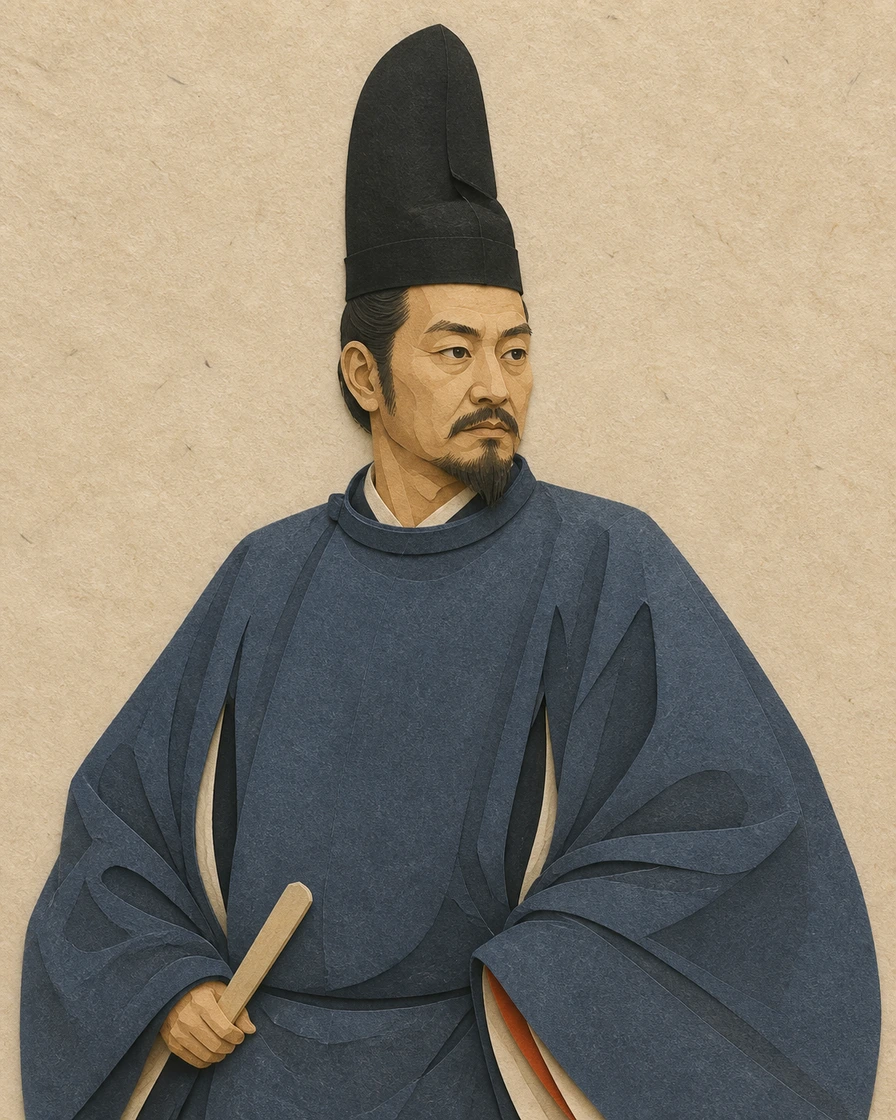
Reception magnified 1192 because later military rulers repeatedly used the shogunal title. It also contrasted Yoritomo's severity with Yoshitsune's tragic brilliance. Portraits traditionally identified as Yoritomo—including the famous Jingoji image and a transmitted seated statue—have attribution and dating problems and are not secure lifetime likenesses.
The canonical legacy is a set of capacities rather than a single founding date: a returnable center at Kamakura; a direct warrior constituency; recognized appointment and policing roles; documents that linked service to land; specialized personnel; and a negotiated relationship with the court. These capacities outlived their maker by being transformed.
Later councils, Hōjō ascendancy, the deaths of Yoriie and Sanetomo, portrait identifications, and textbook foundation dates belong to the living actors and institutions that produced them, not to Yoritomo's retrospective voice.