Read the article below. Interactive reading tools are available when scripts load.
Quick
Saigō was born in Kagoshima's Shita-Kajiya district on 23 January 1828, corresponding to the seventh day of the twelfth month of Bunsei 10. He was the eldest son of Saigō Kichibē in a castle-town retainer household. The family belonged to Satsuma's warrior order but did not command the rank or wealth of the domain's senior houses.
Local peer-group education, household obligations, and service expectations shaped his youth. At seventeen by contemporary reckoning he entered domain work as an assistant in county administration. That post dealt with rural government rather than national strategy. It exposed a young retainer to records, assessment, petitions, officials, and the distance between castle decisions and village conditions.
Later fame turns this beginning into proof of an irresistible leader. The evidence supports a narrower conclusion: hereditary status gave him a route into service, modest rank limited access, and administrative work allowed him to become useful. He was not a peasant rising from outside the order, and no childhood voice can explain policies he had not yet encountered.
In 1854 Saigō accompanied Lord Shimazu Nariakira to Edo and entered the lord's garden-service staff. The title sounds domestic, but proximity allowed him to carry messages, contact allies, and perform confidential political work. By 1857 he had become a foot inspector.
Nariakira expanded Satsuma's industrial, military, and political activity and was willing to employ capable men below the highest hereditary ranks. Saigō assisted efforts connected to the shogunal succession, including support for Hitotsubashi Yoshinobu, and moved through networks linking Edo, Kyoto, domains, and court nobles.
His rise depended on selection, not charisma alone. Nariakira authorized access; senior retainers, couriers, monks, nobles, and allied-domain officials supplied information and routes. Saigō's work demonstrated reliability, but he did not personally control Satsuma policy.
The relationship was powerful and fragile. A retainer raised through one lord's trust could lose both protection and political direction if that lord died. Nariakira's sudden death in 1858 exposed the institutional dependence hidden by later stories of two exceptional men recognizing each other.
Nariakira died suddenly in 1858 as the Ansei Purge expanded against opponents of bakufu succession and treaty policy. Saigō's political network collapsed. He helped the Kyoto monk Gesshō flee toward Satsuma, but domain leaders would not protect the fugitive as he expected.
Before dawn on 16 November, Saigō and Gesshō entered Kagoshima Bay from a boat. Both were pulled from the water. Gesshō died; Saigō was revived and sheltered. Satsuma records addressed the aftermath while the domain concealed Saigō from bakufu pursuit.
The event is often written as a perfectly staged double suicide with recovered speeches and a single noble motive. The deaths, survival, place, and political danger are well supported. The last conversation, moment-by-moment intention, and survivor's immediate inner voice are not.
Saigō's survival did not confirm destiny. It left him physically weakened, politically compromised, and dependent on officials who could hide, punish, or move him. Gesshō's death must remain a life lost, not merely the crisis that deepened another man's character.
Satsuma sent Saigō to Amami Ōshima under concealment in 1859. In the Ryūgō community he formed a household with Aikana, a woman of the local Ryū family. Their son Kikujirō was born in 1861, and their daughter Kikukusa followed. This was a real family, not an atmospheric episode between political careers.
For Saigō the island was enforced removal. For Aikana and her neighbors it was home under a Satsuma regime that treated Amami differently from mainland domain society and extracted sugar through restrictive controls. Local households supplied knowledge, residence, food, mediation, and care. Their value does not depend on “refining” an exile.
The relationship was unequal in law and mobility. Saigō could later be recalled to domain service; Aikana could not simply transfer into his Kagoshima political life on equal terms. Their children linked island and mainland households across that boundary.
Letters help recover concern and relationship, but they do not justify a romantic conversion story or the claim that Saigō fully opposed the system benefiting Satsuma.
Saigō was recalled in 1862 as Shimazu Hisamitsu prepared a large political expedition to Kyoto. He soon clashed with the domain's new power center. Moving ahead without authorization and criticizing the plan made him a liability. His earlier service to Nariakira did not give him permission to treat Nariakira's brother as a substitute patron.
The domain sent him first toward Tokunoshima, where Aikana brought their children to see him, and then imposed harsher exile on Okinoerabu. He spent part of roughly eighteen months in severe confinement. Local officials and residents, along with fellow prisoners and later relaxed conditions, made survival and study possible.
Ōkubo and other Satsuma actors advanced under Hisamitsu while Saigō was absent. The domain did not wait for its later hero. When Kyoto politics and the Chōshū crisis increased the need for an experienced negotiator, Satsuma ordered Saigō's recall in 1864.
Repeated exile reveals real disagreement inside Satsuma. Loyalty did not mean obedience without conflict, and recall did not prove that punishment had been a wise training program.
Recalled in 1864, Saigō received military and interdomain responsibilities. In July, Chōshū forces entered Kyoto and fought Satsuma, Aizu, and other defenders near the imperial palace. Satsuma helped defeat them. The fighting caused deaths and a major urban fire.
The bakufu then organized the First Chōshū Expedition. Saigō served in its command network but came to support a negotiated submission rather than a destructive invasion. Chōshū punished selected leaders, dismantled some fortifications, and presented compliance while internal factions continued to struggle.
Saigō's changing position was not sentimental reconciliation. Satsuma had to weigh bakufu power, Chōshū's capacity, court legitimacy, domain interests, and the danger that complete destruction would strengthen the shogunate. Katsu Kaishū and other contacts also influenced the strategic field.
This phase makes the later alliance intelligible. Satsuma and Chōshū first fought and coerced one another. Cooperation emerged through altered interests and negotiation, not from an inevitable friendship hidden beneath temporary misunderstanding.
By 1865 Satsuma and Chōshū had reasons to cooperate against renewed bakufu coercion. Chōshū needed weapons, shipping, and political relief. Satsuma sought a balance that limited the shogunate and expanded its own national influence. Nagasaki trade and maritime networks made practical exchange possible.
Saigō, Kido Takayoshi, Komatsu Tatewaki, Ōkubo Toshimichi, Sakamoto Ryōma, Nakaoka Shintarō, and other intermediaries built communication across recent hostility. A six-article pledge emerged from Kyoto discussions in early 1866, with Ryōma later confirming Kido's written understanding.
The pledge was important, but research places it within an alignment already developing in 1865. It addressed how Satsuma would act if the bakufu attacked Chōshū and how the domains would cooperate at court. It did not merge governments, armies, or motives.
Saigō was a principal negotiator, not the sole maker. Trust became credible through weapons, ships, introductions, messages, and commitments that each domain could test. The alliance succeeded because a network made words actionable.
In 1867 Saigō joined Ōkubo, Iwakura, and other coalition leaders seeking to remove Tokugawa political dominance. Yoshinobu returned governing authority, but Satsuma and allied leaders feared he could retain power in a reorganized council. The December court coup abolished older offices and proclaimed restoration of imperial government.
Political pressure became war at Toba–Fushimi in January 1868. Satsuma and Chōshū troops fought Tokugawa forces; imperial authorization and banners helped classify the coalition as the imperial army. Yoshinobu withdrew to Edo, and government forces advanced east.
Saigō held major military-political responsibility within the command organized under an imperial prince. He coordinated troops, policy, and negotiation, but did not personally plan every engagement. Domain units retained officers and interests; supplies, roads, money, and local compliance made advance possible.
The revolutionary and state soldier were the same person. Saigō helped create a government and then used civil-war coercion to extend it. Imperial legitimacy did not make opponents or civilians disappear.
The eastward army prepared a general assault on Edo. Before Saigō met Katsu Kaishū, Tokugawa Yoshinobu had withdrawn from public command, household women including Tenshōin and Seikan'in had supported appeals, and Yamaoka Tesshū had crossed the lines to present submission conditions.
Saigō and Katsu met on 5 and 6 April 1868, corresponding to the thirteenth and fourteenth days of the Japanese third month. Katsu represented Tokugawa and metropolitan concerns; Saigō represented the advancing government's coercive position. They revised terms sufficiently for the planned assault to be cancelled. Edo Castle transferred on 3 May.
Their negotiation mattered greatly. It was not a private handshake that ended national violence. Commanders, imperial officials, Tokugawa administrators, petitioners, guards, storekeepers, and city workers had to carry out disarmament, inventories, residence changes, and handover.
The settlement avoided a general battle in a vast city. Fighting later occurred at Ueno, and war continued north. “Bloodless” applies to the cancelled assault and castle transfer, not to the whole Restoration.
After Edo's transfer, fighting continued at Ueno, in northeastern Japan, and later in Hokkaido. Aizu and the northern alliance resisted the new government under their own claims of loyalty and regional security. Civilians experienced siege, fire, requisition, flight, and punishment.
Saigō remained part of the victorious military system. Forces under his wider direction moved toward Shōnai after Aizu's fall. Shōnai surrendered to Kuroda Kiyotaka in September 1868 and received treatment remembered as comparatively lenient. Former Shōnai leaders later credited Saigō and built a durable relationship with him.
That clemency should not be generalized. Aizu's people endured severe war and punishment; other regions experienced different settlements. The new government used both force and calibrated reconciliation to break opposition and absorb useful former enemies.
Saigō's reputation as humane victor rests partly on real choices. It also depends on memories produced by beneficiaries. He remained a leader of the side whose armies imposed the surrender. Edo peace and northern war belong to the same person.
Saigō returned to Kagoshima after the war and entered the reorganized domain leadership in 1869. He was brought back into central government in 1871, became a councillor, and helped secure Satsuma military support for abolishing the domains. The imperial guard gave Tokyo coercive capacity against possible resistance.
He later held senior army and guard titles, becoming army general and councillor in 1873. Former domain warriors did not simply disappear. Some became national officers, soldiers, police, and bureaucrats; others lost stipend, purpose, and local authority. Saigō stood among the beneficiaries while representing discontented Satsuma networks.
During the Iwakura Mission he was a central figure in the left-behind government. That administration pursued conscription, schools, calendar, judicial, and fiscal reforms through many ministers and offices. Saigō neither authored every measure nor stood outside their burdens.
His famous name also belongs to this institutional conversion: the formal name Takanaga was recorded as Takamori, his father's name, and he accepted its use. A new public official identity emerged through government paperwork as well as legend.
Relations with Korea became the center of a government crisis in 1873. Japanese leaders objected to diplomatic treatment and disagreed over recognition, security, spending, and timing. Saigō proposed that he go as envoy. His letters and arguments anticipated danger and the possibility that harm to him could justify stronger action.
The proposal was therefore more complex than “invade Korea now,” but it was not a risk-free peace mission. Korea had its own government and political choices; it was not merely a test of Japanese honor.
The cabinet provisionally approved Saigō's dispatch on 15 October. Ōkubo opposed it, and Iwakura appealed after the procedure reaching the emperor changed. On 24 October Emperor Meiji accepted indefinite postponement. Saigō and several councillors resigned.
The defeat divided Restoration leaders over more than foreign policy. Reforms undertaken during the Iwakura Mission, control of cabinet procedure, budget, warrior discontent, and competing state visions were involved. Saigō returned to Kagoshima with national prestige but without central office. His resignation did not make him a private citizen without followers or responsibility.
Saigō returned to Kagoshima in November 1873. He farmed, hunted, managed household relationships, and remained the region's most prestigious political figure. In 1874 he and former officers including Kirino, Shinohara, and Murata helped establish a private school using personal funds and military expertise.
The system included rifle and artillery training and spread through branches across Kagoshima. It offered purpose, education, and discipline to former samurai whose national position was shrinking. Members also entered local offices, while governor Ōyama Tsunayoshi cooperated with the network. It became a regional political-military structure, not merely a classroom.
Saigō's presence unified men who did not all share one plan. He did not issue every local order or control every student. Yet the schools used his prestige, and he accepted leadership rather than remaining an unrelated retiree.
His household also complicates the public image. Ito managed a large family; children and relatives linked Kagoshima to Amami and to men serving the new state. Saigō's withdrawal from Tokyo did not withdraw his obligations from other people.
In late January 1877 private-school students raided government arsenals after weapons began to be removed from Kagoshima. Reports about government agents and an alleged plot to kill Saigō intensified fear. Saigō returned from hunting to a crisis he had not initiated, then accepted leadership of the armed movement.
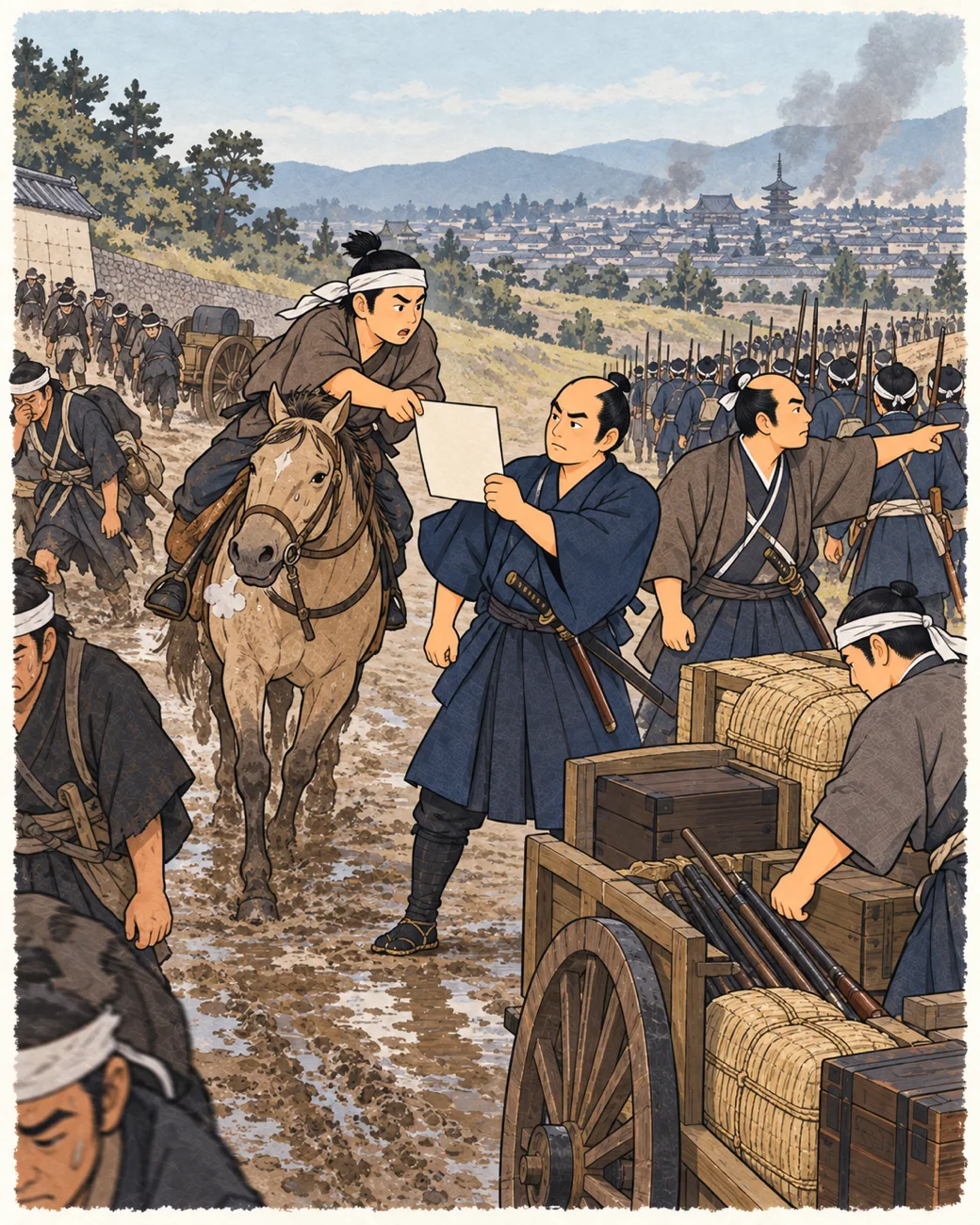
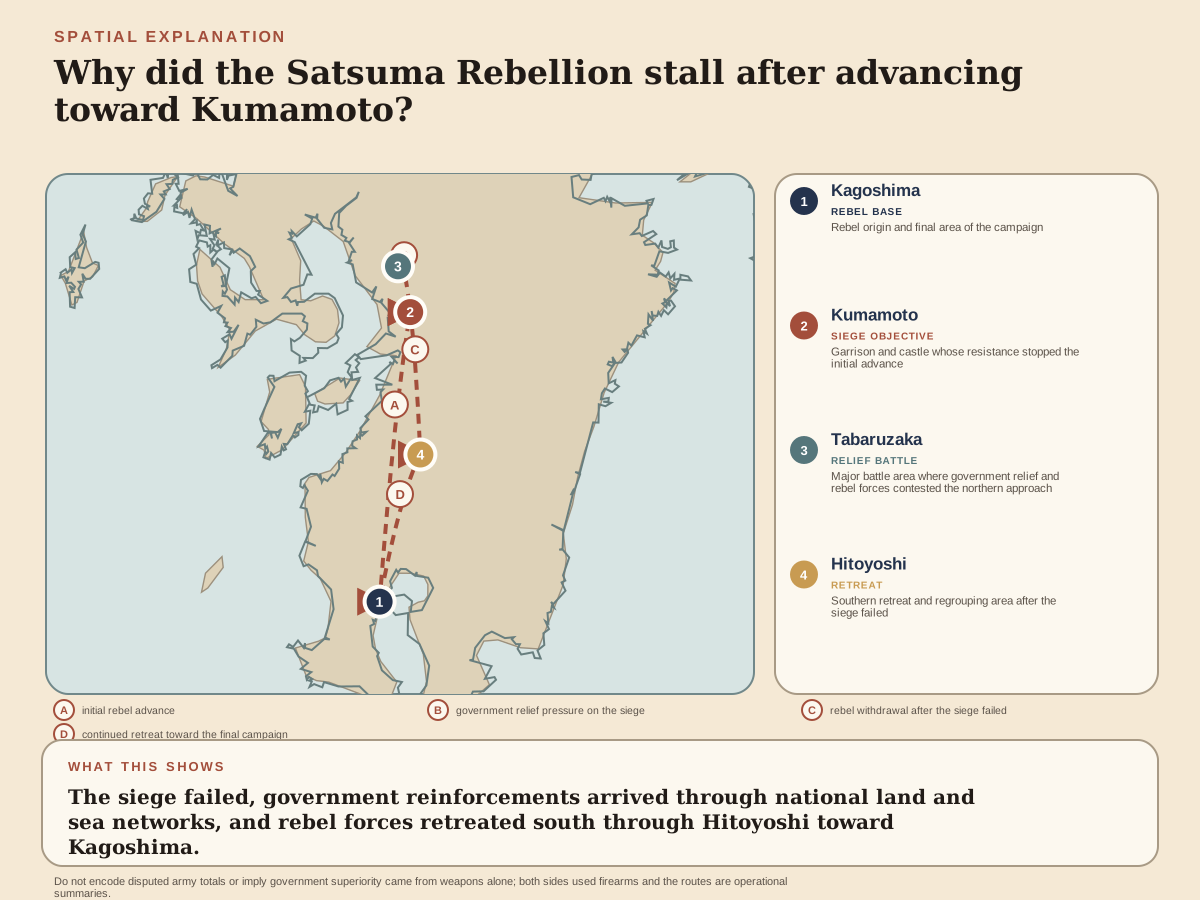
On 15 February the force marched north, publicly seeking an answer from the government. Its size, arms, and conduct made the advance rebellion, whatever language of inquiry or imperial loyalty accompanied it. The attempt to take Kumamoto Castle failed. Heavy fighting at Tabaruzaka and the government's superior reinforcement and supply capacity turned the campaign.
The Satsuma force retreated across Kyushu and returned in reduced numbers to Shiroyama. Government troops surrounded it. On 24 September the final assault destroyed the remaining force and Saigō died.
He was neither a helpless captive of followers nor a mastermind who had planned war since 1873. Students forced the opening; he chose to lead. The famous ritual-seppuku scene and exact role of Beppu Shinsuke are not secure enough for first-person or cinematic certainty.
The government classified Saigō as a rebel, but that judgment never controlled all memory. Former allies, opponents, family members, journalists, and regional communities argued over whether he was traitor, loyal critic, defeated founder, or moral teacher.
In 1889, during the constitutional amnesty and reconciliation climate, his rebel stain was officially removed and court rank was granted posthumously. Former Shōnai retainers compiled and circulated teachings associated with him. Their gratitude for northern-war clemency shaped what they selected, so the collection is evidence of relationship and reception rather than a verbatim autobiography.
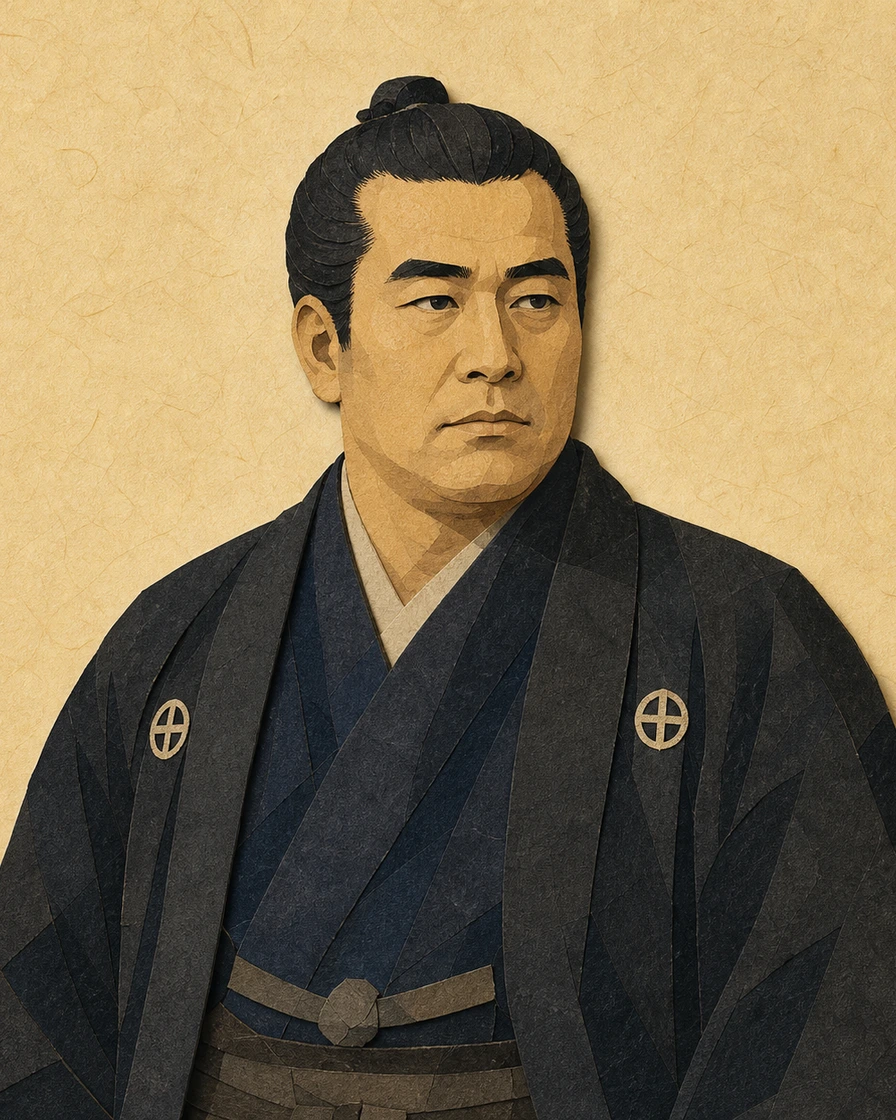
An Ueno statue was unveiled in 1898. Takamura Kōun modeled Saigō, Gotō Sadayuki the dog, and Okazaki Sessei oversaw casting, with patrons and assistants contributing. Because Saigō left no securely authenticated photograph, the public body was reconstructed through family resemblance, portrait conventions, and sculpture.
By 1912 Saigō had become a national image compatible with the state he had fought. Romantic “last samurai” framing hides the former samurai in the government army, his own role in centralization, and the regional institutions behind the rebellion.
Classic
Satsuma's warrior population was internally stratified. A castle-town retainer household possessed recognized service status, education, and claims on the domain. That did not make it wealthy or close to the lord. Stipend, office, neighborhood networks, household size, and senior patronage determined whether status became influence. The Saigō family occupied a real institutional foothold without the privileges of the highest ranks.
Shita-Kajiya later became famous for producing Meiji leaders, which encourages a myth of one neighborhood school manufacturing national greatness. The district's significance was more material. Retainer families lived near one another, youths trained in age-group networks, and information moved through kin and service connections. Such structures could discipline and connect young men, but they did not create one ideology or guarantee promotion.
Saigō's first office is more revealing than a heroic childhood anecdote. As a county-office assistant from 1844, he entered the domain's management of rural production, taxation, petitions, and population. Clerks copied and checked documents, passed orders, and communicated with local officials. This was subordinate work. It nonetheless offered knowledge of how policy reached communities and how an official could make himself visible through accurate service.
The rural economy supporting Satsuma extended beyond the castle town. Agriculture, commercial networks, domain monopolies, Ryukyu relations, and the coerced sugar economy of the Amami islands contributed to fiscal capacity. A young clerk need not have understood the whole structure. His household's position within it prevents “poor but pure outsider” narration. Satsuma's future military and industrial initiatives rested partly on extraction from people with less political access.
Names mark changing roles. He was widely known as Kichinosuke in adult Tokugawa-period records; his formal name was Takanaga. “Takamori” became the government and historical name only later. Using the famous name throughout is readable, but treating it as an essence possessed at birth makes the life appear completed in advance.
Household composition also mattered. As eldest son, he carried expectations toward parents and siblings. Service income and reputation affected more than one individual. Later political absence, exile, office, and war would redistribute labor across wives, children, siblings, and dependants. Great-man biography often uses family only to certify moral character; a household history treats it as infrastructure.
Evidence is uneven. Date, place, father, status, and early appointment are strong. Later recollections about physical presence, compassion, courage, or youthful leadership may preserve memories, but they were selected after his national fame. None authorizes an adult political monologue from childhood.
His rise was therefore neither miraculous escape from nothing nor automatic warrior privilege. The domain supplied a narrow ladder: literacy, administrative service, neighborhood association, and the chance of recognition by superiors. Saigō climbed because he performed useful work and later encountered an unusually receptive lord. The ladder existed before him, was unavailable to many subjects, and could be removed by the same authority that raised him.
Calendar and age conventions add a final safeguard. Bunsei 10 continued into January 1828 under the Gregorian system, so calling him “born in 1827” follows the contemporary Japanese year while 23 January 1828 is the converted civil date. The office at “seventeen” likewise reflects Japanese age reckoning differently from completed years. Stating the systems prevents apparent contradictions and keeps modern chronology from silently replacing the records it translates.
Nariakira's accession to domain leadership followed its own succession struggle. Once in power, he pursued manufacturing, coastal defense, naval acquisition, and wider political influence. These projects required specialists, money, workshops, interpreters, merchants, officials, and retainers able to communicate beyond Kagoshima. Selecting lower-ranking talent was one administrative response to that demand.
Saigō's garden-service title placed him near the lord in Edo. “Garden” should not be modernized into either horticultural labor alone or a secret cabinet office. The post's value lay in access and assigned errands. Saigō could transmit messages and meet figures whose rank would otherwise have excluded him. Confidential utility converted modest status into political reach.
The shogunal succession campaign involved more than a preferred candidate. Supporters of Hitotsubashi Yoshinobu associated him with reform capacity and alliances among powerful lords. Supporters of Tokugawa Yoshitomi, the future Iemochi, defended a different dynastic and political arrangement. Court sanction of foreign treaties added another conflict. Satsuma policy intersected with Echizen, Mito, Tosa, court nobles, bakufu councillors, and religious intermediaries.
Saigō served inside this network. Letters and assignments show activity, but later biography can overread every journey as a national master plan. A messenger selects words and relationships and may advise a patron; he still depends on instructions, credentials, funds, safe houses, and recipients willing to respond. The network's distributed labor made Nariakira's policy possible.
Promotion to foot inspector in 1857 marked institutional recognition. It did not abolish hierarchy or make Saigō equal to senior councillors. His position remained exceptional enough to inspire loyalty to Nariakira and resentment or suspicion elsewhere. A patron's deliberate bypassing of hereditary rank can energize administration while threatening those whose status has been bypassed.
Nariakira's industrial projects also had a fiscal geography. Kagoshima foundries and ships became visible signs of reform, while domain revenue drew on taxes, commerce, Ryukyu relations, and Amami sugar. Selecting talent at the center did not make the system socially open to islanders and cultivators whose production supported it. Heroic modernization must retain the extraction beneath opportunity.
The lord-retainer relationship acquired emotional meaning, but evidence should not become private dialogue. Saigō later revered Nariakira and organized memory around his purpose. That retrospective commitment is historically important. It cannot prove every thought in the 1850s or make the lord the sole source of all later policy.
Patronage therefore explains both acceleration and vulnerability. Nariakira gave Saigō tasks, access, and protection. Saigō supplied intense service and contacts that increased the patron's reach. Neither acted alone. When Nariakira died, no impersonal civil service automatically preserved the subordinate's career. The relationship's collapse exposed how much apparently personal greatness had depended on office, household, and a living sponsor.
The documentary record itself favors the patron's network. Orders, travel permissions, official appointments, and correspondence preserve assignments better than the labor of stable hands, messengers, boat crews, innkeepers, and copyists. Their relative invisibility does not make Saigō's journeys solitary. Every connection between Kagoshima, Edo, and Kyoto required a chain of people able to move a retainer and authenticate what he carried.
Rank still governed whose report could become policy after delivery.
The event arose from political collapse. Ii Naosuke's purge targeted people connected to the disputed succession and court opposition. Gesshō, a monk associated with Kiyomizu-dera's Jōjuin, belonged to activist religious and court networks. Saigō had carried Nariakira's policy through those circles. When Nariakira died, the authorization that made such work service to Satsuma no longer protected it.
Flight required routes, guides, money, boats, and sympathetic households. Saigō brought Gesshō toward Satsuma expecting a refuge that domain leaders would not openly provide. An order to remove or expel the monk toward Hyūga created a situation in which obedience, protection, and personal obligation collided. Surviving administrative notes document aftermath more securely than emotional sequence.
The two entered the water during the night of 15–16 November. Boatmen and local helpers recovered them; fire and shelter were used in attempted revival. Gesshō died while Saigō survived. Those rescuers are not background. Without their labor the event would have left two bodies and a different archive.
Later biographies reward a final exchange that makes both men agree on death and transforms survival into heavenly commission. Some narratives may preserve testimony, but genre and distance matter. A participant remembering trauma, a retainer compiling an official life, and a novelist staging a scene do not carry equal evidentiary force. Even a reliable report of intended joint death cannot recover each second of consciousness.
Suicide should not be aestheticized as proof of sincerity. Political culture could treat willingness to die as loyalty, protest, or escape from impossible obligation. The act also caused irreversible harm: Gesshō lost his life; attendants and officials managed danger; his religious community lost an actor; Saigō's family faced uncertainty. Calling the scene beautiful converts those consequences into character decoration.
The domain's response reveals institutional ambiguity. It could not surrender a useful retainer without cost, openly shelter him without risk, or restore his old work after Nariakira's death. Concealment under an alias and removal to Amami protected Satsuma as well as Saigō. Exile was therefore both punishment and managed disappearance.
Gesshō needs independent biography. His court and religious connections mattered before Saigō's crisis. His death did not exist to produce Saigō's later philosophy. Kiyomizu-dera and associated networks suffered further repression, and the upheavals of the Meiji religious settlement later affected them again.
Saigō's survival became a turning point because later events gave it consequence. That is different from saying survival proved he had a predetermined mission. At the end of 1858 he had lost patron, colleague, position, and safety. The next decision belonged largely to the domain that controlled his movement.
The responsible narrative therefore fixes what records can bear—political pursuit, date, bay, recovery, death, survival, concealment—and leaves final words and total motive unclaimed. It is protection against borrowing tragedy to manufacture a voice.
The surviving “aftermath memorandum” is especially valuable because it was produced by an official dealing with consequences rather than by a later admirer arranging a climax. It confirms that the domain treated the event as an administrative problem involving bodies, identities, burial, and exposure to bakufu inquiry. Such a source does not reveal feeling; its very limitation helps separate what the institution knew from what later narration imagined.
Amami had been incorporated into Satsuma control after the early seventeenth-century invasion of Ryukyu, while its political and commercial classification remained useful to domain policy. By the nineteenth century sugar production and monopoly practices subjected island households to severe extraction. Mainland narratives often admire Satsuma's fiscal and military strength without tracing part of that strength to island labor.
Saigō arrived because the domain needed him absent from bakufu view. Aliases and controlled residence made concealment an administrative arrangement, not free retreat. He depended on officials and local intermediaries to obtain housing, food, information, and permission. The power that constrained him was even more durable over island residents.
Aikana belonged to the Ryū family and married Saigō in 1859 under island conditions. Calling her an “island wife” can describe a historical category but risks treating the marriage as temporary by definition and the woman as subordinate scenery. Kikujirō and Kikukusa demonstrate continuing kinship. Letters and later household arrangements show that the relationship did not vanish when Saigō departed.
Household labor must remain visible. Aikana bore children, managed daily life, and lived with the risks created by a politically dangerous mainland retainer. Her relatives mediated the relationship. Saigō's residence affected local people who had not chosen the national crisis that sent him there. The house later preserved as a memorial should not turn all occupants into attendants of future greatness.
The sugar regime provides the necessary scale. Officials regulated cultivation, sale, and obligations in ways that restricted island autonomy. Exact experiences varied by time and community, and the later phrase “sugar hell” requires contextual use rather than indiscriminate application. The structural fact remains: Satsuma extracted resources through differential governance.
Evidence about Saigō's response is limited. A reference inquiry notes that little direct writing securely records his view of Amami oppression. Later admirers often credit him with immediate moral awakening and reform advocacy. Local traditions deserve preservation, but the publication cannot convert absence into a fully documented anticolonial position. He benefited from Satsuma status even while suffering Satsuma punishment.
Recall exposes unequal mobility. In 1862 the domain could summon Saigō because mainland politics again required his skill. Aikana and the children lived under rules and social boundaries that prevented a simple family move. Political biography usually treats recall as restoration; household biography also sees separation.
Kikujirō would later enter education and public service, while Kikukusa's life followed different family arrangements. Those futures should not be backdated into infancy. Their presence in this chapter establishes that Saigō's obligations were already distributed across places.
Amami therefore changes the meaning of exile. It was punishment and refuge for one man, marriage and parenthood for a family, extraction and constrained mobility for islanders, and a fiscal resource for the domain that would later sponsor national transformation. Saigō's life intersects all four without absorbing them into his personal spiritual development.
Place memory adds another layer. The preserved residence and later museum objects can verify settlement patterns, family association, and commemoration, but a reconstructed room is not untouched evidence of every conversation. Tourism often turns landscape into proof that exile was peaceful. Material remains should instead prompt questions about who owned the site, who maintained it after Saigō left, and which island histories were selected for visitors.
Hisamitsu inherited influence without becoming domain lord in the same form as Nariakira. He sought to move troops toward Kyoto and reshape court-bakufu relations. That project required discipline: a subordinate who independently hurried ahead, contacted activists, or publicly disparaged the leader threatened command even if his political instincts were valuable.
Saigō's identification with Nariakira complicated submission. Later admirers treat defiance as proof that he alone understood history. Yet unauthorized action could expose Satsuma to uncontrolled violence or make the domain appear unable to govern its retainers. Hisamitsu's anger had an institutional basis as well as personal dimensions.
The second removal unfolded across island places. Saigō passed through Tokunoshima, where Aikana and the children briefly re-entered his physical life, before transfer to Okinoerabu. That meeting prevents the Amami family from disappearing at recall. It also intensifies the asymmetry: political punishment could move the father again while the family absorbed separation.
On Okinoerabu, early confinement was severe. A small exposed enclosure, inadequate conditions, and illness or bodily decline form part of the evidence. Later improvements depended on local intervention and administrative discretion. Memorial reconstructions can make the cell an altar of heroic endurance; the historical structure is coercive custody maintained by people and rules.
Local figures offered food, conversation, writing materials, medical or practical assistance, and human contact. Their names and exact roles vary across records and commemoration. The core point is stable: Saigō did not survive by will alone. Island communities again carried costs created by mainland politics.
Study and teaching during confinement are historically plausible and partly documented, but the claim that one famous ethical formula was completed there is a reception tradition rather than a securely dated intellectual event. Later Nanshū teachings were compiled by followers.
Meanwhile Ōkubo Toshimichi and others built influence with Hisamitsu. This parallel career matters. Saigō's absence did not freeze Satsuma's policy network; new trust, offices, and strategies formed without him. When he returned, he entered a structure in which former peers had acquired different authority.
Recall in early 1864 responded to crisis. Chōshū activists and allied nobles had been driven from Kyoto, domain forces crowded the capital, and Satsuma needed people capable of interdomain negotiation and military organization. A useful dissenter could be restored when the cost of exclusion exceeded the cost of conflict.
The pattern shows how premodern office systems managed talent through personal trust and coercive mobility. Saigō could be promoted, concealed, imprisoned, and recalled without a stable legal career. His defiance was real; so was domain sovereignty over his body. Neither fact turns Satsuma into one harmonious Restoration party moving steadily toward 1868.
Murata Shinpachi's simultaneous removal shows that punishment could target a political group rather than a solitary personality. Maritime weather and schedules also governed transfer between islands, making exile a logistical process whose timing officials could not completely control. Recall required another order, a ship, and renewed trust from men who had built careers during Saigō's absence. These mundane mechanisms kept political rehabilitation contingent.
The Forbidden Gate Incident followed the exclusion of Chōshū-aligned nobles and activists from Kyoto in 1863. Chōshū factions sought to restore influence and brought armed forces toward the capital. Satsuma, which had helped change the court coalition, defended palace access alongside Aizu and other troops. Each side invoked imperial loyalty while fighting over who could protect and advise the court.
Saigō's return placed him in Satsuma's military organization at precisely this moment. He did not arrive as Chōshū's natural ally. Combat near palace gates, casualties among domain troops, and fires affecting Kyoto residents made the conflict more than elite maneuver. Urban laborers and households bore the cost of armies claiming sovereign purpose.
Victory allowed the court and bakufu to classify Chōshū as an enemy and organize punishment. The First Chōshū Expedition assembled forces from numerous domains, but a large coalition was expensive and politically difficult to control. Saigō's staff role gave him responsibility within a bakufu-authorized campaign even though Satsuma's long-term interest was already diverging from simple shogunal obedience.
Negotiation offered a different outcome. Chōshū could display submission by punishing responsible officeholders, apologizing, and accepting conditions. The expedition could claim success without siege. Saigō participated in securing that settlement, but opposing Chōshū actors, Iwakuni intermediaries, coalition commanders, and internal factional change all mattered.
Chōshū's internal politics soon overturned the submissive leadership. Takasugi Shinsaku and armed reform forces restored a faction determined to preserve military capacity. A settlement accepted by one domain government was therefore not the final will of an unchanging collective. “Chōshū” contained offices, leaders, units, merchants, farmers, and factions.
Satsuma also recalculated. A bakufu capable of destroying Chōshū might later constrain Satsuma. Foreign bombardment at Shimonoseki and Satsuma's own war with Britain had demonstrated the importance of arms, shipping, diplomacy, and trade. Cooperation with a western rival could become more useful than enforcing Tokugawa supremacy.
Katsu Kaishū's contacts with Saigō are part of this strategic education, but no one conversation explains the turn. Naval policy, regional balance, bakufu weakness, court politics, and Satsuma merchants and officials all supplied evidence. Later stories like a single moment of conversion because they make institutional analysis personal.
Saigō's flexibility contributed to his rise. It also carried coercive responsibility. He could advocate restraint after participating in the force that made Chōshū submission necessary. Peaceful settlement does not erase the violence preceding it; military service does not prove he desired maximum punishment.
This chapter therefore rejects moral binaries of loyal consistency against opportunistic reversal. Domain states adjusted policy as alliances, threats, and capacities changed. Saigō's skill lay in recognizing when an authorized campaign no longer served Satsuma's interest and in negotiating a usable end. The later alliance began from this history of combat and conditional restraint.
The 1864 chronology also distinguishes the Forbidden Gate battle from the expedition that followed. The first was armed conflict inside Kyoto; the second was a multi-domain punitive mobilization aimed at Chōshū. Combining them makes Saigō appear to switch sides in a single moment. Between them came court decisions, coalition planning, travel, internal Chōshū punishment, and negotiation—enough time and institutional change for a different policy problem to emerge.
Satsuma and Chōshū entered 1865 with blood and distrust between them. The Forbidden Gate battle and punitive expedition made moral appeals to shared imperial loyalty insufficient. Cooperation needed a strategic problem both domains could recognize: a renewed bakufu campaign against Chōshū could strengthen central Tokugawa power and alter the western balance.
Chōshū's access to foreign weapons was constrained by political isolation. Satsuma possessed recognized trade channels and relationships in Nagasaki. Sakamoto's commercial group and merchants could help move rifles, ships, finance, and information. Resource exchange did not merely support a political alliance after its creation; it helped create confidence that cooperation was possible.
Intermediaries had different positions. Ryōma and Nakaoka were Tosa men operating outside simple domain command. Komatsu and Ōkubo held Satsuma authority. Kido represented Chōshū's political survival. Saigō could commit substantial Satsuma support but still answered within domain leadership. No mediator could promise another government's obedience alone.
Historical disagreement · When did the Satsuma–Chōshū alliance take shape?
Research on the six articles complicates the familiar January 1866 origin. A political-military alignment can be traced to 1865, while the later Kyoto meeting developed and clarified commitments.
During discussion Saigō and Kido did not immediately agree. Ryōma's arrival and mediation helped resolve the impasse. Friction is evidence of real negotiation, not a flaw in the legend.
The written object also has an unusual form. Kido recorded the agreed points and asked Ryōma to confirm their accuracy. This was not a modern public treaty signed by two sovereign states and announced to populations. Secrecy, personal guarantee, and future performance carried much of its force. The document survives because actors needed memory and verification.
The clauses concerned contingencies: what Satsuma would do if the bakufu attacked, how it would work at court, and whether Chōshū would be treated as a partner rather than an enemy. Conditional language exposes continuing autonomy. The alliance did not create one national command or erase disagreement over timing and political structure.
Foreign commercial networks belonged to the architecture. Thomas Glover and other merchants, interpreters, crews, domain agents, and financiers connected Nagasaki to military procurement. Their activity was profit-seeking as well as political. Giving Ryōma or Saigō sole credit erases the labor and capital that made armed cooperation credible.
The alliance's later victory produces outcome bias. Because Satsuma and Chōshū became leading Restoration powers, every earlier contact appears destined to overthrow the bakufu. Participants faced uncertain responses from court, domains, foreign representatives, and the Tokugawa government. Cooperation could fail or remain limited.
Saigō's importance lay in converting recalculation into commitment. He had fought Chōshū and negotiated its submission, giving him knowledge of both conflict and restraint. Kido had reasons to distrust precisely that history. The relationship became consequential because neither side needed to imagine friendship; each needed mechanisms that made betrayal costlier and joint action useful.
The alliance also had unequal access to publicity. Secrecy protected participants but left later historians dependent on memoranda, letters, and retrospective testimony. Ryōma's confirmation gives one strong anchor, not a complete transcript. Disagreement over whether 1865 or the six-article 1866 understanding marks “the alliance” reflects a legitimate question of definition: resource cooperation, strategic alignment, and written contingency pledges mature on different dates.
Yoshinobu's return of authority in late 1867 did not transfer every Tokugawa asset or office to the court. He expected a role in future government, supported by land, administrators, troops, and senior rank. Satsuma-Chōshū leaders therefore saw procedural settlement as a risk: the Tokugawa house might dominate any deliberative coalition without the title of shogun.
The Restoration coup at court used access, orders, and armed readiness. Iwakura and allied nobles supplied court mechanisms; Saigō, Ōkubo, and domain forces supplied coercive support. Offices were abolished and created through proclamation. The emperor's youth and central authority allowed leaders to claim restored sovereignty rather than simple Satsuma-Chōshū seizure.
Provocation and security activity in Edo also increased tension, but evidence must distinguish organized Satsuma operations from Saigō's personal instruction in every incident. The burning of the Satsuma residence by Shōnai forces and the movement of armed groups helped push Tokugawa leaders toward confrontation. A person biography should not turn a complex escalation into one mastermind's secret plan without claim-level support.
At Toba–Fushimi, military capacity and political classification interacted. Domain troops used firearms, artillery, command, and defensive position. The appearance of imperial sanction affected morale and loyalty. Units facing the “imperial army” had to decide whether continued action made them enemies of the sovereign even when they believed themselves loyal to established government.
Yoshinobu's withdrawal to Edo weakened Tokugawa coordination. Coalition victory opened an eastward route, but it did not create a centralized national force overnight. Satsuma, Chōshū, Tosa, and other troops retained domain supply and command relationships. The new government placed an imperial prince at the head of the expedition, with staff officers including Saigō translating sovereign authority into operations.
Logistics set limits. Armies required rice, ammunition, transport, lodging, medical care, intelligence, bridges, and routes. Local communities and officials provided or surrendered resources under pressure. The category “imperial army” could unify command language while masking the regional sources of material power.
Saigō's revolutionary agency was substantial. He helped plan the political break, accepted war, and occupied a central staff position. Describing collective architecture should not turn him into a passenger. But his authority came from court appointment, coalition agreement, Satsuma forces, and the cooperation of many officers. Removing those dependencies creates a general who commands an army that did not yet exist in modern centralized form.
The war also shaped the state. Orders naming loyal and disloyal domains, confiscating or protecting property, and appointing governors extended government into territory. Military advance was administration by other means. Saigō's decisions therefore affected not only battlefield outcomes but the classification of households and regions.
Restoration must remain violent and contingent. A legal return of authority, a court coup, a battle, imperial designation, and eastward invasion were separate events linked by actors. Saigō participated across them, which explains his power. It also prevents later affection for his anti-bureaucratic image from erasing his foundational role in central coercion.
Titles in the expedition clarify distributed command. An imperial prince supplied the formal headship expected of an army acting for the court, while staff officers translated policy into orders and domain commanders controlled units. Modern readers may call Saigō “commander,” but the record requires specifying the level. His influence could exceed his formal title without making the prince, fellow staff, or domain officers fictitious.
Yoshinobu's retreat and submission altered the problem. The new government could demand punishment and asset transfer without necessarily destroying the city, but commanders feared deception and remaining Tokugawa forces. Edo contained armed units, the former shogunal castle, foreign residents, storehouses, dense wooden neighborhoods, and a large population vulnerable to fire and disorder.
Tokugawa household women used dynastic and court connections. Tenshōin, a Satsuma-born widow in the shogunal household, and Seikan'in, the former imperial princess Kazunomiya, supported petitions through different channels. Their action did not command armies, but it connected surrender claims to people whom new-government leaders could not dismiss as ordinary messengers.
Takahashi Deishū helped identify Yamaoka Tesshū as an emissary. Yamaoka reached Saigō at Sunpu before the final Edo meetings and argued for Yoshinobu's submission. This prior encounter established terms and credibility. Treating Yamaoka only as Katsu's subordinate erases an independently risky crossing.
Katsu Kaishū managed military and urban contingencies. Tokugawa ships, units, retainers, police functions, and city services did not vanish with Yoshinobu's confinement. Katsu could offer compliance and warn of catastrophe, but his authority over all armed actors was incomplete. He prepared alternatives while seeking agreement.
Saigō brought the leverage of an advancing army and the authority of government command. The meetings on the two Japanese calendar days, commonly associated with Satsuma facilities at Takanawa and Tamachi, allowed detailed adjustment. Site traditions vary in precision, so the narrative preserves the two-day process rather than a single perfect room.
Terms involved Yoshinobu's treatment, castle and weapon transfer, warships, retainers, and the Tokugawa house's future. Saigō could recommend or accept modifications, but higher government and command structures also had to ratify and execute them. Negotiation was embedded in hierarchy on both sides.
Foreign pressure belongs within bounds. Diplomatic representatives opposed indiscriminate harm and monitored treaty security. Their concern affected the environment, but claims that one foreign minister directly ordered both Japanese negotiators exceed clear evidence. Domestic actors had their own overwhelming reasons to avoid urban destruction.
Implementation created records: gates, buildings, arms, documents, and residents had to be inventoried; guards changed; the Tokugawa house was reorganized under Iesato; troops and officials moved. A settlement becomes historical reality through such labor, not merely a moral decision at a table.
The avoided assault was genuinely important. In a wooden metropolis, fighting and fire could have killed residents and disrupted diplomacy and food supply. Saigō's willingness to accept submission rather than demand exemplary destruction deserves recognition. It does not transform him into a pacifist detached from the eastern campaign.
Edo demonstrates his double role. He was a coercive victor whose forces made surrender necessary and a negotiator who limited how victory would be used. Katsu, Yamaoka, household women, Yoshinobu, commanders, and urban workers made the same outcome possible from different positions. Their shared Event should remain reusable rather than rewritten into separate heroic realities.
Date conversion has narrative consequences here. The planned assault was set in the contemporary lunisolar calendar, while modern accounts commonly give 5–6 April for the meetings and 3 May for castle transfer. Silent mixing can place Yamaoka after the famous meeting or compress the implementation interval. Keeping both systems visible preserves the sequence of prior mission, two-day negotiation, cancelled attack, and later handover.
The northern alliance joined domains with different interests. Aizu had defended Kyoto under the bakufu and became a principal target of the new coalition. Shōnai had policed Edo and participated in the attack on the Satsuma residence. Both could be classified as severe enemies, yet geography, sequence of surrender, battlefield conduct, political symbolism, and negotiators shaped their treatment.
War after Edo disproves the national “bloodless restoration” frame. The attack at Ueno killed former Tokugawa fighters and damaged religious precincts. Campaigns through the northeast required multiple columns, local allies, supplies, and occupation. Aizu-Wakamatsu endured siege; rural districts experienced armies from both sides. Hakodate resistance continued into 1869 after many domain governments had submitted.
Saigō did not personally command every northern operation. Imperial princes, staff officers, domain commanders, and local guides held distinct roles. His high position connected him to strategy and settlement, while his physical movements covered only part of a large theater. The death of his brother Kichijirō in the fighting was a family loss, not evidence that Saigō alone bore the campaign.
Shōnai's army remained effective until the wider alliance collapsed. It surrendered on 26 September to Kuroda Kiyotaka. Local historical records describe weapons transfer, lordly submission, and an absence of looting, while later officials credited Saigō with directing leniency. Kuroda's on-site role must remain visible; beneficiary memory is evidence for reception as well as policy.
Clemency served state construction. A defeated warrior population could become a source of officers, students, labor, and local order if humiliation were limited. Excessive punishment could prolong resistance. Magnanimity was not the opposite of power; it was one way victorious power secured compliance.
Treatment of Aizu was harsher and later memory more wounded. The contrast prevents Saigō's Shōnai reputation from becoming universal proof of a single humanitarian policy. Decisions emerged through councils and circumstances, and the victorious government controlled categories of guilt. Women, children, farmers, townspeople, and low-ranking soldiers did not receive equal voice in settlement.
The later Shōnai connection became important. Former lord Sakai Tadaaki and retainers sent men to Kagoshima for military and ethical study. Sugane Sanehide and others helped preserve teachings later compiled as Nanshū Ō Ikun. Gratitude therefore shaped an archive that presents Saigō as moral teacher. The relationship was real, while its documentary product was situated.
Northern war also established who could define loyalty to the emperor. Domains claiming to oppose bad ministers were defeated by armies claiming direct imperial authority. Settlement converted political disagreement into official rebellion or return to allegiance. Saigō participated in that classification even when he advocated restraint.
His career cannot be divided into Edo peacemaker and northern bystander. He sought surrender where useful and accepted continuing war where resistance remained. The humane and coercive dimensions are not mutually cancelling verdicts. Together they describe how a revolutionary commander turned victory into government.
Regional sources deserve independent weight. Shōnai records explain why leniency became a foundational local memory, while Aizu materials preserve a different experience of the same victorious state. Neither should be reduced to praise or grievance and discarded. Comparing surrender terms, occupation conduct, confiscation, transfer orders, and later petitions allows historians to measure the contrast before interpreting the moral reputations built from it.
Victory in 1868 did not leave Saigō continuously at the Tokyo center. He entered Kagoshima domain leadership in 1869, where returning campaign personnel challenged older status arrangements. Domain reform elevated men whose authority came from war and political networks. Shimazu Hisamitsu remained an influential and dissatisfied figure, demonstrating that Satsuma was not simply absorbed through Saigō's will.
Central leaders needed Satsuma's cooperation for deeper reform. The 1869 return of registers had converted lords into governors without removing domain administrations or armies. Before abolition in 1871, forces from Satsuma, Chōshū, and Tosa formed an imperial guard. Saigō's standing among Satsuma troops helped make that force credible.
Domain abolition joined secrecy, decree, and military assurance. Saigō supported the action and became a councillor, but Kido, Ōkubo, Iwakura, Sanjō, domain leaders, guard commanders, and administrators shared the process. Calling him sole guarantor converts Satsuma prestige into one body. Calling the reform peaceful ignores the guard's deterrent function.
The new state reused warrior capacity. Officers, policemen, clerks, and governors often came from former-domain houses. Conscription gradually challenged military monopoly, while stipend commutation and status reforms changed livelihood. The “end of the samurai” was a long redistribution in which some former warriors acquired national power over others.
Saigō occupied that contradiction. He accepted top titles—councillor, guard commander, marshal, and army general—within the central state. His social reputation drew Satsuma men who expected him to protect their dignity and access. He could advocate national consolidation while remaining a regional patron.
The Iwakura Mission's departure left a government whose mandate was contested. Saigō, Sanjō, Itagaki, Etō, Ōkuma, Inoue, and others did not form a single faction. The left-behind administration implemented conscription, education, judicial change, the solar calendar, and other reforms despite an earlier agreement to avoid major innovation. Decisions came through councils and ministries.
Saigō's precise relation to each reform must be claim-specific. His senior membership creates responsibility for the government's direction, but minutes and office records are needed before assigning personal authorship. Later admirers sometimes make him protector of tradition against Ōkubo's modernization, even though he helped build the army and central state that transformed warrior life.
Household structures also changed. Saigō married Ito in 1865 and later lived in a large Kagoshima household including children and relatives from multiple branches. Aikana remained on Amami; Kikujirō and Kikukusa connected the families. Political office depended on women and kin managing homes through prolonged absence.
The name “Takamori” offers a small example of bureaucratic transformation. His original formal name was Takanaga. A friend reportedly entered his father's formal name, Takamori, in government registration, and Saigō accepted it. The most famous identity thus emerged through paperwork and convention rather than timeless selfhood.
By 1873 he was not the last representative of an old order standing outside modernity. He was a senior maker of a centralized, conscripting state. His later break would be a conflict within that state-building coalition, intensified by the unequal fate of the warrior networks it had mobilized.
Official photographs and portraits from these years create another trap. The familiar seated image associated with Saigō is not a secure photograph of him, because no authenticated photographic portrait is known. Administrative documents establish rank more reliably than a visual likeness. This absence helps explain why later artists relied on relatives and testimony and why physical appearance became unusually open to national reconstruction.
The conventional term seikanron identifies a real expansionist field, but it can make every participant advocate the same immediate invasion. Saigō's specific proposal centered on his dispatch as envoy. He argued that direct representation might resolve insult and recognition, while also anticipating that Korean authorities might mistreat or kill him and create a cause for action.
Historical disagreement · What did Saigō intend as envoy to Korea?
Historians therefore debate intention. Was the mission a sincere diplomatic attempt, a self-sacrificial provocation, or a plan whose danger allowed several outcomes?
Letters support willingness to risk death and an expectation of escalation, but they do not collapse all possibilities into a secret final script.
Korean agency changes the question. The Joseon government faced its own domestic factions, diplomatic conventions, and concerns about Japan's transformed imperial title and conduct. Japanese descriptions of insult reflected a struggle over status. Korea was under no obligation to perform the role Japanese councillors assigned it in their internal politics.
The crisis also followed rapid left-behind reform. Returning Iwakura Mission members found schools, conscription, legal changes, and offices altered. They worried about finance and external risk. Saigō and other councillors could see postponement as repudiation of decisions made while they carried government. The dispute concerned who governed and which sequence of reform was legitimate.
On 15 October the cabinet provisionally accepted dispatch. Ōkubo resigned on the seventeenth. Sanjō's illness and Iwakura's position in the channel to the emperor changed procedure. Iwakura submitted an appeal against immediate action. On the twenty-fourth Meiji accepted postponement, reversing the practical result of the earlier council.
Saigō's resignation followed a real defeat. It was not a theatrical retirement arranged in advance. Itagaki, Gotō, Etō, Soejima, and others also left, but their later politics diverged. Some pursued representative government; Etō entered the Saga Rebellion; Saigō withdrew to Kagoshima. One cabinet crisis produced multiple opposition paths.
The emperor's decision and ministerial maneuver are both necessary. Meiji was not a passive seal, because his acceptance changed policy. Iwakura and Ōkubo were not mere messengers, because they structured the argument and channel. Saigō did not lose simply because one man had a different preference.
The Korean proposal also intersected warrior discontent. External service could redirect military capacity and offer status, but it would impose costs on Korea and Japanese households. Reducing the policy to domestic pressure would erase strategic and diplomatic beliefs; ignoring that pressure would detach it from Saigō's social base.
Resignation transformed rather than erased authority. Saigō surrendered office, not reputation, military rank in public memory, family networks, or the loyalty of men returning to Kagoshima. The next phase would test whether a national leader outside government could prevent followers from turning symbolic leadership into regional power.
Korea-related documents must also be read across languages and governments. Japanese cabinet papers richly preserve the dispute among Japanese leaders, whereas they do not automatically reveal how Korean officials understood the proposed embassy. A national archive can make its own procedural crisis look like the whole diplomatic event. Preserving that asymmetry prevents evidence abundance in Tokyo from becoming presumed Korean passivity.
Saigō's return drew officers and young men who had followed him in Restoration war or left office after the 1873 crisis. Former samurai faced stipend change, conscription, the sword ban, and reduced monopoly over military service. A school could preserve skills and community while presenting itself as education rather than rebellion.
The central private school opened in 1874 with support from Saigō, Kirino Toshiaki, Shinohara Kunimoto, Murata Shinpachi, and others. Rifle and artillery instruction required weapons, ammunition, instructors, grounds, schedules, and finance. Branches expanded through city districts and rural communities. This material network made affiliation more durable than admiration alone.
Curriculum and discipline mattered. Students studied texts and politics as well as martial subjects. The system could claim to form useful men for the nation, not merely restore hereditary privilege. Some students even went abroad. “Traditional samurai school” is therefore too simple; modern military and educational forms served a regional warrior network.
Kagoshima prefectural government was not external to the schools. Governor Ōyama Tsunayoshi cooperated, and private-school adherents held district and village posts. Administrative and educational networks overlapped. Tokyo could see a prefecture whose officials, armed men, and political loyalty were increasingly organized around Saigō rather than ordinary central channels.
Saigō's control was charismatic and relational. Followers sought his judgment, used his name, and expected him to defend them. He could advise restraint and refuse requests. He did not possess a modern party discipline or command every branch. That limitation does not absolve him of all responsibility for institutions built under his authority.
His rural activity has often been romanticized as simple life close to nature. Farming and hunting were real, but a former councillor and general surrounded by armed followers was not an anonymous farmer. Visitors sought him; former domain networks transmitted news; central officials monitored Kagoshima. Retirement itself became political theater whether or not Saigō intended every interpretation.
Family labor supported the role. Ito maintained a large household including children and kin. Kikujirō and Kikukusa linked Saigō's Amami family to Kagoshima arrangements, while Aikana remained on the island. Brothers and cousins occupied different positions, including service to the government. The later civil war would divide networks that biography often presents as one loyal clan.
Other former-samurai rebellions increased pressure. Saga in 1874 and uprisings in Kumamoto, Akizuki, and Hagi in 1876 showed that discontent could become armed action. Saigō did not join each rebellion, and Etō Shinpei's appeal did not automatically command him. Refusal demonstrates agency; it does not prove Kagoshima was insulated.
By late 1876 the private-school network had both defensive anxiety and offensive capacity. Government officials feared separatism; students suspected surveillance and disarmament. Weapons stored in Kagoshima belonged to a contested relationship between former domain and national state.
Prestige thus became a trap and a resource. Saigō could gather men without an appointment, but their independent initiative could force choices in his name. The schools were not an inevitable rebellion machine. They were an institution capable of education, local rule, and war. Their next transformation would depend on raids, rumor, fear, and Saigō's decision to lead rather than refuse.
The government attempted to remove stored arms and ammunition from Kagoshima, fearing private-school power. Students attacked arsenals and naval facilities in late January. Government agents in the prefecture, intercepted information, and allegations of an assassination plot heightened the belief that Tokyo intended to destroy their movement. Some claims were real intelligence activity; the most dramatic confession narratives require scrutiny because interrogation and wartime propaganda shaped them.
Saigō was away hunting when raids began. This strongly challenges a long-planned personal rebellion. On return, however, he did not disown the students or surrender organizers. After meetings with Kirino, Shinohara, Murata, and others, he accepted the march. Leadership converted a mutiny-like regional crisis into an army centered on his authority.
The proclamation of going to question the government preserved a loyalist grammar. Saigō's followers could claim service to the emperor against corrupt ministers, as earlier Restoration activists had done. The Meiji state treated a large armed advance as rebellion. Both sides had helped create the political language that separated sovereign from government when convenient.
Roughly thirteen thousand men left Kagoshima at the start, though numbers changed through recruitment, loss, and desertion. The force chose the route toward Kumamoto and committed to siege. It could not simply present a petition while carrying artillery and organized battalions through prefectures.
Kumamoto Castle held under Tani Tateki's command. The delay allowed government forces to assemble. At Tabaruzaka, terrain, rain, firearms, ammunition, fortification, and casualties shaped the struggle. Government victory was not a morality play of modern conscripts defeating obsolete swords. Its army included many former samurai, and police sword units also fought. Rail, steamship, telegraph, taxes, arsenals, and national recruitment gave it endurance.
Command on the government side was distributed through Prince Arisugawa, Yamagata, Kawamura, field generals, police leaders, and civil administrators. Men from Satsuma, including people connected to Saigō's wider network, served Tokyo. “Satsuma versus modern Japan” hides a civil war running through former-domain relationships.
After defeat in northern Kyushu, Saigō's force moved through Miyazaki and mountainous routes, repeatedly losing capacity. Local communities faced requisition, combat, punishment, and disease. The return to Kagoshima was not a triumphant planned last stand but the narrowing end of a failed campaign.
At Shiroyama the government concentrated artillery and troops around a small remnant. Contemporary reports establish the dawn assault and Saigō's death on 24 September. Accounts differ over when he was wounded, whether Beppu Shinsuke cut off his head at his request, and whether the act should be called seppuku. The body's treatment and missing or recovered head became part of legend-making.
No final words can resolve responsibility. Students initiated the arsenals; officials escalated surveillance and removal; Saigō accepted command; thousands chose or were drawn into service; the state chose military suppression. His decision was not the only cause, but it was consequential and voluntary enough to reject total exoneration.
The war ended organized resistance and strengthened the national state's monopoly of force. It also produced sympathy for Saigō that official rebel classification could not erase. His death became usable because the factual last minutes were uncertain. Historical rigor stops before the cinematic scene begins.
Official classification in wartime served prosecution and mobilization. Saigō lost rank and was named as a rebel leader. Government victory made that label administratively effective, but public interpretation was harder to command. His prior role in restoring imperial government made it possible to argue that he had opposed ministers while remaining loyal to the sovereign.
Former associates contributed different memories. Katsu Kaishū could emphasize the Edo settlement. Government leaders could regret a fallen colleague without accepting his rebellion. Freedom-and-rights advocates, former samurai, and regional readers could use him as a critic of bureaucratic concentration. These were not one coherent Saigō cult.
In 1889 the promulgation of the Constitution accompanied a broad amnesty and reconciliation setting in which Saigō's rebel status was lifted and court rank restored posthumously. The act did not reverse the Satsuma War or declare his cause legally correct. It allowed the imperial state to absorb a founder whose continued popularity made permanent exclusion inconvenient.
Shōnai memory supplied an ethical text. Former retainers who credited Saigō with lenient treatment gathered sayings and lessons and circulated Nanshū Ō Ikun. Their proximity gives the material importance. Compilation, selection, editing, and publication mean it cannot be treated as a stenographic transcript or mined for first-person prose without provenance.
Family members also mediated memory. Ito managed the consequences of defeat and later commemoration. Kikujirō's public career crossed Amami descent, education, colonial service in Taiwan, and local government, complicating a simple rebel family. Aikana remained in Amami, showing again that national rehabilitation did not equalize all household histories.
Visual commemoration solved a problem: there was no securely authenticated photograph of Saigō. Edoardo Chiossone and others constructed portrait likeness through relatives and testimony. For the Ueno monument, Takamura Kōun modeled the man, Gotō Sadayuki modeled the dog, Okazaki Sessei cast the work, and assistants and patrons made the project possible. One familiar body was a collective artifact.
The 1898 location also carried meaning. Ueno had been a battlefield where new-government forces defeated former Tokugawa fighters. Installing Saigō there connected the commander to imperial victory while presenting him in informal dress rather than on a warhorse. The statue could domesticate rebellion without erasing martial association.
Stories that Ito rejected the likeness or that the dog reveals one authentic private Saigō require source care. Even when a reported reaction is early, it is one observer's relationship to a public monument. Sculpture is not failed photography; it is an argument about which qualities the sponsors wanted viewers to see.
The “last samurai” model is historically misleading. The government army that defeated Saigō contained former samurai, and Saigō himself had helped build conscription and central military authority. Private schools used modern rifles and organization. His conflict concerned power, policy, status, and regional networks, not an untouched medieval code confronting technology.
By the end of Meiji, the state could honor Saigō because his death no longer threatened its control and his earlier service strengthened imperial legitimacy. Reconciliation transformed contradiction into loyalty: he became a man whose pure devotion supposedly survived mistaken rebellion. HO preserves the contradiction instead. He built central coercive power, negotiated restraint, lost office, organized regional authority, and led war against the state. Reception is part of that life history, but the dead man does not narrate it.