Read the article below. Interactive reading tools are available when scripts load.
Quick
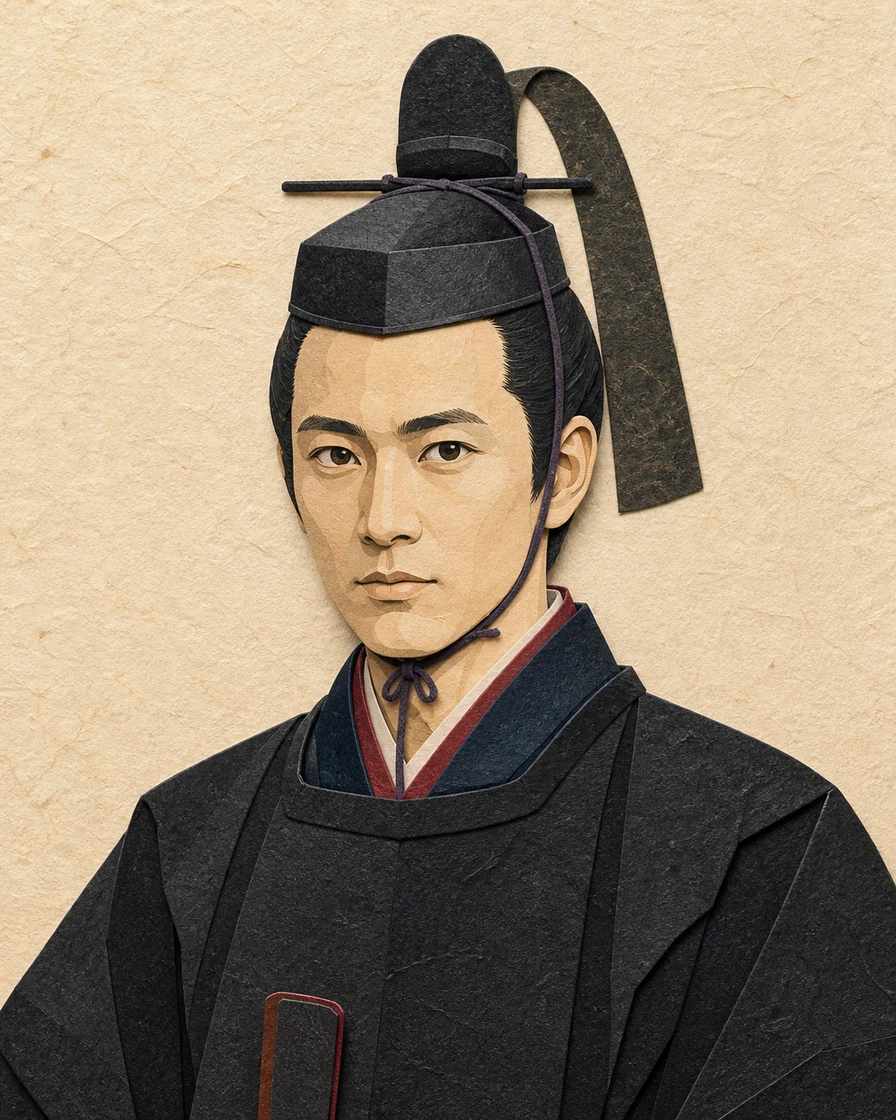
Matsudaira Katamori was born at the Takasu Matsudaira family's residence in Edo, today's Tokyo. His father ruled Takasu, a domain in present-day Gifu Prefecture connected to the Owari Tokugawa family. Japanese records give a birth date in Tenpō 6, usually labeled 1835; conversion of the day places it on 15 February 1836. He became an Aizu lord later through adoption into another ruling house. In 1846 Matsudaira Katataka, lord of Aizu in northeastern Japan, adopted Katamori as his heir. Katataka continued to govern until 1852, when Katamori succeeded as the domain's ninth lord. The intervening years placed him among retainers who taught him Aizu's traditions and obligations. As a teenage lord, he still depended on experienced councillors to carry out government. [1][6][10]
In 1862 the shogunate, Japan's warrior government, appointed Katamori Kyoto Military Commissioner to strengthen security in the imperial capital. Aizu's house tradition supported service to both shogun and emperor, but Katamori and his councillors feared the cost and danger of a distant deployment. Senior shogunal officials pressed him to accept. Roughly one thousand retainers accompanied him to Kyoto in Bunkyū 2's twelfth month, an old-calendar date. His headquarters at Konkai Kōmyōji, a temple in eastern Kyoto, supported policing and court protection. The appointment committed Aizu's resources to the shogunate's struggle for authority. [1][3][5][6][9]
A group of masterless warriors who remained in Kyoto formed the Mibu Rōshigumi and came under Aizu protection in 1863. Later named the Shinsengumi, it received support and authority to police the city while retaining its own commanders. Katamori held senior responsibility for the security system that enabled its actions. Individual raids and arrests were directed by the group's leaders rather than all personally ordered by him. [3]
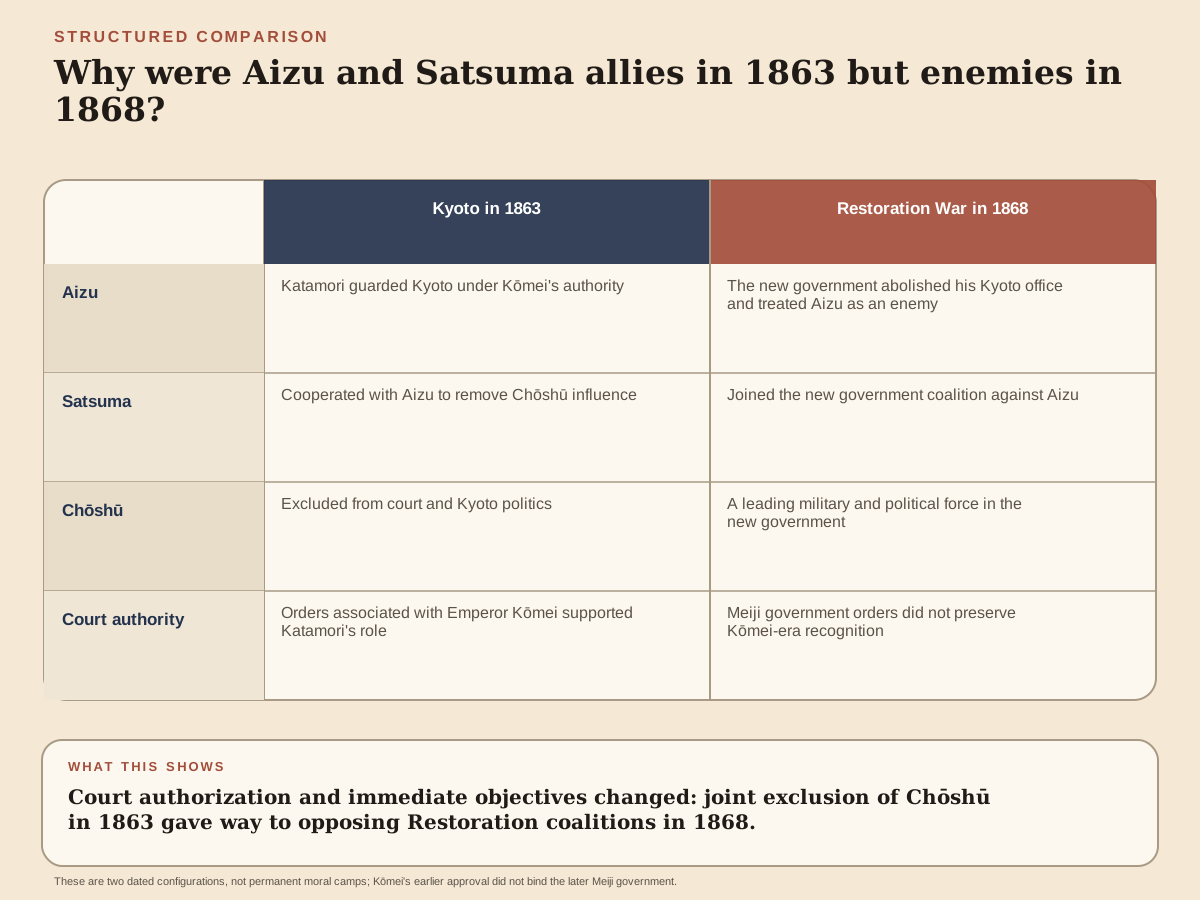
In the political action known as the coup of the eighth month, eighteenth day, Aizu cooperated with Satsuma, a southern Kyushu domain, and court allies to remove the influence of Chōshū, a western Honshū domain, and nobles campaigning to expel foreign powers from Kyoto's political center. The event occurred in 1863; its lunar date should not be mistaken for 18 August in the Gregorian calendar. Katamori's forces helped secure palace gates and implement new court orders. The Aizu–Satsuma partnership is crucial evidence that the enemies of 1868 were not permanent camps. Alliances followed changing interests, court access, and judgments about political control. [13]
In 1864 Shinsengumi members raided the Ikedaya inn in Kyoto, killing and wounding activists and making arrests. Kyoto City's historical-site account describes an assassination plot; a 2024 Ryozen Museum account centers the meeting on rescuing the arrested activist Furutaka Shuntarō. The wider familiar burn-and-abduct plot remains source-dependent. The raid enhanced Shinsengumi prestige and intensified hostility toward Aizu, which supported the policing force. Katamori held senior responsibility for that system, but its leaders commanded the raid. [12][13]
Later in 1864, Chōshū forces moved toward Kyoto seeking restored access and political reversal. Fighting around the imperial palace—often called the Kinmon Incident or Hamaguri Gate Rebellion—pitted them against defenders including Aizu and Satsuma. Chōshū was defeated, while combat and fire devastated parts of Kyoto. Katamori's forces defended the palace under the existing court–shogunate order, deepening imperial recognition at that moment and Chōshū hostility thereafter. Later designation of Aizu as an imperial enemy did not make its 1864 authorization fictional; legitimacy changed with institutions and victory. [1][5][6][13]
In 1864 Katamori briefly moved to a military-superintendent post. Shungaku, a former Fukui lord and senior shogunal official, took over the Kyoto commission, then resigned; Katamori returned within the year. His brother Matsudaira Sadaaki, lord of Kuwana, served as the shogun's Kyoto deputy. Emperor Kōmei's confidence strengthened Aizu's position, but Shogun Iemochi died in 1866 and Kōmei in early 1867 in the Western calendar (Keiō 2, usually labeled 1866). The young Meiji emperor succeeded as Satsuma and Chōshū joined against Tokugawa dominance. Earlier imperial trust no longer guaranteed Aizu's place in the governing coalition. [1][5]
Shogun Tokugawa Yoshinobu returned governing authority to the court in 1867. The restoration proclamation followed on 3 January 1868—the old calendar's Keiō 3, twelfth month, ninth day. It abolished the shogunate; the restoration settlement also ended Katamori's Kyoto commission. Aizu lost the office through which it had policed the capital. Chōshū's renewed influence brought earlier grievances into the new government, while former ally Satsuma now opposed Tokugawa dominance. Yoshinobu's forces and lands still mattered, so formal restoration did not settle the struggle over military power. [5][14]
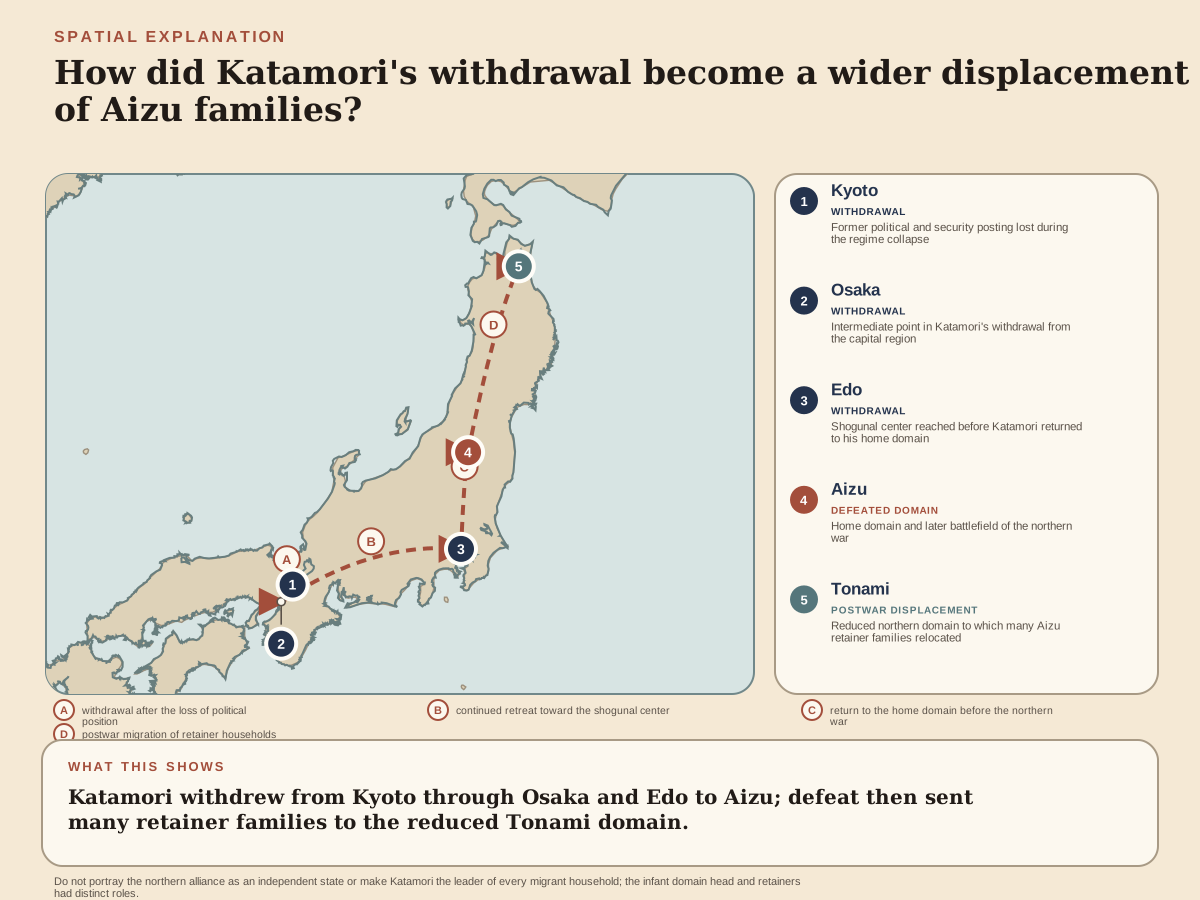
Aizu troops fought with the former shogunal forces at Toba–Fushimi in January 1868. The new government's side gained military and symbolic advantage, including court authorization that changed how wavering domains understood the conflict. Tokugawa Yoshinobu withdrew from Osaka to Edo by ship, accompanied by Katamori and other senior figures, leaving forces behind to manage defeat and dispersal. Katamori did not command the entire battle or control Yoshinobu's strategy. Returning east, he sought terms from a government that associated Aizu with years of Kyoto enforcement. [1][3][6]
In 1868 Katamori retired as Aizu lord in favor of his adopted heir Matsudaira Nobunori and sought submission. Sendai, Yonezawa and other northeastern domains attempted mediation for Aizu and Shōnai. The Ōuetsu Reppan Dōmei, a coalition spanning northeastern Japan and Echigo, developed from petitions into armed resistance as government forces advanced. Its members sought different settlements rather than beginning with one agreed plan for a separate northern country. Failed negotiations left Aizu preparing for a campaign against its own territory. [6]
Government forces besieged Tsuruga Castle in 1868, bringing bombardment, shortages and displacement to Aizu. Members of one Byakkotai, or White Tiger Corps, group killed themselves at Iimoriyama; Iinuma Sadakichi survived an attempt to take his life. Later testimony links their reasoning to smoke over the castle town or debate about further resistance. Accounts differ over how the conventional nineteen dead are grouped, including whether some died earlier in battle. Their deaths were one part of a siege whose losses also reached households and villages. [6][7][8][9]
After Aizu's surrender, Katamori and adopted heir Matsudaira Nobunori were confined. Senior retainer Kayano Gonbei was put to death as bearer of responsibility. Katamori's infant son Matsudaira Kataharu was permitted to continue the lineage in 1869 and became Tonami's governor in 1870. Former retainers organized resettlement in northern Honshū; the child did not lead it. The reduced grant and inadequate provisions left many families in hardship. Katamori's confinement ended in 1872, without restoring their former livelihoods. [6][7]
In 1880 Katamori became chief priest of Nikkō Tōshōgū, the shrine of Tokugawa shogunate founder Ieyasu, and headed a building-preservation association. His family returned to Aizu's Oyakuen garden in 1883. He died in Tokyo on 5 December 1893. Yamakawa Hiroshi's account of the Kyoto commission appeared in 1911; an Aizu association bulletin began in 1912 from Katamori's former Tokyo house. These activities transmitted a defeated domain's history without restoring its old government. [1][7][10]
Classic
Matsudaira Katamori was born on 15 February 1836 at the Takasu Matsudaira family's residence in Edo, today's Tokyo. His father, Matsudaira Yoshitatsu, ruled Takasu, a small domain in present-day Gifu Prefecture connected to the Owari Tokugawa house. Japanese records date his birth to the twenty-ninth day of the twelfth month of Tenpō 6, the era-year usually labeled 1835. The familiar 1835/1836 discrepancy comes from converting that day between calendars. [1][10]
Katamori was born into a family whose younger sons could be adopted by other ruling houses. Such transfers preserved a lineage when its lord needed an heir, while giving the adopted child an office he would not inherit in his birth family. Rank and kinship made these opportunities available to him; they offered no guarantee that he would become lord of Aizu.
Takasu belonged to the Owari Tokugawa family network. Aizu, in northeastern Japan, traced its ruling house to Hoshina Masayuki, a son of Tokugawa Hidetada, the second shogun—the head of the warrior government. Adoption would join Katamori to that second line. It would also place him among retainers whose knowledge of Aizu government long preceded his arrival. The celebrated Aizu lord began life in another household.
In 1846 Matsudaira Katataka, lord of Aizu, adopted Katamori as his heir. Katataka continued to govern until 1852, when Katamori succeeded as the domain's ninth lord. The six-year interval mattered: the boy entered a functioning government before receiving its highest office. He had to learn Aizu's house traditions and administrative obligations from the people who already managed them. [1][6]
Adoption in a daimyō house—a family headed by a territorial warrior lord—preserved more than a surname. Retainers' livelihoods and the domain's standing with the shogunate depended on an accepted succession. Katataka's designated son still needed to become a usable governor.
Senior retainers would carry out the new lord's orders, oversee revenue and maintain military organization. Their cooperation made his inherited authority workable. Adoption changed his principal obligation without erasing his connections to the Takasu family. He could belong to several kinship networks while holding office in one domain.
Katamori became lord while still in his teens. Councillors and established procedures limited what he could decide alone. The foreign-policy crisis soon widened his responsibilities: Commodore Perry's American squadron arrived in 1853 demanding access to Japan, bringing pressure on the shogunate and its domains to strengthen coastal defense. His new office tied him to national problems whose scale was becoming clearer only after his succession.
Aizu's house precepts, associated with its founder Hoshina Masayuki, enjoined service to the Tokugawa shogunal family. For Katamori and his retainers, that obligation explained the house's privileged position. Aizu also revered the emperor. During the early 1860s, leaders sought closer cooperation between the imperial court and the shogunate, Japan's warrior government. Service in Kyoto could be presented as protection of both. [6][9]
In 1862 the shogunate created the office of Kyoto Military Commissioner and appointed Katamori. Political assassinations and rival claims to imperial authority had made the capital difficult to police. The new commissioner stood above the existing Kyoto deputy and other regional officials, adding a substantial permanent military force to the shogunate's position there. [1][3][5]
Matsudaira Yoshinaga, also known as Shungaku, pressed Katamori to accept. A former lord of Fukui in central Japan, he now served as the shogunate's political superintendent. He and Tokugawa Yoshinobu, then guardian to Shogun Tokugawa Iemochi, promoted the appointment. This was pressure from senior officials able to shape shogunal policy, rather than advice from another relative alone.
Katamori repeatedly tried to decline. Aizu councillors feared the expense and danger of keeping troops so far from home. Coastal defense already consumed resources, and protecting the domain remained their responsibility. Invoking ancestral duty made refusal harder, but their objections show that the precepts did not simply end discussion. Katamori accepted an obligation whose military and financial costs were foreseeable, even though the defeat of 1868 was not. [6]
Roughly one thousand Aizu retainers accompanied him to Kyoto in the twelfth month of Bunkyū 2. That is an old Japanese calendar date, not an English December date. He established headquarters at Konkai Kōmyōji, a temple in eastern Kyoto, and worked through the city's existing officials as well as Aizu troops. Quarters, food and communication with the home domain demanded continuing expenditure. [3][6]
Two explanations recur in accounts of this decision. Aizu's loyalty tradition emphasizes ancestral duty; an explanation centered on political pressure gives more weight to demands from the shogunate. The house tradition helped make those demands persuasive. Acceptance supplied Katamori with authority in the capital while committing Aizu's resources to a conflict the domain could not settle by itself.
In 1863 the shogunate recruited a Rōshigumi, a corps of masterless warriors, to accompany Shogun Tokugawa Iemochi's visit to Kyoto. Most returned east after a dispute over their purpose. Those who remained formed the Mibu Rōshigumi, named for the Kyoto village where they lodged, and came under Aizu protection. The group later received the name Shinsengumi. [3]
Aizu patronage gave these men financial support and recognized authority to police the city. Their leaders, including Kondō Isami and Hijikata Toshizō, organized operations within that relationship. They retained a command structure distinct from Katamori's household.
That separation shaped responsibility for violence. Aizu enabled the force to operate, while its commanders selected targets and directed raids. Katamori held senior responsibility for a security system whose individual actions he did not all order. Informants and accusations helped guide policing in a city where genuine threats and partisan rumors circulated together. Those arrested could not expect a politically neutral authority to assess their case.
The Shinsengumi's successes enhanced Aizu's reputation for keeping order. They also tied the domain more closely to repression in the eyes of its opponents. The force's later fame, built around distinctive uniforms and swordsmen, often overshadowed the officials who supported it. For Katamori, its importance lay in the usable coercive power it added to his office and the political consequences that power brought.
In 1863 Aizu and Satsuma joined court allies to remove Chōshū's influence from the imperial political center. Chōshū, a domain in western Honshū, supported an aggressive campaign to expel foreign powers and had gained influence among activist nobles. Its opponents feared that this alliance was monopolizing access to the emperor. [13]
Katamori's forces helped secure palace gates while court allies implemented orders excluding Chōshū-associated troops and nobles. The operation is remembered as the coup of the eighteenth day of the eighth month. That is its old Japanese calendar date, not 18 August in the Western calendar.
The coup removed Chōshū influence from Kyoto without abolishing the domain's government. Exiled nobles and Chōshū leaders continued to seek a return to the political center. Their exclusion supplied a grievance around which further action could gather.
Satsuma, a domain in southern Kyūshū, was then Aizu's ally. By 1866 its leaders would cooperate with Chōshū, and in 1868 those two domains would provide the core of the forces fighting Aizu. The 1863 partnership answered an immediate problem in Kyoto; it did not bind its members to a permanent national alliance.
For Katamori, court orders and palace cooperation made service to emperor and shogun compatible in this operation. Aizu's armed presence enforced that arrangement. Those denied access regarded the same force as an obstacle to political change. The domain's success in guarding the gates strengthened its position while helping define the opposition that would later confront it.
In 1864 Shinsengumi members raided a meeting of anti-shogunal activists at the Ikedaya inn in Kyoto. Men were killed and wounded, and others arrested. The action made the organization famous as a defender of the capital. [12][13]
Historical disagreement · What was the Ikedaya meeting planning?
Descriptions of the meeting's purpose differ. Kyoto City's historical-site account describes an assassination plan against Katamori and a senior prince. A 2024 Ryozen Museum account instead centers the meeting on efforts to rescue Furutaka Shuntarō, an activist arrested earlier that day. The familiar story of a wider plan to burn the city and abduct its leaders goes further than either brief account.
These summaries emphasize different purposes; neither by itself establishes what every participant intended. [12][13]
Aizu's patronage helped make the raid possible, but its tactical decisions belonged to Shinsengumi leaders. The activists gathered at the inn had their own political purposes and different degrees of involvement; the alleged plot cannot establish identical intentions for every man present. Katamori gained credit through the office he held and incurred hostility for its force's actions, even though he was not the street commander.
The attack damaged activist networks and sharpened anger against Aizu. It became one grievance in the escalation that brought Chōshū troops toward Kyoto later that year. Chōshū's earlier exclusion and the wider struggle over court influence also remained active causes. The raid's fame compressed this continuing conflict into a memorable night; its political effects spread beyond the inn.
In 1864 Chōshū forces approached Kyoto seeking to reverse their exclusion from the court. Fighting around the imperial palace became known as the Kinmon Incident, or Hamaguri Gate Rebellion. Aizu and Satsuma troops were among the defenders. The men confronting Katamori's security system were trying to regain political access through an armed advance. [1][5][6][13]
Palace gates concentrated the struggle. Chōshū's commanders needed entry or leverage strong enough to force reconsideration; the defenders sought to keep them outside. The imperial compound was both a guarded site and the place from which orders acquired authority. Katamori bore senior responsibility for Aizu's defense, while battlefield decisions were made by several unit commanders.
Chōshū was defeated. Its exclusion now carried the consequences of military confrontation with the palace guards, strengthening pressure for punitive campaigns against the domain. Katamori could receive recognition for defending the existing court–shogunate arrangement while becoming more deeply associated with Chōshū's punishment.
Fire carried the fighting into the lives of Kyoto residents. Wooden homes and businesses burned, and households lost stores and workplaces along with shelter. Precisely assigning each fire to one army would require evidence beyond a general account of the battle. The destruction nevertheless formed part of the event's consequences, not merely its scenery.
Satsuma still fought beside Aizu in this crisis. Their later opposition belonged to a different alignment. In 1864, guarding the palace supported Katamori's recognized office; when the court's governing coalition changed, that record would no longer protect Aizu from being classified as an enemy.
In 1864 the shogunate briefly transferred Katamori from Kyoto Military Commissioner to a new military-superintendent post for operations against Chōshū. Shungaku took over the Kyoto commission. The Fukui prefectural history describes resistance from shogunal officials to Shungaku's policies and his subsequent resignation. Katamori returned to the Kyoto office within the same year; this was reappointment, not one unbroken tenure.
His younger brother Matsudaira Sadaaki, lord of Kuwana in present-day Mie Prefecture, became Kyoto Shoshidai—the shogun's senior deputy in the capital. Aizu's commission and Kuwana's deputyship brought two related domain forces into the city's government. Their coordination gave Katamori support through an actual arrangement of offices, as well as through kinship.
Emperor Kōmei's recognition gave Katamori an answer to opponents who portrayed Tokugawa policing as anti-imperial. Court favor reassured Aizu retainers that their service protected the emperor as well as the shogun. Yet nobles at court differed over foreign policy and punishment of Chōshū. Imperial confidence strengthened Katamori within that political world without removing its divisions. [1][5]
Tokugawa Iemochi died in 1866 during the crisis surrounding the Chōshū campaign. He was the shogun whose Kyoto visit Aizu had helped protect. His successor, Tokugawa Yoshinobu, brought a different strategy to the effort to preserve Tokugawa power.
Kōmei died in early 1867 in the Western calendar, though Japanese-era accounts place his death in Keiō 2, usually labeled 1866. His young son succeeded as Emperor Meiji. Court personnel and powerful domains shaped the new reign's decisions; Katamori could not assume that his earlier relationship would determine them.
Satsuma's cooperation with Chōshū transformed the alliance map. Leaders who had fought beside Aizu in 1863 and 1864 now sought to reduce Tokugawa dominance with their former enemy. Katamori lost two senior patrons while a stronger opposing coalition was taking shape.
These changes weakened more than a personal friendship with the emperor. Aizu's security role rested on appointments, court access and alliances that could be revised. Kōmei's past confidence remained important to the domain's defense of its record, but the new reign's governing coalition was not bound to preserve Katamori's office.
In 1867 Tokugawa Yoshinobu, the shogun, returned governing authority to the imperial court. The act left open how much power the Tokugawa house would retain. Its armies and lands still mattered, and court leaders disagreed over Yoshinobu's place in a new government.
The restoration proclamation of the ninth day of the twelfth month of Keiō 3—3 January 1868 in the Gregorian calendar—abolished the shogunate and established new central offices. The Kyoto Military Commission was abolished in this restoration settlement. Katamori consequently lost the appointment through which Aizu had exercised authority in the capital. [5][14]
Orders and honors from Kōmei's reign could establish what Aizu had been authorized to do earlier. They could not override the new court's decisions. Katamori still had armed followers and a domain, but his former position at the palace gates no longer constituted a recognized commission.
Chōshū's restored influence made accommodation harder. Aizu had helped exclude its activists and defeat its armed advance. Satsuma, formerly an ally of Aizu, now worked with Chōshū to reduce Tokugawa dominance. The new political partnership carried grievances against Katamori as well as plans for central government.
Yoshinobu's next decisions constrained Aizu's options. Years of Kyoto duty had tied the domain's forces and reputation to shogunal policy. Councillors could seek terms and households could hope for continued support, but Aizu could not withdraw from that history by surrendering a title alone. Military command remained unsettled while the new court government asserted its authority.
At Toba–Fushimi in January 1868, Aizu troops fought with the former shogunal forces against a coalition centered on Satsuma and Chōshū. Both sides drew on domain armies and competing claims to court authority. Aizu's years of Kyoto service placed its forces near the crisis and identified the domain with defense of Tokugawa power. [1][6]
Artillery and firearms mattered, alongside command and the willingness of other domains to remain in the fight. Court authorization of the new government's forces made continued support for Yoshinobu appear to be opposition to the emperor. That change in recognized authority affected allies watching the battle.
As the old shogunal side lost ground, Yoshinobu withdrew from Osaka to Edo by ship. Katamori accompanied him. Units left behind lost the political leadership around which they had assembled and had to manage defeat and dispersal. The withdrawal broke command at a critical moment. Katamori participated in the departure without controlling the former shogun's strategy. [3]
In Edo, Yoshinobu sought submission and protection for the Tokugawa house. Aizu had a harder path out of the conflict because the new government's supporters associated it with years of Kyoto enforcement. Returning to the northeast brought the consequences home. The domain that had supplied troops for national service now had to prepare its own towns and villages for war.
After returning east in 1868, Katamori retired as Aizu lord in favor of his adopted heir, Matsudaira Nobunori. Retirement and confinement were offered as signs of submission. The new government still sought accountability for Aizu's part in Kyoto policing and the war. The dispute concerned whether those measures were sufficient to protect the house and end military action.
Sendai and Yonezawa, neighboring northeastern domains, attempted mediation for Aizu and Shōnai, another domain threatened with punishment. A punitive campaign could place the mediators between advancing government troops and their regional neighbors. Efforts to obtain a settlement preceded their open military resistance.
The Ōuetsu Reppan Dōmei, a coalition of domains across northeastern Japan and Echigo on the Sea of Japan coast, developed from consultation and petitions into an armed alliance. Its members sought differing outcomes. Some concentrated on protecting Aizu; others sought to preserve their own authority or improve the terms on which they would enter the new order. [6]
Proposals for a northern political order arose during this crisis. They did not give every participating lord one agreed plan at the outset. The coalition's ability to act depended on cooperation among domain governments whose willingness to keep fighting could change. Katamori was central because demands for punishment focused heavily on Aizu, but retainers and allied negotiators carried many of the petitions.
Resistance required supplies and coordinated forces as well as agreement among lords. Villages provided transport and food, sometimes under military pressure. Aizu's preparations remained distinct within the coalition, and purchasing modern weapons did not ensure that every allied unit could use them effectively.
Negotiations took place as government forces advanced. Commanders viewed delay as a military danger, while Aizu's petitioners sought terms that could protect lives and preserve the house. Failed mediation narrowed the available choices. The alliance's move toward war grew from that bargaining process, rather than from an unchanged plan for northern independence.
Government forces advanced into Aizu and besieged Tsuruga Castle in 1868. Fighting spread through the approaches and castle town, while bombardment and shortages endangered those inside. Katamori stood at the head of the defensive system, but unit leaders and councillors acted on information that reached them unevenly. [6][7]
Outside the walls, villages faced requisitions and displaced residents sought safety. Inside, defenders needed medical care and food as well as ammunition. The campaign's human cost extended well beyond the lord and the soldiers whose names later dominated its memorials.
Historical disagreement · Why did the Byakkotai youths take their lives?
The Byakkotai, or White Tiger Corps, included young Aizu soldiers. Members of one group retreated to Iimoriyama and killed themselves; Iinuma Sadakichi survived an attempt to take his life. A familiar retrospective account says smoke over the castle town led them to believe the castle had fallen. Other transmitted explanations emphasize debate over returning to the castle or attacking the enemy.
The castle was still resisting, and these descriptions of the group's reasoning come through later testimony.
Historical disagreement · How was the Byakkotai memorial total counted?
The conventional memorial total of nineteen does not settle the sequence. Kobe Central Library's comparison quotes Nakamura Akihiko's 2016 White Tiger Corps account as placing sixteen attempts first and four later, with one survivor. Hoshi Ryōichi's 2005 history instead treats three of the commemorated youths as earlier battlefield deaths.
This disagreement concerns which deaths belong to the memorial total. It does not make one group's deaths the fate of the entire corps. [8][9]
Women took part in defense and nursing, supplied households, fled danger and survived to preserve families. Farmers and townspeople bore demands from armed forces and losses from fire and disrupted work. These experiences continued after the castle surrendered. The siege remembered through loyalty and sacrifice also left a damaged town and households whose means of support were about to disappear.
Aizu surrendered in 1868. Katamori and his adopted heir Matsudaira Nobunori were confined, while the domain lost its political and military authority. Sparing Katamori's life did not preserve the government through which he had ruled. Retainers lost offices and stipends, and decisions over their future passed to the new authorities. [7]
Kayano Gonbei, a senior Aizu retainer, was selected to bear responsibility and put to death. Katamori survived in confinement. The allocation of punishment to a particular officer was one part of the settlement; its social consequences extended to dependents who had neither accepted the Kyoto commission nor directed the war.
In 1869 Katamori's infant son Matsudaira Kataharu was permitted to continue the family. In 1870 he was appointed governor of the new Tonami domain in northern Honshū. Restoration of the lineage and appointment to a reduced grant were separate steps. The infant did not organize resettlement: former retainers, including Yamakawa Hiroshi, led families north. [7]
Many moved from Aizu to the territory in present-day Aomori Prefecture. Its smaller grant and unfamiliar conditions could not reproduce the livelihoods and support they had lost. Inadequate provisions and housing placed particular strain on children and other dependents. Existing inhabitants also lived in the region into which the former Aizu households arrived. [6]
Katamori spent a short period in Tonami in 1871 before moving to Tokyo. His confinement ended in 1872. Release changed his own position under the new government, while former retainers continued rebuilding lives disrupted by defeat. A surviving lord and a restored family name did not amount to restoration of Aizu society.
In 1880 Katamori became chief priest of Nikkō Tōshōgū, the shrine dedicated to Tokugawa Ieyasu, founder of the Tokugawa shogunate. The former lord now held recognized religious work under the state that had defeated Aizu. He also headed the Hokōkai, a preservation association established to protect Nikkō's shrine and temple buildings after the loss of shogunal support. [1][7]
In 1883 his family returned to Aizu and lived for several years at Oyakuen, the former domain garden. The site had survived the siege partly because it was used to treat government soldiers. Returning to a former domain property allowed a family home, not the recovery of the offices and revenues through which he had once governed.
Katamori died in Tokyo on 5 December 1893. The Bunkyo History Museum identifies the next day's Yomiuri newspaper report of his death and the planned departure of his funeral procession from his residence. The report places his final illness and funeral in the Tokyo household through which his family maintained its affairs. [1][10]
Aizu remembrance preserved Kōmei's confidence and earlier cooperation with Satsuma against the victor's label of imperial enemy. A loyal-lord interpretation recovered service and suffering that a restoration victory narrative could neglect. Treating every former Aizu person as equally committed to Katamori's policies would, however, obscure the different choices available to retainers and dependents.
Yamakawa Hiroshi's Kyoto Shugoshoku Shimatsu, an account of the Kyoto commission, appeared in 1911. The Aizu association's bulletin began publication in 1912, with its office in Katamori's former Tokyo house. These were concrete means through which former Aizu people organized and transmitted their history. A former lord's residence thus became a meeting point for people whose ties to Aizu continued under the Meiji state.