Read the article below. Interactive reading tools are available when scripts load.
Quick
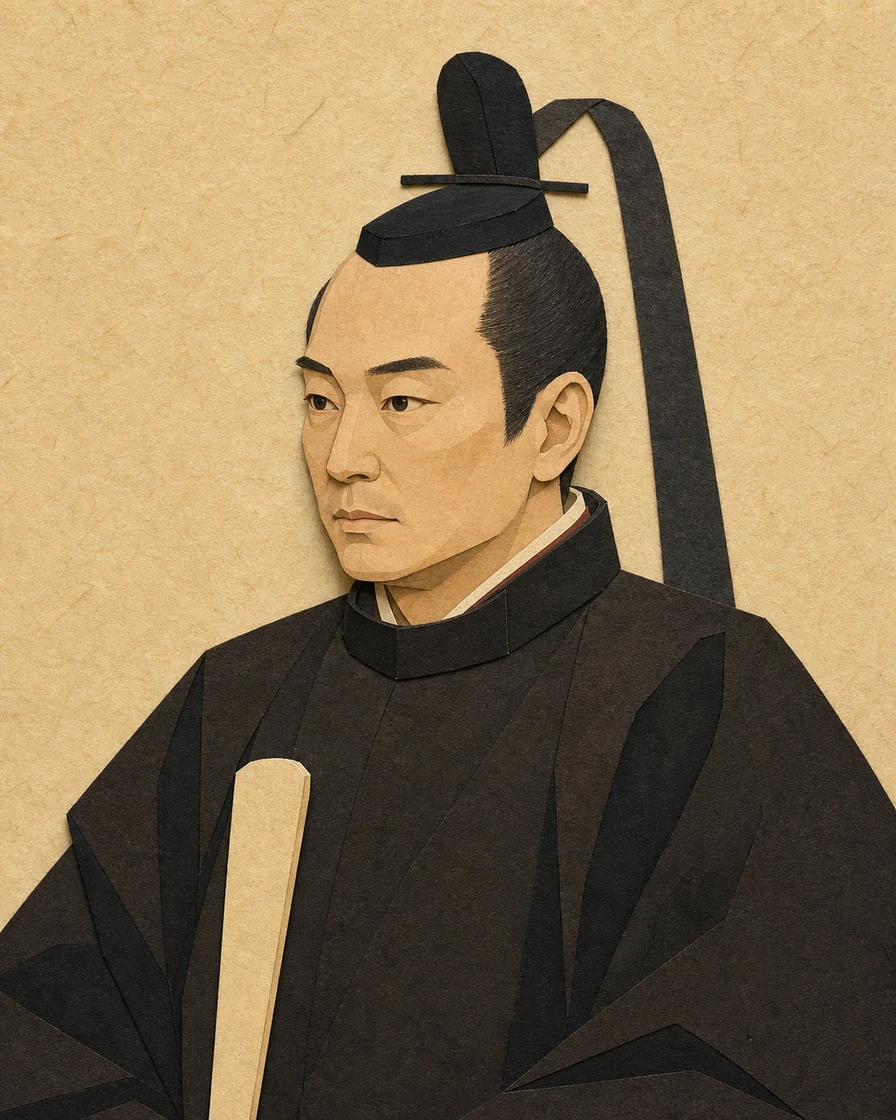
Tokugawa Yoshimune was born in 1684 at Wakayama, the fourth son of Kii lord Mitsusada. Kii belonged to the Gosanke, the three senior Tokugawa branches of Owari, Kii and Mito. Their descent made them possible sources of heirs to the shogunate, the warrior government headed by a shogun. Senior brothers stood ahead of Yoshimune, however; he was not born an expected successor to the main house. [1][4][20]
After coming of age as Yorikata, he received a smaller lordship in Echizen, present-day Fukui Prefecture, in 1697. This gave him an adult position before inheriting Kii. His route upward depended on later deaths and family decisions, not an automatic entitlement attached to his birth.
In 1705 Yoshimune's brother Tsunanori died, followed that year by their retired father Mitsusada and the next lord, their brother Yorimoto. With no heir to continue Yorimoto's line, Yoshimune became Kii's fifth lord. He inherited debt and the cost of maintaining its households. The Hōei earthquake and tsunami of 1707 added coastal damage; regional chronology records temporary conversion of an inlet into salt pans.
He married Princess Masako of the Fushimi imperial house in 1706 and established a domain lecture hall in 1713. Kii also gave him experience of water-management officers whom he could later bring to Edo. This was useful preparation, but the shogunate's own lands and dealings with other domains were a larger responsibility, not simply Kii policy repeated.
The seventh shogun, Tokugawa Ietsugu, died in 1716 while still a child. With no surviving son to continue the recent main line, the Tokugawa selected Yoshimune from the Kii branch as eighth shogun. His descent, adult lordship and political support made him a viable successor. The outcome demonstrated the collateral houses' role in sustaining the dynasty.
Yoshimune inherited an established shogunal bureaucracy. He removed or sidelined important figures associated with the previous administration, including Manabe Akifusa and Arai Hakuseki, and brought trusted Kii men into service; he did not replace the whole government. Before formal appointment in the eighth month of 1716 in the traditional calendar, he requested the Momijiyama library catalogue in the sixth month. The new shogun approached rule through personnel and archives, while officials accustomed to another lineage had to decide how to serve him.
The Kyōhō reforms developed across Yoshimune's shogunate rather than beginning as one complete plan. Early economy measures were followed by new ways of raising revenue and administering Edo. Ōoka Tadasuke, the city's south town magistrate from 1717, helped put urban measures into effect. The petition box and imported books enlarged the information available to government.
Thrift was a priority and an image, not a complete description of resource use. Policies changed when conditions changed. The 1732–33 Kyōhō famine exposed the limits of agricultural and fiscal management. Attempts to raise revenue could worsen burdens; measures to support rice prices could conflict with consumers' need for affordable food. Yoshimune supplied direction, but thousands of officials and subjects produced its outcomes.
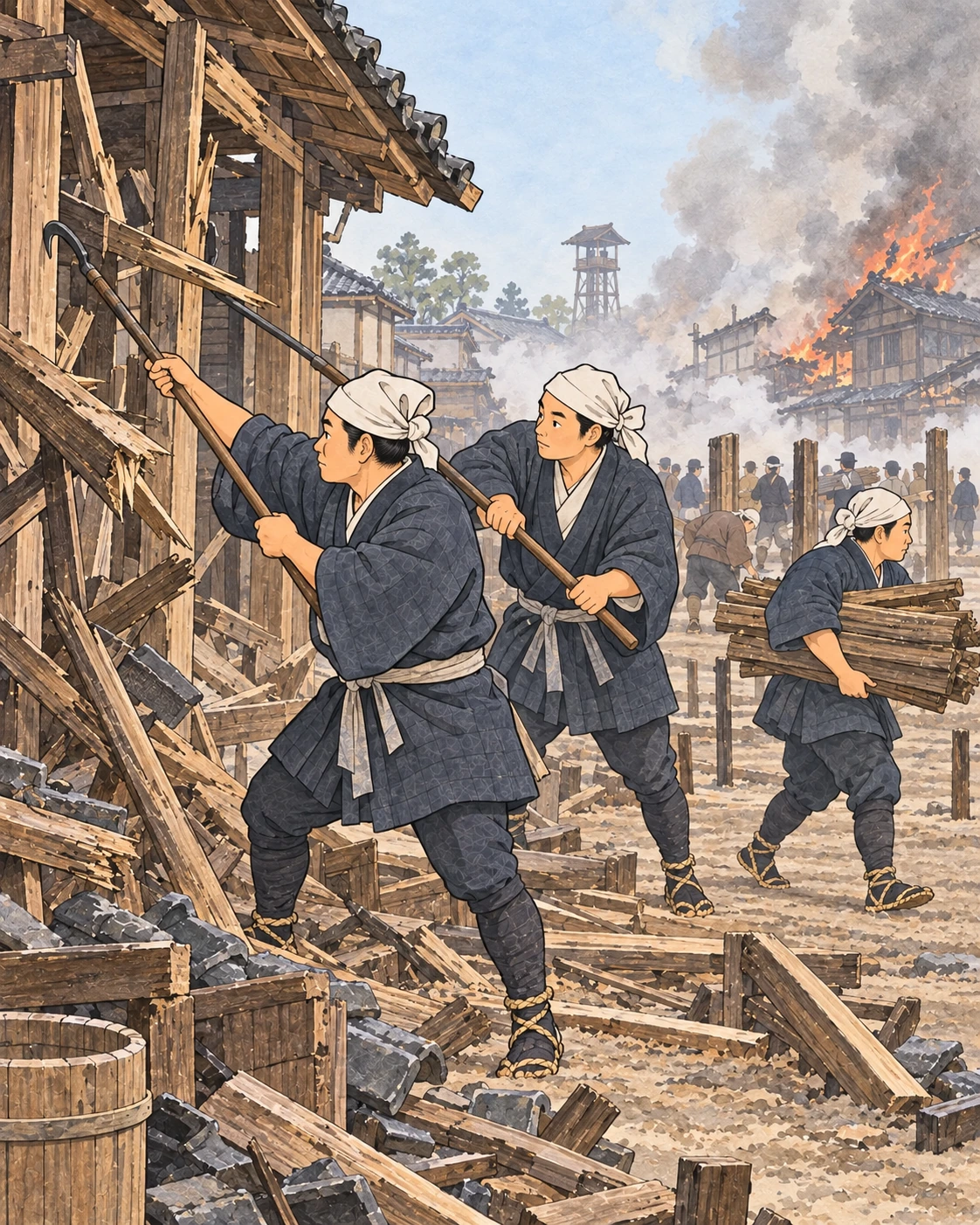
Fire was a routine threat in dense wooden Edo. Earlier shogunates had daimyo, or territorial-lord, brigades and standing warrior brigades, but the scale of the city required residents and tradespeople to become part of organized response. In 1718 Yoshimune ordered the establishment of town fire brigades. Under town magistrate Ōoka Tadasuke, the system was reorganized into district groups identified by iroha, a traditional sequence of Japanese syllabic characters, in 1720. The brigades relied heavily on townsmen, especially workers skilled at climbing and dismantling buildings.
Firefighters often pulled down buildings to stop flames spreading. Residents' knowledge of roofs and streets made this possible, while Ōoka's office coordinated local responsibilities. The method could save a block at the cost of the demolished owner's property, and poor tenants had fewer resources to rebuild.
In 1720 Yoshimune allowed books written by Christian missionaries to be imported if their contents were judged unrelated to Christian teaching. Many were in Chinese, including translations of European learning. Nagasaki officials still examined incoming works, and religious prohibitions remained. The Momijiyama library and specialists helped make selected books usable. Permission enlarged access to knowledge inside controlled trade, without authorizing missionaries or opening all exchange.
In 1721 Yoshimune established the meyasubako, a box for written petitions and proposals. Officials examined submissions and investigated selected cases; petitioners needed literacy or a scribe's help. Physician Ogawa Shōsen's proposal led to the Koishikawa medical facility. A 1722 petition associated with masterless warrior Yamashita Kōnai instead criticized austerity for impoverishing people. The channel could carry criticism, but did not guarantee action on every request.
In 1722 the Koishikawa Yōjōsho opened within the shogunate's medicinal garden. The town physician Ogawa Shōsen had used the suggestion box to propose care for poor people unable to obtain treatment. The facility initially held about forty patients and later expanded substantially, according to Tokyo archival interpretation. At first, many potential patients stayed away, reportedly fearing they might be used to test medicines. The government invited town headmen to inspect the institution and relaxed admission conditions; demand then exceeded capacity.
The Yōjōsho offered treatment and medicine within an early modern framework, not a universal modern health service. Eligibility, beds, staffing, trust, and medical knowledge limited it. The medicinal garden itself had earlier phases and was expanded in 1721. The present Koishikawa Botanical Garden preserves the site history but is not an intact 1722 hospital. The experiment matters because government accepted a continuing responsibility for some poor patients and adapted after learning that an institution without public trust could remain empty.
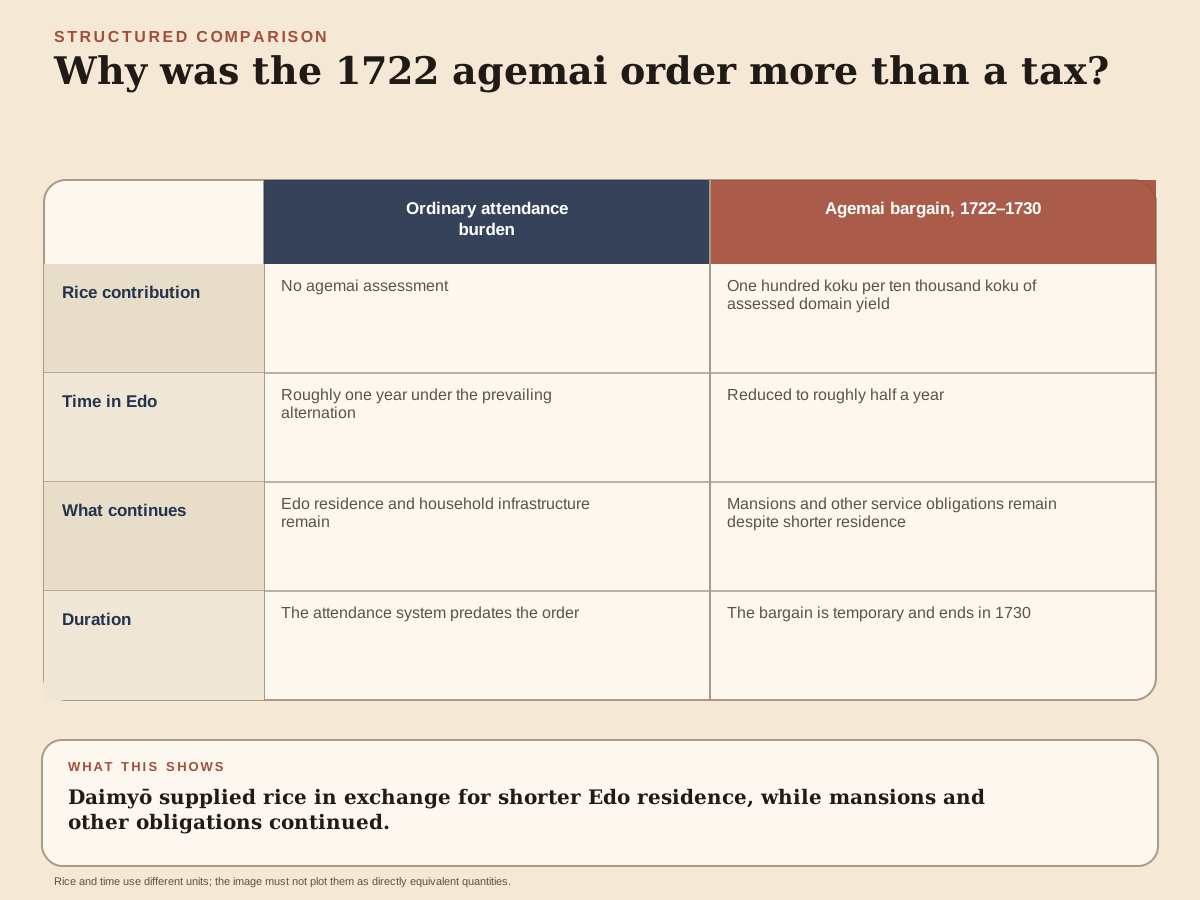
In 1722 Yoshimune required daimyo to provide agemai: one hundred koku (a unit used to assess rice yield and domain income) of rice for each ten thousand koku of assessed domain yield. In exchange, the period a lord was required to reside in Edo under alternating attendance was reduced from about a year to about half a year. The policy sought emergency income for a shogunate struggling to support its direct retainers. This was not simply a new tax added to unchanged obligations. The shogunate traded one burden for another, acknowledging that attendance and Edo residence consumed domain resources.
Domains bore different costs according to their harvests, debts and distance from Edo. The arrangement operated until 1730 in the Yamaguchi Prefectural Archives' account, after which the earlier attendance pattern returned. It did not abolish sankin-kōtai, the lords' alternating attendance between Edo and their domains. This was an unequal bargain within the bakuhan, or shogunate-and-domain, order: Yoshimune commanded the levy while conceding part of the lords' cost of service.
Yoshimune's government depended on rice assessments while Edo and Osaka operated through money, credit, wages, rents, and commodity prices. Samurai received income defined in rice but sold or pledged it to meet cash expenses. When rice prices fell, stipend value weakened; when prices rose sharply, urban consumers and the poor struggled to eat. This contradiction made Yoshimune a later “Rice Shogun.” He pursued production, revenue, price support, and market regulation, but no single price benefited everyone.
In 1730 the shogunate recognized Dōjima's existing rice trade as a public market, with arrangements for settlement and trading future claims. The famine of 1732–33 then exposed a different difficulty: market intentions could not replace missing food. In 1736 the Genbun recoinage lowered the precious-metal content of coins to enlarge the currency supply. The Bank of Japan's Currency Museum interprets it as a response to weak rice prices after earlier monetary contraction, not simply another demand for grain.
In 1722 Yoshimune's government encouraged new-field development. Reclamation and irrigation could expand taxable land and food supply, but they required a dependable water supply and money and labor for construction. Technical officials with Kii experience, especially Izawa Yasobē, helped carry water-management methods into projects in the Kantō, the region around Edo. Improvement was not automatically enrichment. Draining wetlands could remove fishing, reeds, grazing, or flood storage; a new canal could favor one village and reduce another's supply. Construction costs and later tax assessment shaped who benefited.
Local knowledge and conflict mattered as much as shogunal intention. The government also investigated medicinal plants and regional products, seeking imports it might replace and commodities it might cultivate. The 1732–33 Kyōhō famine demonstrated that expanding fields did not eliminate vulnerability to weather, insects, transport failure, or unequal access. Afterward, the scholar Aoki Konyō promoted sweet potatoes as famine food, and Yoshimune authorized trials at Koishikawa and at Makuhari, east of Edo, in 1735. Sweet potatoes already had a history through Ryukyu and Satsuma; neither man introduced the crop to Japan from nothing. Policy linked knowledge and relief while arriving after people had already suffered.
Yoshimune commissioned specialists to make information usable. In 1736 Aoki Konyō copied and edited about 470 documents from Suruga, preserving details of their seals and condition. Around 1740 Yoshimune had Aoki and Noro Genjō study Dutch. Noro then questioned visiting Dutch physicians through interpreters about European botanical knowledge. Research depended on specific exchanges, not merely on collecting foreign books.
Imported Western horses and instruction from the German-born riding specialist Keijser connected overseas exchange with practical training. Books, animals and observations needed people who could interpret and care for them. Yoshimune's patronage gave that work resources inside a controlled system.
Ōoka Tadasuke became Edo's south town magistrate in 1717 and helped implement the fire brigades, Koishikawa medical facility and other reforms. His later title-based fame as Ōoka Echizen produced stories of an ideal judge, not all of them verified cases. The actual magistrate depended on subordinates and town officials to investigate complaints and administer a large city.
In 1742 the Kujikata Osadamegaki gathered criminal rules and procedure under Yoshimune's authority. This confidential reference helped officials consult a more consistent body of precedent. Status still shaped punishment, and torture and coercive interrogation remained. Legal compilation strengthened administrative memory without establishing equal rights for the people judged.
Yoshimune's own rise from the Gosanke demonstrated the value of collateral succession. He later established positions for his younger sons: Tayasu Munetake received a residence inside Tayasu Gate in 1731, and Hitotsubashi Munetada established another line in 1740. Together with the later Shimizu house founded under Ieshige, these became the Gosankyō, family branches closer to the shogunal household than ordinary daimyo. In 1745 Yoshimune transferred the shogunal office to his eldest son, Ieshige, and became Ōgosho, the senior retired shogun.
Yoshimune retained influence until his death, but Ieshige held the office and selected officials. Later accounts report speech difficulties and question his capacity; a 2024 profile by Mayama Tomoyuki emphasizes his personnel choices instead. The report is a particular interpretation, not a settled diagnosis or proof that the retired father ceased to matter. Both men governed through attendants and councillors.
Yoshimune died in 1751 and was buried at Kan'eiji, a Tokugawa memorial temple in Edo. Baba Bunkō's eighteenth-century Meikun Kyōhōroku praised him through anecdotes that circulated in manuscript and influenced later official memory. His commissioned research had a different afterlife: in 1912 botanist Shirai Mitsutarō had Noro's botanical explanations copied. Neither flattering stories nor preserved scholarship erase the famine and burdens of reform.
Classic
Tokugawa Yoshimune was born in 1684 at Fukiage in the castle town of Wakayama, the fourth son of the daimyo, or territorial warrior lord, Tokugawa Mitsusada of Kii. His mother later took the name Jōen'in. The Kii house descended from Ieyasu and governed the region around present-day Wakayama Prefecture. With Owari and Mito it formed the Gosanke, the three senior collateral Tokugawa houses available to supply an heir when the main line of the shogunate, the warrior government headed by a shogun, failed. Senior sons stood ahead of Yoshimune; his descent created a possibility, not an expected route to the shogunate. [1][4][20]
His early names included Genroku and Shinnosuke. At his coming-of-age ceremony he became Yorikata, and in 1697 shogun Tsunayoshi granted him a smaller lordship in Echizen, present-day Fukui Prefecture. He acquired an adult position before inheriting Kii. Wakayama's councillors and officers meanwhile governed a substantial domain, managing land revenue and the obligations of its warrior households. A younger son belonged to that hierarchy without controlling its decisions.
Yorikata held land and had retainers before the much larger Kii inheritance came within reach. The Gosanke's rank made their members possible successors to the main house, but neither seniority nor descent settled every vacancy. Adoption and support among the ruling households still mattered. A collateral lord might preserve the dynasty while bringing different advisers into its government.
Yoshimune's early position was privileged, although senior brothers stood ahead of him. It should not be confused with the childhood of a ruler already being trained for Edo. His later preference for practical investigation tells us more about his adult government than about what he intended as a boy.
His estate had not made him heir to Kii. The deaths of 1705 would change that position and give the younger son responsibility for a much larger domain.
In 1705 Yoshimune's elder brother Tsunanori, the lord of Kii, died. Their father Mitsusada, who had retired, also died that year, and the next lord, Yoshimune's brother Yorimoto, survived only a short tenure. With no heir to continue Yorimoto's line, the fourth son inherited Kii as its fifth lord and took the name Yoshimune. The deaths changed his prospects without relieving the domain's debts. Stipends and the expenses of maintaining residences had to be met from revenue assessed largely in rice. In 1707 the Hōei earthquake and tsunami brought further loss along the coast. [1][4]
Coastal salt production was damaged, land changed, and households required response. A Wakayama cultural-property chronology records an order to turn an inlet near the city temporarily into salt pans after the destruction. That measure shows adaptation rather than a timeless thrift principle. Salt was essential to consumption and revenue; emergency production involved labor, water control, land use, and the distribution of loss. Whether every affected household benefited equally cannot be inferred from the order. Irrigation and reclamation knowledge also belonged to teams. Figures such as Izawa Yasobē and other Kii engineers later became important in works in the Kantō, the region around Edo. Yoshimune's contribution included selecting and moving expertise, not personally designing every channel. The domain lecture hall established in 1713 indicates an interest in learning as government. [4][26]
In 1706 he married Princess Masako of the Fushimi imperial house. The marriage joined a senior Tokugawa branch to the court's family network; his later succession policy would likewise operate through households, not just offices. The lecture hall of 1713 served the education of officials within a hereditary order. Thrift, too, served both accounts and authority. Cutting display could save money and set an example, but revenue collection and disaster recovery still placed demands on retainers and cultivators.
Kii also gave him officers whose abilities he knew. Izawa's water-management experience would become useful when the government commissioned larger works in the Kantō, the region around Edo. Bringing trusted men into the main Tokugawa government could provide expertise, but their advancement also changed the prospects of families already serving there. The larger government would have to deal with other domains as well as its own lands. [26]
In 1716 a vacancy in the main Tokugawa line would take him from this domain to Edo. He brought experience and trusted officers, but entered a government with a history and service families of its own.
The seventh shogun, Ietsugu, died in 1716 while still a child. With no son to continue his line, the succession reached beyond the recent main house. Yoshimune's descent from Ieyasu made the Kii lord a strong candidate, but Owari also had dynastic standing. His selection was a household and political decision, not a competition decided solely by his management of Kii. Adoption into the main house changed the office he could inherit. [20]
Yoshimune inherited the bakufu, or warrior government, rather than transferring Kii rule into Edo Castle. Imperial appointment conferred the shogunal title, while councillors and household officers sustained its daily operation. He changed the leading advisers: Manabe Akifusa, prominent under Ienobu and Ietsugu, lost his position, and Arai Hakuseki's advisory role ended. Existing officials nevertheless supplied procedures and experience on which the newcomer depended.
Kii officers offered Yoshimune men he trusted, but their arrival altered the prospects of established Edo service families. The castle's earlier households also remained; changing the male head did not remove all of their relationships. Books gave him another point of entry. On the third day of the sixth month of 1716 in the traditional calendar, before appointment in the eighth month, he requested the Momijiyama library catalogue. It told him what resources belonged to the office he was taking over. [2]
The catalogue gave Yoshimune access to knowledge inherited with the office: books and records that could be brought to him or assigned to specialists. His move from Kii also reshaped future dynastic planning. Positions later established for his younger sons, Tayasu Munetake and Hitotsubashi Munetada, extended the pool of possible heirs. In 1716, however, the immediate task was to govern through an Edo household and bureaucracy that had served another branch of the family.
Yoshimune began his shogunate by stressing economy. Samurai incomes were assessed in rice, but households needed money for daily expenditure. Cutting display could lower some costs; it could not prevent a falling rice price from reducing what a stipend would buy. Measures to increase revenue therefore accompanied restraint. Their burden reached beyond Edo Castle to the lords and villages supplying that revenue.
Ōoka Tadasuke, appointed Edo's south town magistrate in 1717, supplied an important link between Yoshimune and the city. His office helped organize town firefighting and the medical facility at Koishikawa. These were responses to particular urban needs. Meanwhile, the 1720 relaxation of book restrictions enlarged the materials available to scholars, and the petition box of 1721 offered another route for proposals and criticism to reach government. [2][9][13][14]
The rice levy of 1722 exchanged a contribution from daimyo for shorter required residence in Edo. Recognition of the Dōjima market followed in 1730. The Kyōhō famine, beginning in 1732 and followed by hunger and unrest in 1733, confronted this revenue policy with a shortage of food. The scholar Aoki Konyō's sweet-potato trials in 1735 and the currency change of 1736 belong to a later phase, after years of reform had failed to remove vulnerability.
The criminal reference completed in 1742 came later still. The name “Kyōhō reforms,” taken from an era name, gathers measures developed across nearly three decades, not one finished plan. Officials put them into effect under different local conditions. New arrangements could endure, be revised or end: the additional rice levy was temporary, whereas the medical facility became a continuing institution.
Yoshimune increased the government's range of responses, but those responses could conflict. A policy that improved stipend income might make food dearer for townspeople; new revenue could support officials while increasing village burdens. The following measures show those competing purposes in practice.
Edo's growth concentrated wooden buildings and open flames. Daimyo residences and the households serving the castle stood beside crowded town districts. Earlier governments had organized warrior brigades, which continued to protect their assigned areas. Yoshimune's 1718 directive enlarged organized town response under magistrate Ōoka Tadasuke. The familiar iroha groups, named from a traditional Japanese sequence of syllabic characters, were arranged in 1720. These dates describe stages of organization, not the sudden creation of all Edo firefighting. [12]
The companies gave residents a local organization and a recognized identity. Forty-eight is the familiar iroha count, although accounts count forty-seven named groups west of the Sumida; Honjo and Fukagawa had further groups. These labels refer to town districts, not all forces protecting Edo. Tobi, construction workers skilled at climbing and dismantling buildings, were especially important. They used hooks and other tools to pull down structures before the flames reached adjoining homes. [12][19]
Officials also regulated buildings and watched for fires. Demolition offered a practical way to interrupt the spread of flame, but it made protection costly for the owner whose structure was pulled down. Poor tenants had fewer reserves with which to save their possessions or rebuild. The common description of a city's recovery obscures households that lost their home and income together.
The brigades had separate responsibilities and chains of command. Town firefighters received directions from the magistrate's officers, while company leaders could command in an emergency. Company pride encouraged speed, but disputes over position and responsibility could arise in a spreading fire. A standard displayed on a roof announced a company's presence; it did not make the first arrival commander of every brigade. [12][19]
Town brigades made residents' practical knowledge part of official fire response. Their companies became recognizable communities with standards and traditions, while magistrates continued to regulate them alongside warrior brigades. Yoshimune's order enlarged organized protection without removing the unequal risks of losing a wooden home or the resources needed to rebuild it.
A book written by a missionary did not necessarily teach Christian doctrine. In 1720 Yoshimune allowed such works to be imported when officials judged their contents unrelated to Christianity. The distinction admitted knowledge associated with European authors while retaining the religious prohibition. It was an exception within censorship, not a right of general admission. [2][15]
Many of the relevant works were in Chinese, including translations of European learning. Calling them all Dutch books would obscure the route by which that knowledge entered Japan. Nagasaki merchants and interpreters connected imported works with buyers. Yoshimune's library officials made selected texts accessible through catalogues and summaries; the rare book on a shelf still needed someone able to explain it. [2]
The exception left an important decision with officials: whether a book's contents taught Christianity. Importing a work did not grant its author freedom to publish in Japan or permit missionaries to preach. Nor did admission mean that everyone could obtain a copy. Price, access to collections and the availability of a reader or interpreter continued to limit its use.
The 1720 exception enlarged the books that could enter a controlled system of exchange. Christian teaching remained prohibited, and admission at Nagasaki did not guarantee general circulation. Scholars and interpreters would develop rangaku, the study of European knowledge through Dutch-language books, more fully in later generations. Yoshimune's decision helped make further inquiry possible while keeping permission in official hands.
In 1721 Yoshimune established the meyasubako, a box for written petitions and proposals, as another route by which information could reach shogunal government. Reports normally passed through neighborhood and official hierarchies. The box offered a way around some of that filtering, but submissions still needed to be collected, examined and investigated. A petitioner also needed literacy or help from a scribe, and an accusation could bring retaliation from the people named. [10][11]
A submission had to become something officials could investigate. Ogawa Shōsen, a town physician, proposed treatment for poor people unable to obtain care. His proposal led to the Koishikawa facility, with Ōoka's office arranging its implementation. The box enabled Ogawa to put the need before government; authorization still had to be followed by an institution and people able to run it. [10][11]
A petition associated with Yamashita Kōnai shows a different use. The surviving copy is dated 1722 and argues that austerity impoverished ordinary people. Its catalogue attributes the criticism to a masterless warrior living in Edo, while leaving the copy's author unidentified and noting another description of him as a Kii masterless warrior and military scholar. It is evidence of an argument against reform, not proof that Yoshimune accepted it or changed policy in response. [11]
The box could carry criticism as well as recommendations. What it changed depended on the government's willingness to investigate and act, rather than on the mere existence of a route for submissions.
In 1722 the Koishikawa Yōjōsho opened inside the shogunate's medicinal garden in Edo. Town physician Ogawa Shōsen had proposed care for poor patients through the suggestion box. Yoshimune authorized the response, and Ōoka Tadasuke's administration arranged a continuing facility under official supervision. Edo already had doctors and charitable care; the new experiment made selected poor patients the responsibility of an institution connected to government. [10][28]
The garden joined the cultivation of medicinal plants with treatment. Yoshimune had expanded it in 1721, before the facility opened. Initial capacity was about forty patients. Yet prospective patients at first stayed away, fearing they would be used to test medicines. Officials invited town headmen to inspect the premises and treatment, and relaxed admission conditions. A free place did not attract patients until they had reason to trust what would happen inside. [10][28]
When inspection and relaxed conditions encouraged patients to enter, the difficulty became finding enough places for them. The facility's later expansion to about 170 beds did not provide care for all of Edo's poor. Physicians and attendants sustained treatment in the garden's institutional setting, while officials controlled admission. Success in attracting patients exposed a limit the original proposal had not removed.
Admission and available beds limited who could benefit. The institution provided early modern treatment rather than a universal entitlement to care, and its garden and buildings changed in later periods. More consequential than a perfect plan was the response to patients' initial distrust: inspection and altered conditions helped turn an underused facility into one facing demand beyond its capacity.
In 1722 Yoshimune required daimyo, the territorial lords, to supply agemai: one hundred koku of rice for every ten thousand koku of assessed domain yield. A koku was the rice-based unit used to measure holdings and income. In return, lords could reduce their required residence in Edo from about a year to half a year under sankin-kōtai, the system of alternating attendance between Edo and their domains. The shogunate sought emergency funds to sustain its direct retainers, while acknowledging that attendance consumed domain resources. [9]
Less time in Edo reduced some costs of attendance, but a domain still maintained its residence and household there. Savings therefore depended on what expenses could actually be avoided. Distance and the expense of transporting rice also made the same rate a different burden for different lords. The government set the terms; the concession did not make the contribution optional. [9]
The levy was calculated from assessed kokudaka, a domain's officially recognized rice yield, rather than a fresh measurement of every harvest. An apparently proportional charge could therefore weigh differently on domains with poor crops or debts. On the receiving side stood the shogunate's direct retainers, whose stipends depended on its ability to raise revenue. Yoshimune used superior authority to transfer resources from domains while acknowledging part of their cost of service.
The arrangement operated from 1722 to 1730 in the Yamaguchi Prefectural Archives' account. It relaxed attendance rather than abolishing the lords' subordination or their Edo residences. Its termination does not by itself establish either success or failure. The temporary exchange shows that an established obligation could be adjusted when the government needed another form of support. [9]
Yoshimune had used an obligation of service to meet a financial need. The rice and the months spent in Edo were different resources, exchanged under the authority of the stronger party.
Rice was food and revenue as well as the unit in which holdings and stipends were assessed. A warrior selling stipend rice needed a high enough price to meet cash expenses. A townsman paid in money needed food to remain affordable. Low rice prices could weaken domain finances even when grain was plentiful; high prices could make urban households hungry. Supporting one group did not automatically help the other. [6][13]
Cultivators occupied a third position. They produced rice but paid tax and debts, so a high city price was not automatically a gain for every farming household. Domain rice collected in Osaka warehouses supplied a trade in certificates as well as grain. The certificate let a claim change hands without a bale being moved at each transaction. Its value depended on the credibility of the stock and the promises behind it.
In 1730 the shogunate recognized the Dōjima rice market in Osaka. Merchants were already trading rice certificates issued against domain stocks, including claims on future grain. Recognition gave an existing trade a public institutional form; it did not make the shogun its inventor. Membership and settlement arrangements made Dōjima an early organized futures market. Prices communicated by messengers and signals influenced quotations elsewhere, although local supply and transport still mattered. [13]
The Kyōhō famine began in 1732, with severe crop damage in western Japan. Hunger and disease followed, and the crisis continued into 1733. Shortage now made dear rice a threat to subsistence rather than simply a question of stipend value. The nickname “Rice Shogun” compresses Yoshimune's repeated efforts to manage prices, but those efforts addressed different conditions: plentiful grain with weak prices was not the same problem as a failed harvest. [23][24]
In 1736 the government lowered the gold and silver content of its coins in the Genbun recoinage. This made it possible to put more currency into circulation from a given quantity of precious metal. The Bank of Japan's Currency Museum explains the change as a response to falling rice prices and the contraction associated with earlier high-purity coinage. Its account credits the change with improved economic conditions. That monetary response differed from demanding more rice or cutting household expense; neither it nor market recognition supplied a harvest during famine.
New-field development, encouraged in 1722, promised more food and a larger tax base. Reclamation changed land already used by surrounding communities, however, and required a dependable water supply. Izawa Yasobē brought experience from Kii into the Kantō works. At Minuma, north of Edo, a reservoir was drained for cultivation and a replacement irrigation channel drew water from the Tone River. Japan's agriculture ministry dates the channel to 1728. The new fields depended on maintaining the substitute supply. A later ministry chronology places the drainage work in 1728–29; the dating depends on which stage of the project is being counted. [5][21][26]
Farmers supplied much of the construction labor. Developers and merchants could advance capital expecting future returns, while cultivators carried costs of settlement and later assessment. Projected output was not always the harvest a household obtained. Even a work that enlarged the tax base could leave individual plots burdened by debt or difficult drainage. [21]
Completion did not end the expense. Banks and gates needed repair, and communities sharing water still had to settle claims over intake and drainage. A new canal could benefit one settlement while changing another's supply. Officials also investigated medicinal plants and other products for domestic cultivation. The same interest in increasing useful production connected field development with the study of crops.
The famine of 1732–33 exposed the limits of expanding assessed acreage. Aoki Konyō advocated sweet potatoes as a reserve against hunger, drawing on a crop already cultivated through Ryukyu and Satsuma. In 1735, with Ōoka's support and Yoshimune's authorization, trials took place at Koishikawa in Edo and at Makuhari to the east; the Chiba cultural-property account also names Fudōdō as a trial site. These were tests of cultivation and a means of carrying existing knowledge into new districts, not the introduction of sweet potatoes to Japan from nothing. Households still needed planting material and instructions. An agriculture-ministry introduction gives 1734 for Aoki's promotion in Edo, while Chiba's 2024 cultural-property account dates the trials to 1735; these should not be collapsed into a single first introduction of the crop to Japan. [3][29]
New fields could increase food and tax revenue for years, but also left communities responsible for maintaining channels and banks. Those obligations persisted after the celebrated construction. Yoshimune's government treated land and biological knowledge as resources for improvement; projected yield could nevertheless hide lost livelihoods or debts borne by the households doing the work.
Yoshimune's interest in books led beyond reading the library catalogue. He commissioned specialists to assemble knowledge that the government did not already possess in a usable form. In 1736 Aoki Konyō copied and edited about 470 documents from Suruga, the province around present-day Shizuoka. The resulting Hanmotsu shōmon utsushi preserved grants and other records by their owners, with notes on the condition of documents and seals. The National Archives holds the collection in ten books. [2][17]
Aoki's career crossed fields: sweet-potato advocacy brought him to the government's attention, and document work and Dutch study followed. Noro Genjō pursued another task. Between 1742 and 1750 he questioned Dutch physicians visiting Edo, using interpreters to obtain explanations of the plant book by Rembert Dodoens. His extracts became the Oranda honzō wakai, explanations of Dutch botanical knowledge in Japanese. The surviving account names physicians and interpreters, making the exchange more specific than a story of a shogun simply ordering a translation. [8][15][17]
Imported animals also required instruction. The National Diet Library records Western horses brought by Dutch ships in 1725 and other years, and the German-born riding specialist Keijser invited to teach horsemanship and veterinary knowledge. The import was meant to improve useful skills, not merely fill a collection. Grooms and practitioners had to work with living animals whose care could not be learned from a catalogue alone. [15]
Hunting and equestrian practice qualified the image of effortless thrift. Falconry required landscapes, staff and animals, as well as obligations imposed locally. Astronomy likewise served an administrative need: the calendar governed official and ritual time. Yoshimune supported investigation within the permitted system, not an unrestricted freedom to study. Christian teaching remained prohibited even as particular foreign books and specialists entered government service.
Some findings circulated only in manuscript or remained within authorized collections. Even so, acquiring books and commissioning specialists enlarged the materials available to later inquiry. Yoshimune connected study to government needs, while translators, collectors and makers determined much of what could actually be understood and used.
Ōoka Tadasuke's appointment as south town magistrate in 1717 placed him where Yoshimune's directions met town life. His office dealt with complaints as well as firefighting and care for poor patients. Subordinates investigated and town officials mediated households before a matter reached the magistrate. The later image of a man instantly solving every case obscures this work, without diminishing his importance in coordinating it. [12][25]
Later Ōoka seidan, stories of the magistrate's judgments, made him an ideal solver of difficult cases. They are not interchangeable with verified court records. His administrative importance lay in connecting shogunal directions to town government and specialist knowledge. The fire brigades and Yōjōsho depended on his office, while merchants and medical practitioners supplied capacities its officials could not replace. [7]
Ōoka also connected natural-product inquiry to government. Collectors and physicians reached the shogun through administrative recommendation. Intellectual patronage depended on an official who could judge whether an unusual specialist deserved resources. The Kujikata Osadamegaki extended this institutional logic. Completed in 1742 under Yoshimune's order, it gathered criminal rules and procedure so authorized officials could consult a more consistent reference. Confidentiality distinguished it from a modern published code addressed equally to citizens. Subjects did not necessarily know the complete rule set used to judge them. Legal predictability existed primarily inside the administering elite. Evidence production remained coercive. Confession could be privileged, and interrogation power was shaped by status and office. A more consistent schedule of punishment may reduce some arbitrariness while leaving the accused without the procedural protections a modern reader associates with codification. [14][22]
The 1742 reference had two parts: the upper volume collected eighty-one important regulations, and the lower contained 103 provisions on punishment and related matters. The lower was nevertheless commonly called the “Hundred Articles.” Access was restricted to specified offices. Copies made among officials could contain errors; the National Archives' displayed Tōin hikan is an 1841 corrected version, not the original 1742 compilation. Maintaining a dependable text became another administrative task. The code strengthened shared reference inside government, while leaving domain rules and other jurisdictions in place.
Tokugawa history already contained retired rule. Ieyasu remained powerful after transferring the title to Hidetada, and Hidetada retained senior weight under Iemitsu. Office and authority had never been perfectly identical. Yoshimune's situation differed because the shogunate was now mature. Officials possessed precedents for a retired head, but they still had to manage seals, audiences, reporting routes, residences, and the dignity of the active shogun. The collateral houses formed part of this succession policy. Tayasu Munetake and Hitotsubashi Munetada received positions inside Edo Castle gates and remained family members of the shogunal house rather than ordinary independent Gosanke daimyo. Their creation was not completed as the later “Gosankyō” at one instant. Tayasu dates to 1731, Hitotsubashi to 1740, and Shimizu was established later by Ieshige for his son Shigeyoshi. [18][20]
Historical disagreement · How should Ieshige’s ability be assessed?
Ieshige was the designated eldest son. Later accounts report difficulty understanding his speech and use it to question his ability. The Tokugawa jikki, the dynasty's official chronicle, is one source of that description; it is not a modern diagnosis. A 2024 historical profile by Mayama Tomoyuki in the Japan Finance Corporation's monthly report instead emphasizes his choices of officials.
That reading gives Ieshige agency without establishing that every earlier criticism was false.
Yoshimune's transfer of the title in 1745 secured a recognized successor while the father was still alive.
Yoshimune continued to exert influence as the retired shogun. His experience and trusted officers could help the transition, but the arrangement also limited how quickly Ieshige would govern independently. The new shogun had the title and appointed his own attendants. The existence of a powerful retired father does not make the son's government merely a six-year continuation under another name. [4][16]
The younger sons' houses extended the pool of heirs without giving them the independent domain bases of the Gosanke. Their residences inside castle gates expressed that closeness to the main household. Ieshige, meanwhile, received the office, court rank and audiences of the ninth shogun. Yoshimune's continuing position derived from being the retired holder and his father. Authority was shared across generations without a precise constitutional division.
Yoshimune died in 1751, six years after transferring the shogunal title to Ieshige. The ninth shogun already had officials and a recognized household; no vacancy awaited an heir to the retired father. Burial at Kan'eiji, a major Tokugawa memorial temple in Edo, placed Yoshimune within the dynasty's ritual landscape. Official histories preserved his decisions and anecdotes, shaping a reputation for thrift, diligence and practical government. [4]
Baba Bunkō's Meikun Kyōhōroku, or “Record of the Wise Ruler of Kyōhō,” gave the reputation a particular vehicle. Bunkō, an eighteenth-century professional storyteller, assembled anecdotes praising Yoshimune's conduct. The work circulated in handwritten copies through lending-book networks rather than as an officially authorized printed book. In a 2020 National Diet Library account, Kawamoto Tsutomu describes more than fifty surviving copies, later use of the work in the Tokugawa jikki, and its influence on stories of Ōoka's judgments. A popular narrative could help shape what became official memory. [7]
The knowledge commissioned under Yoshimune had another afterlife. In 1912 the botanist Shirai Mitsutarō had Noro's Oranda honzō wakai copied from the Cabinet Library's manuscript. The National Diet Library now holds that two-book copy. It preserves the sequence of questions put to Dutch physicians between 1742 and 1750, including the people who answered and interpreted. This is evidence of later scholarly preservation, not a record that every reader accepted the wise-ruler portrait.
The flattering anecdotes and the copied botanical work carry different parts of Yoshimune's legacy. One made government memorable through a ruler's character; the other preserved inquiry performed by specialists. The 1722 criticism associated with Yamashita and the famine of 1732–33 remain part of the same reign. His institutions enlarged what government could investigate and attempt, without making their costs or results uniform.