Read the article below. Interactive reading tools are available when scripts load.
Quick
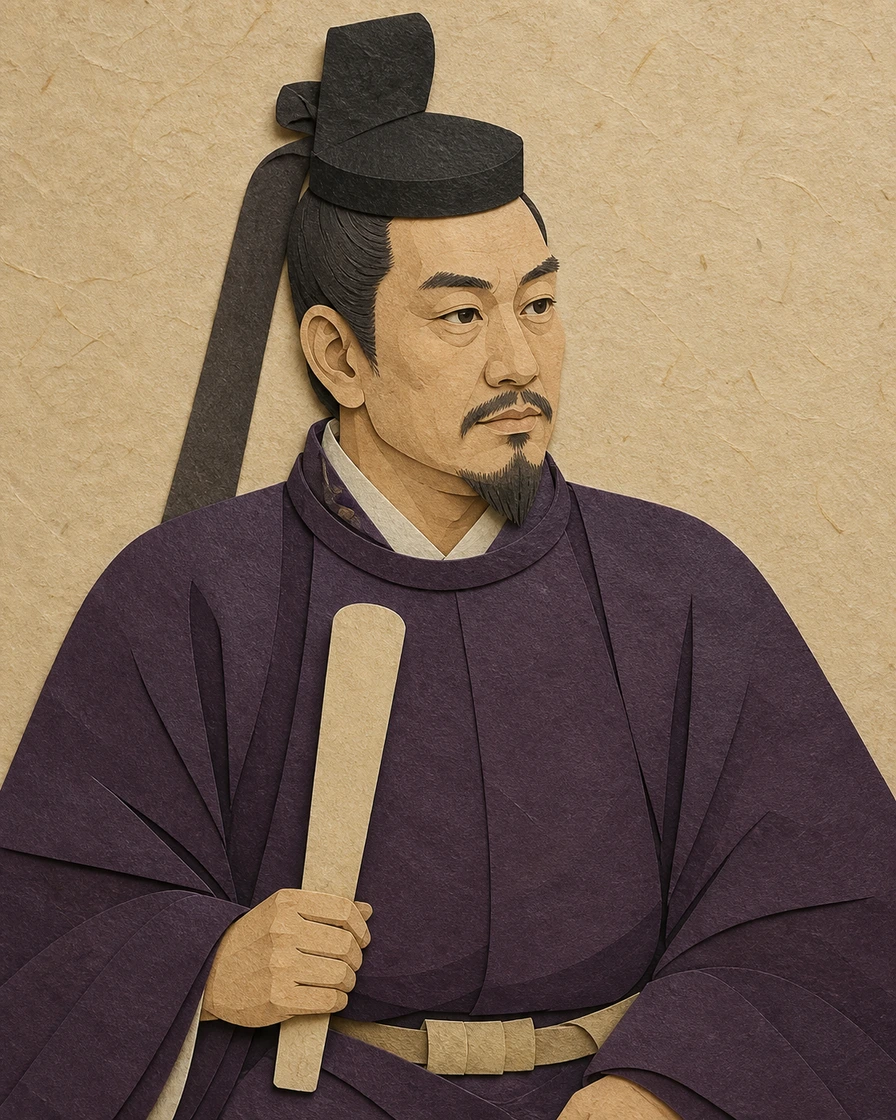
The future Emperor Kammu was born Prince Yamabe in 737. His father, Prince Shirakabe, later reigned as Emperor Kōnin; his mother was Takano no Niigasa. A court genealogy connected her family with Baekje, a former kingdom on the Korean peninsula. This ancestry had meaning within court rank and marriage, not modern nationality. Yamabe was a royal son, but other household branches initially had stronger claims to succession. [1]
His father's later accession would transform the family's position. Niigasa's standing had initially offered Yamabe less succession prestige than descent through an imperial princess. [1]
Yamabe became head of the court university in 766. When Empress Shōtoku died in 770, his father became Emperor Kōnin. Kōnin's first heir was Prince Osabe, his son by Inoe, an imperial princess. In 772 Inoe was deposed after an accusation of cursing the emperor, and Osabe lost his position. Yamabe became crown prince in 773 with support associated with Fujiwara no Momokawa. Inoe and Osabe died in confinement in 775. The accusation's truth remains uncertain; Yamabe gained a position opened by their removal. [1]
Yamabe became Emperor Kammu in 781 after Kōnin abdicated. He inherited the ritsuryō system, the court's code-based administrative order, and its provincial taxes and military obligations. His brother Sawara became crown prince. Fujiwara no Otomuro became empress in 783; her sons Ate and the later-born Kamino would eventually reign as Heizei and Saga. Kammu began by redirecting an existing government under fiscal and military pressure. [1]
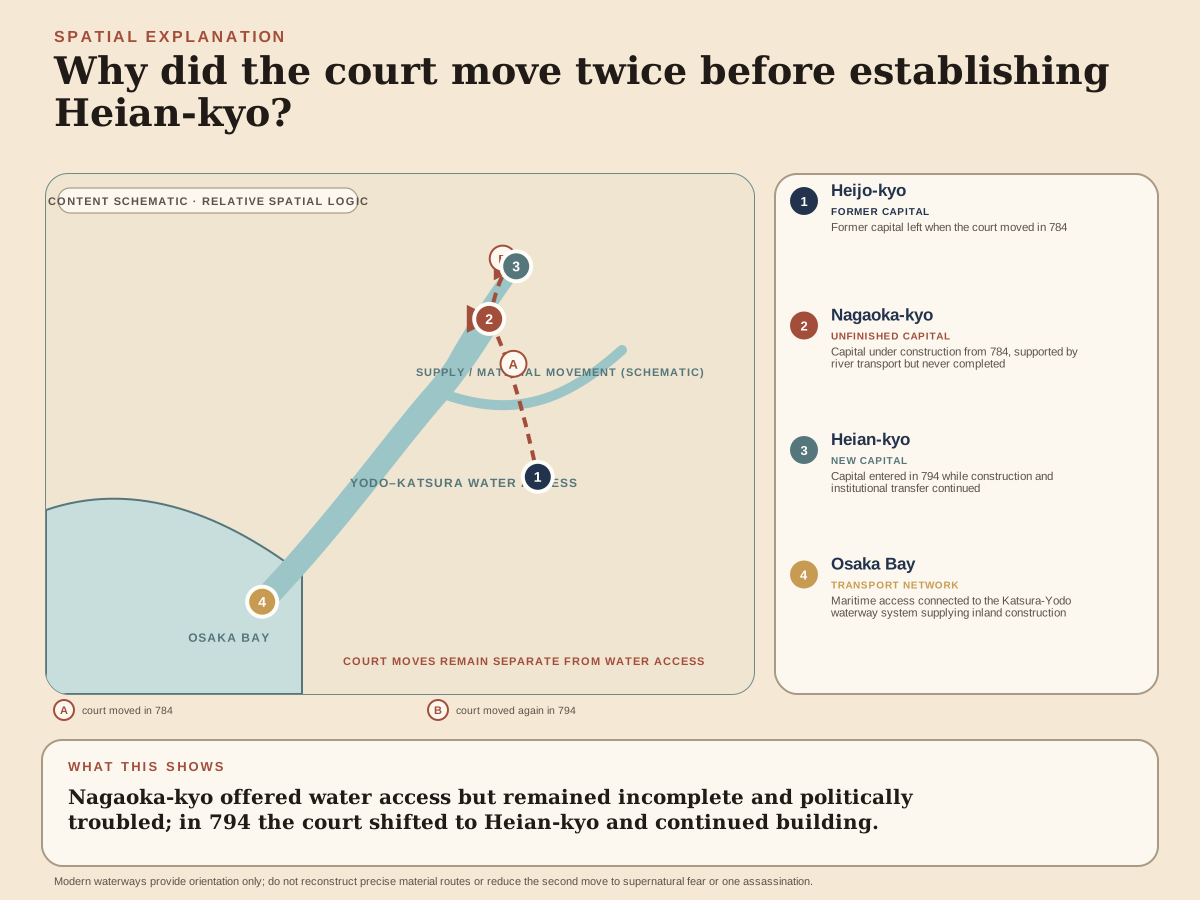
In 784 Kammu moved the court from Heijō-kyō at Nara to Nagaoka-kyō. The new site offered access to the Katsura–Yodo river system and transport toward the Inland Sea. Fujiwara no Tanetsugu directed construction, supported by local Hata connections. Greater distance from Nara’s powerful court and temples is one explanation for the move, but transport advantages and local political support also mattered. [1][8]
The court entered before the city was finished. Nagaoka was a serious capital project in its own right. Its later abandonment should not obscure the decade during which the court tried to make it work. [1][8]
In 785 Fujiwara no Tanetsugu was shot while Kammu was away and died from his wounds. The murder removed the official central to Nagaoka's construction. Investigators punished members of prominent military families and implicated Crown Prince Sawara. The state response is documented more securely than Sawara's personal responsibility. Construction lost its leading patron, while a murder inquiry became a succession crisis. [1]
Sawara was removed as crown prince, confined and ordered toward exile on Awaji, an island in the Inland Sea. He refused food and died during the journey in 785. Later illness and disasters were interpreted at court as his anger. Kammu’s government sponsored rites and restored honors; in 800 it gave Sawara the posthumous title Emperor Sudō, although he had never reigned. These actions establish the court’s fear and attempts at reconciliation, not that a spirit caused disease or flood. [1]
Kammu sought to extend military and administrative power in northern Honshū. In 789 Ki no Kosami’s expedition was defeated in the Isawa region by forces associated with Aterui. Court accounts called varied northern groups Emishi, a broad political label rather than the name of one uniform people. The campaign depended on provincial troops and supplies, but local defenders could exploit terrain and knowledge that the court lacked. [5]
Defeat did not end Kammu’s expansion policy. Further campaigns would require different command arrangements and sustained resources from the provinces. [5]
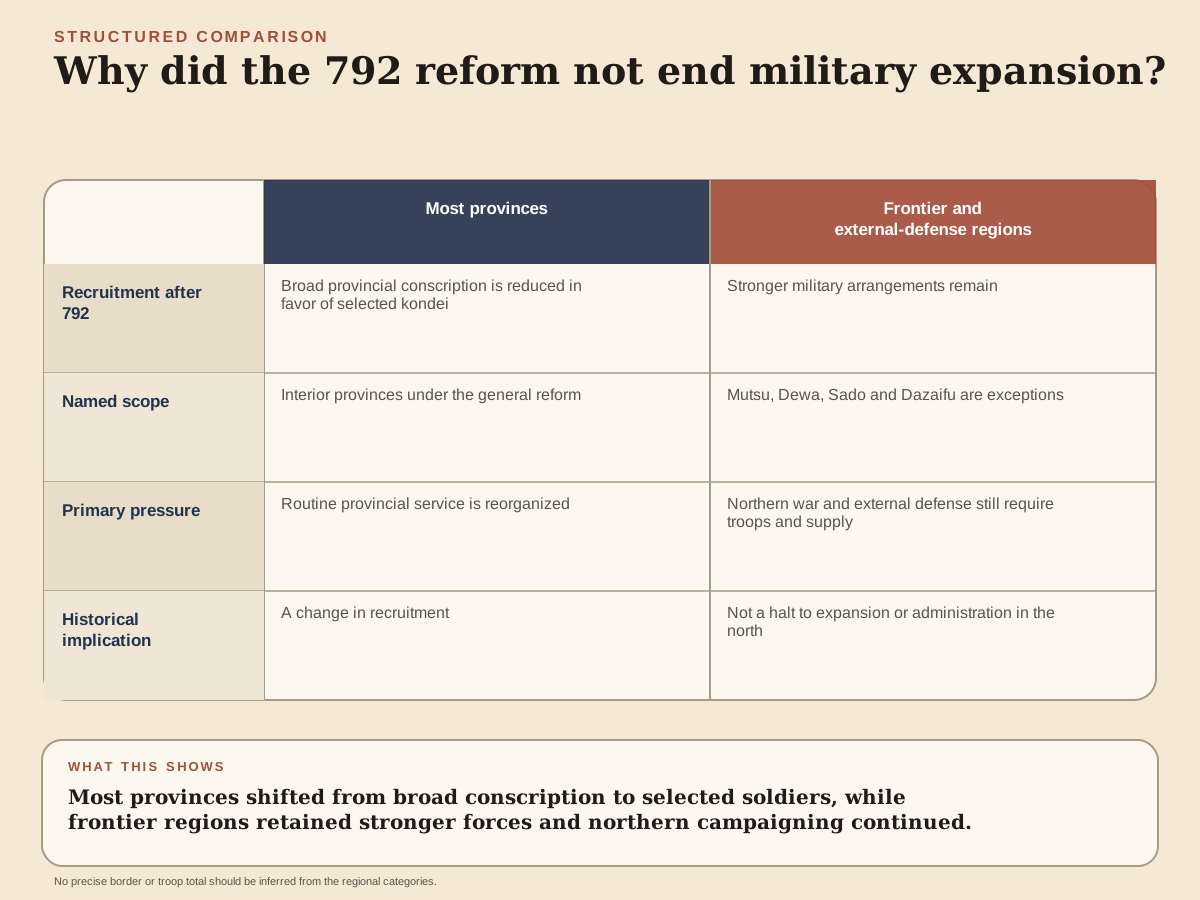
In 792 Kammu's government abolished broad provincial soldier levies in most regions and substituted kondei, selected local guards. Mutsu and Dewa in the north, Sado island and the Dazaifu defensive region in northern Kyūshū retained stronger arrangements. Interior relief and continued frontier warfare were parts of the same regional policy. Taxes and other support obligations remained. [1]
In 793 officials examined a site northeast of Nagaoka in the Yamashiro basin. Kammu entered the new capital in 794 and named it Heian-kyō, expressing a hope for peace and stability. Its grid organized palace, avenues, markets and residences. Buildings and materials moved from Nagaoka, while construction continued after the court arrived. [8]
The move was Kammu’s second attempt to establish a capital. Nagaoka had become associated with flood, assassination and succession fear. The new city would endure as Kyoto, but in 794 its future depended on continued building and government use. [8]
Kammu appointed Sakanoue no Tamuramaro as seii taishōgun, the imperial commander for the campaign, in 797. A major expedition advanced court power in 801, and Isawa Castle followed in 802. Aterui and More surrendered. The surviving account says Tamuramaro proposed sending them back to help govern Isawa, but court councillors rejected the proposal and they were executed in Kawachi. Military advance could make submission possible; the court still determined how surrendered leaders would be treated. Isawa District followed in 804, turning military advance into a continuing administrative presence. [1][5]
Saichō, who founded a community on Mount Hiei in 788, traveled to Tang China in 804 with Kammu's support. Gishin served as an interpreting monk; Tajihi no Fukunari was an attendant. Saichō studied Chinese Tiantai, the source of Japan's Tendai tradition, centered on the Lotus Sutra and the possibility of Buddhahood for all people. He returned in 805. In 806 the court approved two annual places for officially recognized Tendai monks. Independent ordination was a separate struggle that continued after Kammu's death. [2][3][4][6]
Kūkai sailed with the 804 embassy on a different ship from Saichō. Expected to undertake extended study, he reached Chang’an and learned esoteric Buddhism, conveyed through initiated ritual training, from the teacher Huiguo. He returned to Japan in 806, after Kammu had died. Kammu authorized the mission that carried him, but the major court relationship supporting Kūkai’s later institutions developed under Emperor Saga. [1][2][3][9]
In 805 Kammu ordered court advisers Fujiwara no Otsugu and Sugano no Mamichi to debate good government. Otsugu argued that northern campaigns and capital construction were exhausting the population; Mamichi defended continuation. Kammu accepted retrenchment. He died in 806, and Crown Prince Ate became Emperor Heizei. The successor inherited the capital, frontier administration and continuing obligations, with authority to change the previous reign's policies. [1][8]
After 806, Kammu's successors and later residents sustained Heian-kyō through repeated rebuilding. Tendai and Shingon developed beyond his reign, and northern communities continued to negotiate or resist court power. The founder label remembers his capital moves and policy direction, but can obscure the work and costs borne by others. [3][7][8][9]
In 1895 Kyoto's capital-foundation commemoration and Heian Shrine gave Kammu a new presence within the Meiji imperial state. This later image emphasized the lasting capital more readily than the households supporting construction or the communities resisting conquest. [7][8]
Classic
Prince Yamabe, the future Emperor Kammu, was born in 737. His father, Prince Shirakabe, was a grandson of Emperor Tenji and later became Emperor Kōnin. His mother was Takano no Niigasa. Imperial paternity placed Yamabe among possible heirs, but a mother's rank and kin connections affected the support a prince could command. Niigasa's family belonged to immigrant-descended lineages established at court. A later official genealogy connected her ancestry with King Muryeong of Baekje, a former kingdom on the Korean peninsula. Such a connection could confer antiquity and standing; it was not a statement of modern nationality. [1]
Families descended from migrants had served the court across generations. Niigasa nevertheless lacked the prestige of an imperial princess. Yamabe's position differed from that of princes whose mothers belonged directly to the ruling line. His mother's ancestry was part of that hierarchy, not an explanation of the energy or policies he would display as emperor. Her own life is less fully recorded than the genealogy recognized after her son's rise. [1]
In 737 Shirakabe was not emperor. The throne remained within a succession shaped by Emperor Shōmu's descendants and the authority of his daughter, the future Empress Kōken/Shōtoku. Yamabe's birth therefore did not place him next in line. The royal household gave him status and access to court service, while nurses, attendants and other household workers sustained the family behind its public genealogy. [1]
Yamabe held court office before becoming heir: in 766 he was appointed head of the court university. When Empress Shōtoku died in 770 without a designated child to succeed her, senior courtiers selected his father, Shirakabe, as Emperor Kōnin. The new reign recognized Inoe as empress and her son Osabe as crown prince. Inoe was Emperor Shōmu's daughter. Her imperial lineage gave Osabe a claim that Yamabe's maternal connection did not match. Yamabe was an adult royal son inside a succession arranged around another household branch. In 772 the court accused Inoe of cursing Kōnin. She was deposed and Osabe lost his position. [1]
Historical disagreement · Why were Inoe and Osabe removed?
The official accusation does not establish Inoe's guilt. One explanation treats the proceedings as a response to a threat believed real at court; another emphasizes the advantage gained by those seeking a different heir.
The surviving account does not settle how these forces combined.
Yamabe became crown prince in 773, with Fujiwara no Momokawa associated with support for his rise. In 775 Inoe and Osabe died in confinement. Their deaths left suspicion and religious fears that later punishment would revive. [1]
The transition altered marriage and office calculations. Families considering alliance with Yamabe could now expect influence near a future throne. Officials who had served Inoe and Osabe faced risk or reassessment. Maternal status had built Osabe's legitimacy, then transmitted danger when his mother's position was attacked. Kōnin's own authority depended on the courtiers who had selected him and could shape which son followed him.
Yamabe's appointment followed another claimant's removal. His experience of office gave him a place within government, but did not make his selection inevitable. The same court that raised Kōnin also shaped the succession he could secure. An accusation against an empress had destroyed her son's political future as well as her own position. [1]
Yamabe benefited from a coercive succession change whose full responsibility remains uncertain. His appointment in 773 followed Osabe’s removal, before he inherited the throne in 781.
In 781 Kōnin abdicated and Prince Yamabe became emperor, known to history as Kammu. The court remained at Heijō-kyō, at Nara, and the ritsuryō order—the court-centered government organized through penal and administrative codes—continued. Ministries appointed provincial governors and drew taxes and compulsory labor from registered households. Kammu inherited these offices and obligations rather than founding a state from nothing. His brother Sawara became crown prince, offering an adult successor while the emperor's sons were young. Fujiwara no Otomuro became empress in 783. [1]
Otomuro's sons Ate and Kamino later reigned as Heizei and Saga; Kamino was born only after the years covered here. Their eventual accessions were not settled when Kammu took the throne. Palace women's offices managed access and transmitted orders, linking royal households to officials and family supporters. Kammu's strong direction still depended on ministers issuing documents, governors collecting resources and communities meeting or resisting demands. Households could flee burdens or disappear from registers, while officials could manipulate assessments. Commands from Nara did not operate equally in every province. [1]
Relocation could not make national taxation work without provincial administration. A governor's appointment was one link in a chain reaching through local officials to cultivators. Tax grain still needed storage and transport before it supported the court. The same institutions could preserve an emperor's orders and conceal difficulties in carrying them out. Kammu's later reputation for personal leadership should be read against this dependence on information and cooperation from elsewhere. [1]
Large Buddhist temples supplied ritual and expertise as well as possessing estates and court patrons. Their influence could trouble a ruler without making Buddhism itself his enemy. Kammu's later moves would rearrange the center of government and its religious relationships. They would also draw heavily on the resources of a state whose military obligations were uneven: active northern campaigns placed demands on frontier provinces unlike those of much of the interior. [1]
In 784 Kammu moved the court from Heijō-kyō to Nagaoka-kyō. Distance from Nara could reduce the daily leverage of established court and temple networks, but transport and local support also mattered. Nagaoka lay near routes linking the Katsura and Yodo waterways with the Inland Sea. Boats could bring tax grain and building material toward the new center. Fujiwara no Tanetsugu directed construction and joined palace trust to regional connections. The Hata, kin groups long established in the region, supplied important local ties; their involvement need not be reduced to shared immigrant ancestry. [1][8]
Surveyors imposed roads and blocks on existing terrain, affecting landholders and residents already there. Farmers and craft households supplied work that court accounts could record as quantities while families experienced absent workers and disrupted seasons. Officials also needed new residences and offices. The relocation distributed opportunity and cost unequally. [1][8]
Boat crews and carriers connected distant tax production to the site. Reusing material saved some fresh production, but an old beam or roof still had to be removed, transported and fitted to a new structure. Elite households moved with staff and demands for housing appropriate to rank. Existing residents did not simply disappear beneath the plan: roads and building plots reorganized the land around them. Early occupation placed administrators close to these continuing tasks. [1][8]
The court entered before the city was finished. Early occupation committed the ruling households to a project still under construction. Kammu continued to rely on Buddhist rites, and Nara's temples retained influence beyond the old capital. The move therefore has several explanations: a change in political access, useful transport geography and regional support. The evidence does not justify making hostility to temples its sole cause. Nagaoka's abandonment ten years later does not make it a temporary camp from the beginning. [1][8]
In 785 Fujiwara no Tanetsugu was shot while Kammu was away from Nagaoka and died from his wounds. The killing removed the official central to construction and a trusted ally of the emperor. Reports reaching Kammu linked the attack to the security of his new capital. Investigation in the eighth-century court did not follow modern evidentiary procedure: rank and kin connections affected punishment, while an official judgment expressed the authority of the government conducting the inquiry. [1]
Historical disagreement · Why was Prince Sawara implicated?
Members of Ōtomo and Saeki networks were among those punished. Their lineages had military and political standing, but that affiliation alone does not establish a coordinated plot. Sawara's implication changed the succession. As crown prince and Kammu's brother, he represented a possible future court. One interpretation connects his fall with opposition surrounding the new capital; another stresses how the investigation removed a dangerous alternative heir.
His direction of the assassination remains uncertain. The murder presented a real security problem without proving every accusation made in its aftermath. [1]
As construction organizer, Tanetsugu had coordinated labor and material as well as holding political trust. An attack on him threatened the people and relationships making Nagaoka function. Kammu's absence meant that messengers and officials first framed the event for him. This dependence on reports helps explain the urgency of the inquiry; it cannot establish the truth of every denunciation. The accused and the government they allegedly threatened did not leave equally complete accounts of the case. [1]
Tanetsugu's death also deprived builders and suppliers of relationships and command capacity. His household lost a family member; accused households faced punishment and stigma. A project already requiring heavy work now carried an unresolved royal dispute. Kammu's own rise had followed the removal of Inoe and Osabe. The investigation at Nagaoka again joined an accusation against a royal figure to a change of heir.
Sawara was removed as crown prince, confined and ordered toward exile on Awaji, an island in the Inland Sea. He refused food and died during the journey in 785. Prince Ate replaced him as heir. Later, Ate fell ill, Empress Otomuro died in 790 and disasters struck the court and capital. Courtiers interpreted these misfortunes through the anger of a wronged royal spirit. An unresolved political injury had become a religious explanation of continuing danger. [1]
The belief changed government action. Clergy performed rites of appeasement and the court restored honors. In 800 Sawara received the posthumous title Emperor Sudō, although he had never reigned. Elevating the condemned prince could express remorse, fear or political prudence; the action does not reveal which motive predominated. Nor did a posthumous imperial title amount to a modern judicial acquittal. [1]
Appeasement gave Buddhist clergy and other ritual specialists work at the center of political repair. The court's choice of rites, honors and burial arrangements made its interpretation visible. Prince Ate's illness also connected the new succession with the fate of the uncle whose place he had taken. The title bestowed in 800 changed Sawara's ritual standing without undoing his death or explaining every decision made in 785. The episode belongs to the practical history of religious government, not merely to a palace ghost story. [1]
Flood and disease affected residents beyond the palace, independently of the court's supernatural interpretation. Ritual repair could not return Sawara to life or restore his place in the succession. Yet the court's fear had practical consequences for expenditure and policy. Earlier injury to Inoe and Osabe also entered this world of dangerous royal memory. Political elimination had not made the resulting order feel secure. [1]
In 789 a major expedition under Ki no Kosami was defeated in the Isawa region of northern Honshū by forces associated with Aterui. The court called varied northern communities Emishi, a broad classification rather than the name of one uniform people. These communities possessed local leaders and routes, and differed in their relations with court power. An imperial description of territory did not establish control over those living there. Kosami's army depended on provincial troops and supplies; chronicle numbers indicate its scale without providing a verified modern roster. [5]
The reported battle involved government forces divided by river crossings and attacks by defenders who knew the ground. Food and communication had to reach columns far from the capital. Local knowledge could outweigh greater nominal numbers. The victory shows the defenders' effective organization; it does not establish that all Emishi belonged to one political community. Aterui's coalition is less fully recorded than the state army it defeated. [5]
Guides and cooperating local groups could make the boundary between court and opponents less clear than the category Emishi suggests. Traders and frontier officials also carried knowledge of routes and settlements. The same valley could contain people accommodating state demands and people resisting them. Kosami's defeat did not settle these relationships. Repeated expeditions would have to cross a landscape occupied by communities with their own reasons for choosing an alliance or refusing it. [5]
Failure consumed provincial resources and exposed the distance between imperial command and battlefield results. Kammu continued northern expansion rather than abandoning it. Further mobilization would depend on better command and accumulated local knowledge, including that supplied by cooperating communities and frontier officials. Requisition and disrupted cultivation placed costs on households on both sides of the campaign. The court's defeat was part of their history as well as the emperor's. [5]
In 792 Kammu's government abolished the old provincial soldier system across most of the interior while retaining stronger arrangements at strategic margins. Smaller kondei units—selected local guards, often drawn from prominent families able to supply equipment—replaced broad levies for many guard duties. The reform could reduce mass service while giving provincial elites a larger military role. It did not release households from taxes, transport or all support obligations. [1]
Mutsu and Dewa, the northern provinces involved in expansion, remained exceptions. So did Sado, an offshore island, and the Dazaifu region, the court's administrative and defensive center in northern Kyūshū. These places faced different strategic concerns. A single reform therefore created regional arrangements rather than imposing one national military pattern. Reducing interior levies could coexist with intensified pressure on the frontier. [1]
The old soldier system assigned obligations widely, even where large formal units no longer supplied useful guard capacity. Selected guards shifted the balance toward households capable of furnishing skill and equipment. The result could relieve some cultivators while rewarding already influential local families. That contrast matters when calling the reform humane or efficient: relief and increased local hierarchy could occur together. The retained frontier arrangements also show why fewer soldiers in the interior did not mean an emperor turning away from conquest. [1]
The fort-centered government later established in the northeast illustrates the other side of this policy. Soldiers and administrators could be concentrated at durable bases, supplied through provincial systems. Such concentration increased reach around particular sites, not evenly across all surrounding communities. Neither the abolition of many old units nor the creation of forts can be described adequately as the simple collapse or uninterrupted growth of one uniform state. [1]
The reform strengthened the military role of some provincial families, but the later emergence of medieval warrior government was not an automatic consequence of one decree.
Officials surveyed a new capital site in the Yamashiro basin in 793. In 794 Kammu entered Heian-kyō, the city that became Kyoto. The move followed years of instability at Nagaoka; it also required another major construction effort. The planned grid drew on East Asian capital traditions while adapting to the basin's rivers and terrain. Palace, central avenue and ranked residences gave hierarchy a physical form. Markets and service districts supplied the ruling households. [8]
The city reused material from Nagaoka as well as drawing on fresh timber and tiles. Corvée, compulsory labor owed to the government, helped sustain construction. Workers' absence affected households elsewhere, while residents at the site faced relocation and new demand. Entry did not complete the city: offices, dwellings and water management still required work. The western and eastern sides later developed differently, despite the symmetry of the plan. [8]
Residential allocation by rank made social order visible in the streets. Officials with urgent duties and households able to build quickly did not move on the same timetable as everyone else. Servants and craftspeople followed employment; people already in the basin encountered new claims on land and supplies. Maintaining drainage linked the planned city to water beyond its boundaries. The capital was an inhabited, unfinished project whose environmental needs did not stop at a ceremonial gate. [8]
The name Heian expressed an aspiration to peace after Nagaoka's troubles. It did not erase construction costs or fears surrounding Sawara. Wake no Kiyomaro is associated with site selection, within a larger process of surveying and court advice. Nara temples and older provincial offices remained part of government. The move changed its central geography rather than replacing the whole administrative order. [8]
In 797 Kammu appointed Sakanoue no Tamuramaro seii taishōgun, an imperial commission to command the northern campaign. His experience and palace trust supported sustained preparation after the defeat of 789. Provincial officials and households provided troops and supplies. The campaign of 801 advanced court power; in 802 Isawa Castle established a fortified administrative base. Builders and material producers helped turn military movement into a presence that could remain after an expedition withdrew. [1][5]
Aterui and More surrendered in 802 and were taken south. The account transmitted in the Nihon Kiryaku, a later historical compilation, reports that Tamuramaro asked for them to be spared and returned to help govern Isawa. Court councillors rejected the proposal, fearing renewed resistance. They were executed in Kawachi, in the area of present-day Osaka. The proposal and its rejection show that surrender did not settle how the court would use or punish local authority. [5]
Their execution removed local leaders who might have served as intermediaries. Submission had opened a choice between incorporation and punishment; the court chose the latter. Isawa Castle and the establishment of Isawa District in 804 required garrisons, stores and records, as well as settlers and local cooperation. An administrative district did not give officials identical reach into every community. Some relations rested on negotiation, others on coercion or intermittent military access. [5]
A fortified office complex gave conquest a material center. Stores and records enabled troops and officials to remain after the field army withdrew. Local intermediaries supplied knowledge of routes, kin relations and production that distant offices lacked. Settlers and resettled groups also changed the area's use of land. Daily administration depended on these relationships as well as on walls. A district name in a court record expressed an intention to govern; it did not measure how regularly a particular community met that intention. [5]
Tamuramaro later became a heroic conqueror in temple and warrior stories. Those traditions should be distinguished from the recorded campaigns. Kammu authorized the expansion without directing every maneuver; commanders and provincial society made it possible. Its durable forts and the treatment of surrendered leaders both belong among the reign's consequences. [5]
In 804 Kammu's court sent Saichō to Tang China for a short period of Buddhist study. Saichō had established a community on Mount Hiei in 788, near the future capital, and gained a palace prayer appointment in 797. His teaching drew on Chinese Tiantai, known in Japan as Tendai: a tradition centered on the Lotus Sutra, a Buddhist scripture teaching that all people can attain Buddhahood. The court gained an additional center of expertise without abandoning the older temples of Nara. [2][3][4]
Saichō traveled with Gishin, an interpreting monk, and the attendant Tajihi no Fukunari. Their roles distinguish language work and practical attendance from the famous monk's study. Tang teachers and officials enabled access to texts and instruction. Religious learning depended on diplomatic permission and a maritime mission sustained by sailors and provisions, not solely on Saichō's personal determination. He returned in 805 with texts and ritual learning. [2][3][4][6]
In 806 the court approved two annual places for officially recognized Tendai monks. This was a concrete addition to the state's allocation of authorized ordinations. It gave Saichō's teaching a recognized foothold, while the monks still depended on existing arrangements for full ordination. The later struggle for a separate Mahayana ordination system—one using vows directed toward the salvation of all beings—was a different institutional question and continued after Kammu's death. [2][3][6]
Nara's major temples possessed recognized ordination authority and established court patrons. The Hiei community offered an additional network, not religious life outside all government obligations. Texts brought from China still needed copying, teaching and people able to perform the new rites. Food and buildings sustained the mountain community. [2][3][6]
Nara clergy defended established standards and their own institutional authority; Saichō sought room to train monks through Hiei's program. Court support supplied opportunity and obligations to protect the state through religious practice. The annual quota did not create a finished independent institution in one royal act. [2][3][6]
Kūkai sailed with the 804 embassy on a different vessel from Saichō. He was assigned extended study, whereas Saichō's stay was intended to be short. After reaching Chang'an, the Tang capital, Kūkai studied with Huiguo. He acquired esoteric Buddhist teachings, transmitted through initiated ritual training as well as texts. Different assignments and teachers gave the two travelers distinct paths within one state mission. [2][3][9]
A multi-ship embassy distributed people and risk, and its vessels could reach different landing places. Officials had diplomatic duties; monks sought teaching and texts. Sharing authorization therefore did not mean following one curriculum or building one future school. Written credentials and the cooperation of Chinese hosts made Japanese travelers legible within Tang administration. What they could bring home depended on those encounters as well as on the permissions issued in Japan. [2][3][9]
The voyage depended on shipbuilders and sailors; study required the cooperation of Tang officials and monastic hosts. Kūkai returned in 806, after Kammu had died. Imported texts and ritual objects still had to win recognition from the succeeding court. Emperor Saga later became a major patron of his work. Shingon, the esoteric Buddhist school associated with Kūkai, developed in that later setting. [1][9]
Imported learning still needed readers, copies and people trained to perform rites. Recognition and material support would come from living patrons. Kammu's authorization made the voyage possible; Kūkai's work and the choices of succeeding rulers shaped its institutional results. [1][9]
By 805 northern warfare and capital construction were drawing on the same provincial resources. Grain and labor dispatched to palaces or armies were unavailable to households at home. Victory also created continuing costs: northern forts needed supplies and officials after the main expeditions ended. Heian-kyō remained a city requiring work, rather than a completed project whose expenses stopped with the move of 794. [1][8]
Kammu ordered two court advisers, Fujiwara no Otsugu and Sugano no Mamichi, to debate good government in 805. The account transmitted through official historical writing identifies Otsugu's case: military campaigns and construction were exhausting the population. Mamichi defended continuation. Their disagreement concerned the risks of further demands against those of leaving imperial projects unfinished. Kammu accepted retrenchment, reducing further building and military ambitions. Existing buildings and frontier institutions still needed maintenance and defense. [1][8]
Otsugu's case did not require denying the usefulness of a capital or a defended frontier. It asked whether further mobilization imposed more than supporting households could bear. Mamichi's position raised the danger of leaving costly objectives incomplete. Their reported debate places competing judgments inside the governing court, rather than dividing the reign into one ruler and silent subjects. Acceptance of restraint was a real change in direction, not repayment of the years of labor already spent. [1][8]
Kammu died in 806, and Crown Prince Ate succeeded as Emperor Heizei. His position had been prepared through years as heir, though it had first opened through Sawara's removal. He inherited authority to alter the policies of the previous reign. Prince Kamino, the future Emperor Saga, remained another royal actor whose later choices would shape the court. [1]
The new reign inherited a functioning capital and northern administrative bases, with obligations that outlasted their founder. Saichō's annual quota had been recognized, while a distinct ordination system remained a later issue. Kammu's final policy reversal acknowledged costs already borne; his death did not resolve all the demands placed on those sustaining the state. [1][8]
After Kammu's death, Heian-kyō remained the court's center through later changes of ruler and repeated rebuilding. His decision in 794 gave the city its beginning as a capital; later residents and governments sustained it. Heizei and Saga made their own choices about the succession and religious patronage. Saichō's Tendai and Kūkai's Shingon developed through disciples and institutional struggles beyond Kammu's reign. [3][7][8][9]
Northern administration continued through forts and local relationships rather than ending with Tamuramaro's campaigns. Aterui and More's execution did not end the history of the communities they had led. Imperial conquest and the later heroic memory of it left different accounts of what the reign had accomplished. [3][7][8][9]
Dynastic histories also gave imperial descent uses Kammu could not have planned. Later families could claim standing through lines traced to his descendants. Temple narratives highlighted patronage; stories of northern campaigns emphasized Tamuramaro's heroism. These forms of memory selected different people and consequences from the same reign. Injuries surrounding Inoe, Osabe and Sawara survived through ritual traditions, showing that a successful succession did not make its earlier classifications permanent. [3][7][8][9]
Centuries later, Kyoto's 1895 festival commemorating the foundation of the capital and the creation of Heian Shrine gave Kammu a new public presence in the Meiji imperial state. The shrine honored a historical ruler for contemporary purposes. That act of memory belongs to 1895, not to an intention Kammu held in 794. [7]
His historical importance lies in redirecting the state's central geography, military service and religious opportunities, then accepting restraint when war and building weighed heavily on the population. The lasting capital made a strong founder image. It also made the households paying for construction and the communities resisting northern conquest easier to overlook. [7][8]