Daigokuden and Chodoin: A Capital Recovered in Fragments
Attraction
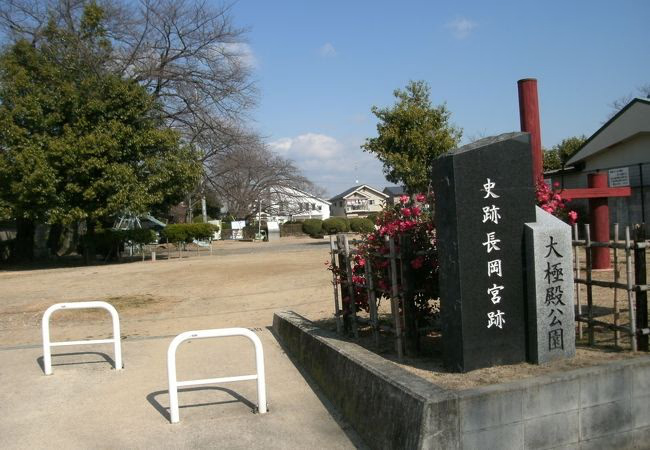
Emperor Kammu transferred the capital to Nagaoka-kyo in 784. The Daigokuden and Chodoin sites in modern Muko preserve the ceremonial and administrative core through marked foundations, parks and archaeological interpretation rather than standing eighth-century halls. Their separation across the present city reveals the scale of the planned palace. Read reconstructed posts and ground outlines as evidence-based aids, not original fabric. The Place matters because it shows that the political break with Nara required a new working center before Heian-kyo existed. Officials assembled, ceremonies were staged and government occupied real compounds here for a decade. Modern streets divide the remains, making the incomplete survival of the capital part of what visitors must understand.
Current visibility
“Daigokuden and Chodoin: A Capital Recovered in Fragments” is carried by archaeological evidence at Nagaoka-kyō Capital Site, chiefly the administrative landscape, the foundation stones, and the ritual setting; no intact structure from the historical phase is claimed.
Fujiwara no Tanetsugu's Assassination and the Sawara Crisis
Attraction
Nagaoka-kyo's history cannot be separated from the assassination of Fujiwara no Tanetsugu in 785. Investigation implicated Crown Prince Sawara, who was removed from succession and died while being sent away after refusing food. Later accounts connected his angry spirit with deaths and disasters, but political responsibility and supernatural explanation belong to different evidence layers. Locating the crisis in the unfinished capital changes its meaning: palace construction, elite rivalry and succession were unfolding together. Nagaoka was not abandoned simply because one ominous event frightened the court. The assassination and Sawara's death contributed to a wider history of instability that accompanied the expensive effort to create a new center of rule.
Current visibility
The capital-site markers and interpretation provide the physical frame for Tanetsugu's assassination and the Sawara crisis; the event itself is not presented as surviving fabric.
A Ten-Year Capital and the Move to Heian-kyo
Attraction
The court moved again in 794, this time to Heian-kyo. Nagaoka-kyo's short life should not be read as proof that nothing durable happened here. Its planned avenues, palace compounds and administrative spaces carried forward the attempt to reposition the court and helped form the transition between Heijo-kyo and Kyoto. Much of the ancient city lies beneath later settlement, so present interpretation depends on several small parks, signs, artifacts and digital reconstruction rather than one monumental destination. That scattered visibility suits the historical lesson. Capitals are institutions sustained by people, resources and political confidence; a geometric plan alone cannot secure permanence. Nagaoka's remains make failed duration historically productive by showing the decisions, costs and conflicts hidden behind the apparently simple date 794.
Current visibility
Nagaoka-kyō is encountered through scattered parks, signs, artifacts, and digital interpretation; the digital reconstruction is not a standing reconstructed building.