One Temple Across Three Mountain Districts
Attraction
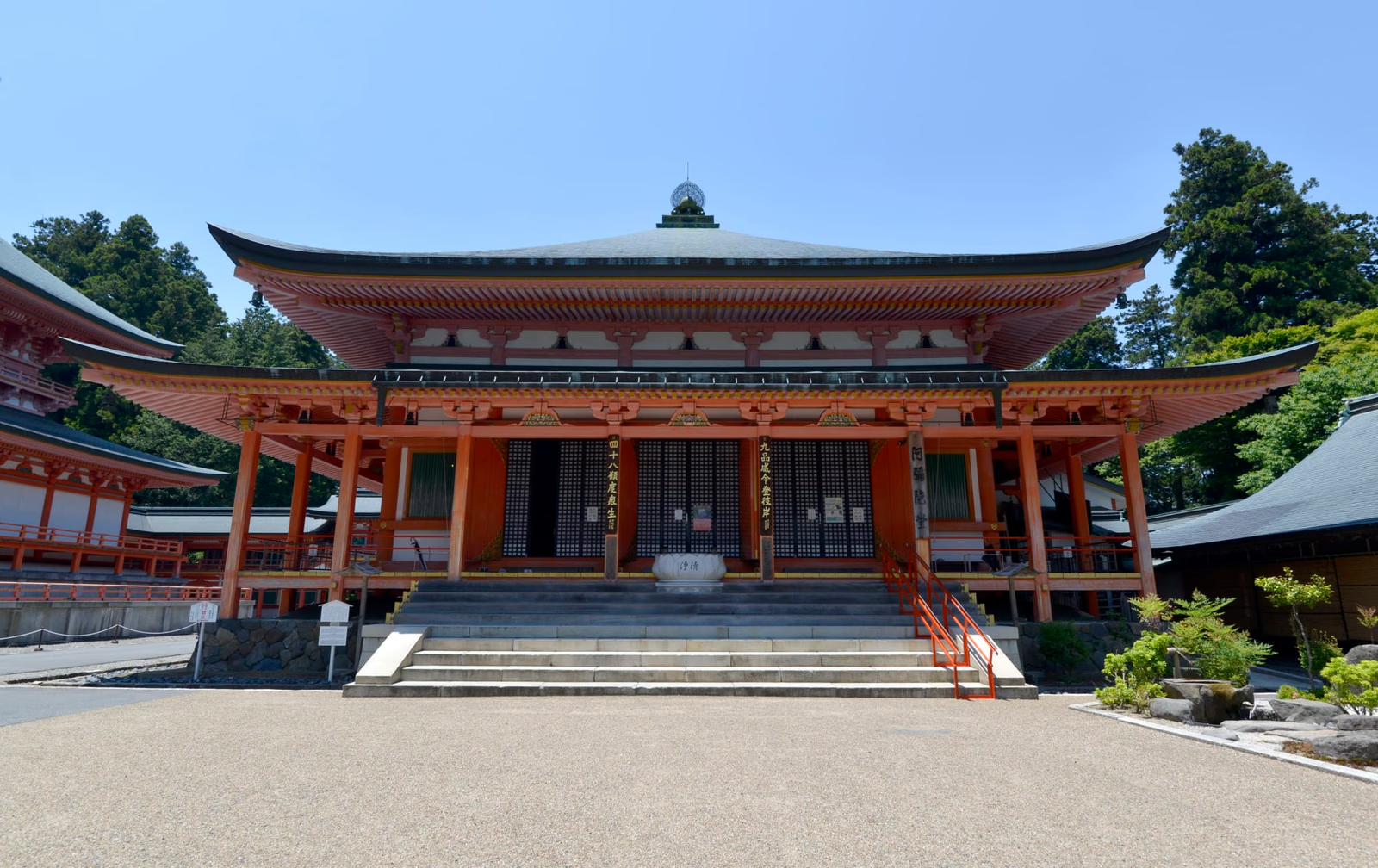
Enryaku-ji is not one building called Enryaku-ji. The institution extends across Mount Hiei in the Todo, Saito and Yokawa districts, each containing halls, routes and communities separated by forest and elevation. This dispersed form is historical evidence. Monastic training, worship and administration developed through a mountain network rather than a compact urban enclosure. Todo is the principal center; Saito and Yokawa require additional movement and should not be treated as decorative extensions. Modern roads and transport make parts of the mountain easier to reach, but distance still explains institutional scale. Read the forest between precincts as connective space, while avoiding the claim that the present landscape is unchanged from Saicho's time. The mountain temple survived through repeated construction, conflict and renewal.
Current visibility
The present landscape at Hieizan Enryaku-ji keeps “One Temple Across Three Mountain Districts” legible through the mountain terrain, the present landscape, and the surviving building, rather than through one preserved interior.
Saicho, the Ordination Platform and a New Buddhist Institution
Attraction
Saicho established his community on Mount Hiei near the end of the eighth century and developed the Tendai tradition after study in Tang China. His campaign for a Mahayana ordination platform was institutional as well as doctrinal: it concerned who could authorize monks and how a new community related to the established Nara schools. Approval came after his death in 822. Enryaku-ji consequently became a major training center whose alumni helped establish several later Japanese Buddhist traditions. That broad influence should not be reduced to a claim that every later founder simply learned one identical teaching here. The mountain supplied education, discipline, texts and networks that different monks transformed in different directions. Its significance lies in institutional reproduction across generations.
Current visibility
Mount Hiei's temple precinct and training institution anchor Saichō's ordination history; the visible setting is monastic and mountainous, not battlefield terrain.
Konpon Chudo and the Discipline of Continuing Light
Attraction
Konpon Chudo is the principal hall of the Todo district and the ritual center most closely associated with Enryaku-ji's enduring identity. A lamp maintained before the altar is traditionally described as continuing the light kindled by Saicho, though the building and institution have survived destruction and rebuilding. The current hall dates from the seventeenth-century reconstruction under Tokugawa patronage and has undergone major conservation work. That layered condition should govern the description. Visitors encounter an active sacred interior shaped by controlled light and a lowered worship area, not an untouched ninth-century room. The enduring flame expresses institutional continuity; repaired timber and modern conservation show the material labor required to sustain that claim.
Current visibility
“Konpon Chudo and the Discipline of Continuing Light” remains part of Hieizan Enryaku-ji, but interior or path access can vary; verify current official conditions before promising entry to the main hall, the present landscape, and the ritual setting.
1571: Destruction, Political Power and Reconstruction
Attraction
In 1571 Oda Nobunaga's forces attacked Mount Hiei and caused extensive destruction and death. Exact casualty figures vary and should not be inflated, but the assault was a major rupture. Enryaku-ji had become more than a secluded school: estates, armed forces, court ties and regional alliances made it a political actor within the conflicts surrounding Kyoto. The rebuilt precincts do not allow visitors to see a preserved battlefield. Instead they show what happened after institutional violence—Tokugawa-supported reconstruction, renewed ritual and the selective survival of memory. Reading the attack together with later buildings avoids two simplifications: that Nobunaga merely hated Buddhism, or that the mountain temple was an innocent community wholly outside military politics.
Current visibility
Enryaku-ji's rebuilt precincts show institutional recovery after the 1571 attack; they are not a preserved battlefield and should not be read as one.