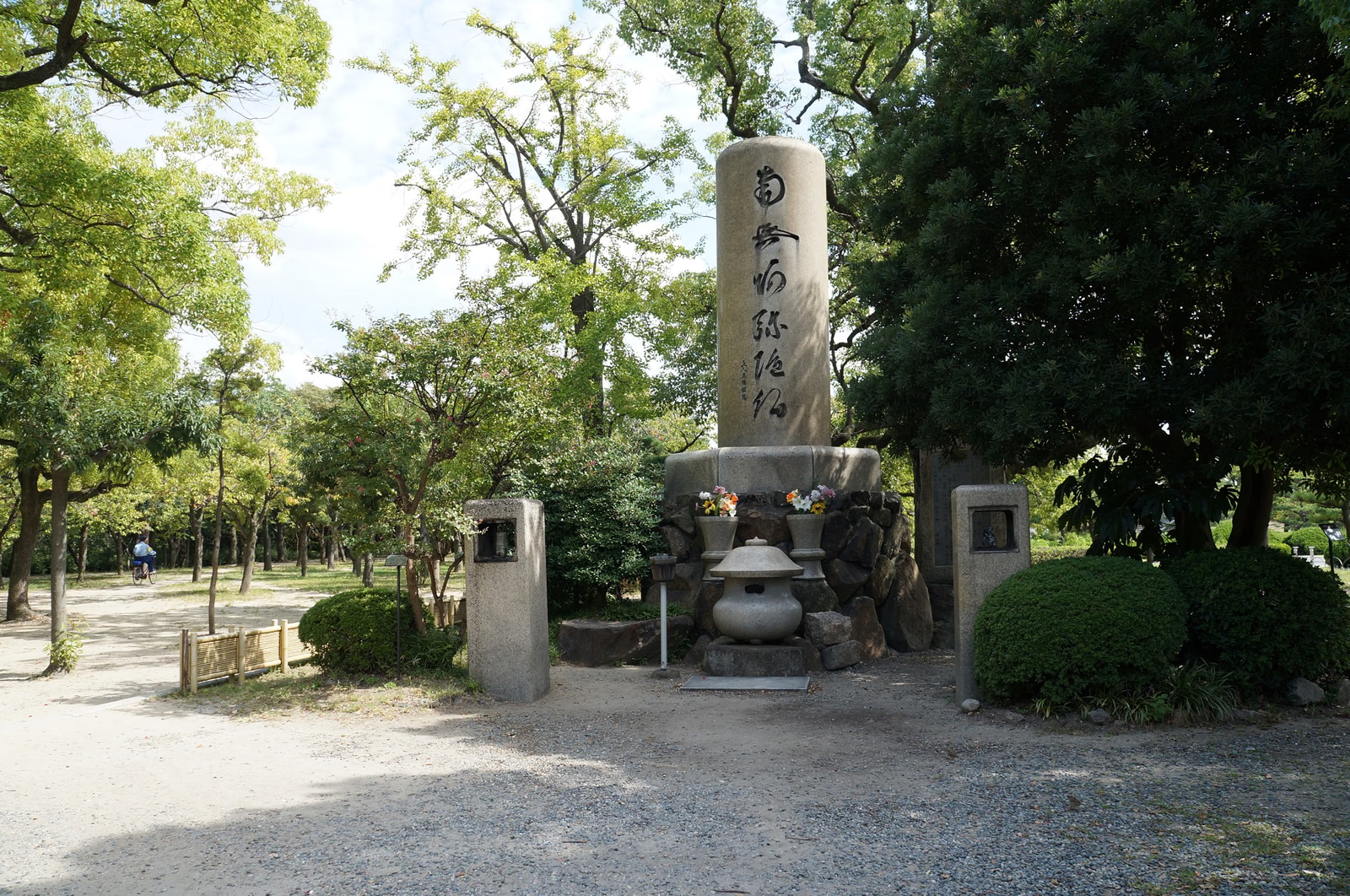
An Estimated Site, Not an Exposed Temple Foundation
Attraction
The stone monument west of the Shudokan identifies the area traditionally and historically associated with Ishiyama Hongan-ji. It does not stand over an excavated main hall, and Osaka Castle Museum explicitly notes that no Hongan-ji remains were discovered beneath the marker itself. Later Toyotomi and Tokugawa construction cut, filled, and raised the ground on a monumental scale. The correct on-site reading begins with uncertainty: the headquarters lay within this transformed upland, but its detailed plan and exact center are not recoverable from the monument's position alone.
Current visibility
A modern monument and explanation are visible; the Hongan-ji structures are destroyed and their remains are buried or uncertain beneath later castle works.
From Rennyo's Hall to a Religious Headquarters
Attraction
Rennyo established a hall on the Osaka upland in 1496, at first one node in a widening network of Jōdo Shinshū communities. After Yamashina Hongan-ji was destroyed, the institution made Osaka its headquarters in 1533. The move brought clergy, followers, administration, craftsmen, and trade into a concentrated precinct. Ishiyama should not be imagined only as a fortress that happened to contain a temple. It was a religious city whose collective organization and strategic position later gave it military resilience. None of its late-medieval buildings survives above ground inside the present castle.
Current visibility
The religious headquarters and settlement are no longer visible as standing fabric; interpretation depends on the memorial, documents, and archaeology.
A Temple Town with Political and Defensive Power
Attraction
Hongan-ji's precinct belonged to a wider temple town rather than an isolated sanctuary. Houses, worship spaces, routes, supplies, and defensive works allowed the community to sustain both ordinary life and collective resistance. The high ground beside waterways helped connect Osaka to regional trade and allied communities. Because later castles overwrote the surface, visitors cannot trace a complete wall circuit or street grid today. The historical importance lies in a form of power that joined faith, urban organization, and military capacity—one that challenged the assumption that late-sixteenth-century authority belonged only to territorial lords and their castles.
Current visibility
The temple town's layout is not presented as a complete visible circuit; it survives as a buried and historically reconstructed urban layer.
The Ishiyama War, 1570–1580
Attraction
Oda Nobunaga's attack in 1570 opened a conflict that lasted until the 1580 settlement and Hongan-ji withdrawal. The struggle was not a continuous ten-year assault on one wall. It involved supply by water, shifting alliances, regional followers, negotiation, and repeated military pressure. Ishiyama's ability to endure exposed limits in Nobunaga's control of the Kinai and made the headquarters a national political actor. The present grounds retain no authenticated battle building. Linking the marker to the war is therefore an act of historical orientation, not an invitation to assign every nearby stone or well to the siege.
Current visibility
The battlefield's buildings and defenses do not survive visibly; the war is represented by the estimated site and historical interpretation.
The Castle above the Temple's Erased Landscape
Attraction
After Hongan-ji left and the complex burned, Toyotomi Hideyoshi began Osaka Castle in 1583. Tokugawa rebuilding after 1620 then buried much of the Toyotomi castle beneath immense new fills and stone walls. The visitor consequently stands within at least three political landscapes: a religious headquarters, Hideyoshi's castle, and the Tokugawa stronghold whose masonry largely defines the park today. Even the square well curb beside the memorial is not secure Hongan-ji evidence; museum research treats its Rennyo association as tradition and its visible stonework as likely Tokugawa-period. Stratigraphic humility is the site's central discipline.
Current visibility
Later castle earthworks and masonry are visible, but they should not be relabeled as Hongan-ji fabric; the earlier layer remains largely buried.