Map: GSI Japan Kitano Tenmangū turns the posthumous memory of Sugawara no Michizane into architecture, ritual, art, and urban history. Founded in 947, it helped transform a scholar and exiled minister into Tenjin, a deity associated today above all with learning and culture. The precinct is not a preserved tenth-century shrine. Its principal sanctuary and gate are monumental early seventeenth-century works connected with the Toyotomi, while the western edge preserves part of Hideyoshi's Odoi earthwork. The shrine also remembers the 1587 Kitano Grand Tea Gathering and safeguards scrolls and offerings that shaped the visual culture of Tenjin worship. Seasonal gardens and periodic museum openings extend the history into present practice, but must be kept distinct from permanently accessible fabric.
The 947 shrine and the making of Tenjin
Attraction
Kitano Tenmangū was founded in 947 to enshrine Sugawara no Michizane, who had died in exile in 903. Court disasters and political deaths were interpreted through the language of his angry spirit, and worship gradually remade the condemned minister as Tenjin. Later generations emphasized scholarship, poetry, sincerity, and cultural accomplishment, producing the present association with education. No tenth-century sanctuary survives. The historical object is the institution and its accumulated ritual memory, anchored at Kitano but connected to thousands of Tenjin shrines. This distinction allows belief history to be described without treating every later legend as a report of physical events.
Current visibility
The active shrine and worship tradition are visible, while the founding buildings and tenth-century ritual setting are gone.
The 1607 Main Sanctuary as Toyotomi statecraft
御本殿
Attraction
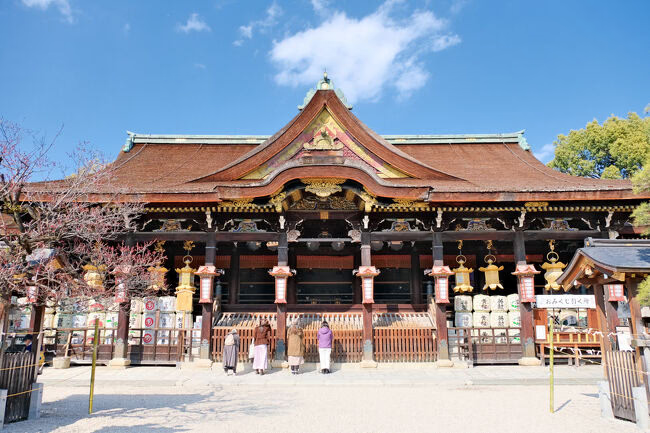
The National Treasure sanctuary was completed in 1607 by Toyotomi Hideyori under an instruction associated with Hideyoshi. Shrine, worship hall, stone-floored connecting chamber, side halls, and music spaces form the complex roof composition called yatsumune-zukuri and an early form of gongen-zukuri. Its richly carved and painted surfaces belong to Momoyama architectural culture, not Michizane's lifetime. The building made Toyotomi patronage visible at a shrine revered by court and warrior governments alike. Ordinary worship takes place before the sanctuary; access through interior connecting spaces occurs only during announced special programs.
Current visibility
The sanctuary exterior and worship frontage are visible; interior passage or close special viewing is limited to announced occasions.
Sankōmon and the absent star
三光門
Attraction
Sankōmon, the middle gate before the sanctuary, carries the imperial plaque Tenmangū and elaborate early modern carving. Its name is associated with the sun, moon, and star, yet shrine tradition says the star is absent because the North Star itself appeared above the gate when viewed from the old imperial palace. The story is valuable as a tradition linking Kitano's northwestern position to protection of the capital, not as a literal architectural survey. Close looking should separate carved motifs that are physically present from the explanatory legend that made the missing star one of the shrine's seven wonders.
Current visibility
The gate, plaque, and carvings are visible from the precinct; the starless-gate explanation is a shrine tradition.
The Kitano Grand Tea Gathering of 1587
Attraction
Hideyoshi staged the Kitano Grand Tea Gathering in the shrine's pine-field area in 1587. Its remembered scale and invitation across social ranks made Kitano a public theatre for political authority expressed through tea, display, and access. The event should not be reduced to a surviving tea room: temporary settings filled a broad area and disappeared. Objects, later paintings, and shrine memory now carry the episode, while the precinct supplies its spatial anchor. Linking this gathering to Sen no Rikyū is historically important, but the Place Highlight remains the event-landscape and Hideyoshi's use of Kitano rather than a complete biography of tea practice.
Current visibility
The shrine landscape remains; the temporary 1587 tea settings do not survive as intact structures.
The Odoi earthwork inside the maple garden
御土居
Attraction
Along the western edge of the precinct, part of the Odoi earthwork built under Hideyoshi in 1591 survives above the Kamiya River. The wider embankment marked distinctions between the city and its outskirts and also helped manage water. At Kitano, the height difference and riverbank make the structure easier to read than an isolated line on a map. The surviving bank now lies within a managed maple garden. That garden is not permanently included in ordinary precinct access: spring green-maple and autumn foliage openings use separate dates and admission, and the shrine warns that schedules change each year.
Current visibility
The earthwork survives, but close garden access is seasonal and paid; dates and hours require a current shrine check.
Kitano Tenjin Engi and the visual history of belief
Attraction
The shrine's celebrated Kitano Tenjin Engi scrolls narrate Michizane's life, exile, disasters, deification, and miracles in pictorial form. They are not neutral illustrations of verified events; they are major evidence for how medieval worshippers understood Tenjin and why Kitano accumulated authority. Other offerings from court, warriors, and the Toyotomi extend that history of patronage. The Treasure Hall protects these fragile works and displays selected material during scheduled exhibitions rather than maintaining one permanent complete presentation. Publication should therefore identify the collection's interpretive importance without promising that a particular scroll or sword will be visible on an ordinary visit.
Current visibility
The collection is conserved indoors and only selected works are shown during announced Treasure Hall openings.
Plum, poetry, and a living calendar of Tenjin worship
Attraction
Plum trees connect the precinct's seasonal life to poetry attributed to Michizane and to the wider visual language of Tenjin worship. They are living plantings, renewed and managed over time, rather than biological survivors from his Kyoto residence. Monthly observances on the twenty-fifth, annual rites, examination prayers, and seasonal gardens show how a political afterlife became a continuing social institution. This practice layer deserves space because it explains why the shrine remains historically active. Specific blossoms, markets, rituals, or garden openings are time-sensitive experiences, however, and should be named as scheduled possibilities rather than guaranteed components of every visit.
Current visibility
The shrine and many plum trees are visible, but blossoms, gardens, markets, and rites depend on season and calendar.