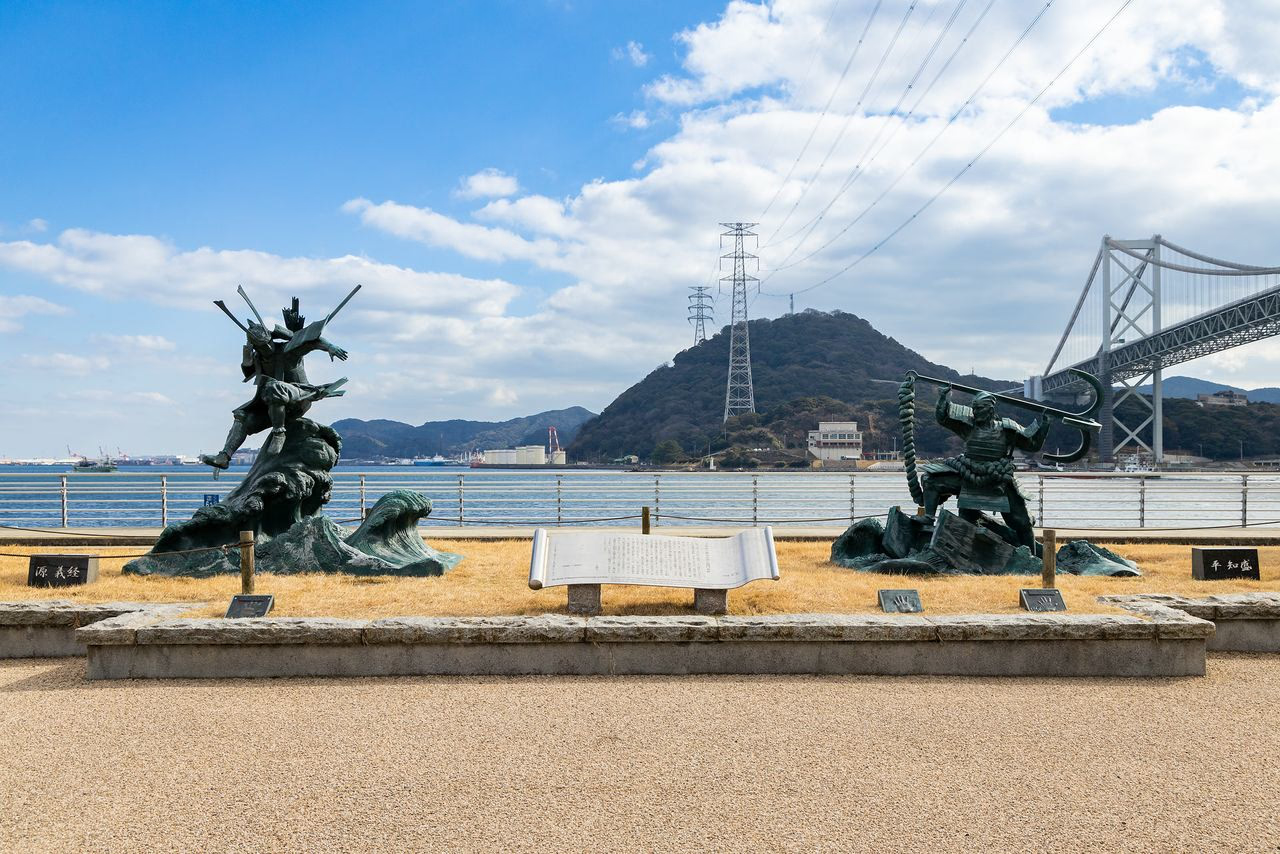
The Kanmon Strait as a Battlefield
Attraction
The Battle of Dan-no-ura in 1185 unfolded in the narrow waters between Honshu and Kyushu. Currents, ships, local knowledge and changing tactical positions made the strait an active condition of battle, not a scenic background. No fixed viewing point reproduces the fleets' positions, and modern bridges and shipping transform the scene. What remains legible is constraint: a compressed channel through which political power, armies and maritime traffic moved. The Taira carried the child Emperor Antoku and imperial regalia with them, so defeat threatened both a military coalition and its claim to court legitimacy. Looking across the water allows the event to be understood as mobile warfare whose exact surface left no walls or earthworks behind.
Current visibility
The Kanmon Strait remains legible through currents, shoreline viewpoints, modern shipping, and the bridge crossing; no walls or earthen ramparts survive from the naval battle.
Antoku, Tokuko and the End of the Taira Court
Attraction
As defeat became unavoidable, Antoku's grandmother entered the sea with the emperor; Antoku died, while his mother Tokuko was rescued. The Taira leadership collapsed and the war's political center shifted decisively toward Minamoto no Yoritomo's eastern regime. Later literature gave the deaths a powerful emotional form, but the historical event and the narrative afterlife should remain distinct. Dan-no-ura links an imperial child, a defeated warrior house and women of the Taira court to one maritime disaster. It also explains why Tokuko's later religious life carried such weight: she survived a political world that the strait had destroyed. The water is therefore both battlefield evidence and a surface onto which centuries of mourning were projected.
Current visibility
At Dan-no-ura, “Antoku, Tokuko and the End of the Taira Court” is grounded in present on-site evidence—the battlefield terrain—without implying that every historical layer survives as fabric.
Akama Shrine and the Construction of Memory
Attraction
Akama Shrine enshrines Emperor Antoku on the Shimonoseki shore. Its present red-and-white gate and precinct are later memorial architecture, not surviving structures from 1185, and parts were rebuilt after wartime destruction. The shrine shows how defeat became ritual memory. Antoku's tomb, ceremonies and visual references to an underwater palace transform a child emperor's death into an enduring sacred presence. Nearby monuments and museum interpretation extend the event beyond the shrine, but should not turn every legend into a verified battle detail. Read the precinct after looking at the strait: first the geographical conditions of conflict, then the institutional form through which the defeated court was remembered.
Current visibility
“Akama Shrine and the Construction of Memory” can still be read at Dan-no-ura through the gate sequence, the memorial, and the surviving building; the visibility claim concerns that setting, not a past moment preserved intact.