

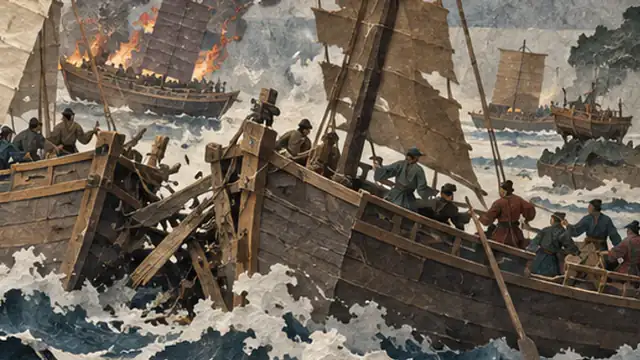
 661–663
The Baekje Restoration and Defeat at Baekgang
百済復興運動と白村江の戦い
Why it mattersDefeat in the attempt to restore Baekje exposed the court's military limits and redirected attention toward defense at home.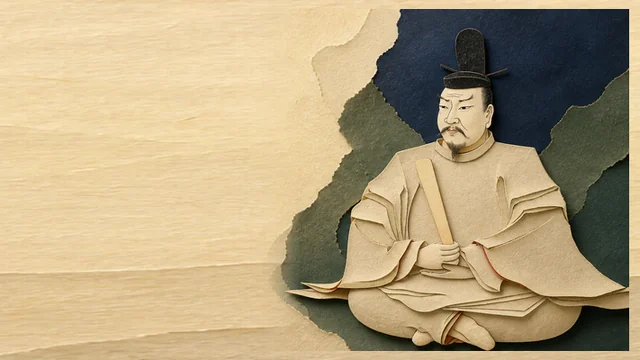 672
672The Jinshin War: From Yoshino to the Defeat of the Ōmi Court
壬申の乱
Why it mattersRoads, supplies, and provincial loyalties turned strategic distance from the palace into a successful claim to the throne.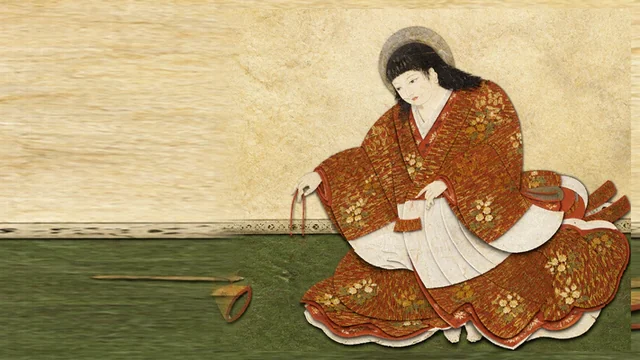 1185
1185Dan-no-ura: The Destruction of the Taira Fleet and Western Court
壇ノ浦の戦い
Why it mattersThe Taira coalition's defeat widened Minamoto possibilities for rule while generating an enduring cultural memory of loss and the defeated.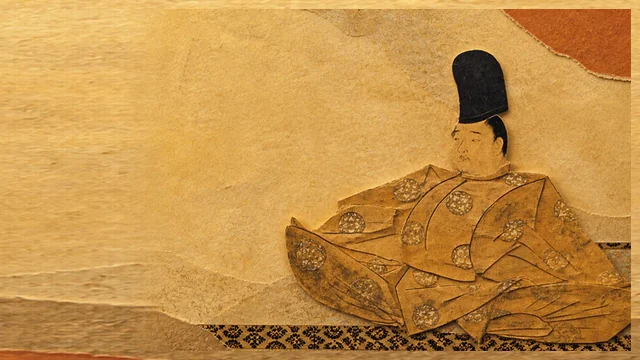 1221
1221The Jōkyū War and Kamakura’s Victory over Go-Toba
承久の乱
Why it mattersVictory extended Kamakura's western land rights and oversight of Kyoto, making continued court–warrior interdependence far more unequal.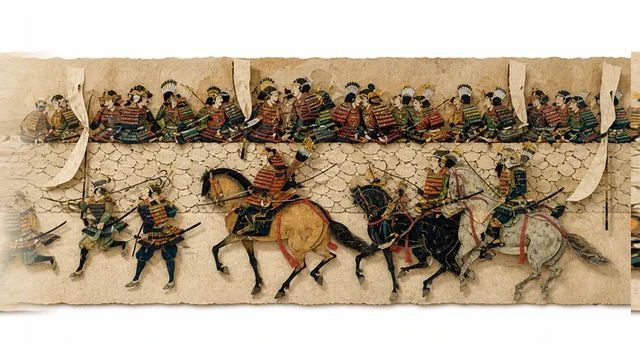 1281
1281The Second Mongol Invasion and the Failure of the 1281 Campaign
弘安の役
Why it mattersPrepared defenses and coordinated service helped repel the invasion, but victory left prolonged obligations and strained the resources of warrior communities.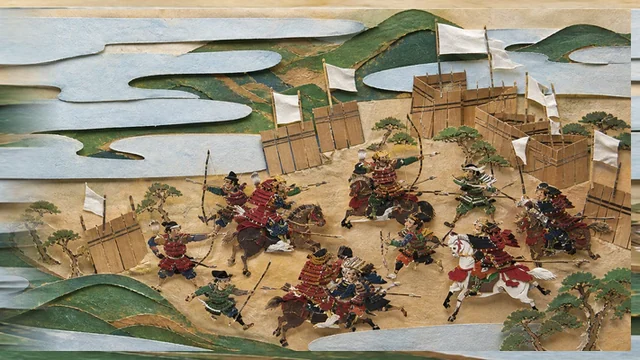 1467
1467The Ōnin War: Rival Armies Occupy Kyoto
応仁の乱の勃発
Why it mattersWarfare undermined trust in central arbitration and devastated Kyoto, accelerating political fragmentation whose local beginnings varied across Japan.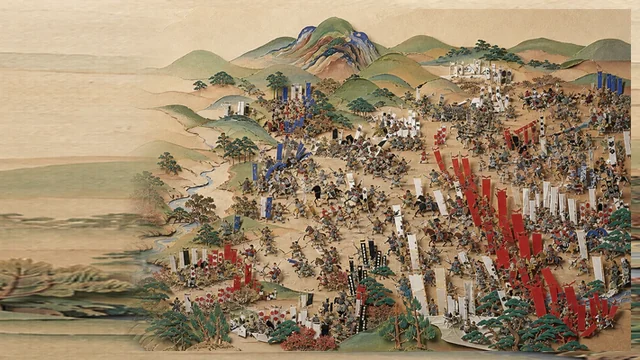 1600
1600Sekigahara: Campaign, Victory and Territorial Settlement
関ヶ原の戦い
Why it mattersSekigahara redistributed land and allegiance in Ieyasu's favor, creating the foundations—but not the complete institutions—of Tokugawa rule.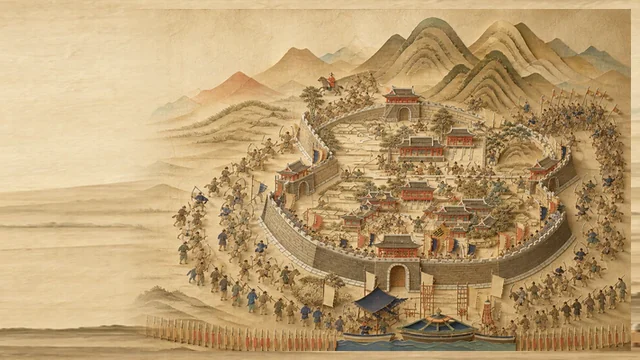 1592-1598
Hideyoshi’s Invasions of Korea, 1592–1598
文禄・慶長の役
Why it mattersContinental invasion devastated Korean communities and strained Toyotomi power; its human and political consequences crossed Japanese, Korean, and Chinese histories.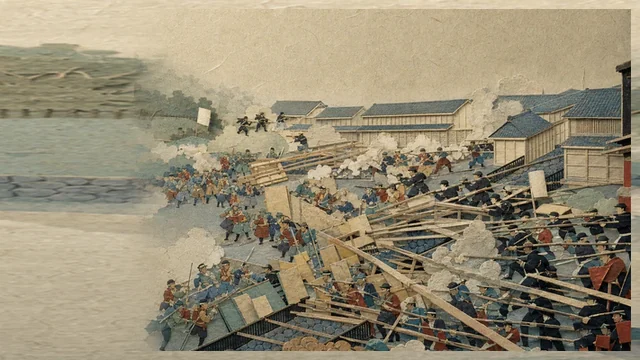 1868-1869
The Boshin War: From Kyoto to Hakodate
戊辰戦争
Why it mattersThe Boshin War turned the dispute over central authority into a sequence of regional campaigns, ending with resistance at Hakodate.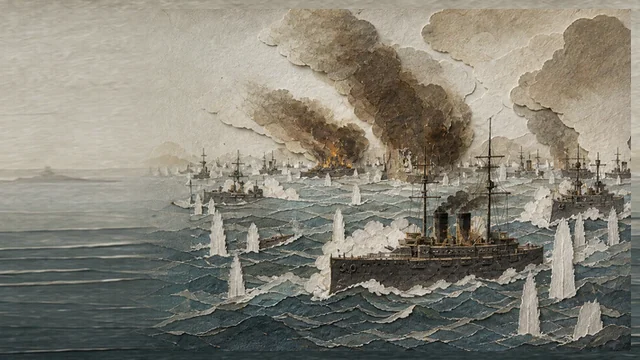 1904-1905
The Russo-Japanese War and the Portsmouth Settlement
日露戦争とポーツマス条約
Why it mattersVictory raised military prestige and expanded Japanese imperial control, while mobilization costs and the removal of Korean sovereignty complicate its celebratory memory.