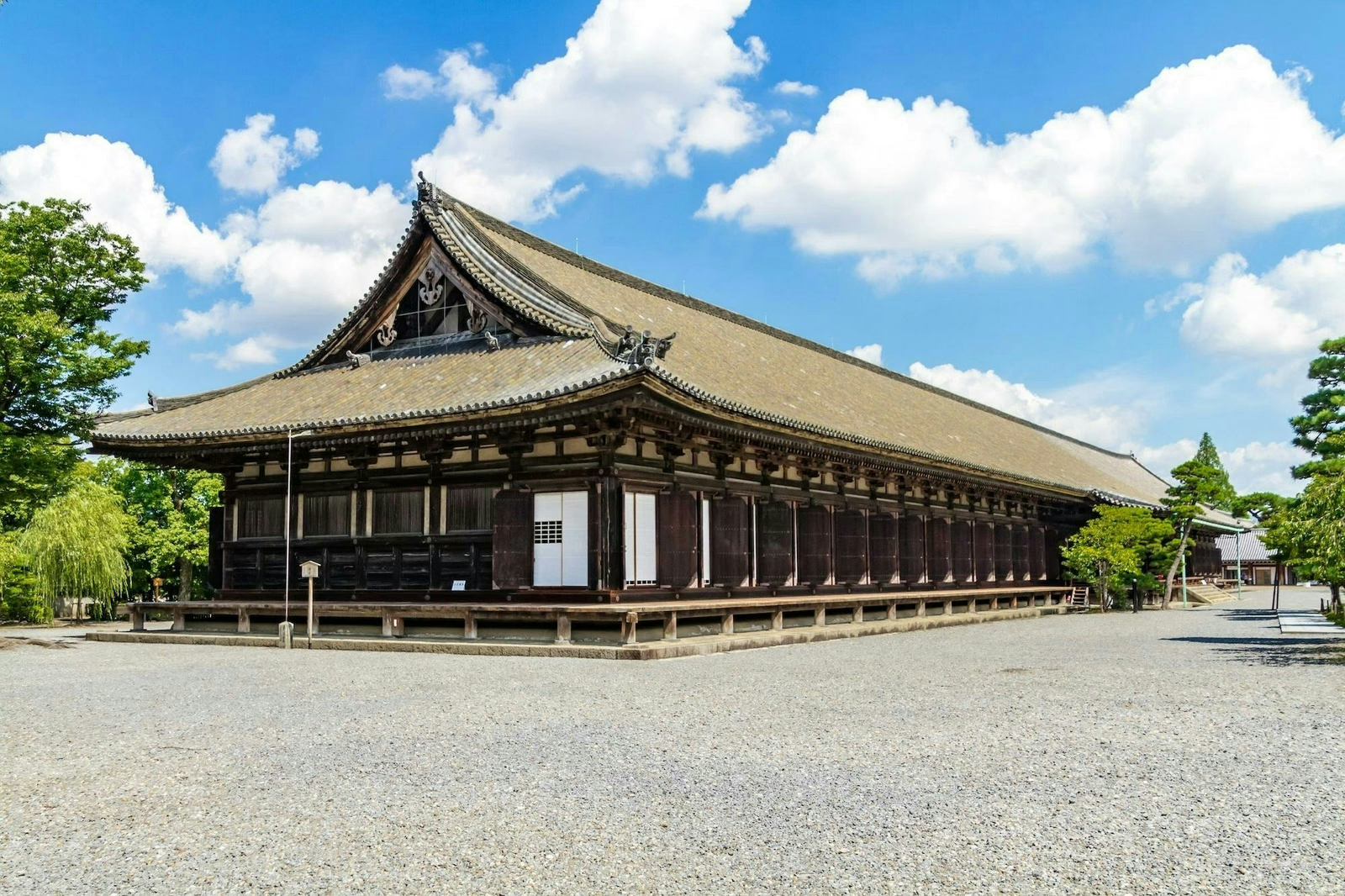
Map: GSI Japan Sanjūsangen-dō survives from a much larger political and religious landscape built around the retired sovereign Go-Shirakawa. The long hall, formally Rengeō-in, was founded in 1164 within Hōjūji-dono, his residence and administrative center. The original burned in 1249; the present National Treasure hall was rebuilt in 1266 and houses a sculptural ensemble assembled across the Heian and Kamakura periods. Nearby Hōjūji and Go-Shirakawa's mausoleum preserve the name and funerary memory of a palace destroyed in the 1183 Hōjūji battle, but they are not intact palace buildings. Later Toyotomi walls, gates, archery traditions, and modern garden work add further layers. The area is strongest when palace, temple, sculpture, ritual, and reconstruction remain chronologically distinct.