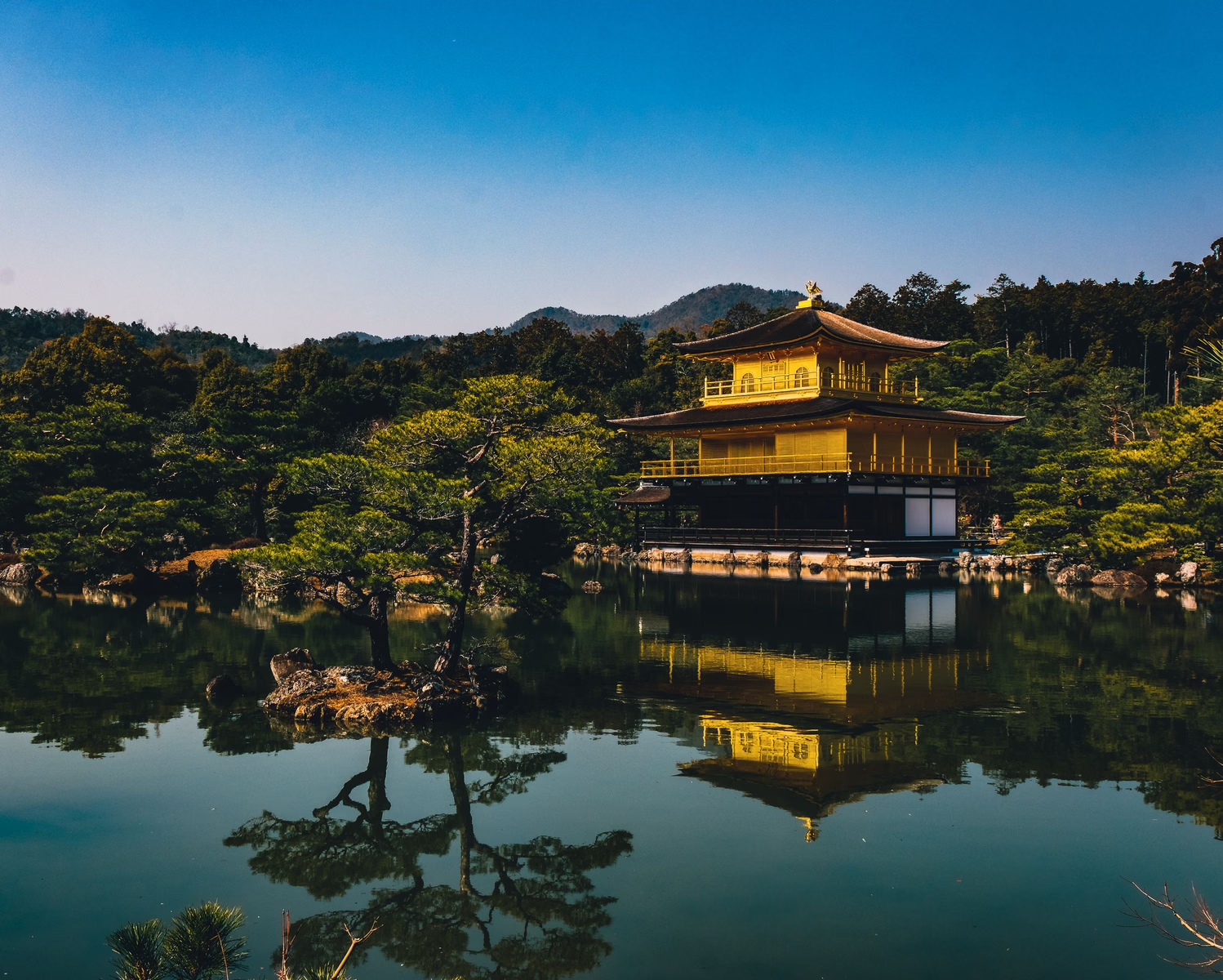
Kyokochi Mirror Pond and the Frontal View
Attraction
Most visitors meet Kinkaku as one image: gold above, reflection below. That image is real, but incomplete. The pond is not a neutral mirror placed in front of a building; its islands, rocks and viewing positions compose the pavilion from changing angles. Yoshimitsu's Kitayama estate used architecture and garden together to create an elite political-cultural environment. The first task is therefore to stop treating the water as a camera effect and begin reading it as part of the design. The iconic view is more than a photograph: it is the entrance to Yoshimitsu's designed political world. UNESCO included Rokuon-ji in the Historic Monuments of Ancient Kyoto World Heritage property in 1994.
Current visibility
Kyōkochi's islands, rocks, water, and changing viewpoints remain visible around the reconstructed pavilion; the pond is an active part of the estate's design, not merely a reflection surface.
The Three Stories of Kinkaku
Attraction
The pavilion visible today was rebuilt in 1955 after the 1950 fire; its three-story program reconstructs the earlier Kinkaku rather than preserving fourteenth-century fabric. Its gold can flatten the building into a single surface. The better way to read it is vertically. JNTO describes the first floor as a courtly shinden-derived style, the second as buke-zukuri associated with warrior residences, and the third as Zen/Chinese architectural language. The combination is not a textbook pasted onto a façade; it concentrates several elite cultural worlds into one pavilion. Yoshimitsu's authority depended precisely on moving across court, warrior and Zen spheres. The first level opens toward the pond with a light residential character, while the upper stories become more enclosed and emphatically gilded. Roof shapes, window patterns and wall treatment keep the levels from dissolving into one reflective surface. The pavilion belonged to Ashikaga Yoshimitsu's Kitayama estate and became part of a Zen temple after his death, so its mixed languages record a world in which courtly, warrior and Buddhist forms supported political display and cultivated retreat. Use the reflection only after identifying those differences in the building itself.
Current visibility
The three stories belong to the 1955 reconstruction and can be read from the exterior through their differing windows, wall treatment, roof forms, and relationship to the pond.
The 1950 Fire and 1955 Reconstruction
Attraction
The original pavilion burned in 1950. The structure in front of you was rebuilt in 1955. That fact should not be hidden, but it also should not end interpretation. The useful distinction is between material survival and historical continuity. The building fabric is modern; the pavilion's location, form, garden relationship and long cultural identity belong to a much older history. Kinkaku is therefore a good test of whether visitors can move beyond the false choice between 'original' and 'fake.' A reconstructed building can still anchor an older landscape and historical memory if its status is stated honestly.
Current visibility
The pavilion visible beside Kyōkochi was reconstructed in 1955 after the 1950 fire; its historic identity and garden relationship outlast its modern building fabric.
The Upper Garden and Changing Views
Attraction
The most useful thing the garden sequence does is break the single famous image. As you move, the pavilion is no longer centered and complete; it becomes partial, distant or hidden. That change is not a failure of the view. It demonstrates that the estate was designed to be experienced through movement, not from one fixed camera position.
Current visibility
The upper garden is read through movement along its paths as the pavilion becomes partial, distant, or hidden; no sculpture group carries this spatial sequence.
Yoshimitsu's Kitayama Estate
Attraction
Official temple history describes Kitayamadono as a major villa complex whose architecture and garden centered on Kinkaku and hosted elite visitors, including Emperor Go-Komatsu. The surviving site is much reduced from Yoshimitsu's full estate, so this place should not reconstruct lost buildings without evidence. Instead, the scale of the grounds becomes the clue: Kinkaku belonged to a political-cultural environment where shogunal authority, courtly reception and Zen culture overlapped.
Current visibility
The surviving garden and reconstructed Kinkaku preserve only a reduced part of Yoshimitsu's former Kitayama estate; lost villa buildings should not be imagined as standing.
Attraction
Sekkatei is a small tea house in the upper garden, traditionally associated with the tea master Kanamori Sowa and later restoration. Its restrained materials and controlled view contrast deliberately with Kinkaku's gold and broad pond setting. Look for the famous staggered shelf and the way openings frame the garden rather than expecting another monumental interior. The building's current fabric reflects repair and rebuilding, so read it as a transmitted tea-space design within the temple landscape, not untouched medieval architecture. Interior access and visibility vary with current rules.
Current visibility
The present precinct at Kinkaku-ji (Rokuon-ji) still carries “Sekkatei Teahouse”; visitors can ground the text in the garden, the reconstructed building, and the pond and water system.
Anmintaku Pond and the White Snake Mound
Attraction
Anmintaku is a smaller pond in the upper garden, traditionally said not to dry up. Its island mound and White Snake association shift attention from the formal pavilion reflection to a more intimate sacred landscape. Observe water, vegetation and the central feature together. The tradition adds meaning, but the pond's spatial role does not depend on proving a legend literally true.
Current visibility
The present landscape at Kinkaku-ji (Rokuon-ji) keeps “Anmintaku Pond and the White Snake Mound” legible through the pond and water system and the garden, rather than through one preserved interior.