Read the article below. Interactive reading tools are available when scripts load.
Quick
Ikoma Chikamasa was born in 1526 into a warrior family associated with Mino in central Honshu, Japan's largest island. He rose through service to Oda Nobunaga and Toyotomi Hideyoshi. His later province, Sanuki, lay across the Seto Inland Sea on Shikoku. Lordship there came from Hideyoshi's appointment, not a native claim. By the 1560s Chikamasa served within Nobunaga's expanding military order. Retainer households had to provide men, supplies and continuing obedience. Service could bring greater responsibility, but advancement depended on recognition by stronger patrons. His career developed through those relationships. Oda expansion also required administration after conquest, duties later directed by a daimyō—a territorial warrior lord—through his household. Chikamasa’s individual early duties are less fully recorded than his later provincial appointment. [5]
In 1582 Nobunaga died at Honnō-ji, a Kyoto temple attacked by his commander Akechi Mitsuhide. The succession struggle broke apart the center organizing Chikamasa's service. Chikamasa entered Hideyoshi's coalition. Continued service then tied his future to a new patron capable of assigning territory.
Chikamasa served Hideyoshi as the coalition overcame rivals and extended its power. The 1585 invasion of Shikoku reduced Chōsokabe authority and opened provinces to reassignment. Territorial rewards gave incoming households income while requiring further military service. Chikamasa's provincial appointment followed this settlement. Sanuki passed through short assignments to Sengoku Hidehisa and Bitō Tomonobu before Chikamasa received the province in 1587. His legitimacy therefore came from Hideyoshi’s settlement. The grant gave the Ikoma house a regional base but did not erase older communities, jurisdictions, or the coercion behind redistribution.
Installed over Sanuki in 1587, Chikamasa faced a choice of political center. Existing inland and elevated castles could serve defense but did not offer the same access to Inland Sea transport. A coastal seat near the established port settlement of Nohara promised movement of people and supplies while placing administration in a newly organized castle town. Construction of Takamatsu Castle began in 1588 at Tamamo Bay and continued for several years. Chikamasa authorized the project as his provincial seat. Builders and laboring households carried out the work, while sea access supported supplies and seawater-filled moats. Later Ikoma and Matsudaira rulers substantially altered the castle. Founding works and completion of the whole castle need not have occurred under the same lord.
When castle construction began, Chikamasa renamed the Nohara area Takamatsu. The act connected castle, port, and emerging town under the name of the new political center. It did not erase the site’s earlier settlement history or by itself create a city; naming accompanied construction and continuing public use. An earlier Takamatsu nearby became known as Furu-Takamatsu, or Old Takamatsu. Retainer residences and households supplying goods and services developed around the castle. Traders and carriers linked the port to provincial resources; officials reorganized existing occupied space.
Chikamasa remained a Toyotomi daimyō while building Takamatsu. His house joined the 1590 campaign against the Hōjō at Odawara in eastern Japan and mobilization for Hideyoshi's invasions of Korea beginning in 1592. Distant service drew men and resources from Sanuki. The house participated in the invasion system, although Chikamasa's exact personal movements are less securely established.
Chikamasa and Kazumasa began Marugame Castle in western Sanuki in 1597. During the Sekigahara crisis, Chikamasa was associated with the western coalition while Kazumasa fought for the eastern side. Eastern leader Tokugawa Ieyasu’s victory exposed the father to sanction, but the son’s service helped preserve the Ikoma possession of Sanuki. The outcome resembles a family hedge; evidence does not prove that father and son planned both alignments in advance to guarantee survival. Kazumasa was confirmed as lord in 1601 and moved from Marugame to Takamatsu in 1602.
After the western defeat, Chikamasa took Buddhist tonsure, shaving his head as a sign of withdrawal. Local accounts place him at Kōyasan, a major Buddhist center, seeking pardon. He was allowed to return to Kazumasa's domain and died at Takamatsu in 1603. Clemency preserved his life without restoring provincial command. In 1603 Kazumasa moved Hōkunji to his father’s burial place and renamed it Kōkenji, according to the temple’s history.
Chikamasa’s durable legacy is the initiation, naming, and early organization of Takamatsu as Sanuki’s coastal political center. Ikoma rule ended in 1640; Matsudaira lords then rebuilt major parts of the castle. The keep was dismantled in 1884 because of deterioration; the Matsudaira family reacquired the site in 1890. Founder status does not make all surviving fabric Chikamasa’s work.
Classic
Ikoma Chikamasa was born in 1526 into the warrior society of Mino in central Honshu, Japan's largest island. Takamatsu's municipal account associates the Ikoma family with Tsuchida in Mino. His later province, Sanuki, lay across the Seto Inland Sea on Shikoku, another of Japan's main islands. That distant lordship came through service and appointment rather than an inherited claim to Sanuki. [5]
Family connections could bring a warrior into a stronger house's service, but could not guarantee a lasting office or an independent army. Chikamasa's childhood is poorly documented. The more visible career is that of an adult whose household served successive military patrons and eventually received territorial responsibility. Security depended on maintaining those relationships.
Chikamasa entered the service world of Oda Nobunaga, whose armies were expanding across central Japan in the 1560s. Nobunaga's retainers served through a changing mixture of household troops and local alliances. Mobilization depended on provisions, transport and command as well as fighting. A subordinate household had to remain available and useful across repeated operations. [5]
These duties made a lord's officers and intermediaries essential. Chikamasa's later ability to govern rested on a household, rather than on one man's performance of every task. A daimyō was a territorial warrior lord responsible for both the grant he held and the service it financed. Subordinates carried out much of the administration while the lord answered to a superior political center.
This formation period is unevenly documented: his birthplace and service relationships are clearer than his individual early duties. General obligations of a retainer household do not establish a sequence of administrative jobs personally performed by Chikamasa. His first well-defined provincial responsibility came later, under Hideyoshi.
In 1582 Nobunaga died at Honnō-ji, a Kyoto temple attacked by his commander Akechi Mitsuhide. His death removed the patron around whom many grants and military obligations had been organized. Oda heirs and senior commanders competed to define the succession. Chikamasa entered Toyotomi Hideyoshi's coalition during the struggle that followed. [5]
Hideyoshi defeated Mitsuhide and then overcame other rivals, turning military support into an authority capable of assigning lands. For a retainer, joining him created new command relationships without immediately guaranteeing a province. Chikamasa still had to serve in the campaigns through which Hideyoshi extended control.
The precise moment at which all of Chikamasa's obligations shifted is not securely established here. Alignment became visible through continuing service and accepted rewards. It preserved his career across the collapse of one center, while making its future dependent on another.
A territorial reward could move a retainer far from his earlier connections. The new lord had to take followers into unfamiliar communities and keep them useful to the regime. Hideyoshi's 1585 invasion of Shikoku forced Chōsokabe power into a reduced settlement. Sanuki then became available for assignment to incoming lords.
The settlement changed established jurisdictions under military pressure. A grant provided income and status while requiring further mobilization. Chikamasa would receive Sanuki only after earlier appointees had held it briefly. The sequence connected his service to a provincial base without making him the island's independent conqueror.
Sengoku Hidehisa and Bitō Tomonobu held Sanuki before Chikamasa's appointment in 1587. Their short tenures showed how dependent provincial possession was on Hideyoshi's confirmation. Takamatsu's cultural-property account describes Chikamasa's move from a holding at Akō on Honshu’s Inland Sea coast to Sanuki after the Kyushu campaign. The new grant gave him a much larger territorial government to organize. [1]
His authority came from Hideyoshi, but it had to operate among existing villages, ports and religious institutions. An incoming lord could command through an armed household while remaining dependent on central recognition. Land brought obligations as well as revenue, including security, assessment and the ability to supply further campaigns.
Chikamasa received the province before beginning Takamatsu Castle in 1588. The appointment made construction possible as the seat of an authorized government. Establishing that seat would redirect provincial movement toward a coastal center, joining local administration to the larger regime.
Sanuki faced the Seto Inland Sea, the sheltered maritime corridor between Honshu and Shikoku. A coastal seat offered access to shipping as well as a place for provincial command. Chikamasa chose the Nohara area, where a port settlement already existed. Building there reorganized an inhabited place rather than creating settlement on empty ground. [1][2]
The low coastal ground required foundations, drainage and control of tidal water. Seawater-filled moats connected defense to the surrounding maritime landscape. A lord could authorize the works, but their execution depended on builders, specialists and laborers. The secure founding attribution is to Chikamasa's government; the individual design contributions are less firmly established.
Retainers needed residences near command, while traders and craftspeople supplied the new center. Existing routes and occupied ground had to be accommodated as the castle town developed. Access to shipping benefited administration, but fortification required controlled entry. The coastal choice brought both logistical opportunities and new demands on established occupants.
Construction of Takamatsu Castle began in 1588 and continued for several years. Groundworks, water management and buildings became usable in stages. Chikamasa committed his household's resources and made the project the seat of the grant he held. His founding responsibility was political as well as material: the castle represented provincial command. [1]
The project continued beyond its founding works. Takamatsu City attributes several years of building to Chikamasa; cultural-property specialist Ōshima Kazunori’s 2013 account cites excavations suggesting that completion of the whole castle may belong to his son Kazumasa or grandson Masatoshi. Starting construction and completing every part are different claims. [1][2]
The work drew on officials, skilled makers, carriers and laboring households under unequal authority. Their individual contributions are not fully recoverable from lord-centered summaries. Shipping helped move supplies, and seawater entered the moats. The maritime position served a working fortress and administrative seat, not merely the scenery associated with the castle today.
With construction, the Nohara area took the name Takamatsu. The name had an earlier association elsewhere nearby, later distinguished as Furu-Takamatsu, or Old Takamatsu. The new designation located Chikamasa's coastal seat within Sanuki and gave the emerging castle town a common public identity. [1]
Takamatsu's castle town concentrated a lord's household and the services sustaining it. Retainer residences stood within a hierarchy of access, while merchants and craftspeople provisioned the center. Municipal archaeology and local histories record reorganization of occupied space. The urban project therefore changed existing arrangements as it created new ones.
Religious communities also maintained property and followers within the province. Traders connected provincial produce to wider markets, and carriers joined sea routes to the town. Officials regulated these activities without creating all of them. The working center depended on practical adaptation within the imposed hierarchy.
Castle maintenance and household service drew on provincial surplus. Making the center sustainable was thus a fiscal task as well as an architectural one. Specific tax measures cannot be attributed personally to Chikamasa from the available summaries, but the seat formed part of the territorial administration his grant required.
The earlier port had contained religious institutions as well as warrior residences. Ōshima identifies Muryōju-in, a Buddhist temple, among them. Its presence establishes an inhabited religious landscape; it does not by itself show that this particular temple was moved for Chikamasa’s castle. [2]
Holding Sanuki did not release Chikamasa from Hideyoshi's campaigns. His household participated in the 1590 campaign against the Hōjō at Odawara, which extended Toyotomi control in eastern Japan. Land revenues supported service beyond the province. The resources gathered around a new seat could be directed outward almost as soon as the center began to take shape. [6]
The Ikoma house also participated in Hideyoshi's invasions of Korea beginning in 1592. These were aggressive wars of conquest, resisted by Korean and Ming Chinese forces, and they produced destruction and captivity. Chikamasa served within the invasion command rather than initiating the war. His personal movements are less securely established than the house's participation, but uncertain tactical details do not remove the responsibility of a participating lord. [6]
Mobilization took men and provisions away from Sanuki while administration had to continue. Chikamasa's son Kazumasa and household officers therefore mattered increasingly alongside the aging lord. The port's logistical value served distant military obligations as well as local exchange. Building the provincial center and answering the conquering regime were parts of the same office.
In 1597 Chikamasa and his son Kazumasa began building Marugame Castle at Kameyama in western Sanuki. The second project supplies a concrete example of father and son participating in the household’s territorial government. Takamatsu remained its coastal center; Kazumasa would move from Marugame to Takamatsu in 1602. [3][8]
During Chikamasa's later career, Kazumasa took on a growing share of the household's service. Formal lordship and a father's continuing influence did not necessarily change at the same moment. Kazumasa had his own campaign obligations and represented the house's future to the rulers able to confirm its land.
In the 1600 Sekigahara struggle, Chikamasa was associated with the western coalition while Kazumasa served Tokugawa Ieyasu's eastern side. Ieyasu's victory made the father's alignment a liability. The son's service supplied a countervailing claim, and Sanuki was confirmed to Kazumasa in 1601. Chikamasa withdrew and sought pardon. [2][5]
The settlement preserved the household without acquitting both men in the same way. Chikamasa did not become an eastern supporter retroactively, and Kazumasa's reward belonged to his own service. The new regime could distinguish father from son, rewarding one while removing the other from command.
The outcome resembles a family hedge, but the current evidence does not establish prior coordination. Household survival is secure common ground. A planned insurance strategy remains an interpretation rather than a demonstrated fact, and the result alone cannot settle either man's earlier intention.
Chikamasa remained politically consequential even as his son gained responsibility. The official Takamatsu chronology lists Chikamasa's lordship through 1601 and places Kazumasa's confirmation and entry into Takamatsu after the Sekigahara settlement. These anchors do not establish one precisely dated earlier retirement.
After the western defeat, Chikamasa took Buddhist tonsure, shaving his head as a sign of religious withdrawal. Local accounts place him at Kōyasan, a major Buddhist center, seeking pardon. Kazumasa's eastern service helped secure clemency. The settlement allowed the house to continue while leaving provincial command with the son. [6]
Chikamasa was allowed to return to his son's domain. Kazumasa entered Takamatsu in 1602; the father died there in 1603. Return meant residence within the continued Ikoma holding, not restoration to the former office. His life ended after the household's service claim had passed into the Tokugawa settlement. [5]
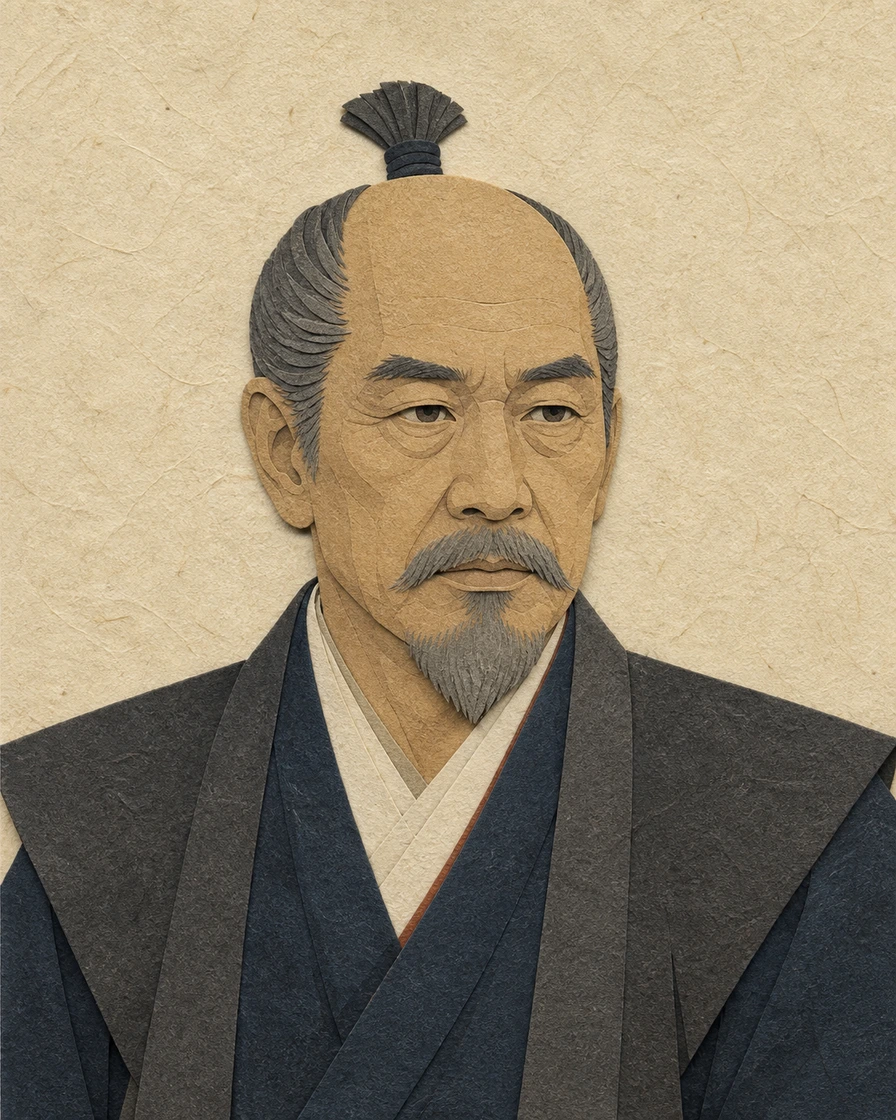
According to Kōkenji’s temple history, Kazumasa moved the old Hōkunji temple to his father’s burial place in Takamatsu in 1603 and renamed it Kōkenji. It became a memorial institution with transferred religious objects and an appointed abbot. The portrait preserved there carries Chikamasa’s memory, although its precise date is not established by the temple’s short online description. [4]
The Ikoma ruled Sanuki for four generations until an internal dispute brought confiscation in 1640. Matsudaira Yorishige received eastern Sanuki and entered Takamatsu in 1642. He and his successors substantially rebuilt the castle. They kept the center Chikamasa had begun while altering its defenses and residences. [1][7]
Meiji government changed ownership and jurisdiction again. Moats were filled and buildings removed; the keep was dismantled in 1884 because of its deteriorating condition. The former Matsudaira family reacquired the site in 1890. By 1912 the city still grew around the old center, but its castle landscape no longer represented either founder's work unchanged.
Chikamasa's lasting contribution was to establish a maritime seat of provincial government at an existing port. Officers, makers and inhabitants built and sustained it; later rulers chose to reuse it. That continuity of location and centrality outlasted much of the original fabric. His founding role is substantial without assigning him every structure now associated with Takamatsu.