Sea Water within the Castle Defense System
Attraction
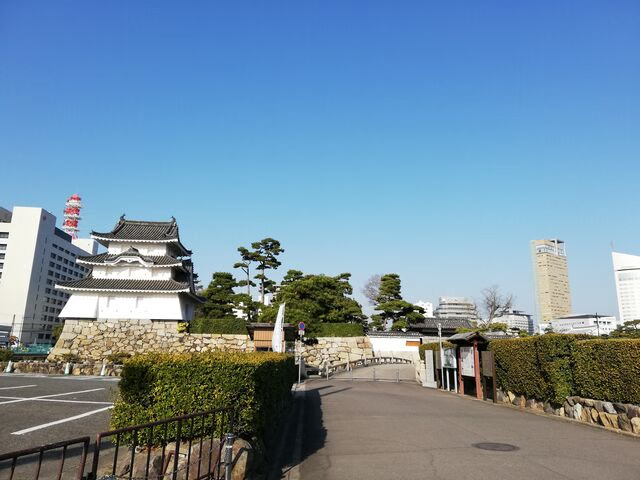
Takamatsu Castle was begun by Ikoma Chikamasa in 1588 and developed as one of Japan's great sea castles. Its defining feature is not a tower silhouette but geography: the castle used the Seto Inland Sea as part of its defensive and transport system. Seawater entered the moat network, linking fortification directly to the coast. Takamatsu is traditionally grouped with Imabari and Nakatsu among Japan’s three great water castles, a label that points to this direct use of seawater rather than to the size of its vanished keep. The surviving inner moats still contain seawater and respond to tidal conditions, making the coastal connection more than a historical claim. Watch the water around the stone bases and compare the castle’s low shoreline setting with hilltop fortresses elsewhere. Boats once approached through water gates, so circulation, supply and defense all depended on the same maritime geography.
Current visibility
At Takamatsu Castle (Tamamo Park), “Sea Water within the Castle Defense System” is grounded in present on-site evidence—the castle compound, the moat, and the pond and water system—without implying that every historical layer survives as fabric.
Surviving Turrets, Gates and Relocated Fabric
Attraction
Takamatsu's keep is gone, but important turrets and gates survive. Their walls, roofs and relationship to moats reveal more about authentic castle construction than any future speculative reconstruction could. Secondary defensive buildings can become primary historical evidence when the main keep is lost. The surviving Tsukimi-yagura, Mizute Gate, Watari-yagura and Ushitora-yagura are designated Important Cultural Properties, while the castle site has been a National Historic Site since 1955. Tsukimi-yagura stood near the route by which the lord returned from the sea, and the adjacent Mizute Gate preserves that waterside relationship. Ushitora-yagura was moved within the grounds in the twentieth century, so its present position is not original. Distinguishing surviving fabric from surviving location makes the remaining buildings more informative, not less authentic.
Current visibility
The present precinct at Takamatsu Castle (Tamamo Park) still carries “Surviving Turrets, Gates and Relocated Fabric”; visitors can ground the text in the turret, the gate sequence, and the moat.
Ikoma Chikamasa and Later Building Layers
Attraction
Ikoma Chikamasa's importance is foundational: he established Takamatsu Castle and the political center here from 1588. But the castle continued to change under later rulers, especially the Matsudaira house. Founder history and visible-building history remain separate layers. A founder can define the site without owning every later object. The castle’s seawater setting began under Ikoma rule, while most named surviving buildings reflect later phases. Dates attached to each structure should therefore take precedence over a single founder narrative.
Current visibility
“Ikoma Chikamasa and Later Building Layers” is materially legible at Takamatsu Castle (Tamamo Park), especially through the surviving building and the castle compound described in the Highlight.
Maritime Access, Fortress and Political Port
Attraction
A sea castle was not only harder to attack from land. It also had direct access to maritime transport, communication and regional movement across the Seto Inland Sea. Takamatsu's coastal position therefore supported both military defense and political administration. Defensive geography and transport geography are often the same system. The Mizute Gate and waterside turrets make that connection concrete. They show a political center receiving people, information and supplies from routes across the Inland Sea.
Current visibility
The place-specific feature discussed as “Maritime Access, Fortress and Political Port” is anchored by the harbor, the castle compound, and the administrative landscape, but today's access or operating condition at Takamatsu Castle (Tamamo Park) requires a current official check.
Absence as Evidence at Takamatsu Castle
Attraction
Takamatsu is valuable precisely because it teaches visitors not to demand a reconstructed icon at every castle. The keep is absent; the moat system, stonework, gates and turrets remain; the sea still defines the site's logic. The castle is historically richer when its losses stay legible. Absence can strengthen interpretation when surviving evidence is allowed to carry the story.
Current visibility
The surviving setting at Takamatsu Castle (Tamamo Park) anchors “Absence as Evidence at Takamatsu Castle”; its physical context is the castle compound, the moat, and the stone walls.
Attraction
Hiunkaku is not an Edo-period palace but an early-twentieth-century villa built within the former castle grounds for the Matsudaira family. Its large tatami rooms, corridors and garden-facing spaces preserve a later layer of elite residence and reception inside Tamamo Park. Now designated an Important Cultural Property, the building complicates a setting otherwise centered on fortification and lost structures. Interior access depends on events and opening arrangements, but the exterior and garden relationship remain important even when rooms are closed.
Current visibility
The feature or practice discussed as “Hiunkaku” is available only at announced times; the castle compound, the corridor, and the garden remain the stable context, and current official notices control access.