

 607
607Missions to Sui and Competing Records of Wa
遣隋使と倭の記録
Why it mattersThe missions placed the Wa court within East Asian diplomacy, while Japanese and Chinese records preserved different accounts of the encounter. 661–663
The Baekje Restoration and Defeat at Baekgang
百済復興運動と白村江の戦い
Why it mattersDefeat in the attempt to restore Baekje exposed the court's military limits and redirected attention toward defense at home. 804-806
Kūkai Studies in Tang China and Returns to Japan
空海の入唐と帰国
Why it mattersStudy in Tang China and the transmission of texts, images and ritual instruction gave Kūkai the foundations of a new institutional program in Japan.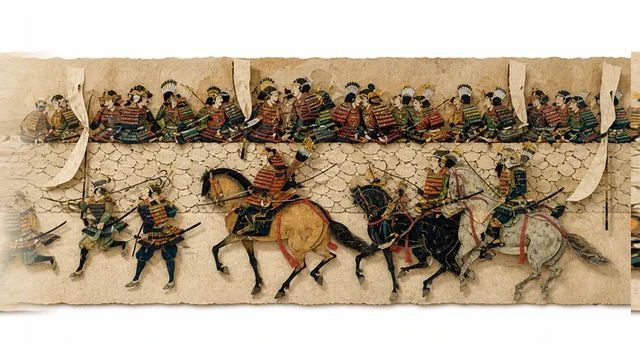 1281
1281The Second Mongol Invasion and the Failure of the 1281 Campaign
弘安の役
Why it mattersPrepared defenses and coordinated service helped repel the invasion, but victory left prolonged obligations and strained the resources of warrior communities.- 1401-1404
Yoshimitsu Opens Ming Relations and Tally Trade
日明関係と勘合貿易
Why it mattersDiplomatic recognition and tally trade connected Ashikaga authority to Ming institutions and regulated maritime exchange. 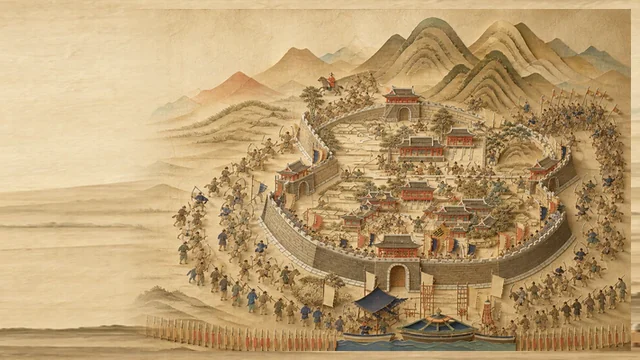 1592-1598
Hideyoshi’s Invasions of Korea, 1592–1598
文禄・慶長の役
Why it mattersContinental invasion devastated Korean communities and strained Toyotomi power; its human and political consequences crossed Japanese, Korean, and Chinese histories.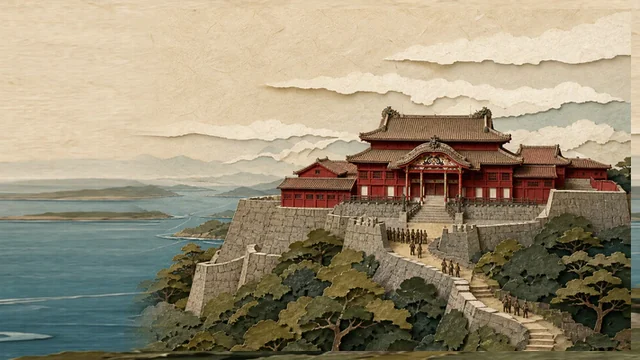 1609
1609Satsuma Invades Ryūkyū and Captures Shō Nei
薩摩の琉球侵攻
Why it mattersInvasion imposed Satsuma's unequal control while Ryūkyū retained a court and Chinese relations, creating a coerced political arrangement rather than unchanged independence. 1858
1858The United States–Japan Treaty of Amity and Commerce
日米修好通商条約
Why it mattersThe treaties exposed disputed domestic authority and made recovery of judicial and tariff autonomy a lasting objective of institutional reform.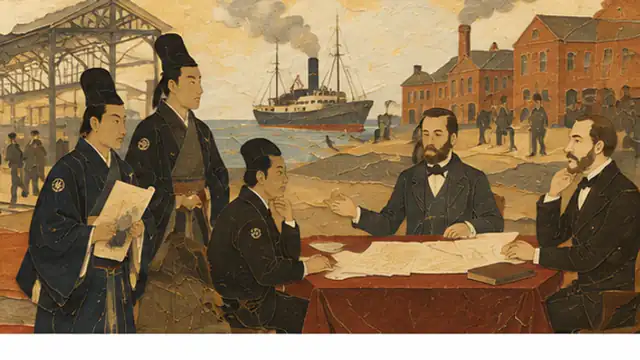 1871–1873
The Iwakura Mission Negotiates and Investigates Abroad
岩倉使節団
Why it mattersThe Iwakura Mission combined treaty negotiations with investigation of institutions abroad, bringing observation into debates about reform at home.- 1910-1919
Colonial Administration and Resistance in Korea, 1910–1919
朝鮮の植民地統治と抵抗
Why it mattersAnnexation ended Korean sovereignty; the early colonial administration extended Japanese authority through policing, institutions and coercion.